

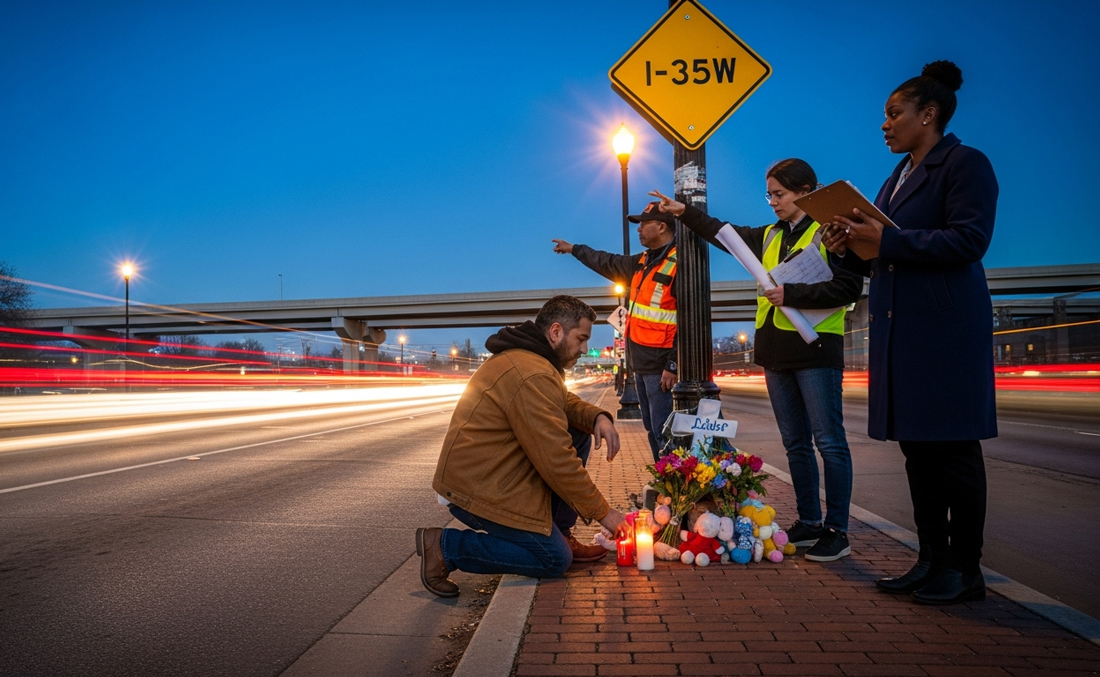
One minute, it’s the familiar evening crawl along Camp Bowie, the setting sun glinting off a thousand windshields. Next, it’sa chaos of twisted metal and flashing blue-and-red lights. For too many Fort Worth families in recent weeks, this nightmare has become a tragic reality. A disturbing pattern of severe and fatal crashes has emerged on some of Cowtown’s most critical arteries, turning familiar commutes into danger zones. The daily headlines tell part of the story, but the sheer frequency of these incidents on Camp Bowie Boulevard and Interstate 35W points to a growing public safety crisis that demands a much closer look.
The Anatomy of a Cowtown Danger Zone
The “what” and “where” of this crisis are becoming painfully clear. These aren’t random accidents scattered across the grid; they are concentrated along corridors that thousands of residents depend on daily. Each road presents its own unique brand of peril, a volatile mix of design, speed, and human behavior that is proving to be a lethal combination. The stories from recent weeks paint a grim picture of how quickly a normal drive can turn into a catastrophe.
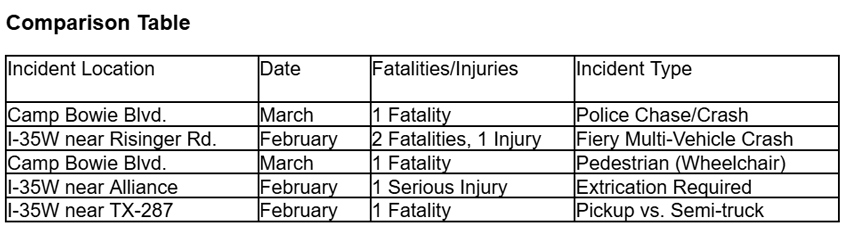
Camp Bowie’s Urban Chaos: The historic bricks of Camp Bowie Boulevard are soaked in a history of commerce and community, but lately, they’ve been stained by violence. The road’s design — a mix of high-speed through-traffic, constant business access, and pedestrian activity — creates countless points of conflict. This tension erupted into tragedy in early March when a police pursuit of a hit-and-run suspect ended with 33-year-old Sam Chavarria dead after his car crashed into a tree. According to reports, the chase began after Chavarria allegedly fled the scene of an initial crash on the West Freeway. Just days later, another life was lost when a person in a wheelchair was struck and killed while trying to cross the boulevard in the evening, highlighting the extreme vulnerability of pedestrians on a street that prioritizes vehicle speed over human safety.
The I-35W Gauntlet: If Camp Bowie is a story of urban friction, I-35W is a testament to the brutal physics of high-speed failure. The interstate, a primary north-south corridor for commuters and freight, has been the site of a series of fiery, high-consequence collisions. In late February, a two-vehicle crash on the I-35W service road near Risinger Road killed two people and sent another to the hospital when one vehicle burst into flames. That same month, another serious crash near the Alliance Gateway Freeway required firefighters to use specialized equipment to extricate a driver from their mangled vehicle. These incidents, which often shut down the highway for hours, reveal how the interstate’s high traffic volume and speed can turn a single mistake into a multi-victim disaster.
Is Anybody Listening? Official Responses and Lingering Questions
In the face of mounting tragedies, the official response often defaults to a familiar script focusing on enforcement and driver error — speeding, distracted driving, or fleeing police. While individual accountability is crucial, this narrative conveniently sidesteps tougher questions about systemic failures. Are the very designs of these roads contributing to the death toll? Is a high-speed police pursuit for a non-violent crime like a hit-and-run worth the risk it creates for the public? These questions hang in the air long after the wreckage is cleared, and for many concerned residents, the silence from city and state officials is deafening.
The Sobering Numbers: This recent spike in crashes isn’t an anomaly; it’s an escalation of an existing problem. The data shows a city struggling to keep its citizens safe on its roads. According to a 2023 report, Fort Worth saw a staggering 120 traffic fatalities and 449 serious injuries in 2022 alone. That number transforms the abstract concern over traffic into a concrete reality: hundreds of families are shattered every year. This isn’t just random bad luck; it’s an ongoing failure to protect citizens, one that requires a response beyond just ticketing speeders.
Community and Advocate Voices: Local safety advocates and neighborhood groups are growing increasingly vocal, arguing that engineering and policy changes are long overdue. “We can’t just ticket our way out of this problem,” a representative from a local safety group might say. “We need to fundamentally rethink how these corridors are designed for everyone, not just for cars in a hurry.” This sentiment reflects a growing demand for proactive solutions that prioritize human life over traffic flow, a shift in thinking that has yet to fully take hold at the planning level.
Safety Measures: The key safety measures under discussion include: Increased and more visible police patrols in crash-prone hotspots; Road “diet” studies for Camp Bowie to calm traffic and add protected pedestrian crossings; Installation of median barriers on high-speed sections of I-35W to prevent crossover collisions; Reviewing and potentially revising police pursuit policies for non-violent offenses; and Public awareness campaigns targeting the dangers of speeding and the high cost of distracted driving.
The Unseen Aftermath: A Lifetime of Consequences
When the news cycle moves on, the real story begins for the survivors and their families. A catastrophic injury inflicted in a split second on I-35W or Camp Bowie sets off a lifetime of physical, emotional, and financial challenges. The impact extends far beyond the initial hospital stay, creating a new reality that is often completely overwhelming. These aren’t just “accidents”; they are life-altering events with staggering long-term costs that are rarely discussed in public forums.
Beyond the Medical Bills: The financial toll of a catastrophic injury is almost incomprehensible. Research shows that the lifetime cost of care for a severe traumatic brain injury can easily exceed $3 million. For someone suffering a spinal cord injury, a common outcome in high-speed crashes, the cost can climb to over $4.7 million, depending on the severity of the injury. These figures don’t just represent medical bills; they account for a lifetime of necessary care, home modifications, assistive technologies, and lost earning potential that families are suddenly forced to confront.
The Ripple Effect: A single crash sends a devastating ripple through an entire family and community. Spouses may have to quit jobs to become full-time caregivers, life savings are drained to cover expenses insurance won’t touch, and the emotional trauma can last a lifetime. With motor vehicle accidents being a leading cause of these life-altering spinal cord injuries, the carnage on Fort Worth’s roads is creating a hidden population of families struggling under an immense and unforeseen burden. The true cost of our dangerous roads is measured not just in fatalities but in the lives forever changed.
Navigating the Aftermath: For families thrown into this new reality, the path forward is a daunting maze of medical, financial, and legal challenges. The stress of talking with insurance companies and corporations while caring for a loved one can be overwhelming. Gaining a sense of control often requires an experienced Fort Worth catastrophic injury lawyer to guide you through complex claims, a critical step for families trying to secure the resources needed for a lifetime of care.
Cowtown at a Crossroads: Whose Road Is It, Anyway?
As memorials on our roadways multiply, Fort Worth faces a stark question: Are these tragedies the unavoidable cost of a growing city, or a failure of collective will? The answer will determine whether our streets serve the community or continue to claim it.