

Fifty years ago, Peter Jensen launched Project Censored, in part as a response to how the Watergate break-in was covered. Richard Nixon didn’t censor the initial reporting, but he didn’t have to. The press simply didn’t cover it with any serious scrutiny until well after Nixon was elected. The story didn’t reach the American people when it mattered most — when they could have done something about it directly themselves, before going to the polls in November 1972.
Reflecting this, Jensen saw censorship as working differently in a democracy than in a dictatorship. He defined it as “the suppression of information, whether purposeful or not, by any method — including bias, omission, underreporting, or self-censorship — that prevents the public from fully knowing what is happening in society.”
That happened with Watergate, though the truth belatedly came out. And an echo of the same sort of thing happened just as I was writing this half a century later. Six members of Congress who had served in the military or the CIA released a video accurately informing those serving, as they had, that they have the right — and, in some cases, the duty — to refuse unlawful or unconstitutional orders. Donald Trump responded on social media by falsely claiming their video message was “SEDITIOUS BEHAVIOR, punishable by DEATH,” but The New York Times relegated the story to pg. 16 with a headline that didn’t mention Trump’s call for their execution.

“No wonder Trump thinks he can get away with anything,” said Mark Jacob, a former top editor at both the Chicago Sun-Times and the Chicago Tribune.
This was only a faint echo of what happened with Watergate — especially given the Times’ diminished gatekeeping role — but those echoes are everywhere around us, every day. That same dynamic of suppression of information by underreporting and self-censorship is constantly at play, with the same consequence of preventing the public from fully knowing what’s happening in society — particularly in time to do something about it.
For half a century now, Project Censored has been bringing these omissions to light, and while each story highlights a particular omission, they are often complex and interrelated to one another. There’s a perfect example in this year’s top censored story. Government spying on, suppressing, and even criminalizing its critics goes back at least to World War I as a systematic endeavor, but new elements have intertwined with it over time. Racial targeting, private contracting, and omnipresent surveillance technology are all present in this most recent example and are routinely censored in other settings as well.
It’s also an example of systemic abusive policing, which shows up again in stories 7 and 8, targeting the homeless for private profit in the first story and killing four people a day in the second one, mostly in response to 911 calls, the majority of which involved a nonviolent offense or no offense at all. Racial targeting is also involved in this story (with Black people and Native Americans far more likely to be killed), as well as in stories 3 and 4, regarding systemic exploitation of Native Americans and targeting of pro-Palestinian activists, respectively.
Stories 4 through 6 involve tech surveillance in different ways, not just targeting activists but also systematically blocking data privacy protections for everyone and using surveillance technology to harm workers and disrupt unionization at Amazon and Walmart, the largest private employers in America.
In turn, the class exploitation and oppression involved in this last example appear in two others as well: No. 7, about private companies reaping more than $100 million to sweep homeless camps in California (doing nothing to solve the problem), and No. 10, about about the extreme under-representation of working-class Americans in state legislatures, a censored story about censored voices that fittingly rounds out the list.
This is the deeper point of Project Censored’s list, that it’s not just about this or that suppressed and underreported story. It’s about a whole different way of seeing the world if that systemic censoring were stripped away. Here, then, is Project Censored’s half-century anniversary list, so you can see for yourself what that means.
1.) ICE Solicits Social Media Surveillance Contracts To Identify Critics
In February 2025, Techdirt’s Tim Cushing reported on Sam Biddle’s Intercept investigation into a new ICE bid solicitation seeking private contractors to “monitor and locate ‘negative’ social media discussion” about the agency. The request, also covered by the Independent, appeared as the agency prepared for a more aggressive role under the returning Trump administration. ICE’s plan, Biddle wrote, could pull “people who simply criticize ICE online” into its surveillance dragnet.

Biddle noted the solicitation was “nearly identical” to a 2020 request that resulted in a $5.5 million contract with Barbaricum, a Washington-based defense and intelligence firm, but the new version, arriving amid ramped-up enforcement rhetoric, signaled a broader threat. Cushing observed that ICE justified the program by citing increased risks — yet provided no evidence.
The scope of potential targets is massive. Social media criticisms of ICE number in the millions, but contractors would be required to assess users’ “proclivity for violence” using “social and behavioral sciences” and “psychological profiles.” After scraping personal details — Social Security numbers, addresses, affiliations — contractors would deliver ICE dossiers containing photos, partial legal names, birth dates, education or work ties, and identified family members. The request also sought facial recognition tools capable of scanning the internet for additional information tied to a subject.
Although framed as a safety measure for ICE employees, Cushing wrote that the document “makes it clear ICE is looking for tech that allows it to monitor people simply because they don’t like ICE.” The First Amendment implications, he added, are unmistakable: The government should not monitor social media users to quantify criticism, especially when it conflates negativity with threats.
ICE’s digital surveillance ambitions are not new. Past investigations revealed fake ICE social-media profiles, entrapment schemes, and systems designed to flag “derogatory” posts. While Forbes and The New York Times have addressed ICE’s tech investments targeting immigrants, no corporate outlet has covered this planned monitoring of ICE critics.
2.) Water Scarcity Threatens 27 Million People in the United States
Nearly 30 million people in the country live in areas with limited water supplies, Carey Gillam reported for The New Lede in January 2025. The finding comes from a first-of-its-kind study by the U.S. Geological Survey (USGS) assessing national water availability from 2010 to 2020, including quality concerns. With climate change worsening droughts, floods, and contamination, the crisis is expected to deepen. Project Censored also highlighted two ongoing threats: saltwater intrusion and PFAS, or “forever chemicals,” linked to cancers, liver disease, and birth defects.
USGS Director David Applegate warned of “increasing challenges to this vital resource,” noting that socially vulnerable communities face the greatest risks. Gillam reported widespread pollution in waterways across the Midwest and High Plains tied largely to industrial agriculture runoff. USGS found “substantial areas” of major aquifers — supplying one-third of public drinking water — contaminated with arsenic, radionuclides, manganese, and nitrates. Low-income, minority, and rural, well-dependent communities face disproportionate exposure.
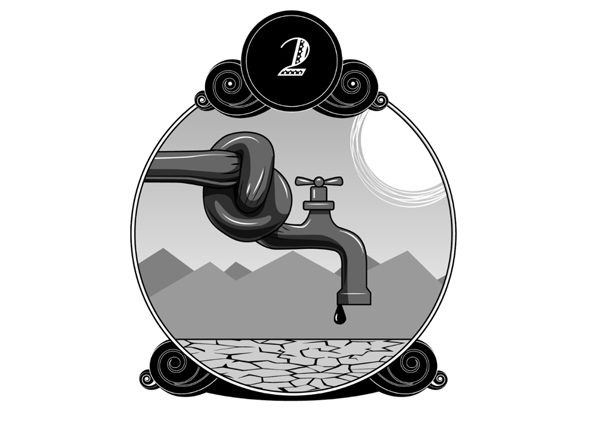
Project Censored cited worsening shortages in Texas due to drought, aging infrastructure, and international water disputes and in Florida, where population growth and groundwater overuse have collided with climate-driven storms and droughts. In Virginia, massive data centers consume up to 5 million gallons of water daily, Grist reported, straining already depleted aquifers.
Globally, the situation mirrors U.S. trends. A joint U.S./UN assessment, “Drought Hotspots Around the World 2023-2025,” described current conditions as “a slow-moving global catastrophe,” with 48 U.S. states experiencing drought in 2024 — the highest number on record. Meanwhile, The Guardian reported that the Trump administration ordered the closure of 25 federal water-monitoring centers, undermining the nation’s ability to track shortages.
Although major outlets like The New York Times and The Washington Post cover droughts, Project Censored noted they typically frame the issue as an economic threat to agriculture, not a direct danger to human life. As of July 2025, Newsweek was the only U.S. corporate outlet to report on the USGS water-availability study.
3.) Indigenous Communities in the U.S. Underfunded and Exploited by Federal and State Governments
A series of 2024-25 investigations by ProPublica, High Country News, and Grist revealed how federal and state governments continue to underfund and exploit Indigenous communities — coverage largely ignored by corporate media. Matt Krupnick (ProPublica) documented the chronic underfunding of tribal colleges, institutions created in the 1970s to serve Native students harmed by generations of violence, dispossession, and cultural erasure. Although Congress set funding at $8,000 per tribal student in 1978, adjusted annually for inflation, the government has never met its obligation. Since 2010, per-student funding ranged from $5,235 to just under $8,700 — far below the roughly $40,000 it would be if federal commitments had been honored — totaling a $250 million shortfall. Under the Trump administration, conditions worsened as at least $7 million in USDA grants for tribal colleges were suspended.
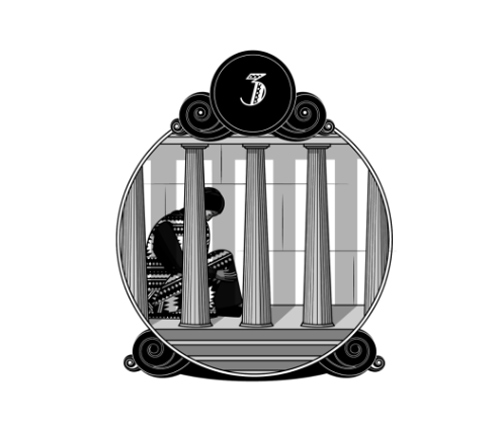
Meanwhile, a joint High Country News/Grist investigation showed how states profit from “trust lands” located inside reservations. These lands, often seized during the 1887 Dawes Act Allotment Era, generate millions through grazing, logging, mining, and oil and gas production, funding state universities, prisons, hospitals, and schools. Earlier reporting traced this system to the 1862 Morrill Act, which granted nearly 11 million acres taken from nearly 250 tribes to states to build land-grant universities.
The new investigation mapped 1.6 million acres of state-managed trust lands within 83 reservations across 10 states, revealing how state control undermines tribal sovereignty and jurisdiction. In some cases, tribes must lease back what was once their own land — an estimated 58,000 acres — paying the state for agricultural or grazing use. One notable exception is the Confederated Salish and Kootenai Tribes in Montana, who secured the return of nearly 30,000 acres through a 2020 water-rights settlement.
Corporate media coverage of these injustices remained minimal, limited mostly to stories about Trump-era layoffs that failed to address the deeper, long-term history of governmental neglect.
4.) Meta Undertakes “Sweeping Crackdown” of Facebook and Instagram Posts at Israel’s Request
Since October 7, 2023, Meta has executed a massive censorship campaign on Facebook and Instagram, removing or suppressing posts critical of Israel or supportive of Palestinians, Drop Site News reported in April 2025. The report called it “the largest mass censorship operation in modern history,” based on internal Meta data provided by whistleblowers and confirmed by multiple sources inside the company.
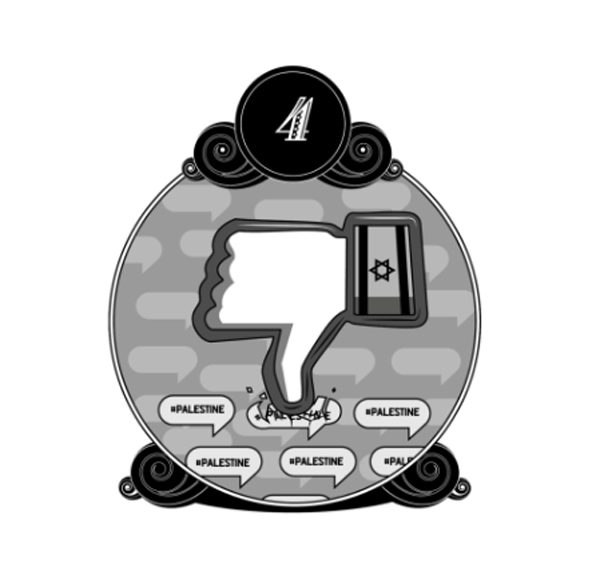
Meta reportedly complied with 94% of takedown requests from Israel — the single largest originator of content removals worldwide — affecting an estimated 38.8 million posts. While most requests were classified under “terrorism” or “violence and incitement,” the complaints all used identical language regardless of the content, linking to an average of 15 posts each without describing the posts themselves.
The campaign disproportionately targets users from Arab and Muslim-majority nations but has a global reach, affecting posts in more than 60 countries. Drop Site News warned that Meta’s AI moderation tools are being trained on these takedowns, potentially embedding this censorship into future automated content decisions.
Project Censored noted that the Council on American-Islamic Relations condemned Meta’s actions, stating, “Meta must stop censoring criticism of the Israeli government under the guise of combating antisemitism, and Meta must stop training artificial intelligence tools to do so.”
The report also cited the Committee to Protect Journalists’ findings that Israel controls coverage of its military operations.
Although independent outlets such as ZNetwork and Jewish Voice for Labour republished the Drop Site News report, no major U.S. newspapers or broadcast outlets had covered the story as of July 2025. Meta shows no signs of ending the censorship initiative, leaving critics concerned about the implications for free expression and the global reach of government-directed social media moderation.
5.) Big Tech Sows Policy Chaos to Undermine Data Privacy Protections
Big Tech companies are actively attempting to undermine consumer data privacy laws, using tactics reminiscent of Big Tobacco in the 1990s, Project Censored reports. Jake Snow documented this in Tech Policy Press and the ACLU of Northern California in October 2024.

Snow outlined a three-step strategy. Step one: “Respond to a PR crisis with a flood of deceptive bills.” Just as tobacco promoted “smoking sections” to weaken bans, Big Tech floods Congress with industry-backed laws that replace meaningful privacy protections with weak alternatives. Snow cites a 2021 Virginia law drafted by an Amazon lobbyist as “just what Big Tech wants.”
Step two: Complain about the “patchwork” of state laws, portraying diverse regulations as chaotic or unworkable. Tobacco did this in the 1990s. Today, tech lobbyists repeat it, even creating websites like United for Privacy: Ending the Privacy Patchwork.
Step three: Use federal preemption to erase state laws and block stronger local legislation. While federal law could set a floor — like the federal minimum wage — Big Tech pushes it as a ceiling, limiting grassroots influence. Snow notes that states and cities historically drive real change. California, for example, enshrined a privacy right in its 1972 constitution, offering protections against modern abuses. Once state legislatures are sealed off, communities with limited access to Congress lose power.
These tactics are not hypothetical. The House version of Trump’s controversial “Big Beautiful Bill” included a provision shielding tech companies from state lawsuits for a decade over negligence, privacy violations, or AI misuse. Though removed by the Senate, similar efforts are expected.
Project Censored noted that while outlets like The New York Times and Time have reported aspects of Big Tech lobbying, no corporate coverage has fully captured the scale, coordination, or historical parallels Snow identified — leaving much of the strategy’s impact unexamined.
6. Amazon and Walmart Use Hostile Surveillance Technology Against Warehouse Employees
Walmart and Amazon are the two largest retailers in America, with a combined workforce of more than 2.7 million workers (not counting Amazon drivers), whose lives have been made more miserable by the use of surveillance technology, as documented in an April 2024 report from Oxfam America. “At Work and Under Watch” finds that “regimes of measurement, surveillance, discipline, and data collection deployed by both companies unduly punish workers, stifle worker voice, and have negative impacts on worker health, safety, and well-being,” as Alex Press reported for Jacobin.

“In 2018, Walmart patented surveillance technology designed for management to eavesdrop on workers, track customer interactions, and oversee all employee movements,” Project Censored noted. “Amazon uses similar tracking methods, including a rating system that scores worker productivity, providing real-time feedback on individual workers’ speed and efficiency.”
Oxfam’s report drew on quantitative data from worker surveys at both companies, as well as qualitative research interviews. “An Amazon worker in North Carolina compares the experience to Netflix’s Squid Game, stating that ‘Every three days, first responders are called to [our] facility, and when I say that it’s like [Squid Game], you see co-workers — you see friends … who pass out, who are taken out of their facility on the stretcher,’ ” Press reported, adding, “If you get injured, a Walmart worker in California explains, it is ‘almost always your fault. Management would not negotiate this with you at all. You would be penalized for it because they would deem that you were working unsafe and ignore all the other possible reasons for why you got injured.’ ”
Key findings include:
- Three-quarters (75% for Amazon, 74% for Walmart) of workers reported feeling pressure to work faster at least some of the time (compared to 58% industry-wide).
- More than half (54% for Amazon, 57% for Walmart) of workers reported that their production rate makes it hard for them to use the bathroom at least sometimes.
- Half of workers (52% at Amazon, 50% at Walmart) report feeling burned out from their work.
- 41% of Amazon workers and 91% of Walmart workers reported experiencing some level of dehydration over the past three months.
“One might argue that unionizing could help workers resist surveillance,” Project Censored noted, but Amazon defeated a unionization effort in North Carolina in February 2025. However, “union organizers believe the vote was the result of Amazon’s nonstop intimidation of its employees,” and an academic study of an earlier organizing effort in Bessemer, Alabama, backs them up, as reported by The American Prospect in March 2025.
“The company manipulated workplace devices to send workers anti-union messages and to ask questions that employees say were intended to assess their support for the union,” Project Censored summarized. “Amazon also monitored the social media activity of its employees — including Facebook groups, many of which were private, and subreddits — to investigate posts that contained complaints from warehouse workers or plans for strikes and protests.”
Amazon, Project Censored said, “is not just tweaking pre-existing AI systems to make unionization harder to achieve for workers but actually converting and weaponizing sprawling systems into new tools for quashing dissent.”
Aside from some coverage of these issues by independent and specialist news outlets, Project Censored noted, “there has been zero corporate media coverage of Amazon and Walmart’s surveillance and mistreatment of warehouse employees or of Oxfam’s ‘At Work and Under Watch’ report.”
7.) Private Companies Reap More than $100 Million To Sweep Homeless Camps in California
Criminalizing homelessness doesn’t solve the problem — in fact, it makes things worse — but it does make some folks a lot of money.
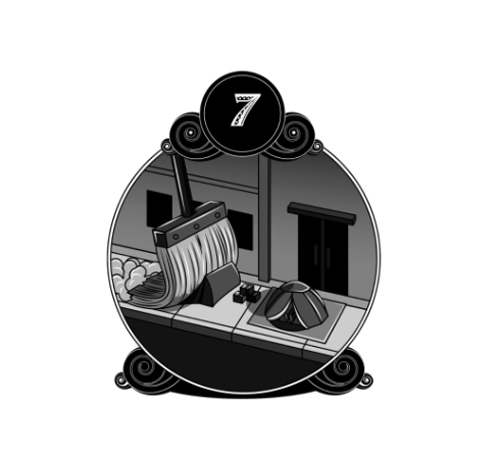
“In total, private firms have been paid at least $100 million to clear homeless camps, an investigation by The Guardian and Type Investigations has found,” Brian Barth wrote for The Guardian on April 16, 2024, but that was a serious undercount, he hastened to add. “The 14 municipalities and public agencies from which spending details could be obtained represent a small slice of such spending in the state.”
Still, the wastefulness was obvious. “It can cost millions to clear a single camp. Marinship, a Bay Area construction company, received $3.4 million to dismantle an unhoused community with about 200 residents,” Barth wrote.
In Silicon Valley, Santa Clara signed a three-and-a-half-year $1 million contract “despite having documented only 264 unsheltered residents at the time.”
And it costs cities even more. “The police presence at one sweep in Los Angeles cost an estimated $2 million,” he noted.
As for what good it does, the answer is almost certainly none on two counts: It doesn’t reduce homelessness, but it does cause serious harm.
“A 2024 RAND study found that policy change — such as encampment sweeps and camping bans — in three Los Angeles neighborhoods temporarily reduced visible homelessness, but within months the unsheltered populations rose slightly in two of the communities and doubled in the third,” Robbie Sequeira reported for Stateline in January 2025.
At the same time, “For homeless people, these sweeps take an enormous toll,” Barth wrote. “Many unhoused residents report being swept over and over, often multiple times in a year. Modeling based on data collected in Boston has shown that hospitalization and death rates are expected to increase significantly among encampment residents after sweeps — researchers projected that overdoses would rise 30%, for instance.”
In 2024, the Supreme Court ruled that punishing homeless people for sleeping outside doesn’t count as cruel or unusual punishment, which allowed police sweeps to confiscate any property belonging to people sleeping on the streets. Since then, “roughly 150 cities in 32 states have passed or strengthened such ordinances,” Sequeira reported, with another 40 in the works at the time. “Bans often allow for steep fines and jail time,” he noted, but as Samantha Batko of the Urban Institute explained, “criminalizing homelessness doesn’t solve the problem. It just punishes people, makes it harder for them to find housing or jobs, and keeps them stuck in a cycle of instability.”
Homelessness is a worsening problem in Europe as well, The Guardian reported in September 2024, but Denmark and Finland are reducing it with a housing-first policy, which shifts focus away from managing homelessness in the shelter system to solving it by providing housing. Finland started first and has only a quarter of the number of homeless families it had in the early 2000s and less than half the number of homeless individuals, with only a small fraction of those “unsheltered,” sleeping on the streets. So, there are policies that work. They’re just not considered or reported on here.
Instead, we have a massive new punitive industry dedicated to destroying lives already in peril.
“While the national corporate media have not shied away from covering the nationwide displacement of homeless people, there has been virtually no coverage of companies profiteering from the homeless crisis in California or other states since Brian Barth’s investigation,” Project Censored noted.
8.) Underreported, Often Deadly Abuses of Police Authority
Every day in 2024, U.S. police killed an average of nearly four people, disproportionately Black and Indigenous. Police killed more people in 2024 than in any year since 2013, when data collection began, and nearly two thirds were in response to 911 calls, the majority of which involved a nonviolent offense or no offense at all.

These were some of the topline results of analysis by Mapping Police Violence reported by Sharon Zhang in a February 2025 Truthout article. “Police killed at least 1,365 people in 2024,” and “Black people in the U.S. were 2.9 times more likely than white people to be killed by police,” and they “were more likely than white people to be killed when unarmed or not posing a threat. The disproportion was even greater for American Indians and Alaska Natives (3.1x) and for Native Hawaiians and Pacific Islanders (7.6x) compared to white people.”
There were only 10 days in 2024 “when police did not kill anyone in the U.S.”
An earlier report covering 1,260 instances found that officers were charged with crimes only in nine cases.
Zhang noted that these figures line up with reporting from The Washington Post that 2024 was the deadliest year on record for police violence, with 10,429 people killed by police in the last decade. However, the Post was discontinuing its tracking.
“The change comes as the publication’s billionaire owner, Jeff Bezos, has exerted an increasingly right-wing influence on the paper,” Zhang observed.
This came at the same time that Trump shut down a federal database tracking misconduct by federal law enforcement officers, which had been in existence only since December 2023.
“Mapping Police Violence was created by Samuel Sinyangwe, who is also the founder of Campaign Zero, an organization that advocates for a society not reliant on policing,” Project Censored noted.
Its findings have been neglected by the establishment press, with two exceptions they cited: one USA Today story in February 2025, using its data “for a report on demographic and geographic patterns in police killings in the United States,” and a May 2025 New York Times story reporting that “police killings keep rising, not falling,” since the murder of George Floyd in 2020, touching off the Black Lives Matter protests, the largest civil rights protests in U.S. history.
Relatedly, “Routine police traffic stops often turn deadly, especially for people of color,” Project Censored noted, and this was the subject of another ignored investigation, specifically focused on the Chicago Police Department (CPD), carried out by Bolts and Injustice Watch and published in August 2024. A 2003 Illinois state law requires law enforcement agencies to report specific details of every traffic stop to the state Department of Transportation, but the investigation identified 200,000 unreported stops.
“The significant number of undocumented traffic stops threatens to undermine any reform efforts and obscures the true impact of the police encounters from oversight groups, preventing them from fully understanding which drivers are stopped, and where in the city they are concentrated,” journalist Pascal Sabino explained.
He had previously noted that these undocumented traffic stops amount to a new form of “stop-and-frisk,” a controversial practice that allows police to search persons, places, and objects without making an arrest. CPD had officially moved away from using stop-and-frisk following the “botched investigation and cover-up” of the murder of teenager Laquan McDonald, but now, Chicago police “fish for guns and evidence of other crimes … by stopping cars rather than pedestrians,” Sabino wrote.
While The New York Times and others have covered how routine police stops often turn deadly, Project Censored noted, there had been no coverage of this exposure of “the extraordinary number of illegal, undocumented traffic stops by Chicago police.”
9.) Antarctic Ice Sheets Approaching Tipping Point, Studies Find
Rising ocean temperature could lead to a tipping point in the melting of Antarctic ice sheets, potentially triggering “runaway melting,” according to a June 2024 article published in the journal Nature Geoscience and supported by two other recent studies.

Robert Hunzikera in CounterPunch and Matthew Rozsa in Salon each reported on this research, warning of potential “tipping points” in Antarctic ice melt.
“Scientists have debated whether a ‘tipping point’ exists for this ice sheet, or a moment when the effects of this melting would be suddenly both irreversible and catastrophic,” Rozsa said.
Hunzikera summed up, “A new study raises the bet on sea level rise, maybe by a lot.”
Drawing from recent evidence documenting that “relatively warm ocean water can intrude long distances” beneath the ice sheet and reach the grounding line — where the ice rises from the seabed and starts to float — the June Geoscience article warned that such “long intrusions have dramatic consequences for sea-level-rise contributions from ice sheets.”
It proposed a new model accounting for these effects, which weren’t included in previous ice-sheet melting models.
As Rozsa explained in Salon, “When warm water moves under a grounding line, the ice melts at an accelerated pace and could pass a threshold where the body’s ultimate collapse is inevitable. While this process occurs, sea levels will rise at a much faster rate than currently predicted, resulting in millions of people from coastal communities being displaced over the upcoming decades and centuries.”
In addition, “new studies show that small increases in ocean temperatures can have a big impact on melting,” Hunziker wrote. “These new facts raise very serious concerns about all projections of sea level rise.”
At the same time, ocean temperatures have been setting new records for over a year, and an earlier paper in Nature Geoscience offered stark evidence of how quickly massive ice loss could happen.
Researchers examined a 2,000-foot-long ice core and discovered that 8,000 years ago, at the end of the Ice Age, part of the ice sheet melted by 450 meters in about 200 years.
“Antarctic ice meltdowns can happen much faster than current sea level studies assume,” Hunziker wrote.
Project Censored said, “Sea levels would begin to rise significantly in a matter of decades, rather than centuries, posing severe challenges for coastal cities, according to experts.”
Rozsa also cited a May 2024 study in the journal PNAS which predicted that “Antarctica’s so-called ‘Doomsday Glacier’ is nearing collapse, as revealed by high-resolution satellite radar data that shows Thwaites [Glacier] is being flooded with warm sea water,” he explained.
It’s “known as the ‘Doomsday Glacier’ because it could greatly contribute to sea-level rise if it collapses,” he wrote in an earlier story. “And new evidence suggests that’s exactly what’s happening.”
Project Censored reported, “To date, U.S. corporate media have not covered these recent findings, especially Bradley and Hewitt’s model of grounding-zone melting of ice sheets. Independent outlets, including Salon and CounterPunch, have provided more substantial coverage of this study. Jessica Corbett of Common Dreams reported in February 2024 on the study that found evidence of rapid ice loss in the past, which CNN, the science news magazine Eos, and the environmental news site Earth.com also covered.”
10.) Working Class Severely Underrepresented in State Legislatures
People considered “working class” make up half the country’s labor force but only 1.6% of state lawmakers, according to the 2024 results of a biennial study. That’s 116 of the nearly 7,400 state legislators, down from 1.8% in 2022. This seriously distorts the legislative process, both in terms of issues considered and solutions proposed, as noted in a March 15, 2024, Stateline article by Robbie Sequeira.

“The only person that’s going to advocate for working-class people is a working-class person,” said freshman Idaho state Rep. Nate Roberts, a lifelong electrician.
Minnesota state Rep. Kaela Berg, a flight attendant who ran for office while living in a friend’s basement, said, “Government works best when all types of personal experience are at the legislative table. I knew that I was uniquely able to speak on issues that my other colleagues never experienced.”
The study by political scientists Nicholas Carnes and Eric Hansen defined “working class” as “those who have currently or last worked in manual labor, the service industry, clerical, or labor union jobs,” representing 2% of Democrats and 1% of Republicans. Ten states have “no working-class state lawmakers.”
Some members of the Utah legislature (which includes police officers and teachers) objected to the characterization that they had no working-class members, but a 2024 Guardian op-ed explained that even including professionals like teachers and nurses, the number of working-class Democrats would still be under 6%.
“Low salaries for working-class jobs are one reason why members of the working class rarely run for office,” Project Censored noted.
Amanda Litman, co-founder of Run for Something, which recruits candidates for down-ballot races, also cited a lack of access to money from family or partners, as well as gatekeepers who typically recruit candidates based on their independent money-raising ability.
Making things worse, only five states allow public financing options for state legislative candidates.
In Idaho, as a lone voice, Roberts spoke out against labor rollbacks “such as a Senate bill that would repeal limits on the number of hours and how late in the day a child under the age of 16 can work,” Sequeira reported.
Pushback for opposing regressive child labor laws still shocked him, Roberts said.
In Minnesota, conditions were far more favorable. Berg helped pass the Minnesota Miracle, which included a major package of labor-friendly laws as well as a slew of tenant-landlord laws with renter protections.
“Berg said the backgrounds of working-class legislators like herself can inform statehouse conversations, even if lawmakers with different backgrounds support pro-labor policies,” Sequeira noted.
In contrast, Project Censored notes the over-representation of wealth in our politics: The majority of the members of the 116th Congress were millionaires, with the 10 richest having estimated fortunes in excess of $30 million.
There’s a new move to change things, Project Censored noted: the formation of a political action committee called the Working Class Heroes Fund, aimed at organizing working-class voters and funding working-class candidates “across party lines to give the working class a seat at the table.”
It was started by Dan Osborn, a pipe-fitter and union leader, who ran a surprisingly strong race for a U.S. Senate seat in Nebraska as an independent in 2024.
While there’s been no national corporate news coverage of the study on the class background of state legislators, there has been occasional mention in opinion pieces in both The New York Times and The Washington Post.