

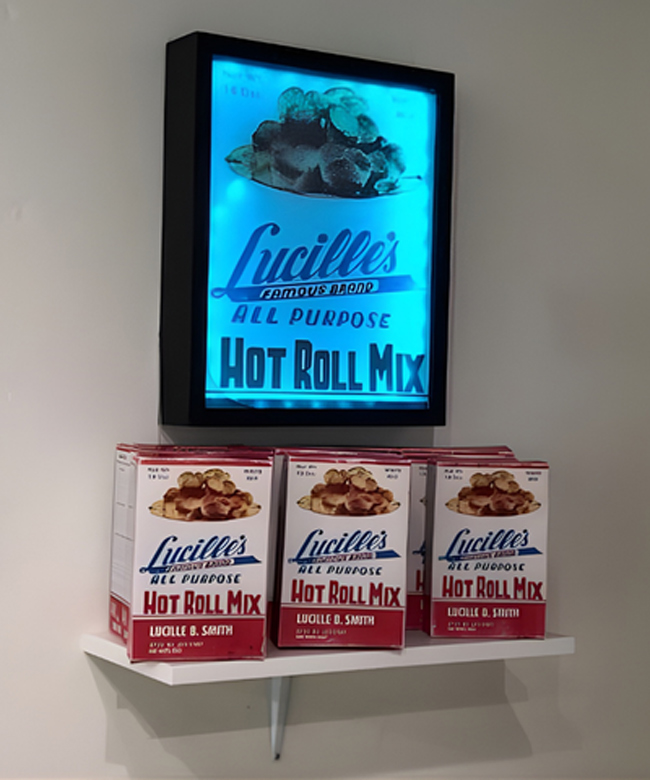
In the early 1940s, St. Andrews United Methodist (522 Missouri Av, Fort Worth, 817-336-2117) asked one of their parishioners, local caterer Lucille Bishop Smith, to help with a fundraiser. The end result was Lucille’s All Purpose Hot Roll Mix, a simple premixed powder that made baking easy. Just add water, mix, and bake for fresh rolls without any hassle.
Within 30 days, the event had raised $800 in profit for the church — nearly $10,000 in today’s dollars. The fundraiser ended. The church was satisfied. But the orders didn’t stop. Customers who tried the mix wanted more, and soon their friends did, too. Grocery stores began to reach out. What started as a church project quickly became a real business. By April 1948, Smith was selling more than 200 cases of hot-roll mix every week.
When grocery stores started selling Lucille’s All Purpose Hot Roll Mix, it became one of the first hot-roll mixes available in American stores. This innovation helped lead to the convenience cooking that would later become common in American kitchens. In 2004, the Cleburne Times-Review said 21 different products could be made from the base mix.

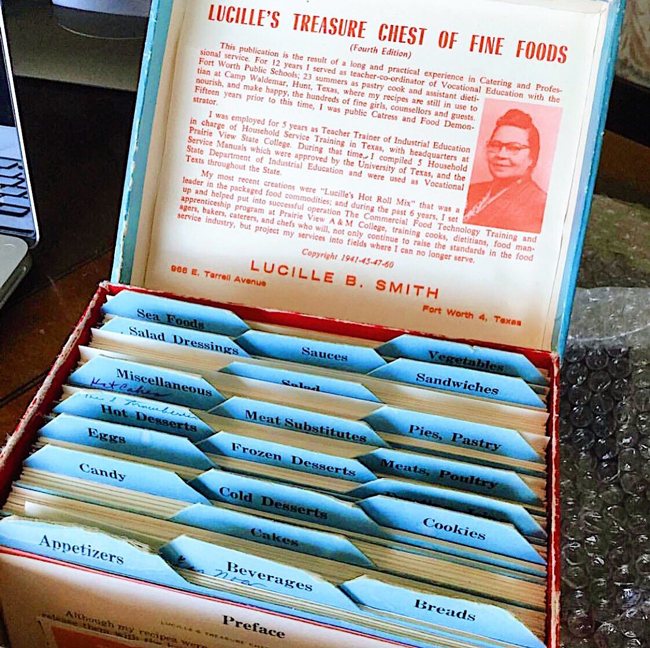
In 1941, Smith published Lucille’s Treasure Chest of Fine Foods, a cookbook that came as a box of recipe cards. It was released in several editions and later became a collector’s item. How collectible? Well, according to Atlas Obscura, one sold at a virtual rare book fair in 2020 for $1,650. Currently, the listings on Biblio and Etsy are $4,500 and $5,500, respectively. As one lucky UTA staffer discovered, there is one at UTA’s Libraries’ Special Collections and Archives.
Courtesy Prairie View A&M University
In honor of Women’s History Month last year, UTA University Archivist Sara Pezzoni sought out the recipe box for Archives Test Kitchen, a blog in which she tests historic recipes to highlight culinary treasures within the library’s collection. She tested two recipes: Lucille’s Famous Chili Biscuits and Banana Nut Bread.
The biscuits, Pezzoni said, “reminded me of Pillsbury crescent rolls but a bit more bland, which is probably why it needs to be topped with chili and cheese.”
Her assessment that they were designed as vessels for the chili is spot on. The recipe even suggests using a ball scoop to make a marble-sized hole in the top of each. As for the banana bread, it was a success.
“I can definitely appreciate a moist cake/loaf,” Pezzoni said, “and this delivered!”
Check out archival images of Lucille Bishop Smith and six other notable women in the digital archives at the UTA Libraries.
In 1966, Fort Worth declared April 28 as Lucille B. Smith Day. In 1968, she became the first Black woman to join the Fort Worth Chamber of Commerce. And she kept going. In 1974, at the age of 82, Smith founded Lucille B. Smith’s Fine Foods, Inc., a family business where she served as president. Their nonprofit, Lucille’s 1913, serves more than 600 meals a day to people in need and offers training for restaurant careers.
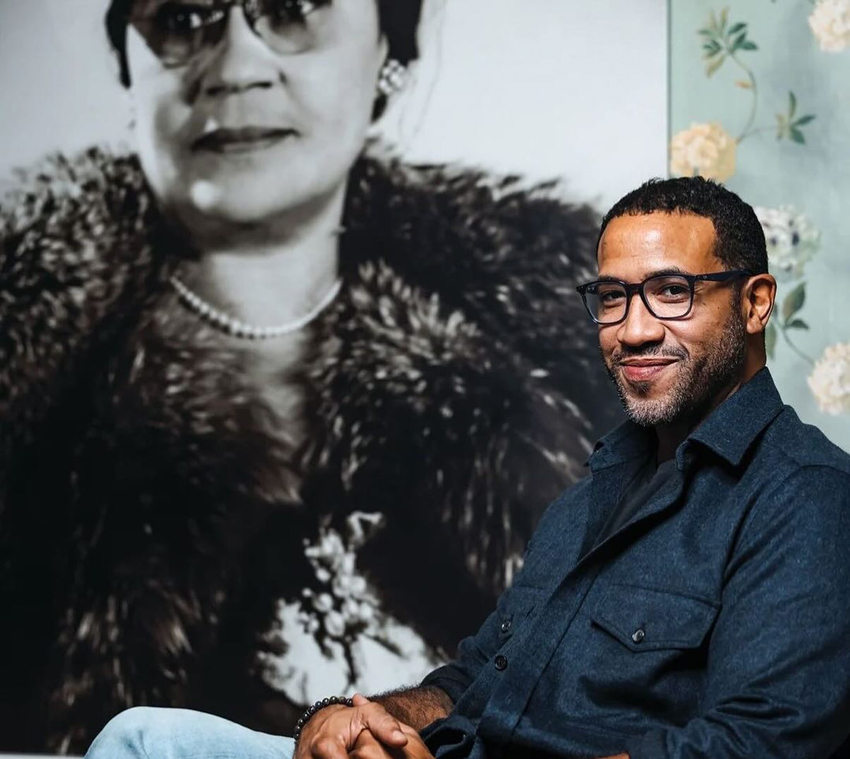
Toni Tipton Martin, Courtesy Lucille’s
Lucille B. Smith died on January 12, 1985, at the age of 92. Her funeral took place at St. Andrews, the same church whose fundraiser had started her hot-roll mix business many years before.
Her legacy lives on through her great-grandsons, Ben and Chris Williams, who run the nonprofit and namesake restaurant, Lucille’s, in Houston (5512 La Branch St, 713-568-2505). Grandma’s chili biscuits are still on the menu. They are $13 as an appetizer but are often available as a happy-hour special. Along with housemade chili and cheddar cheese, they are served with harissa cream, a North African chili paste-based sauce.
This dining destination has been nominated for a James Beard Award and is known for its refined Southern cooking. As my husband and I are headed to Houston for Hell’s Heroes, a two-day metal festival, later this month, I now have a new stop on my bucket list.
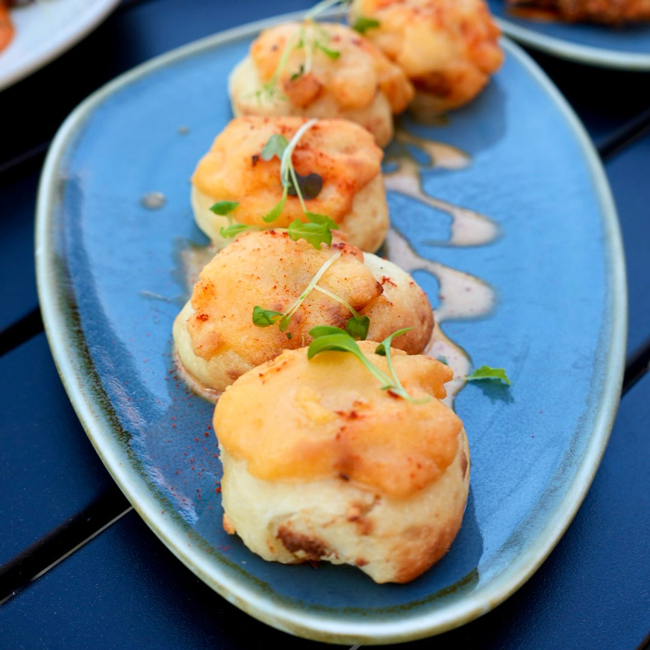
Courtesy Lucille’s