

A wave of nostalgia hit hard in 2016 with the debut of Stranger Things, taking us back to the ’80s, including the cassette tape.
Not sure if I should admit this, but I spent the first money I ever earned myself after appearing in a local commercial back in the early 1990s on cassettes, specifically Bel Biv Devoe and MC Hammer. I played those tapes to death. Then I taped over other tapes from the radio. Don’t tell. It’s too late.
Rewinding to my teenage years, I credit cassettes with giving me a voice on paper. I won’t divulge the details, but one time I was grounded all summer. All I had was a crappy typewriter that my mom had picked up from some thrift store and my walls. No electronics, so I opened up my cassettes and retyped the lyrics over and over until they were sewn into my heart. When I couldn’t bear to type them anymore because time was no longer tangible to me, I made up my own. Fast-forward to now, and I get the pleasure of covering stories about what I love. My love for writing has only grown since then.

Then CDs came around, and they were fun but less portable in my humble opinion, and I couldn’t pirate music from the radio anymore. I was forced to live within my financial musical limits. Eventually, I returned to vinyl as well and let my cassettes go along with the car that could still play them.
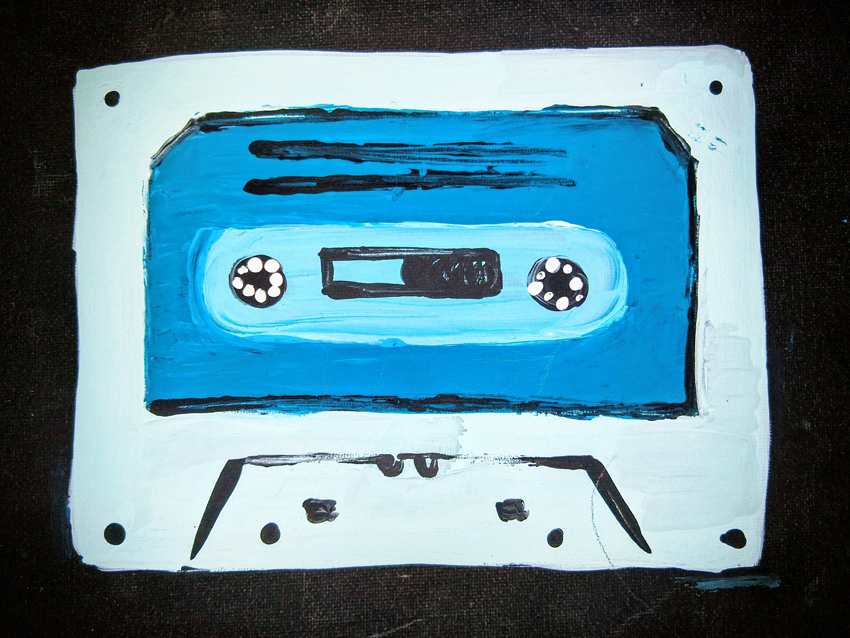
Maybe it was the oversaturation of digital media that people grew weary of. Or maybe people just prefer owning a physical item rather than something in a cloud far away. Cassette tapes had more than just the music. They had booklets of goodies, including pictures of the bands, lyrics, notes, and explanations. They fed morsels of trivia to the audiophilic soul.
In the 2010s, underground artists and live–based groups went back to cassettes and started a rumble. By the 2020s, major artists like Billie Eilish and The Weeknd were adding cassettes to their gallery but at a price much higher than artists who sold locally, even though the major record labels could take the hit with quality cassettes sold at a more affordable price.
There are those who buy cassettes now for the novelty or for the need to complete something, to hold their favorite album in all physical formats, to own a real piece of something in a way that digital media does not satisfy.
“As a label,” said Wyatt Parkins, founder and owner of Fort Worth-based Saint Marie Records, a label specializing in outre musics like shoegaze and post-rock, “cassettes are a cool optional format that makes sense for certain projects: smaller runs, lower barrier to entry, and the packaging can be really fun. What I like most is that tapes feel personal and handmade in a way. They’re still a physical object people interact with, not just a shelf item.”
Local garage-punks Mean Motor Scooter are one popular band that sees the upside in releasing their music on cassette.
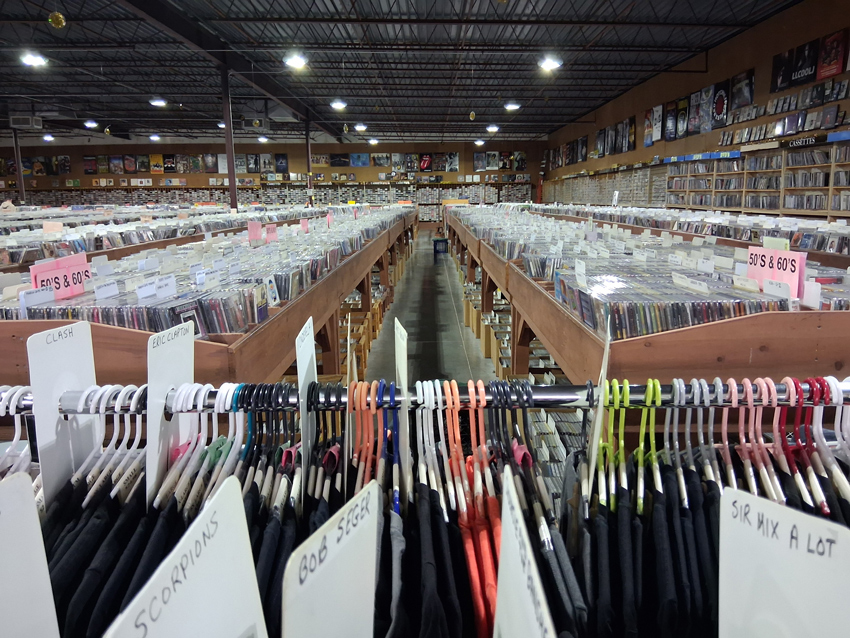
Photo By Kena Sosa
“Response is great,” said frontperson Sammy Kidd. “They’re cheap. Five dollars a cassette is an easy way to support a band you love while not having to break the bank on a $25 vinyl, for young kids who don’t have a lot of cash to spend on merch. But way more people buy them than you might realize. We’ve sold out a ton of releases strictly on cassette. Cassette has a very specific sound. It’s very full, and you can hear things on it that no other format picks up.”
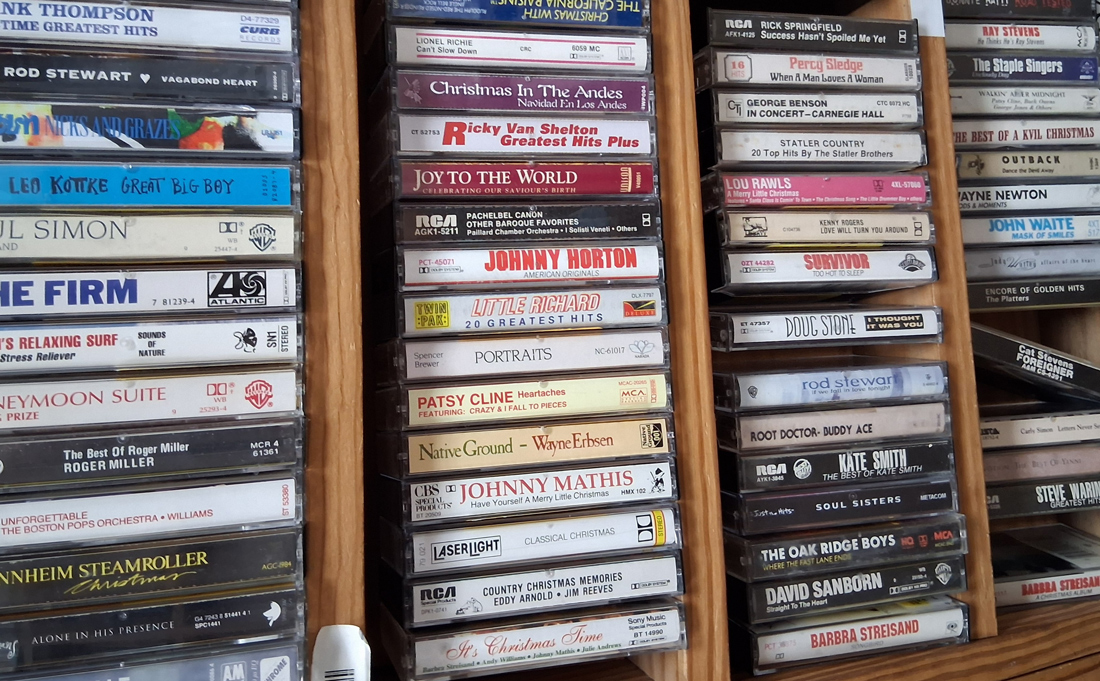
Forever Young Records in Grand Prairie has a warehouse-length wall of cassettes for around $5 each, and the collection of rare cassettes has gems untouched by time. New releases are by the front. The collection is easily in the thousands, possibly in the tens of thousands. Employees say they do sell quite a few, especially to younger listeners.
Young people are buying up cassettes because, compared to a $25-or-more vinyl record, cassettes are generally cheaper. There’s also the novelty of it. There is a warmer sound to cassettes that feels different than vinyl and CDs, plus a more real feel than streaming. There is the physical interaction with the music, keeping the listener connected by flipping sides, rewinding, and fast-forwarding.
“We release in all formats,” Kidd said. “We choose to do it because we want all formats available. Cassettes, vinyls, ads, streaming — they all sound different, and each gives the release a perspective from a different point of view.”
Fort Worth’s Dreamy Life Records releases signed artists on cassette. Saint Marie serves as a cassette label as well. But for recording, many artists prefer to go back to the roots of cassette: at home.
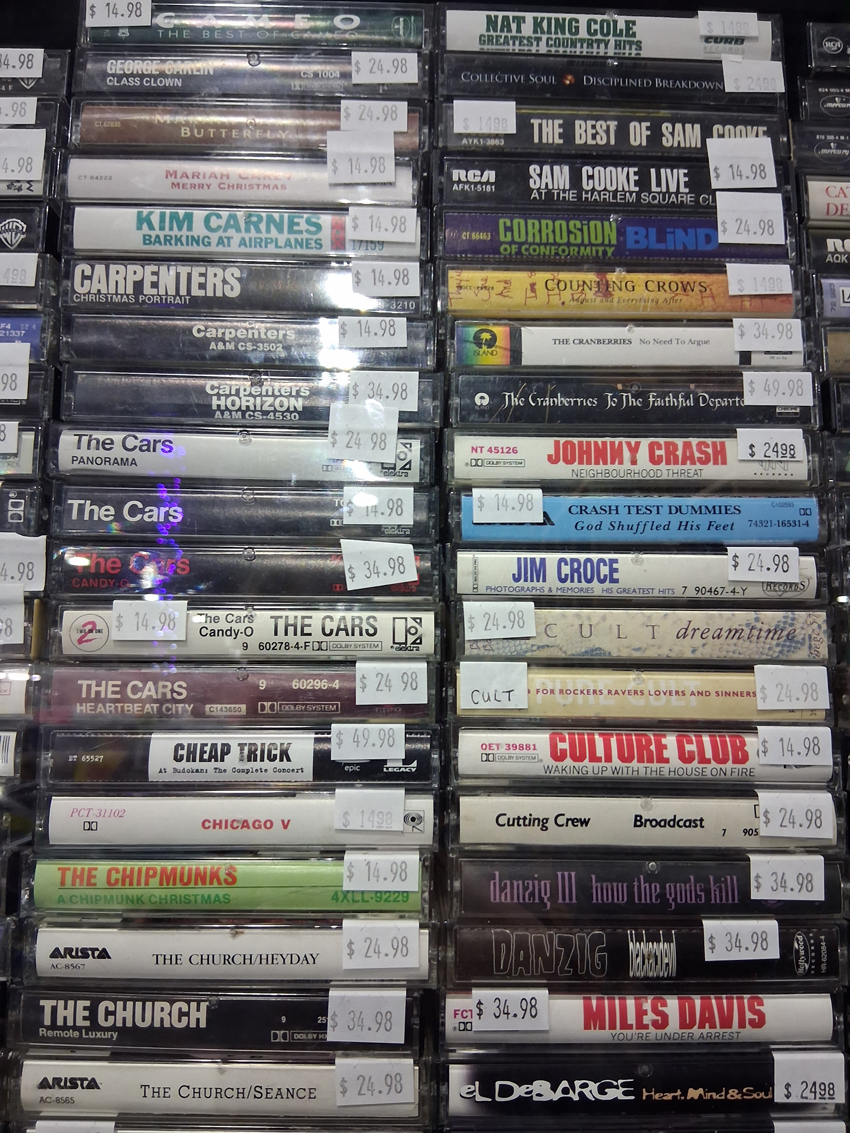
Photo By Kena Sosa
“Only cons are sometimes the making of them trips up, and we end up with a blank cassette,” Kidd said. “I have to check them all to be sure, which is why we make our own instead of letting a company make and wrap them up for us, like we’ve done in the past. Doesn’t happen often, but we can’t allow it to happen at all. So, we just DIY it now.”
A lot of record stores do have a cassette stash now, and many are filled with used cassettes or new releases by mainstream artists. Saint Marie has about 50 to 100 new titles this way. Local artists are making a dent in the market, too. Saint Marie’s Parkins said that local punk band Antirad is a big seller.
Parkins also notes that even though there are not a lot of local bands on the cassette shelf, he would love for more to come in and pitch the opportunity to change that. He also says there are plenty of steady and repeat buyers for the format.
Parkins is also a member of We Are Loveblind, a band that wanted the “trifecta” release on all major formats: vinyl, CD, and cassette in addition to digital. Admittedly, the vinyl has been the biggest seller of the three, and CDs sold well, too, so much so that he had to get extra copies to meet demand. The cassettes, he said, found homes with other audiences.
Some artists override the record–store option and sell their cassettes at shows.
“I chose cassettes because my supporters really liked the idea of having something nostalgic and tangible to take home after my shows,” said Fort Worth rapper 88Killa. “The projects were still available to stream online, but almost everybody treated the cassettes like collector’s items.”
88Killa said he sold out of his two cassettes releases at his shows.
The pattern with cassette lovers seems to be just that, a physical and kinetic experience to connect to the emotional experience of the music. Some like 88Killa only sell cassettes at performances to give the listeners who come out in person an upgraded experience over those who stream from home. After all, it is a different level of support.
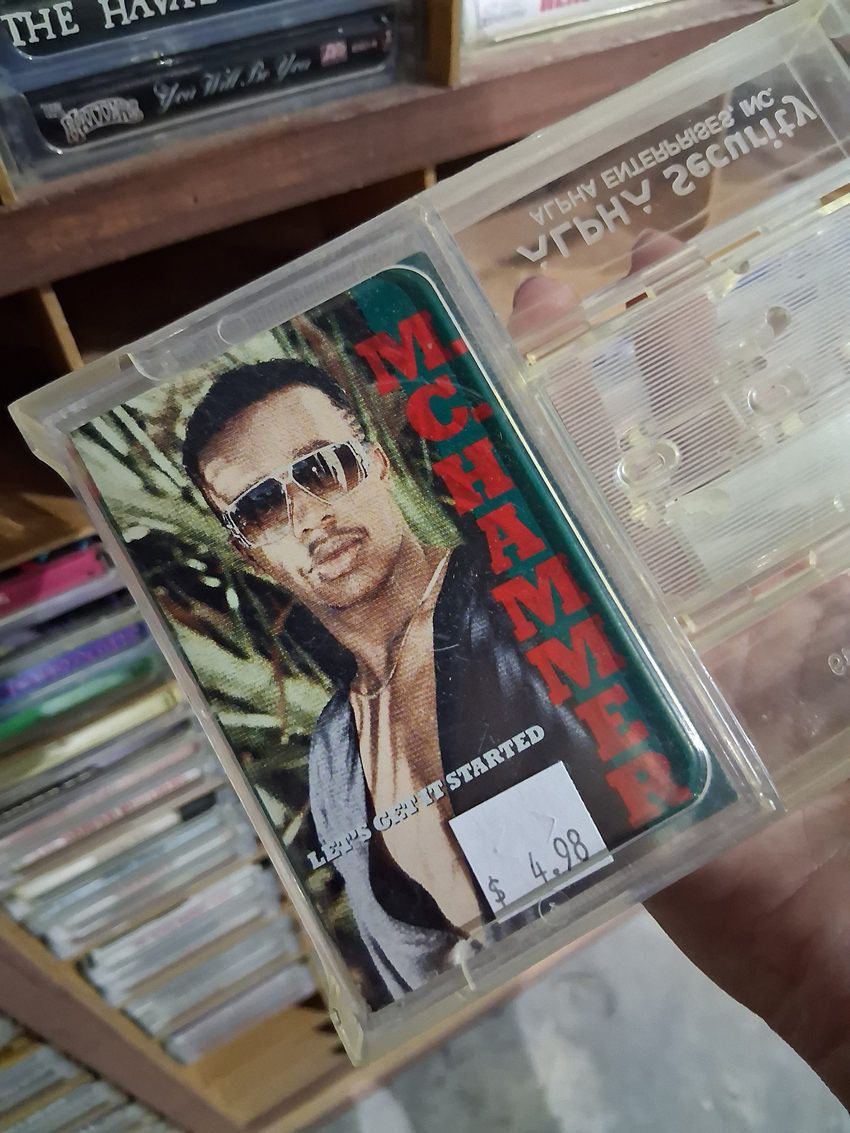
Photo By Kena Sosa
Streaming alone is hardly profitable unless you are a mainstream artist. The purchase of one physical recording regardless of the format benefits artists far more, and you get something tangible to actually own. In a world where being digitally savvy is a requirement, more and more daily functions that we as human beings want to still reach out and touch are forced into the digital realm. Digital requires us to give away our information, log in, put lists together, to search. It is work for the listener and little profit to the artist, who is more qualified than a streaming service to curate a hot plate of music served up in album form in a way I can savor.
Not everyone is jumping on board with cassettes the way they have with vinyl, but the resurgence has been around long enough that it feels more like a leveled-off niche.
Considering how little streaming pays ($0.003 cents on Spotify), if an artist can make cassettes through a company like Mastertrack, which will produce 100 cassettes for $362, or $3.62 each, then even if you sell them at $5 in a hand-to-hand transaction, your profit is $1.38. It would take from 138 to 1,000 streams to make that same amount of money. Grassroots is proving to be a smart business move, not only in terms of profits but in maintaining control over the artist’s image and creative rights.
If you are in the business of supporting music and musicians, buying something from them is always the best way to go. Support record stores by buying music there. Many new releases on vinyl and other formats come with a QR code to download and play digitally if you are worried about not being able to spin your new music in the car.
If you don’t believe me, for only $5, I got a full Tracy Chapman album and the lyrics for me to read, a conversation piece for my shelf, and the satisfaction of knowing that this purchase helps keep independent record stores and artists in business.
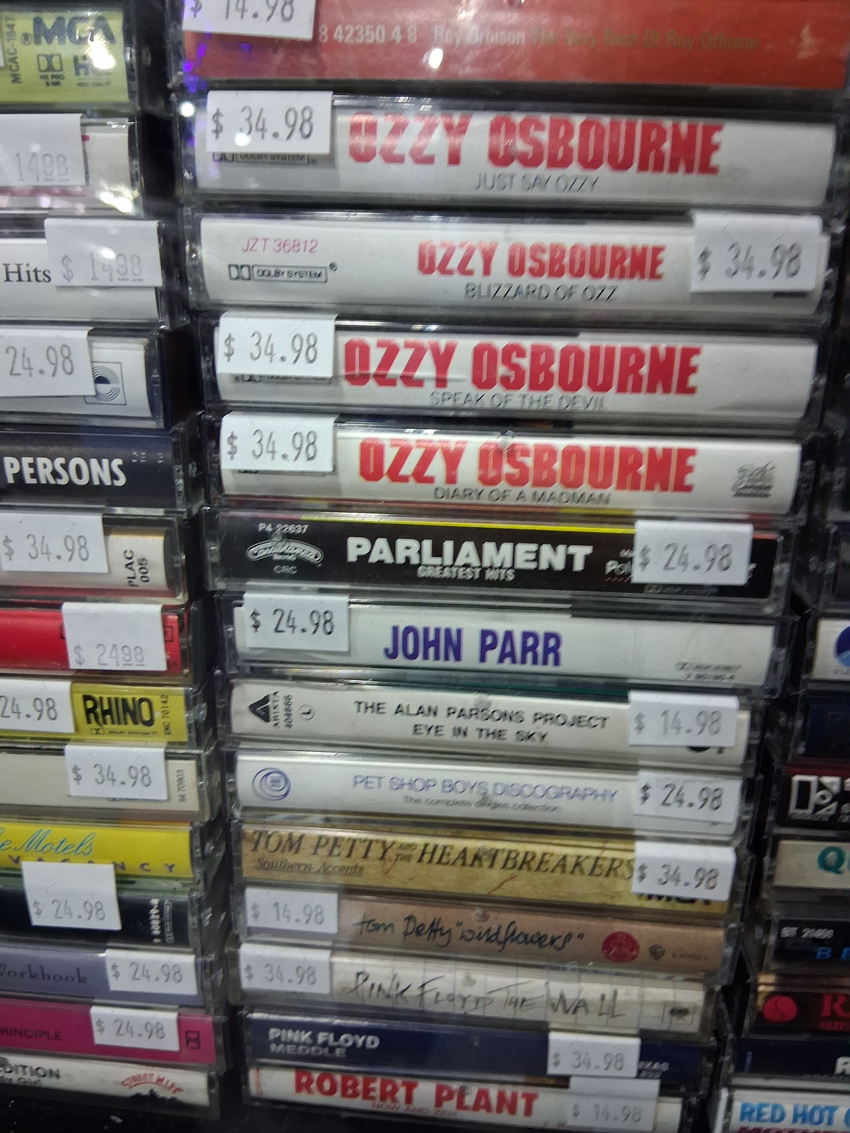
Photo By Kena Sosa
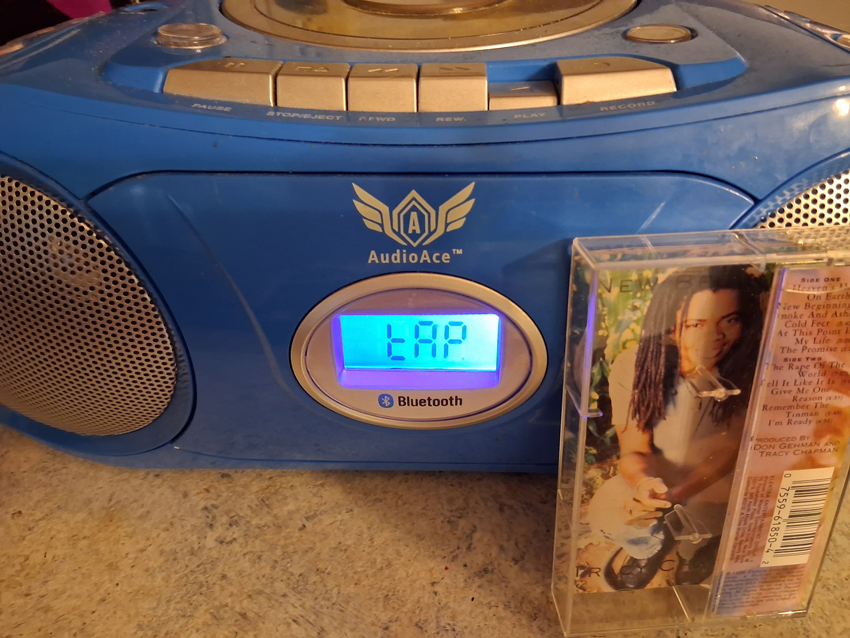
Photo By Kena Sosa