
This is not how I wanted to return to writing, after more than a year back in Fort Worth, but the death of Carol Ivey brings me back to my desk to pen this memorial for one of Fort Worth’s finest. It started with a text from Weekly Editor-in-Chief Anthony Mariani after learning Carol had died unexpectedly on Sun, Feb 8. I must have stared at the message for 20 minutes, going back and forth about whether anything I wrote could memorialize Carol the way that she deserves to be remembered. I took on the assignment because I knew Carol, not as well as her dozens of close friends or the many artists she supported through her advocacy and presence, and because I was asked, I can almost hear her say, “Just write what’s on your mind.”
My reaction to the news of Carol’s death was to reach for all the proof of her presence in my life and the lives of the artists whose lives she touched. I managed to pull up an interview I did with her for a series at another publication, then searched iCloud, thumb drives, and CD-Roms dating back to the early 2000s. What I found — old emails, photos, videos, and texts — are a way of remembering and bringing some comfort for the loss that my fellow artists and all who knew her undoubtedly feel.
I can’t recall when I met Carol. She seems to have always been around at most art openings or opportunities to advocate for artists. She and her husband, Herb Levy, were inseparable and present that way. They spent their last evening together catching a film at the Modern Art Museum of Fort Worth, a place where I ran into them more times than I can recall. From exhibition openings to lectures, or programs she participated in at other Fort Worth Museums, Carol was embedded in this city.
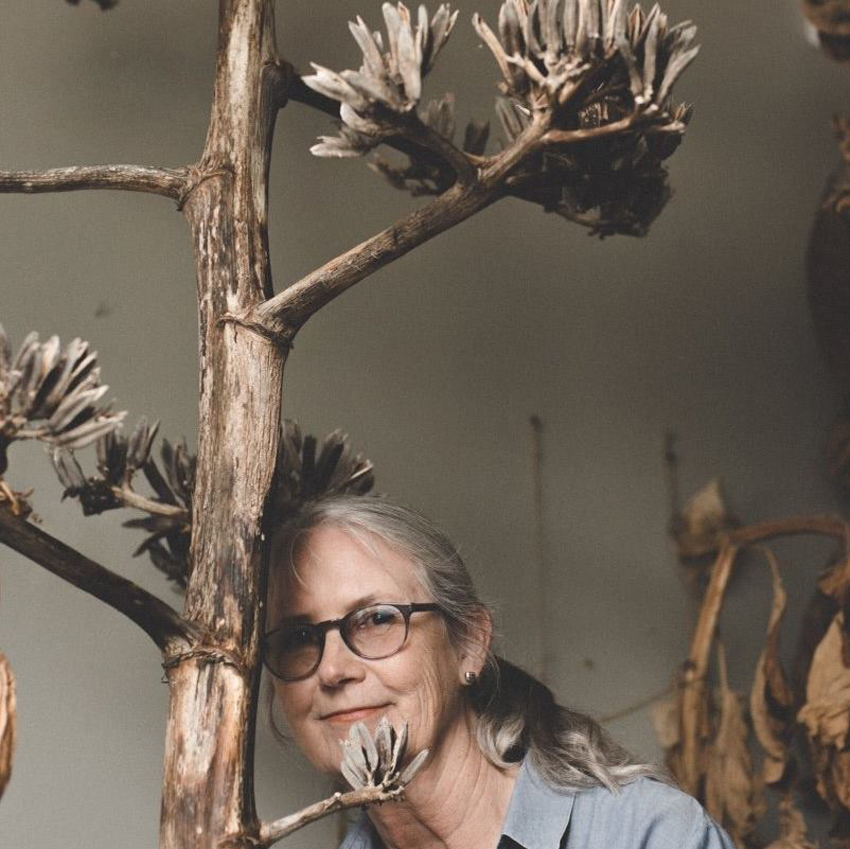
Evie Marie Bishop

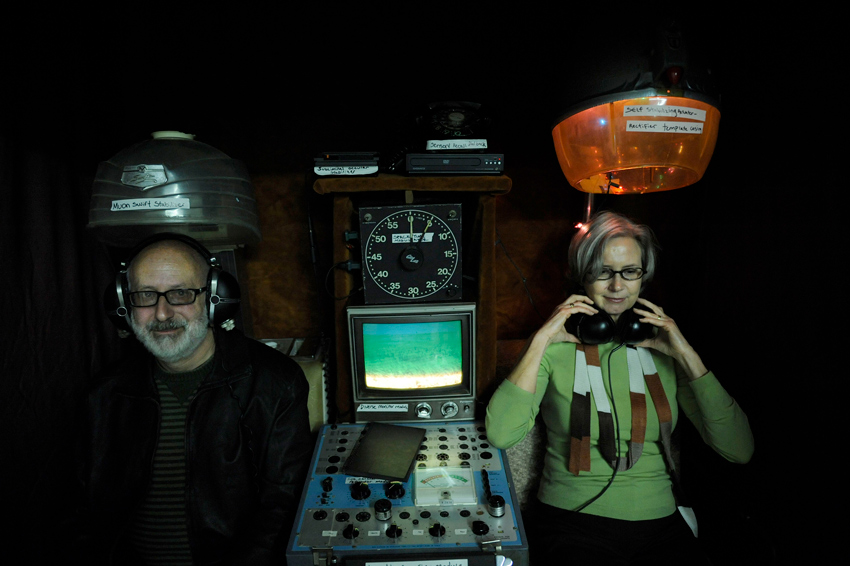
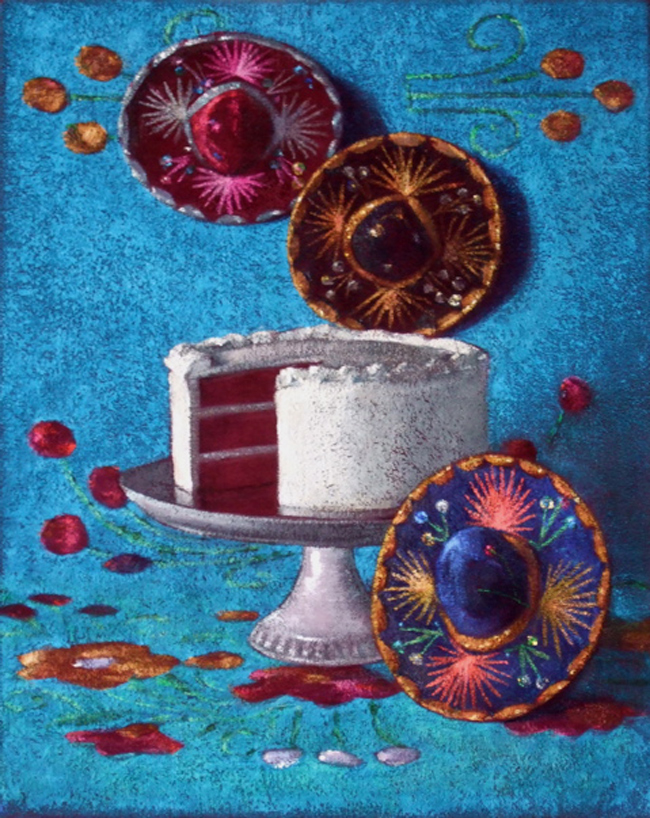
The Carol I knew was from across the table at crawfish boils at Lori and Tom Diel’s, Gallery Night tours, studio visits, and collaborations with one Frank Artsmarter (who may or may not be yours truly). She was supportive. Carol and Herb didn’t miss a single exhibition in DFW that I was a part of, and I could count on her if I had a silly project in mind, especially if it brought our fellow artists together. Besides attending almost all of Artsmarter’s shenanigans/shows and winning a couple of bids for art from thrift stores, she also agreed to make a velvet painting, one of several by our fellow artists, to benefit the Emergency Artist Support League (EASL). Carol and I served together on the EASL advisory board for a couple of years after she encouraged me to join.
My stories are but a few of the many out there that others could share, from artists and colleagues across Seattle, Austin, and Fort Worth — cities where Carol spent parts of her life building relationships — to Lisbon, Terni, Tuscany, and Fort Worth’s Tandy Hills, where she taught and mentored students. Carol loved nature, and when she wasn’t in her studio on East Lancaster Boulevard, she was out at the Tandy Hills wildlife area or some pastoral scene on a clear day. In one conversation with me, she joked that she collected mostly dead things, but that was her all-encompassing perspective on preserving and fighting for our natural environment.
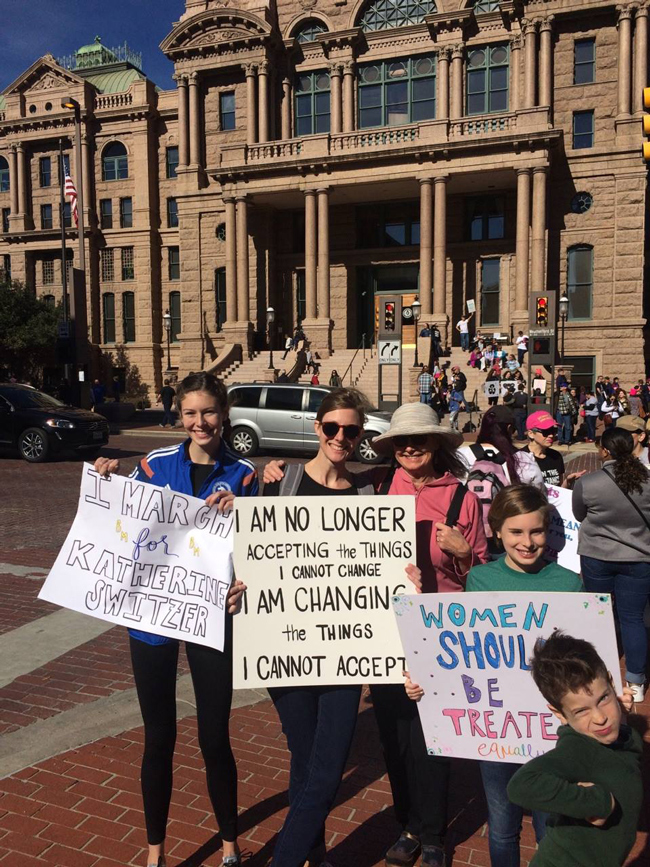
Carol’s civic life included marching in advocacy for women’s rights in 2017 and 2018, against genetically modified organisms (GMOs) in our food supply, and for voting.
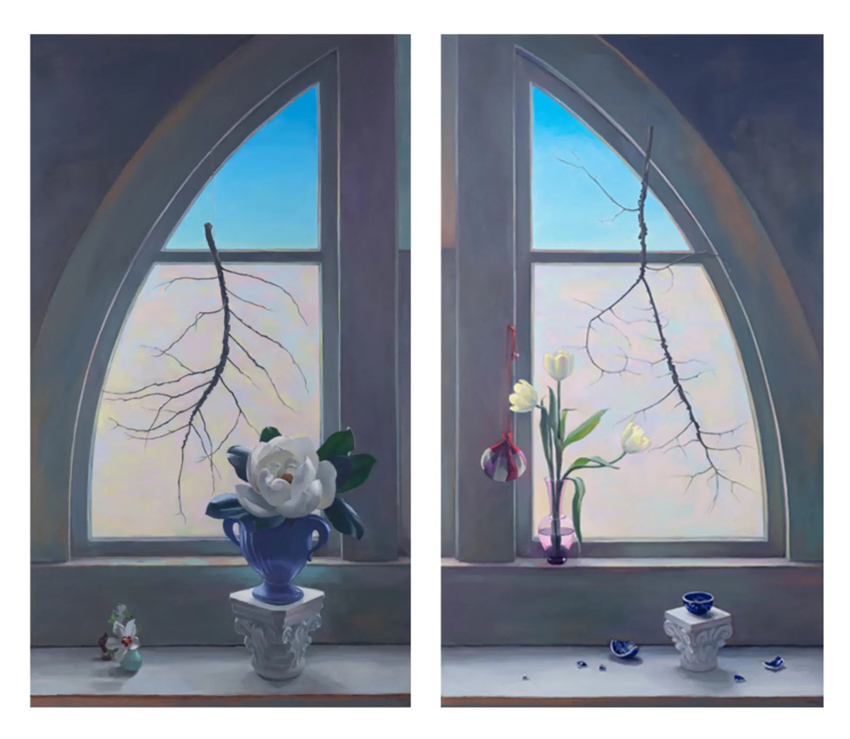
In May 1978, as Carol detailed in an email to me back in 2022, a group of women artists including Rita Starpattern, Barbara Sturgill, Yvonne Burke, Melissa Miller, Claudia Reese, Mary Pillot, Linda Stanton, Deborah Vanko, and Millie Wilson banded together to restructure the seminal Austin organization Women & Their Work, which they were all instrumental in forming. Part of that 2022 conversation with Carol revolved around her participation in the early years of the group and her strong advocacy for her fellow artists to be remembered for something they created that built a legacy for women artists in Texas.
Courtesy the artist
Born Janice Carol Ivey on May 2, 1949, in Sherman, Texas, to Richard H. Ivey and Juanita (Cook) Ivey, Carol attended Denison public schools and Highland Park High School in Dallas. She later graduated in 1971 with a BA from the University of Texas at Austin, where she stayed and exhibited and taught at the Laguna Gloria Gallery, which later became The Contemporary Austin.
Following her time in Austin, Carol moved to Seattle in 1980 and stayed until 2000, returning to Texas (Fort Worth) and marrying Herb on May 17 of that year. Her teaching practice included classes at community colleges across the area, as well as TCU and numerous workshops in Texas and beyond.
Carol’s CV reflects the incredible breadth of her studio work, from being a finalist in the Hunting Art Prize (Houston) to winning awards across multiple years from the organization Preservation Is the Art of the City. She has also exhibited at the Albuquerque Museum, Amarillo Museum of Art, Aspen Art Museum, and Laguna Gloria Art Museum, not to mention showing her work in dozens of solo exhibitions and 60 group shows spanning six decades. Her gallery affiliations include Artspace111 and Hunt Gallery (San Antonio).
Carol’s paintings are in the collections of Baylor All Saints Medical Center, Fort Worth; Diabetes and Thyroid Center of Fort Worth; Fidelity Investments, Boston; Frito-Lay, Inc., Dallas; and Texas Instruments, Dallas.
Courtesy the artist
Although I saw Carol a couple of months ago at the memorial for another dear friend, the last correspondence and final text I received from her was from last February, after she and Herb came to support me at the dedication of my public art sculpture. She texted, “Beautiful Day. So good to see the swarm of friends showing such love and support and appreciation! Bravo Chris! Herb and I celebrate you and the family that made you and the family you make, including the art family. Carol I.”
In a world that thirsts for generosity and goodness, Carol’s cup overflowed with both. A great wellspring of kindness and grace now lives only in the lives of those she touched. May all our words to one another, like hers, be as graceful, which will be her lasting legacy.
Christopher Blay is a Fort Worth-based artist, curator, and writer. A contributing writer for Art in America magazine, he recently curated an exhibition at the Modern Art Museum of Fort Worth.
Courtesy the artist