


Texas kicked off the 2026 midterms on March 3 with a primary that felt less like a decisive opening act and more like a long trailer for the real drama still to come. Across the state, voters delivered a familiar verdict: Incumbents mostly survived, new faces made noise, and statewide some of the biggest races slid into runoffs. Locally, Tarrant County reminded Austin and Washington that it refuses to behave.
The headline race, the U.S. Senate primary, lived up to its billing as expensive, bruising, and unresolved. Republicans failed — again — to settle their own civil war. Incumbent Sen. John Cornyn limped into first place without the 50% needed to avoid a runoff, narrowly ahead of Attorney General Ken Paxton. That means two more months of ear-splitting attack ads before Republican voters make up their minds. That is, unless the deranged, allegedly pedophilic rapist-in-chief gets his way, and one of them drops out following his impending endorsement.

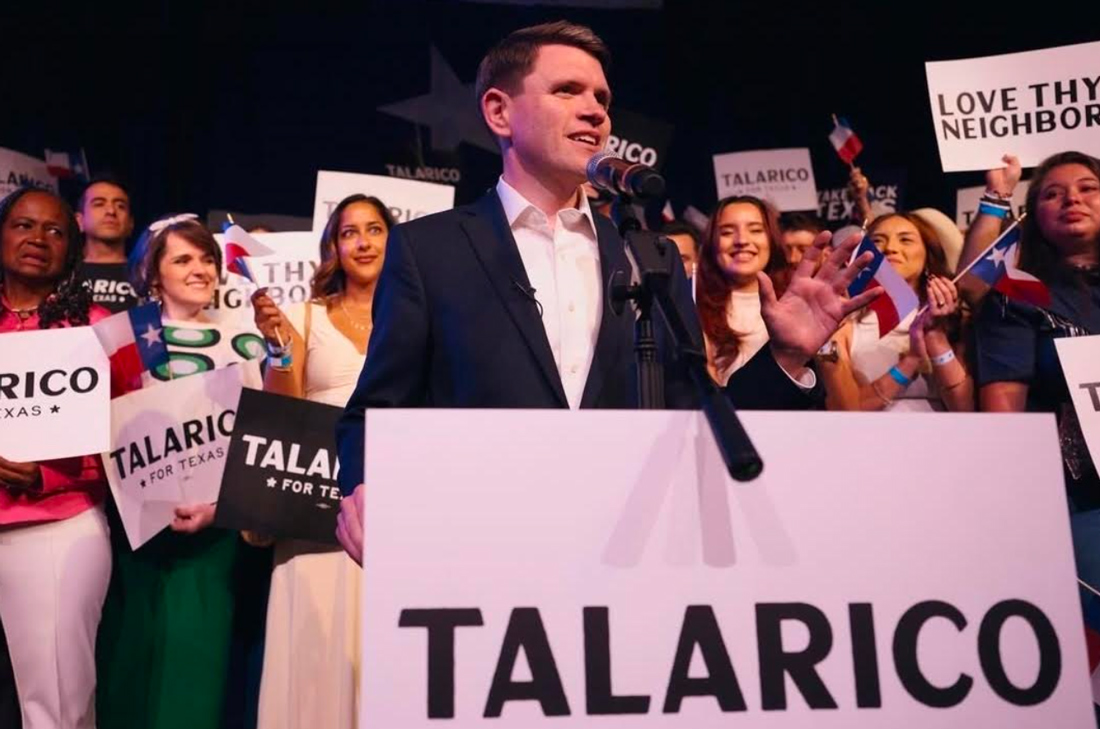
Democrats, meanwhile, avoided the mess as State Rep. James Talarico defeated U.S. Rep. Jasmine Crockett outright, though it wasn’t without controversy. Reports of voter disenfranchisement in Dallas and Williamson Counties led to confusion at the polls, and a court eventually issued an injunction allowing polls to remain open until 9 p.m. Then our corrupt AG Paxton stepped in and had the Texas Supreme Court overrule the lower court. It wasn’t the first and won’t be the last time Paxton meddles in an election that he himself is running in.
Nevertheless, early Wednesday morning, Crockett conceded and called for unity within the party, saying in a statement, “Texas is primed to turn blue, and we must remain united because this is bigger than any one person. This is about the future of all 30 million Texans and getting America back on track. With the primary behind us, Democrats must rally around our nominees and win. I’m committed to doing my part and will continue working to elect Democrats up and down the ballot.”
That contrast alone tells you a lot about where each party is right now.
At the top of the statewide ballot, Gov. Greg Abbott cruised through the Republican primary with little resistance, while Democrats rallied behind State Rep. Gina Hinojosa, setting up a November rematch that will test whether demographic change can overcome Abbott’s deep war chest and name recognition.
Courtesy Chris Tackett
Elsewhere, the Republican primaries for attorney general and several down ballot offices also failed to produce outright winners, which means additional runoffs and extending intraparty tension well into the spring. Texas didn’t so much pick nominees as schedule a sequel. State Sen. Mayes Middleton and U.S. Rep. Chip Roy will face off in a runoff to decide who will be the GOP nominee for attorney general while the democratic side of the lieutenant governor race saw frontrunner Vikki Goodwin get into a runoff with Marco Velez as she nabbed only 48% of the vote.
In Fort Worth and throughout the county, Democratic voters showed up in force across countywide races, reinforcing the city’s slow but steady shift away from automatic Republican dominance. Alisa Simmons won the Democratic nomination for Tarrant County judge while Lydia Bean dominated the county clerk primary. Many judicial races on the Democratic ballot were uncontested, not because of apathy but because Democrats have spent years methodically building a local bench, an unglamorous but very effective form of political organizing.
Republican contests in Tarrant County were more fragmented. In Texas House District 98, Keller Mayor Armin Mizani cleared the 50% threshold to avoid a runoff while Cate Brennan easily secured the Democratic nomination for the seat, setting up a general election in a district that neatly captures the suburban tug of war shaping Fort Worth politics: growth versus control, schools versus culture wars, and whether “business friendly” still means ignoring who actually lives there. Other legislative districts weren’t so tidy, with crowded GOP fields heading toward more runoff elections.
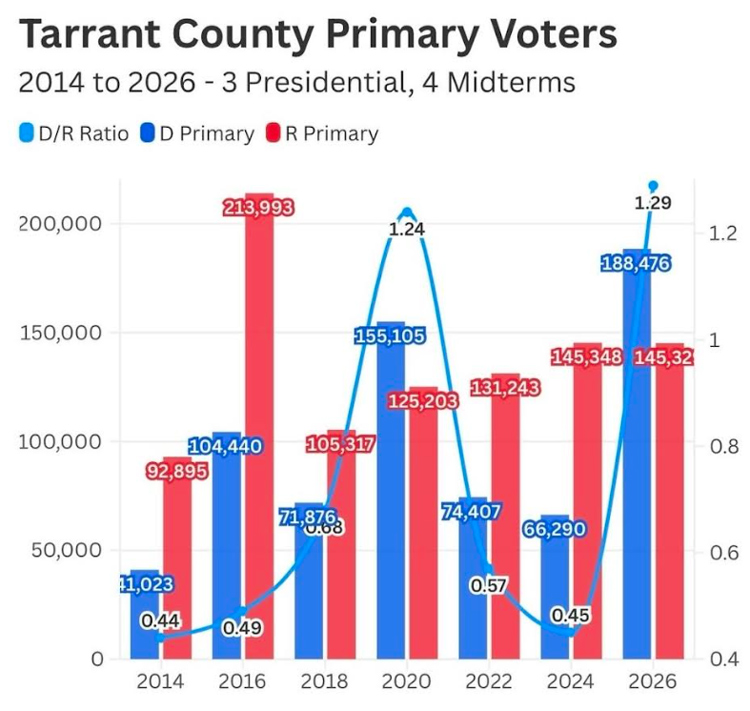
Turnout tells its own story. Voting numbers in Tarrant County were extremely strong by primary standards, especially on the Dem side. Local activist and data expert Chris Tackett (@seeitnameitfightit) reported a total of 188,476 Democrat votes countywide, far more than Republicans and a number never seen before in recent memory. Fort Worth voters signaled impatience with top down politics and an appetite for hyperlocal races that actually affect daily life — courts, county government, and the Legislature.
The general election, if not canceled by this foundering administration, is still so many months away, but if March 3 proved anything, it’s that Fort Worth plans to stay inconvenient, competitive, and very much in the fight.