

Today we examine the strange career of Emmy Rossum. The Metropolitan Opera trainee has the looks, the hair, and especially the singing voice to write her own ticket with any opera company or Broadway musical she might care to. Maybe she would have done just that if the 2004 film version of The Phantom of the Opera had been a hit. (She was 18 when she starred in that. That still amazes me. That, and the high C she hit at the end of “Think of Me.”)
However, while Rossum has since put out three pop albums, her creative star has led her down a much more unusual path. I can’t help but be sad about that. She so easily could have played the lead roles in Glee, the Pitch Perfect movies, or La La Land. If they had made the film version of Wicked a decade earlier, she would have torn it up as Glinda.
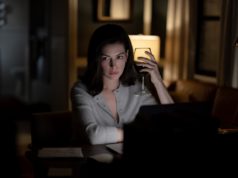
Instead, she spent eight seasons on TV’s Shameless, portraying a teen from a broken home who’s uneasily shoehorned into the role of surrogate mother to her many siblings. Now she stars in the Hulu crime procedural drama Furious, and as the steely and determined FBI agent who’s falling apart underneath while she tracks a serial killer, she gives the performance of her career.

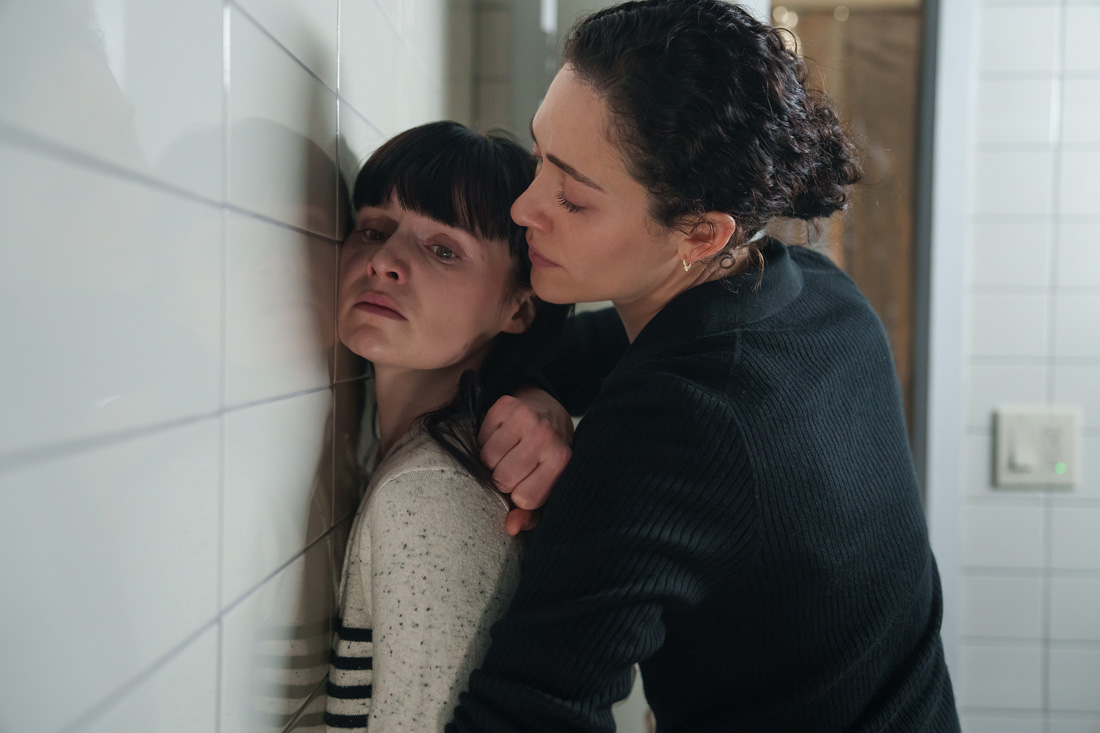
She is Alice Black, a newly minted agent at the bureau’s New York office and former NYPD homicide detective. When she wishes to investigate sex crimes, the head of that unit (Quincy Tyler Bernstine) responds, “Do you hate yourself?” She’s referring to the practical difficulties in prosecuting traffickers, but Alice does hate herself, a bit, and the boss immediately reads Alice as an ex-cop who left the police to escape Marshall (Jake Lacy), the ex-boyfriend and fellow officer who smacked her around. Now Alice copes with the fallout by finding men online and asking them to assault her in her bedroom as foreplay. She’s also afraid to shower, because Marshall used to pull her out of the shower to beat her.
The series is adapted from Bob Rafelson’s 1987 thriller Black Widow, a crappy film that was mostly out to titillate its male audience with the homoerotic attraction between Debra Winger’s agent and Theresa Russell’s slow-motion serial killer. Showrunner Liz Meriwether instead has the two heavily damaged women mirror each other. The killer (Lola Petticrew), who’s named Catherine like her counterpart in the movie, was a victim of sex trafficking as a girl. Now that she’s grown up, she’s not targeting the traffickers but rather the rich men who used their services. Where the movie showed its villain assuming numerous fake identities — an easier thing to do in that pre-internet era — the show executes some fancy moves so that Catherine can do the same, as she wears hoodies in public to hide her face from ubiquitous cameras and presents herself as a battered woman to domestic violence shelters so she can obtain new IDs.
The nifty plotting doesn’t end there, as the series is full of chance meetings that don’t seem like contrivances, like when Catherine injects one of her victims (Rob Delaney) full of fentanyl in his bedroom, only to emerge and find his 15-year-old daughter (Riley Vinson) standing in the kitchen. Catherine works as an unlicensed part-time nurse for a homebound muscular dystrophy patient (Steve Way), who finds incriminating video files on her laptop and manages to save them from corrupt feds while gleefully giving the runaround to the cops and the FBI. As capable as Catherine is, she isn’t immune to mistakes, which keeps the law and her future victims on her tail.
Meanwhile, Alice’s childhood is revealed to be somehow worse than we know, and we know her mother abandoned her and she became pregnant at age 14. Her domestic violence experience turns out to be a great big open wound in everybody’s lives, as she’s forced to work with Marshall on Catherine’s killings and has a panic attack after coming face to face with him. Her ex-cop partner Danny (Scoot McNairy, doing yeoman work in the least flashy major role) is a pariah within the NYPD for standing up for her, while Marshall is still a detective but has been repeatedly passed over for promotion. It leads to a magnificently acted scene when Marshall begs for Alice’s forgiveness, where he’s genuinely sorry for his actions and she’s clearly still in love with him. When she refuses to lie to his superiors for him, though, he starts getting angry again, and she pulls her gun on him. Much later, a disgusted Danny tells Marshall, “Talk to someone. Get some therapy. Learn how to cry. Keep a dream journal. I don’t care. Just be better.”
Jeffrey Epstein hangs heavily over all this — a tasteless joke, I know, but for that guy, I’m leaving it in. The show manages to remind us of him without ever mentioning his name. The dying billionaire pedophile (Peter McRobbie) whom both Alice and Catherine are pursuing also has the initials J.E., and the seventh of the show’s eight episodes reveals that he has his own Ghislaine Maxwell in his daughter (Hope Davis), who goes to her greenhouse and sinks her hands into potting soil while her dad rapes another girl. It never gets more Epstein than when we see an old photo of an underage girl in her lingerie sitting on his lap surrounded by other men in expensive suits.
Other movies and TV shows focus on the sex traffickers, partly because those criminals are easier for some lone vigilante to reach. Furious sets its sights higher, on the men who pay to rape children and the layers of legal, financial, and physical protection that surround them. That and the jaded tone keep the show from degenerating into sensationalism, and it still creates plenty of excitement, especially as the penultimate episode ends with everybody converging on that billionaire’s Connecticut mansion. Catherine’s hands keep trembling and not from nerves — is she dying, too? Is Alice right when she describes Catherine’s murder spree as a suicide mission? The answers will come when the finale drops next Monday.