




Sometimes the good guys win.
A string of victories has raised hopes that citizen groups opposing several large data centers proposed for south of Fort Worth will prevail against the corporations and developers behind the projects. First, NRG pulled its application for an air permit to build a power plant supplying electricity to one huge center near Glen Rose. Then Hood County won a favorable ruling in a lawsuit it was defending against another developer that sued to have its project approved.
“We are thrilled,” said Joanne Carcamo, a co-founder and director of the grassroots group Protect the Paluxy Valley. “What a win for our community.”

Hood County, the second smallest county in Texas, has nine data centers proposed. Of these, Comanche Circle has drawn the most opposition. It is planned to occupy more than 2,100 acres on the line dividing Hood and Somervell counties a few miles from Dinosaur Valley State Park. The design calls for 45 buildings of 300,000 square feet each. Before withdrawing its permit application, NRG was constructing a 2-gigawatt gas-powered turbine electric generator to power the computers.
Comanche Circle developer Ryan Hughes, principal partner with Florida-based Investors, did not respond to interview requests from the Weekly. After the permit application withdrawal, his only public remark was “stay tuned.” The data center plan concept as approved by Hood County is valid for two years, suggesting he may be able to proceed if he lines up a new power provider.
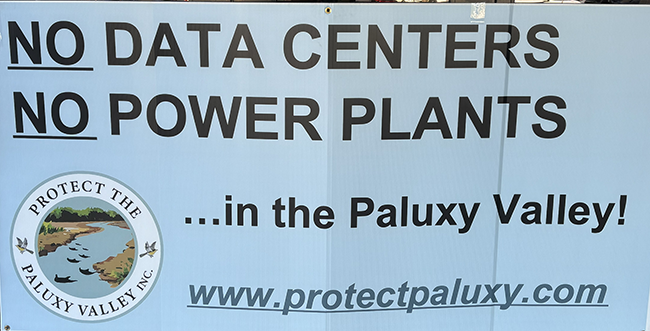
Photo by Mark Henricks
Whatever happens with Comanche Circle, Hood County has ample data developments remaining. They include Amazon Web Services, which plans two centers near the Comanche Peak nuclear power plant. Black Mountain Power, the same company proposing a $10-billion data center in Fort Worth, has an air permit for another on the north edge of the state park, and Pacifico Energy’s Fort Spunky project will sit on the banks of the Brazos River not far from Glen Rose.
Two centers called Red Project and Yellow Project plan to set up on the grounds of the county’s existing Wolf Hollow power generating complex. These were the developers who sued Hood County, asserting commissioners had approved their concept by not acting on it within 30 days. The district judge’s rejection of that claim, stalling the project for the time being, was the second recent win for the area’s data center opponents.
Earlier this year, yet another Hood County data center, this one called Project Patriot, was annexed by Granbury, the county seat. Granbury citizens upset by the city’s rezoning action to accommodate Patriot collected 800 signatures on a petition for an election to recall the mayor and councilmembers.
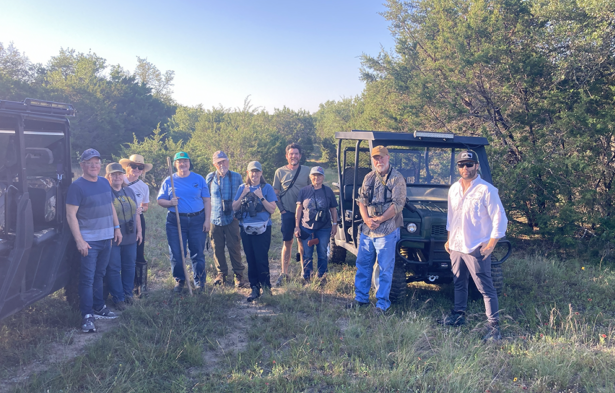
All this citizen fury was distilled recently into a paradoxically calm outing. A dozen or so members of Protect the Paluxy had gathered on the Somervell County owned by Laura and Brian Crawford to go birdwatching. Their goal: To find golden-cheeked warblers, an endangered species whose presence would complicate efforts to develop Comanche Circle.
After an hour or so wandering the hills, Sandy Boulouche held up a smartphone running a bird-call identification app and said, “We have one!”
The rest of the group kept their eyes peeled, hoping for photographic as well as sonic evidence of the endangered bird.
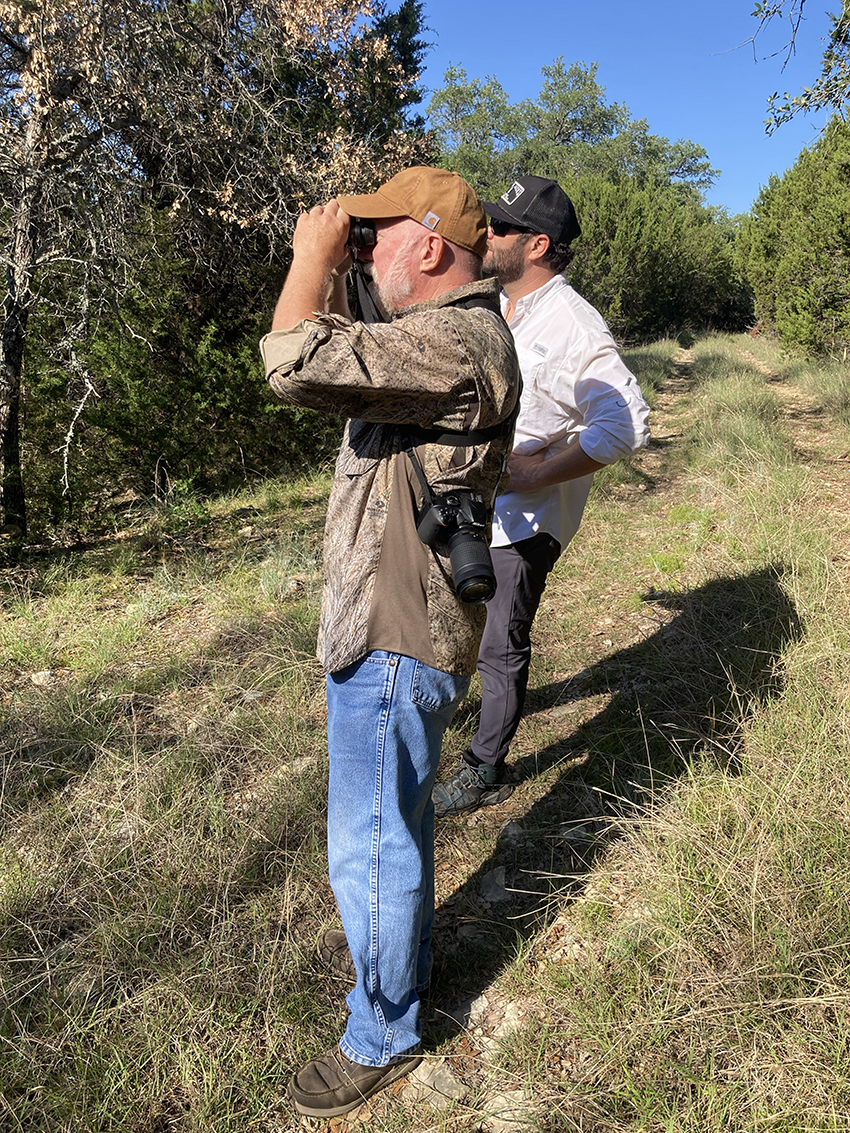
Photo by Mark Henricks
Birdwatching is just one of several initiatives that Protect the Paluxy organizers have revved up since Laura and Brian Crawford first saw a sign notifying locals about the air permit application last September. For the Crawfords, the realization that a 2,000-acre data center planned to go in next door was galvanizing.
“It felt like we’d been punched in the stomach,” Brian recalled.
As he spoke, he gazed from their front yard at the fence marking the start of the planned boundary of Comanche Circle. By October, they had begun organizing the resistance.
“We had a community meeting and hit the ground running,” Crawford said.
Early on, Protect the Paluxy connected with consumer advocacy organization Public Citizen. The North Texas Public Citizen representative Rita Beving explained how to protest power plant air permit applications with the Texas Commission on Environmental Quality (TCEQ), monitor data center requests for water from local water districts, and mobilize citizen involvement.
Beving, a veteran of decades of Texas environmental activism, said the Paluxy activists are a cut above. “They are one of the most data and research-oriented citizens groups I’ve ever met. I’m very impressed by them.”
At a June meeting at The Expo at Glen Rose, more than 500 showed up to hear from a panel of experts on the environment, water, and other concerns. District 56 State Rep. Helen Kerwin, another panelist, echoed Beving’s assessment.
“I’ve been to a lot of these meetings, and this is by far the most effective and committed group I’ve seen,” Kerwin told the Expo crowd.
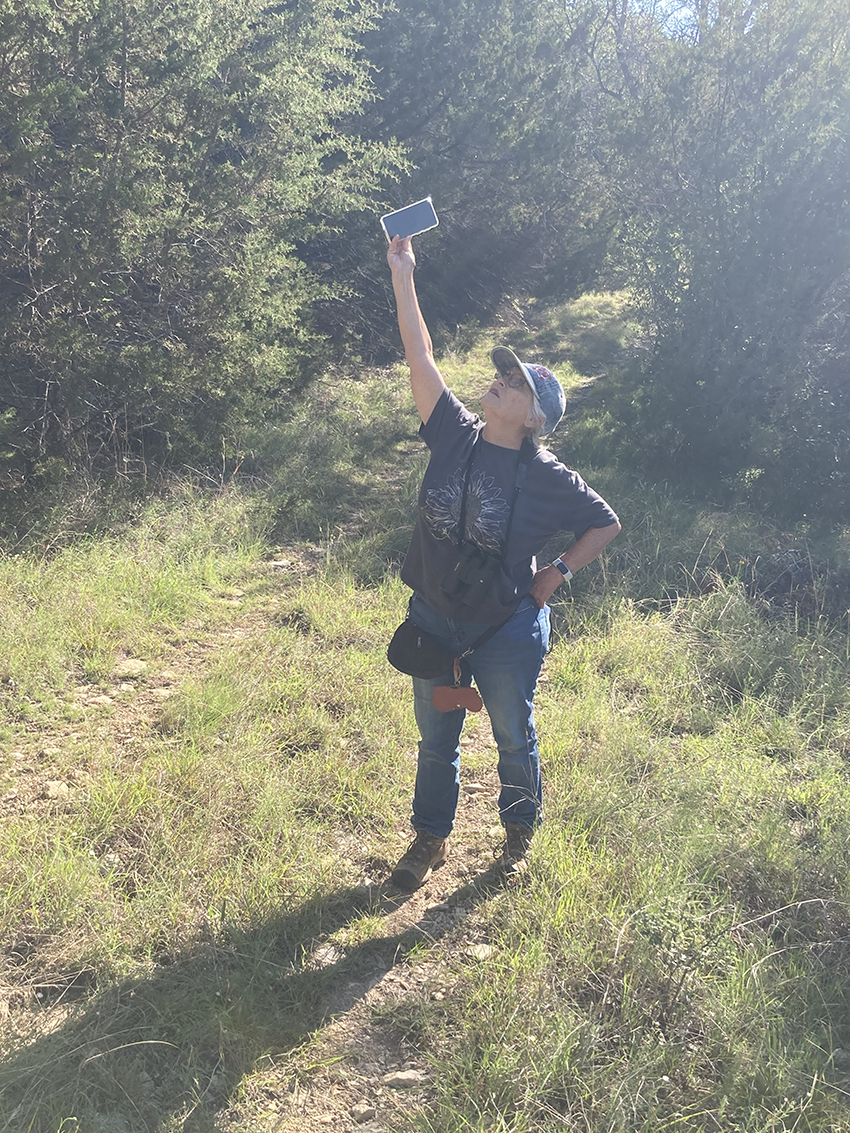
Photo by Mark Henricks
Some of the resistance’s effectiveness is connected to Dinosaur Valley. The much-loved park was already a focus of controversy over plans to build a transmission line on its border. The sudden influx of power plants and data centers, including Comanche Circle with its proposal to drain wastewater into the Paluxy River north of the dinosaur tracks, hit a nerve already raw.
There’s a sense that the opportunity to slow data center development is here, but if it’s not made the most of, it could be too late. As Kerwin put, “If we can’t protect Dinosaur Valley State Park, all state parks are vulnerable.”
People and groups opposing data centers generally stress that they’re not battling artificial intelligence or opposed to economic development. Public Citizen’s Beving said, “Our organization is not anti-data center. We do think data centers should be properly sited. They should be sited in an industrial area with a sufficient amount of distance from homes.”
Still, the issue has transformed many ordinary small-town and rural Texans into ardent environmental activists. The area has a history of even more ardent conservatism. Stewart Rhodes, who founded the far-right Oath Keepers militia and was convicted of seditious conspiracy for his role in the January 6, 2021, U.S. Capitol riot, is a former Granbury resident. Now, however, locals find themselves sharing positions with the likes of Public Citizen and Earth Justice, which is providing legal assistance for lawsuits related to power plants and data centers.
More than 80% of Hood County residents routinely vote for Republican presidential candidates, including in 2024. But today not a few have confused feelings about Republican leadership. That notably includes Gov. Greg Abbott and Donald Trump, who have been energetic promoters of data centers for AI and cryptocurrency mining.
Hood Country resident and longtime Republican Cheryl Shadden led a failed effort last year to incorporate the community of Mitchell Bend to regulate noise from the MARA Digital Bitcoin mine. Now, she says, “Red or blue, if you vote against data centers, we’ll vote for you.”
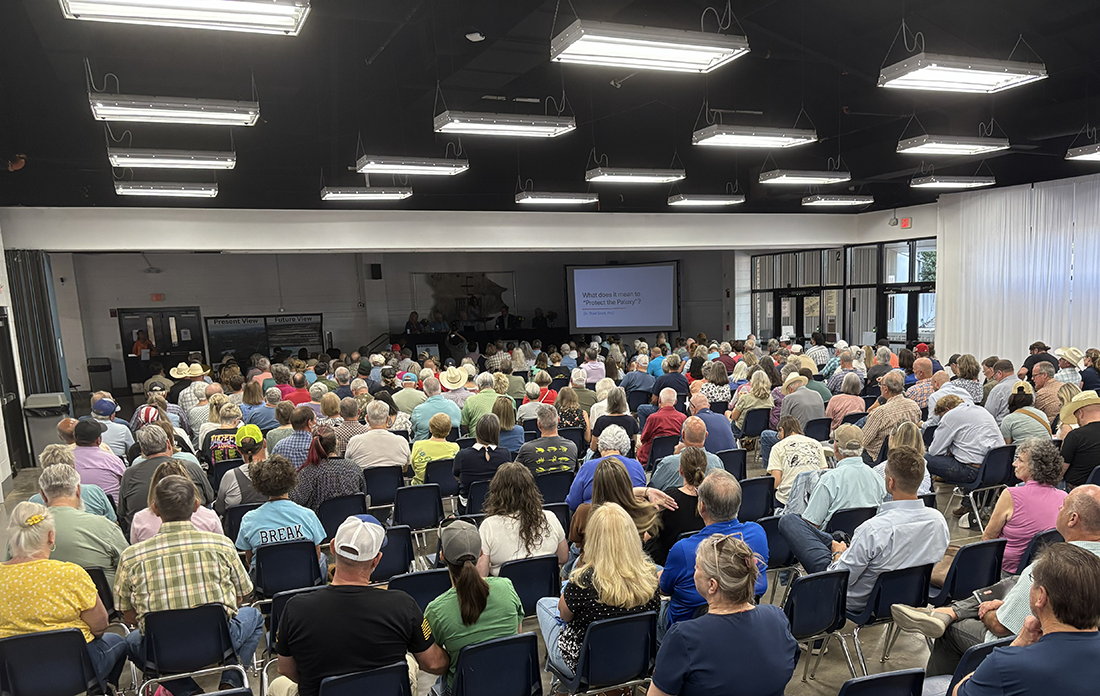
Photo by Mark Henricks
Data center opposition is rising across Texas. Fort Worth City Council is slated to vote on a data center moratorium on Aug. 11. Members of the Texas Legislature are holding hearings to discuss statewide regulation of the industry. Signs reading “Don’t Data Center My Hood County” are common in and around Granbury.
The NRG permit application and Hood County’s court win are promising signs, but they don’t mean the end of the struggle. NRG didn’t explain why withdrew its application, and there could be several reasons.
Protect the Paluxy organizers point to the 11,000 mostly negative citizen comments sent to TCEQ about NRG’s air permit. But TCEQ also has a huge backlog of hundreds of permit applications. That means delay, while costs for generators, computers, and other infrastructure rise steadily. Other factors may also come into play. Shadden heard that one property owner who gave Hughes an option for land to host the power plant had backed out of the deal.
It’s unlikely Hood County will stop all the data centers. Amazon’s seems especially likely to go forward. Several of the rest already have air permits and have satisfied the minimal requirements that Texas counties can place on industrial developments.
However, Commanche Circle is genuinely threatened. Hughes, the Sailfish developer, has no prior experience building data centers. Critics charge he is no more than a speculator aiming to snap up land, water, and power rights, then sell the package to a data center specialist such as Amazon Web Services. He still has two years to get a new power plant permit but hasn’t announced any potential partners yet.
For her part, Beving suspects Comanche Circle missed its window. “I think Sailfish will run out of time and money to keep chasing this, frankly.”
Meanwhile, Protect the Paluxy is not assuming victory. Dissatisfied with mere citizen birdwatching, they hired a biologist to conduct a survey that turned up evidence of golden-cheeked warblers. Next up, said group co-founder Laura Crawford, is a lawsuit they are funding that will seek to stop the development for endangering the species.
Crawford is also planning to attend upcoming Texas Senate hearings on data centers in Austin and constantly watching for the next new data center plan. “We are monitoring the Upper Trinity and Prairieland water district for water permits and TCEQ for air water permits, keeping vigil on all the areas.”

Photo by Mark Henricks
One thing that’s clear is that data center development has stirred a hornet’s next, of which Hood County is just one example. Upset about air pollution, water usage, noise, and other negative aspects of the centers, Texans are mobilizing everywhere.
“People are really angry,” Beving said.
Indeed, opposition to data centers was expressed by 56% of respondents to a June poll by the Texas Politics Project at UT-Austin. Numbers like those tend to get the attention of savvy politicians. That may include Gov. Abbott, despite the presence of data center developers on the list of his major financial supporters. The developer of Black Mountain, for instance, gave $500,000 to Abbott this year, as reported by The Houston Chronicle.
The future of data centers in Hood County and Texas is at least somewhat cloudier than before Protect the Paluxy went into action. Laure Crawford sounds cautiously optimistic. “We are very encouraged with the last two events. We’re very hopeful.”
But even if the good guys may have won only an interim victory, there’s been no lessening of the citizens’ will to go up against corporate behemoths. Developers have begin contacting Protect the Paluxy seeking to negotiate, Carcamo said. “We tell them we’re not negotiating. We’re going to fight them all the way.”









Somervell County, not Hood County, is the second smallest county in Texas.
I absolutely agree that the development of data centers as it is done now should be stopped. This 21st century need is provided using 1950s technology. It is wrong, destructive, expensive and overall detrimental. It almost feels like the people that built them failed the third grade reading.
I am a technology developer with a British PhD in Technology and Applied Science (I am also naturopathic doctor, but it is beyond the point here,) with a long track record, patents and technologies: maritime, aviation, space and medical devices. There is a way to do it not disturbing communities, resources and environment. With the presently available technologies data centers can be built in deserts, arctic, or anywhere else outside of populated areas. No strain on water, no noise, no electrical demands, with thermal energy recovery to actually benefit the communities.
Data centers are unavoidable unless you want to go back to rotary phones. Every time you dial a number, send a text message, email or use the internet – you use data center or centers. Your credit cards, medical records, taxes, government secrets and military operations information are stored on data centers. Every time you log into Facebook, use a credit card, it involves data center(s). Amazon has many data centers to operate, so does Google, Microsoft, and all the others. So, this is not if we need the data centers, but how we develop them and how the communities can benefit of them once they are commissioned.
I made several attempts to contact #governor #Abbott to present to him a project of waterless, quiet, self-powered data centers with thermal energy recovery. This is not difficult and can be done anywhere outside of populated areas (i.e. deserts). I called many #governor #Abbott listed numbers during the business hours and “leave a message” was the only answer. I sent requests for meeting through contact forms. No contact, no callbacks. With a treatment like that, one may wander what our taxes are paying for?