

For five weeks this summer, Sundance Square became Fort Worth’s biggest sports bar, minus the walls and the obligation to keep ordering chicken wings.
From June 11 through July 19, the plaza showed all 104 matches of the 2026 World Cup in English and Spanish. Giant screens handled the soccer. Food trucks, live music, and soccer balls painted by local artists filled out the scene. The matches were played elsewhere, but that did not stop Cowtown from acting like it had seats on the 50-yard line.
Wrong sport, yes. Moving on.

The official Summer of Soccer program called the plaza “Fort Worth’s Front Row.” What it delivered was something television networks have spent years trying to manufacture: the feeling that everybody is watching the same thing at the same time.
Nearly anyone in the plaza could have watched from home. They went downtown anyway.
The Screen Was the Excuse
Watching sports alone has its advantages. The bathroom line is short. The drinks cost less. Nobody wearing the opposing team’s jersey is nearby making that face.
It is also missing something.
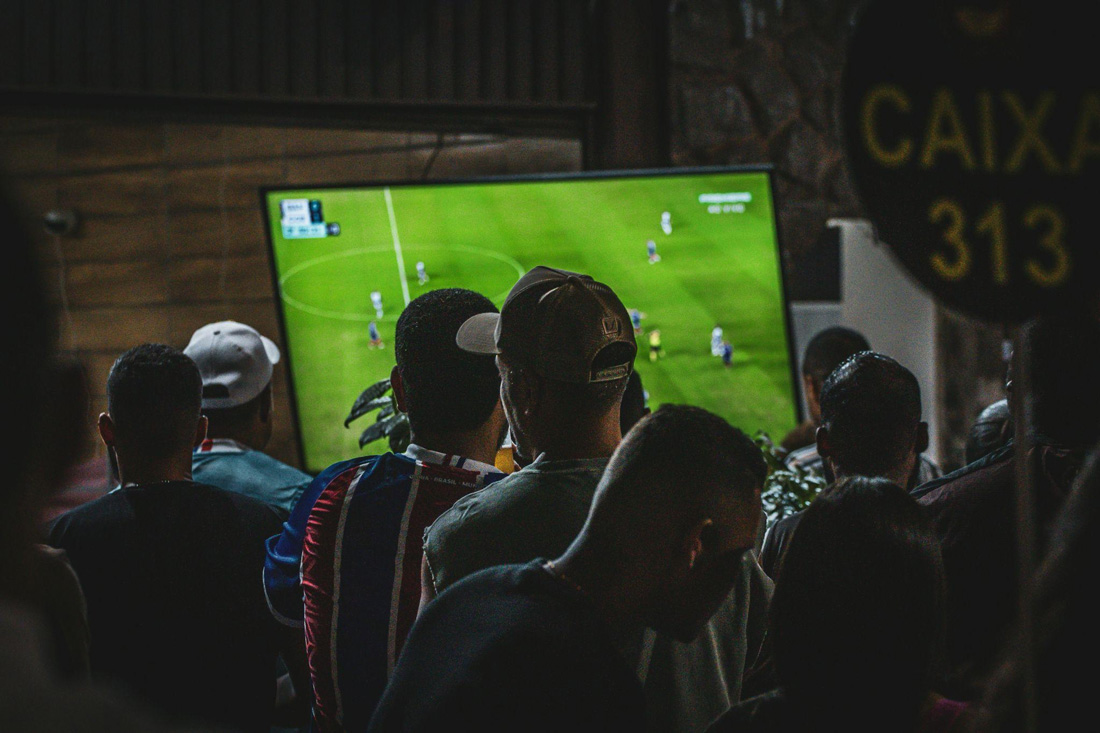
A shot sails wide at home, and maybe you groan at the dog. The same miss on a public screen produces a wave of noise from hundreds of people who, five minutes earlier, had nothing in common. One person blames the striker. Another blames the referee. A third begins explaining the offside rule and immediately loses control of the conversation.
Now we have a scene.
The screen brought people to Sundance Square, but the crowd made the matches worth watching there. Every gasp, chant and confidently incorrect ruling from the cheap seats became part of the show.
Fort Worth did not need to host a match to join the tournament. It just needed a place where nobody had to react alone.
That should not have been surprising. This city has been gathering around shared spectacles since long before anyone needed six passwords to watch television. We do it for rodeos, football games, concerts, festivals, and nearly any event involving smoked meat within a five-mile radius.
The activity matters. What happens around it usually matters more.
Three Countries, Three Screens
The World Cup was shared by the United States, Canada, and Mexico, but the three host countries did not experience it through one identical screen.
Broadcast rights changed at the border. So did streaming packages, subscription prices, advertising, and the collection of apps competing for whatever attention remained after the final whistle.
A fan in Toronto checking a streaming service, buying concert tickets, or opening the Gaming Club casino was moving through a different digital marketplace from a fan scrolling at home in Fort Worth. Same tournament. Same phone. Different menu.
So much for the borderless internet.
The public watch party worked in the opposite direction. It took a match distributed across millions of private screens and turned it back into a local event. What appeared on the screen came from somewhere else. The noise around it belonged entirely to Fort Worth.
The internet supplied the picture. Cowtown supplied the opinions.
We Already Know This Trick
Local bars understand the arrangement. As Fort Worth Weekly found in its look at bars building community beyond the drink menu, Liberty Lounge hosts art markets, trivia, and speed-friending, while Jackie O’s Cocktail Club draws people through karaoke and themed nights.
None of those ideas is complicated. That is partly why they work.
A recurring event tells people where to go and what will be happening when they arrive. More importantly, it gives strangers an opening line. Trivia players can argue over an answer. Karaoke regulars can applaud a courageous attack on Whitney Houston. Soccer fans can debate whether a referee should consider another line of work.
Conversation needs less help than we pretend. Sometimes it only needs a common target.
The World Cup provided one every few hours. Team colors worked as introductions. A surprising result gave strangers something to discuss. People without a lifelong allegiance could select a country for 90 minutes and behave as if the family honor depended on it.
That temporary commitment counts. Communities do not always begin with deep relationships or shared histories. Sometimes they begin when two people complain about the same call.
Filling a Plaza Is the Easy Part
A crowd does not automatically become a community.
Concert audiences can spend an entire evening filming the stage through their phones. Bars can fill every stool without generating enough personality to fog a mirror. A popular event proves that somebody promoted it properly. It does not prove that anyone is connected.
The Summer of Soccer had an advantage: people immediately understood how to participate.
Serious supporters could arrive in full kit and behave as if they had personally been selected for the starting 11. Casual viewers could choose a team based on uniform color. People who knew nothing about soccer could stop for food and remain because several hundred strangers had suddenly started yelling.
There was no required level of commitment.
The best gathering places leave room for the regular, the newcomer, and the person who insists they are leaving after the next round. They offer several ways into the experience instead of demanding enthusiasm at the door.
Not everybody wants the microphone. Some people need three visits before admitting they are having fun.
After the Final Whistle
Developers love calling public squares “living rooms.” Usually, this means there are benches and somebody has approved a tasteful amount of decorative lighting.
A real living room is defined by what people do there.
They linger. They recognize familiar faces. They show up without needing a complicated itinerary. Something happens that becomes better—or at least louder—because other people are present.
For a few weeks, Sundance Square passed the test.
The difficult part comes after the final whistle. The World Cup delivered a ready-made reason to gather, along with national loyalties, dramatic finishes, and enough stoppage time to order dinner. Most ordinary weekends do not arrive with that kind of machinery.
Fort Worth does not need another global tournament every summer. It needs more events that borrow the useful parts: a clear focal point, an easy way to participate, and enough unplanned space for the crowd to become part of the show.
The lesson is not that people are abandoning their screens. Let’s not get carried away. We remain professionally committed to staring at glowing rectangles.
The lesson is that a screen becomes more interesting when it stops being private.
For one summer, matches played across three countries gave Fort Worth a reason to gather downtown. Sundance Square supplied the screen. The teams supplied the drama.
As usual, the people supplied the atmosphere.