


In 2025, nonmedical conscientious exemptions became easier to obtain. With school back in session, the Texas Department of State Health Services (DSHS) has reported that not only has there been an increase in exemptions but also an overall decrease in childhood vaccination rates across Tarrant County. This, along with the rise in anti-vax sentiments, leaves many healthcare officials concerned at our community’s diminishing herd immunity.
Texas is one of 16 states that offers nonmedical conscientious exemptions, giving parents the option to exempt their kids from receiving state-required immunizations based on individual ethical or religious reasons. This process initially entailed submitting written requests to DSHS but changed during the Texas 2025 Legislature Session. That’s when HB-1586 became law, making immunization exemption forms readily available through the DSHS website in addition to the mail-in process.
Rebecca Hardy, president and co-founder of Texans for Vaccine Choice, stated that the bill is “a common-sense measure that would provide relief to families burdened by a process that is currently lengthy, intrusive, and confusing.”

While some constituents praised HB-1586 as a win for parental rights and convenience, others feared that this would lead to a public health crisis. That same year, Texas had one of its worst measles outbreaks in 35 years.
“The current measles outbreak is the latest evidence against efforts to diminish vaccine mandates for Texas children” said pediatrician Dr. Marion Forbes, who also described the bill as “foolish and dangerous.”
Measles had been eliminated in the United States since 2000, but last year, West Texas had an outbreak with 762 confirmed cases and two pediatric deaths. North Texas is a point of concern because of the increased chances of clusters arising within the community — 95% of the population needs to be vaccinated for the region to achieve herd immunity, but according to DSHS data, only 91.53% of kindergarteners in North Texas in both public and private schools have fully received the MMR vaccine. Other required childhood immunizations in the region have also fallen short.
“Our role is to help facilitate vaccines, and we make it as easy as possible for people to receive them,” said Ann Salyer-Caldwell, president of and board member at the Immunization Collaboration of Tarrant County (ICTC).
Courtesy of Immunization Collaboration of Tarrant County
Founded in 1991 in response to the measles outbreak at the time, ICTC has a primary objective: to increase access to immunizations. While the nonprofit’s initial goal centered on infants and toddlers, their primary focus now is on seventh graders, who also have required immunizations but often fall short of receiving necessary vaccines. “They don’t get them, not because they don’t want to get their vaccines, but it’s harder for them to get them.”
Sometimes their parents can’t afford to take time off work to escort their kids to doctor’s appointments, and it’s also worth noting that primary care physicians are often overbooked. While anti-vax attitudes are prominent in North Texas, Salyer-Caldwell also notes that a lack of accessibility and chronic illnesses are also reasons why people choose not to be vaccinated.
“There’s a lot of different feelings about immunizations out there,” she said, “and even though we still have measles outbreaks, some people don’t think that it’s enough to get them back on board with vaccines.”
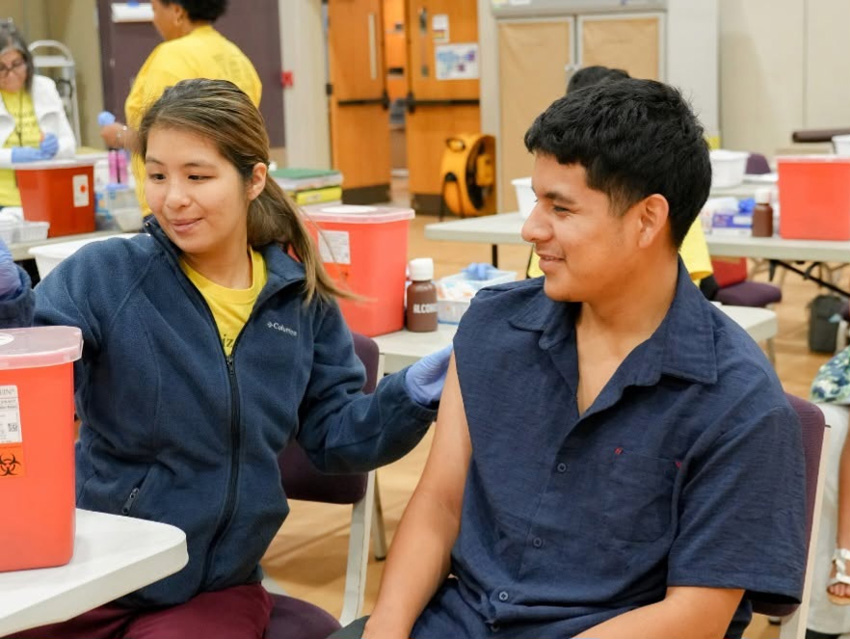
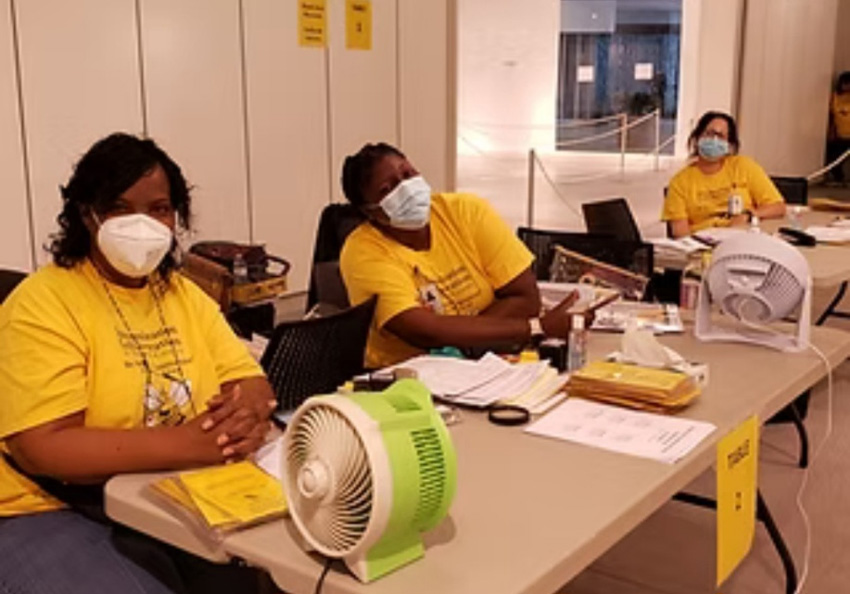
Every year, ICTC bridges the gap by co-hosting Back-to-School Shot Rush events with Tarrant County Public Health, with the assistance of their dedicated staff and volunteers. Anyone who is uninsured or underinsured can attend the event and receive vaccinations with no appointments required. This year at ICTC’s three vaccination sites, more than 4,000 kids were vaccinated in three weeks.
Every year whenever the annual COVID and flu vaccines first become available, I always call up my grandfather to remind him to get his shots. It’s become sort of our thing. We both end up getting our vaccines and are safer now because of it. It’s important to not only have these conversations with our families but others as well. Salyer-Caldwell suggests opening dialogue with others by talking, meeting them in the middle, and acknowledging that someone’s opinion may or may not change.
“Just like I feel strongly that immunizations are needed, there’s another person who feels just as strongly that they are not,” Salyer-Caldwell said.