

Carousels are tracked by historians as originating as far back as the sixth century in Byzantium (a Greek Colony) in what is modern-day Turkey. A spectator attraction then, they evolved into military training devices throughout their history before reverting to their genesis and now a ride of nostalgia for adults and, I assume, mostly boredom for children older than 9.
The steam calliope — originally a large instrument used to advertise the coming of performers or riverboats in the 19th century — was eventually downsized into the band organ to provide music to midways and carousels. TCU’s Froghorn, a train horn blown after every purple score, uses a similar mechanism and seems equally in danger of falling into disrepair as one of the classic instruments of the moment. Yet if you listen closely enough, you can hear the unmistakable sound of the coaching carousel start to spin and the hissing steam of the calliope as head and assistant coaches from across the country are given their walking papers and departing checks.
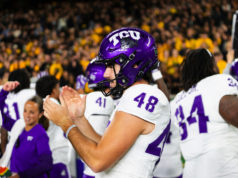
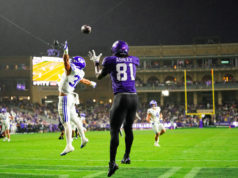
TCU’s season is lost. Beating West Virginia at Homecoming wouldn’t have saved it, but the Frogs are sitting on three total victories — in two of which, their opponent was paid to show up. West Virginia was statistically the worst scoring defense in the conference coming into Saturday factoring for games that matter, and it wasn’t enough to make TCU’s offensive attack palatable to watch. Mountaineer quarterback Michael Hawkins Jr. (#3) accounted for three touchdowns, two of them via rushing, and scampered for almost 100 yards, the second leading rusher for WVU. Hawkins’ footwork was the difference in keeping TCU’s still-excellent defense off balance enough to outlast the Frogs’ lackluster offense.

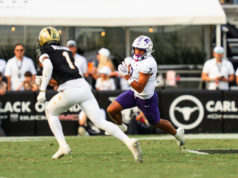
Jaden Craig (#1) is actually growing on me as a quarterback — in that I’m starting to see what coaches saw as his upsides — but the Harvard transfer threw an interception and lost two fumbles, one to seal the game within scoring distance at the very end. Craig completed 33 passes for almost 400 yards on Saturday, but that’s also largely because the TCU rushing attack has gone from ineffective to embarrassing with the absence of Jeremy Payne (#26), who was still out with injury. In games that matter, Craig is directly responsible for five touchdowns against eight turnovers. I don’t care what kind of labor-based grading contract is in the syllabus, that’s a big “F.”
As a unit, the offense did score a season-high 20 points on Saturday despite missing a makeable field goal at the end of the first half but against the worst defense on their schedule. More alarming is that TCU has still yet to score a fourth-quarter touchdown against a major opponent, and the lone field goal against BYU continues to be the only points scored against a major conference team in the final quarter the entire season. Sonny Dykes’ offense failed on a fourth-and-two on Saturday instead of kicking, which made a final-drive touchdown necessary for the win, something the Frogs seem incapable of doing.
Against those same opponents, Dykes and offensive coordinator Gordon Sammis are managing 5.2 points per game in the second half, which is a damning statistic for an offensive staff obviously unable to adjust or who are being completely outcoached in their adjustments, take your pick. At the ripe age of 41, I’m not ready to start doubting myself now, but maybe Kendal Briles wasn’t the entire problem, merely a symptom of a larger one: There is no dog in this team, and that’s on Dykes.
The Buck U Dictionary defines “dog” as: grit, will, clutch, gumption, being a gamer, and/or possessing something that drives the inner demons down the field to flip the proverbial bird to the other team as you walk off in the end, even if you hug and shake their hands afterward. This team, and arguably no team since the one Dykes took over at the beginning of his tenure, has had that dog. Since Dykes came to town, the Frogs are 14-13 in games decided by one possession, yet in that first season, TCU was 6-1 in those games with a roster largely left over from the Gary Patterson era. Since 2023, Dykes’ teams are 8-12, and that column on the right is growing quickly.
Dykes was brought in to revive what had become a stagnant offense and be a master quarterback whisperer and offensive analyst, and this team is Greek tragedy-level against those aspirations. Before this season, I would have affirmed Dykes’ position as firmly secure and that it could weather any losing season, but I’m starting to doubt that. Sports — as much as we love them — are entertainment, and watching TCU (especially in the second half) is an absolute beating right now.
Baylor parted ways with seven-year head coach Dave Aranda this past weekend after the Bears had seemingly started strong but faltered the past two weeks with their loss in Waco against the Frogs and by one point against the Jayhawks in Lawrence on Saturday. Aranda and Dykes share similar struggles as both led early rosters to tremendous success (12-2 for Aranda in ’21 and 13-2 for Dykes in ’22), but with success came expectations, which for Aranda specifically weren’t met. The Bears have had four losing seasons, and fans and the administration have seen enough. Despite how poor this TCU squad looks right now, Dykes’ shorter tenure and only one losing season so far under his leadership — it seems we’re in the throes of his second now — mean his leash is likely longer.
In Fort Worth, turnover is already happening. Dykes dismissed co-offensive coordinator and offensive-line coach A.J. Ricker after the WVU loss. While I’ve stood by TCU’s hog mollies as adequate enough through the early season, their play has deteriorated as conference contests continue. Against Baylor, it became obvious that second-level pressures weren’t recognized, and that continued against the Mountaineers on Saturday. Ricker had been on Dykes’ staff since the two were at SMU together, and Sammis plans to oversee the offensive line directly for the rest of the season, a group in the very bottom rankings for the entire country in sacks allowed and last in the conference for rushing yards per game.
The Frogs host the Kansas Jayhawks on Halloween afternoon, which is pathetically a great primer to digest scary content for the remainder of the day. The Jayhawks are sitting in a large group of 1-3 Big 12 teams that includes our Frogs, KSU, and Iowa State and ahead of Colorado, the only conference team without a win. The Kansas offense isn’t overly productive, but they have shown themselves to be able to transition from either pass or run and have at least more success than the Frogs overall. Sophomore quarterback Isaiah Marshall (#8) isn’t afraid to let the ball fly and has the interceptions to prove it. Marshall completes only about half his passes, but like Hawkins, who burned the Frogs last week on the ground, Marshall has the ability to run the ball effectively as well.
The Jayhawks are allowing an average of 31 points per game in conference, ranking them 11th, but WVU was giving up 40 in dead last, and it didn’t help much. TCU is still the stingiest D in conference, but the road rises over the next five games as the Jayhawks and their Sunflower-State sibling Wildcats are the only unranked squads left. It’s difficult to imagine a turnaround where the offense is suddenly productive enough to pull three wins over the next five games to become bowl eligible and log a non-losing season for Dykes and company, but weirder things have happened. If anyone knows a magic spell for fourth-quarter touchdowns, this is as good a week as any to try it out.
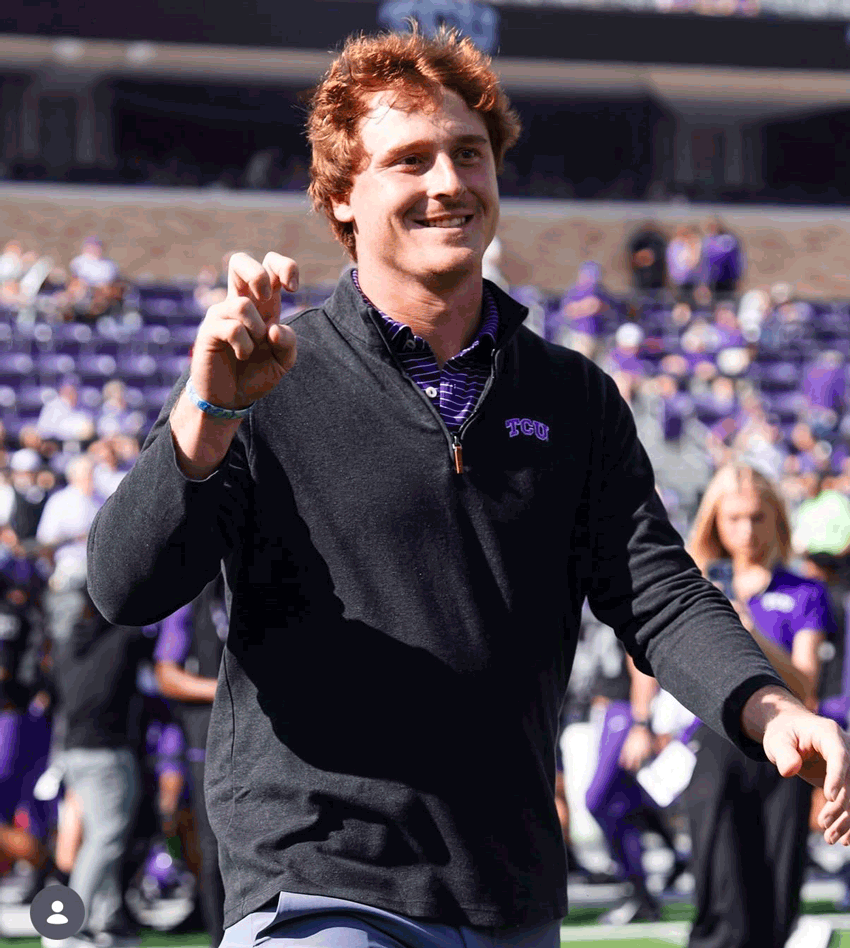
As much as fans are vying to hear the coaching calliope play in Fort Worth and the carousel to start spinning again, I think Dykes is here for at least one more season after this but not unless we see some life and at least aggressive ankle-biting in the meantime.