


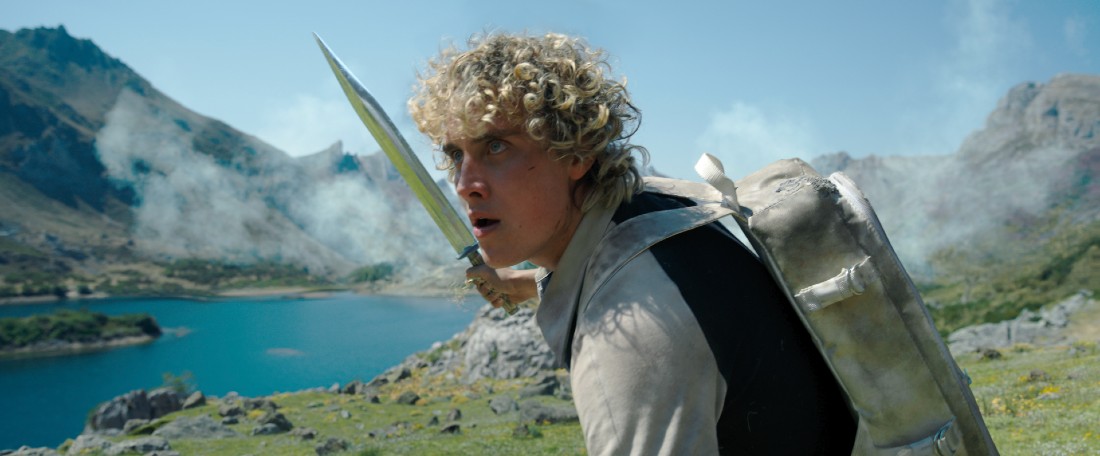
Suzanne Collins started writing the Hunger Games books in the mid-2000s, when the country was conducting that misbegotten war in Iraq while celebrity culture was continuing unabated at home through reality TV shows. She found the juxtaposition fascinating. On the other hand, her two prequel novels have been written in a far different time, under Donald Trump presidencies that have aimed for a fascism similar to Panem’s, though that fictional country’s leaders would be horrified by Trump’s incompetence.
The Hunger Games: Sunrise on the Reaping is all about the necessity of continuing to rise up against a totalitarian state even when it kills everyone you might care about. It takes a peculiar kind of skill to take a story as relentlessly downbeat as this and turn it into a movie palatable to the popcorn crowd. The filmmakers’ focus and the way the series has adapted to a changing America are the reasons why this series has caught a second wind.
It’s funny, when I reviewed the first movie, I found fault with its depiction of the capital of Panem. I’m guessing that budget constraints prevented that 2012 film from giving this fantasy world its proper splendor. The success of those initial movies has opened up the purse strings for these prequels, and the design elements have become a strength here. Director Francis Lawrence and his production team have updated this futuristic film’s look to resemble the 1970s, with logos in Vector Alphabet font, Paisley patterns on the walls, and all the Black people wearing Afros. The Hunger Games arena is in a forested valley filled with brightly colored flowers. Yes, that’s how Collins describes the place in the book, but this location that looks like something out of Midsommar is visually beautiful in ways that the franchise has never attained before.

The dressing is necessary given all the tragedy in the plot. Young Haymitch Abernathy (Joseph Zada) is picked for the 50th annual tournament for trying to protect the girl he loves (Whitney Peak). When he hears that other contestants are planning to sabotage the machinery that runs the games, he quickly joins their conspiracy, especially since President Snow (Ralph Fiennes) has already promised Haymitch that he will die in the games. Of course, we know from the overall story that the plot is not going to succeed and that the horrors he witnesses in the arena will turn him into a broken-down alcoholic. No fewer than five kids die in his arms over the course of this film, and while that worked on the page, it becomes repetitive on the screen.
I’ll tell you what does work better on the screen. Besides the spectacular interiors, the Capitol is populated by fierce personalities. When Caesar Flickerman (Kieran Culkin) uses selective editing to make Haymitch look like he won by betraying people, that comes out better on film than in the book. While there’s varying amounts of mimicry going on as the young actors imitate the older ones who played the same characters in the original tetralogy, they still mostly give the roles large amounts of their own energy, from Culkin’s unholy glee to Elle Fanning’s camp flamboyance as Effie Trinket. The latter’s bitchfests with a costume designer (Billy Porter) who can’t be bothered to do his job are roundly entertaining. As the president, Fiennes manages more sinister chill than even the late, great Donald Sutherland did, and more than Fiennes himself was able to conjure as Voldemort.
As you’ve likely heard, Woody Harrelson, Jennifer Lawrence, and Josh Hutcherson reprise their roles from the original, and their brief appearance at the end here does better at bringing the saga to a close than Mockingjay Part 2 did. As for the Australian newcomer Zada (whom you can also see on Netflix’s East of Eden), he doesn’t bring the same presence that Lawrence did, and his attempt at an American backwoods accent is pretty rickety. The only time he justifies his casting is in the climactic confrontation with Plutarch Heavensbee (Jesse Plemons), when the TV director has to convince the devastated winner to persevere in the face of losing everyone in his life.
And that’s the saving element of Sunrise on the Reaping. While the production design and the supporting performances are good to have, the sixth movie in this series probably collapses on itself without that anti-fascist message acting as its spine. The books and now this movie franchise stays alive because of it.
The Hunger Games: Sunrise on the Reaping
Starring Joseph Zada. Directed by Francis Lawrence. Written by Billy Ray and Michael Lesslie, based on Suzanne Collins’ novel. Rated PG-13.