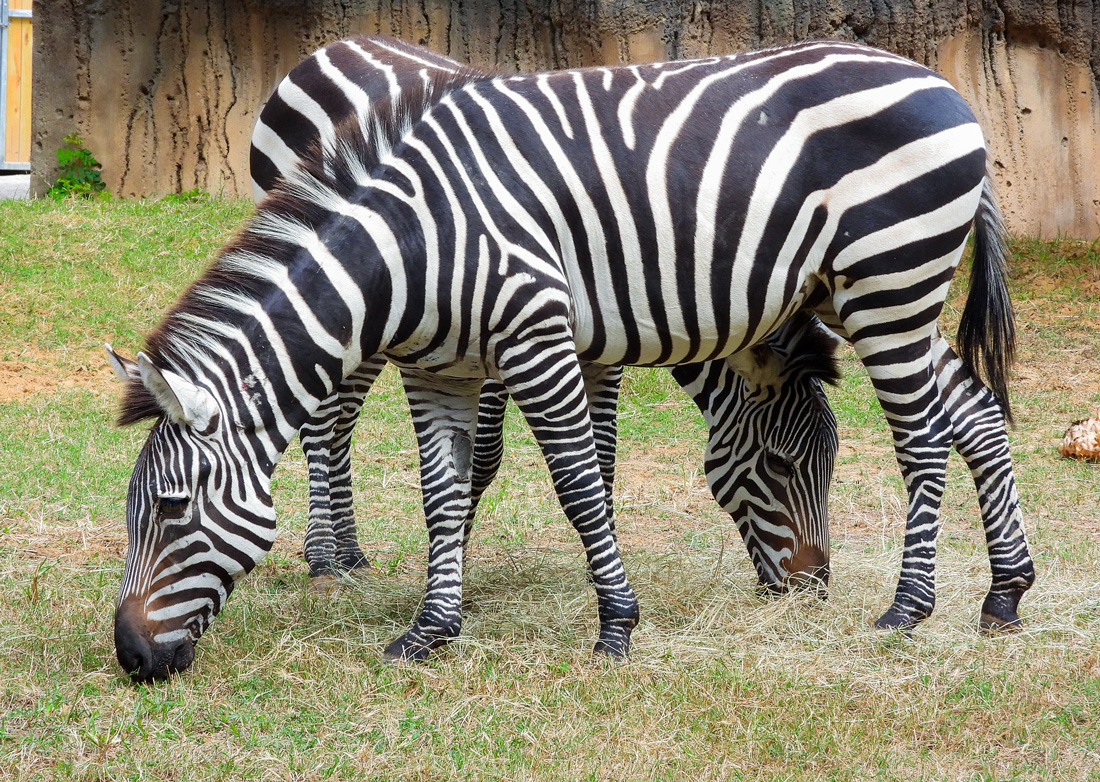


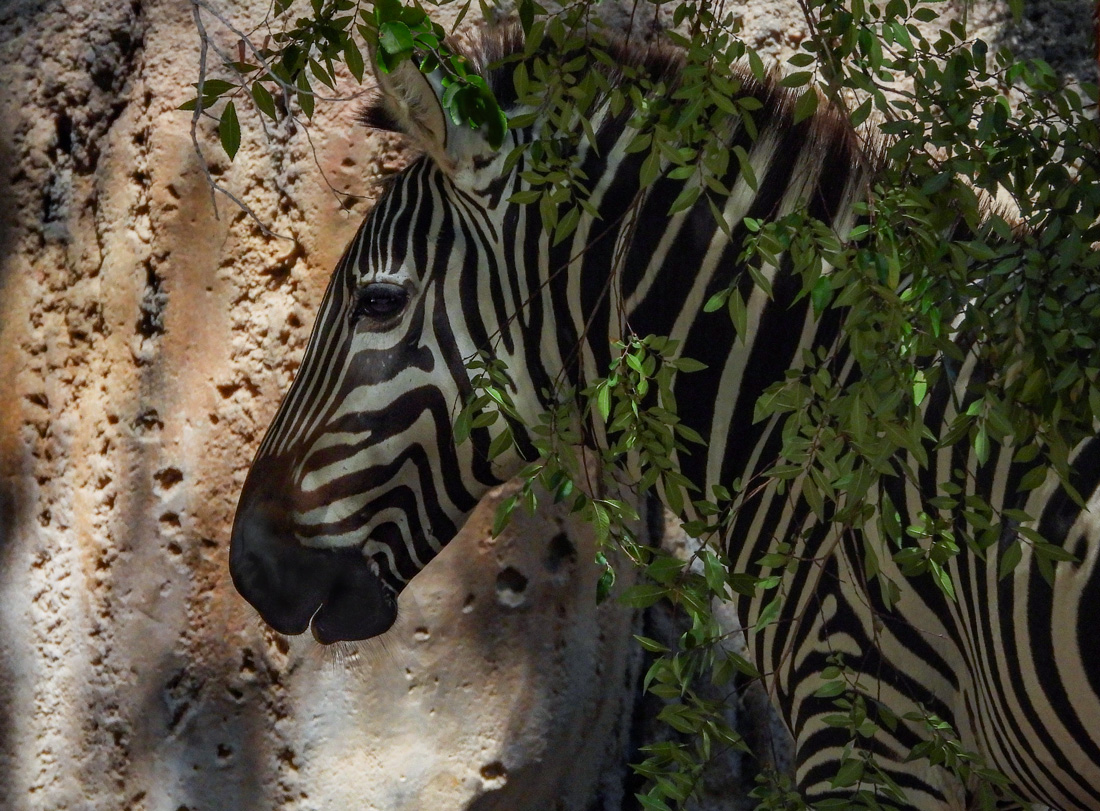
Two young zebras trot across the hard-packed Texas ground covered with patches of thick grass fried to a crispy brown by the relentless summer sun. The zebras’ stark, multiple black and white stripes seem to overlap and blend into each other as Pegasus and Hercules move side by side like a living canvas of graphic art.
The striking duo is the Fort Worth Zoo’s newest — and almost mythical — residents. They were introduced to the public in August, marking the return of zebras to the zoo after a five-year absence.
On a recent September morning, the two plains zebras chased each other around the perimeter of their new habitat kicking up dust and playfully nipping each other. Suddenly they paused, ears twitching like two sets of radar dishes scanning every sound. Zebras can view anything unusual or loud as a potential threat: A helicopter flying overhead or the thud of a plastic trash bin hitting the ground after it’s emptied.
As so-called prey animals, fear is part of their lives. In the wild, eons of living among constant threats from predators like lions and hyenas have left zebras with a temperament that’s always on edge, experts say. At the zoo, for example, a large enrichment ball placed inside their outdoor habitat was intended to be fun.
Hercules and Pegasus were not amused.
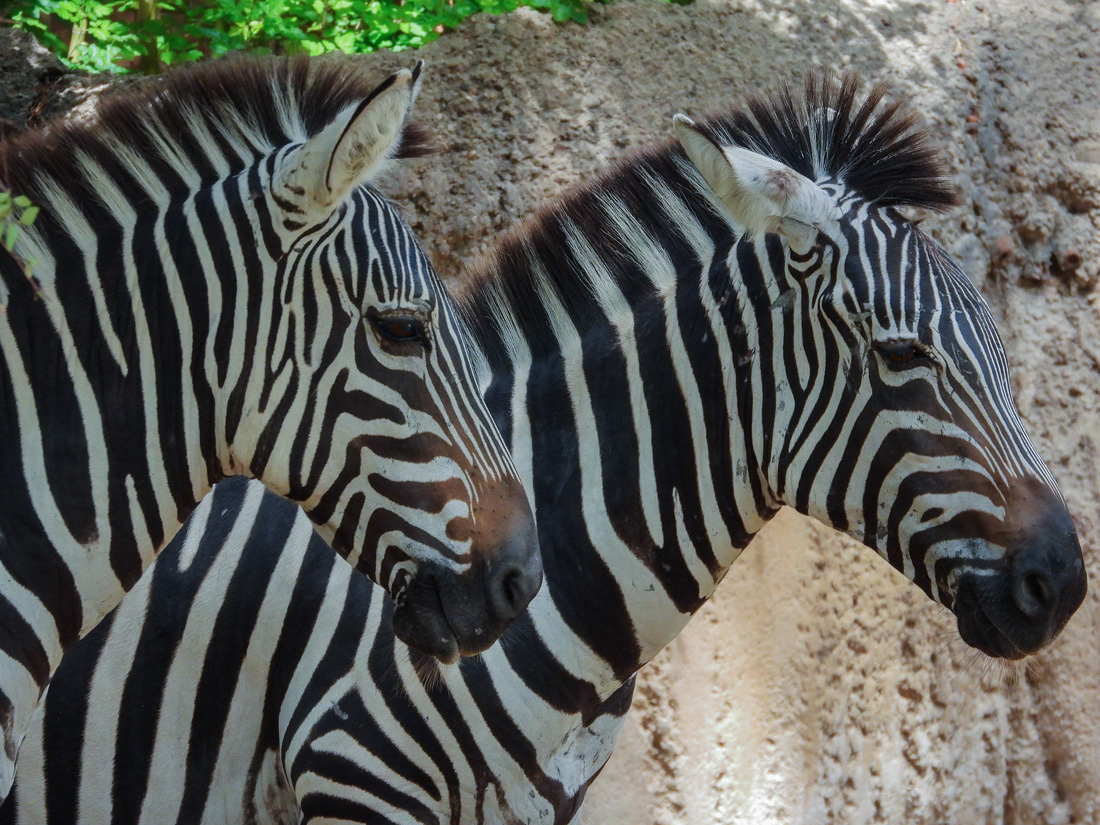
Photo by Teri Webster
“Being prey animals, enrichment can be scary at first,” said Sterling Harry, a swing savanna keeper. “A large ball in the habitat might be viewed as a threat. Now it’s there, and it wasn’t there yesterday. The more we keep giving it to them, it won’t be scary. But right now, pretty much everything is scary unless it’s food enrichment.”
Even then, Pegasus and Hercules have standards.
“They really don’t like kale,” Harry said.
Their vigilance shows up in other ways, as well.
“They are always on alert,” Harry said. “In a city, you have cars and everything that’s going not just in the zoo but outside the zoo as well. Someone changing a trash can spooked them, but when someone did it again, they were OK.”
After scanning everything for safety, Pegasus and Hercules continue their daily agenda of running around, eating grass and hay (and eating more grass and hay), followed by a brief nap or two in the shade.
Overall, they are adjusting well to their new surroundings. The two zebras arrived from a private wildlife facility in Texas in July and have been slowly acclimating and building trust.
Hercules and Pegasus started by staying mostly in their barn.
“The first day, they did not want to go out at all,” Harry said. “They politely said, ‘We’re comfortable in here.’ ”
After giving the duo a brief quarantine period to settle in behind the scenes, keepers began introducing the zebras to their outdoor yard.
Keepers coaxed them out for 30 minutes the second day, followed by short 5-to-10-minute intervals throughout the afternoon. The zebras’ caution quickly gave way to curiosity.
Now, the challenge isn’t getting them outside. It’s convincing them to come back indoors at closing time, Harry said.
Although it may seem unlikely, zebras are considered dangerous. Despite their elegant appearance, zebras are willful and strong and can defend themselves with powerful force, as noted by the world-famous San Diego Zoo.
Zoo professionals use extreme caution around zebras because they can react unpredictably when startled or threatened. That unpredictability became national news in 2013 when a zebra bit and severely injured a keeper at the Smithsonian’s National Zoo in Washington, D.C. In the wild, mature zebras are known to pack a kick so hard that it can seriously injure a lion.
Keepers at the Fort Worth Zoo work through barriers as they run standard training exercises with the zebras (and other animals). For their care, the animals are trained to shift between areas, step onto scales to be weighed, and present themselves calmly for health checks and blood draws.
So far, Pegasus and Hercules are behaving like gentlemen (and brothers), Harry said.
“Sometimes they’re great and happy with each other, and, sometimes, they’re brothers,” Harry said.
They play-fight and nip to test dominance yet will panic if separated for even a few minutes. If one slips back into the barn, the other immediately starts pacing and looking for his partner, Harry said.
Keepers keep a watchful eye for any aggressive behavior.
“If one is trying to bite hard, and the other one is trying to get away, that’s when we would separate them,” Harry said. “With them, so far, we haven’t gotten to that point.”
While Pegasus and Hercules settle into their cushy Texas routine, their wild relatives face much harsher realities across areas of eastern and southern Africa. They are classified by the International Union for Conservation of Nature (IUCN) as near threatened, and their populations are decreasing. Common threats are the loss of habitats due to farming, hunting, civil unrest, climate change, and severe weather, the IUCN says.
The World Wildlife Fund (WWF) says zebras help ecosystems through migrations that till compacted earth, disperse seeds, and sustain apex predators like lions.
Back on the Fort Worth savanna, Hercules and Pegasus are inspiring less serious questions. Zoo guests often want to know how to tell Pegasus and Hercules apart, Harry said.
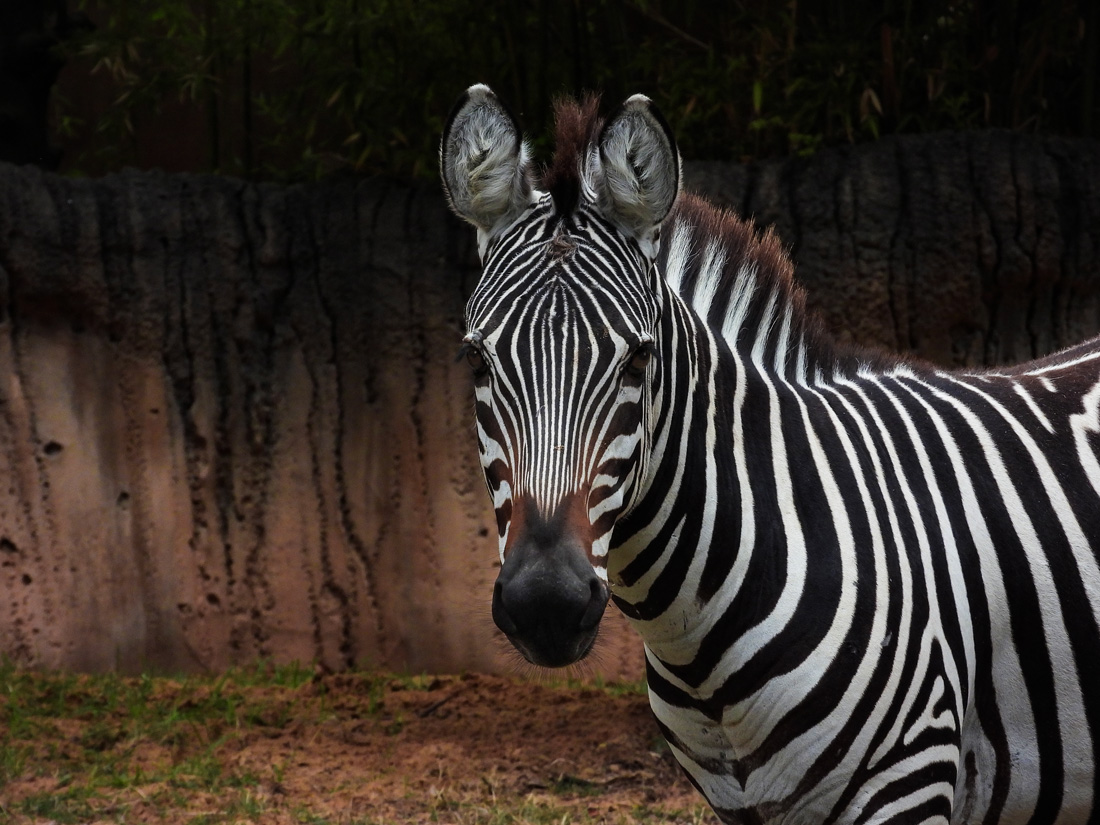
Pegasus, who is about a year and a half old, has a distinct black spot on his left abdomen and another on his right front leg, along with V-shaped facial stripes. Hercules, who is almost 2 years old, is slightly larger and has clean vertical stripes running along his snout.
“All zebras, just like a human fingerprint, have different stripe patterns,” Harry said.
Pegasus is smaller than Hercules, who tends to be more dominant, Harry said.
Another popular question is whether zebras are white with black stripes or black with white stripes. Mystery solved. Zebras are considered black animals with white stripes. Their skin is black underneath, covered by black and white fur. The white stripes are areas where the fur has no pigment.
Perhaps the biggest question of all is one that has been asked since they left. Where are the zebras?
“An iconic species native to the savannas of Africa,” said Michael Fouraker, executive director of the Fort Worth Zoo, in a prepared statement, “the zebra also became a beloved fixture at the Fort Worth Zoo for decades. After their departure in 2021, we realized just how much our guests missed their presence in the park.”
For nearly a century, zebras were a cornerstone of the Fort Worth Zoo. The first zebra resident arrived in 1923, marking the start of a 98-year stretch for the species here. In 2021, zebras were moved to another facility during construction on the Predators of Asia & Africa exhibit. More recently, crews spent months preparing for the zebras’ return, building a new barn and renovating a rhino habitat located between the flamingo and hippo habitats. Two of the zoo’s rhinos are now housed together in another rhino habitat.
Five years have passed since the zebras left the zoo, and now the lingering question is finally answered.
They’re back — just as clear as black and white.