


I’ve been watching documentaries for a while now. Some of them have featured the likes of genocidal dictators, Nazi concentration camp guards, and pedophile serial killers as interview subjects. Some of them have occasionally given me the urge to stand up and yell, “You are a piece of shit!” at the screen as they told me about how much they enjoyed what they did. And nobody has ever given me a stronger urge to do that than Billy Evans.
Of course, the sins of Elizabeth Holmes’ current husband are minor compared to those other malefactors’, but I wish to impress upon you how he comes across in You Can See Everything, which opens this weekend at way more Tarrant County theaters than documentaries usually receive. Billy is far from the only reason that this dazzling piece of nonfiction might be the best movie of the year. (It might be the best documentary of the decade. It might be one of the 10 best documentaries I’ve seen in my life.) However, he is just one amazing thing that you’ll see here.
The first third of the movie takes place in the spring of 2023, as comedian Nathan Fielder, documentarian Lance Oppenheim, and their film crew move in with Elizabeth, Billy, and their two kids at the San Diego beach house that the family has rented. It documents the 34 days before she’s scheduled to report to the federal penitentiary in Bryan, Texas to begin her 11-year prison sentence for defrauding investors as the CEO of Theranos.

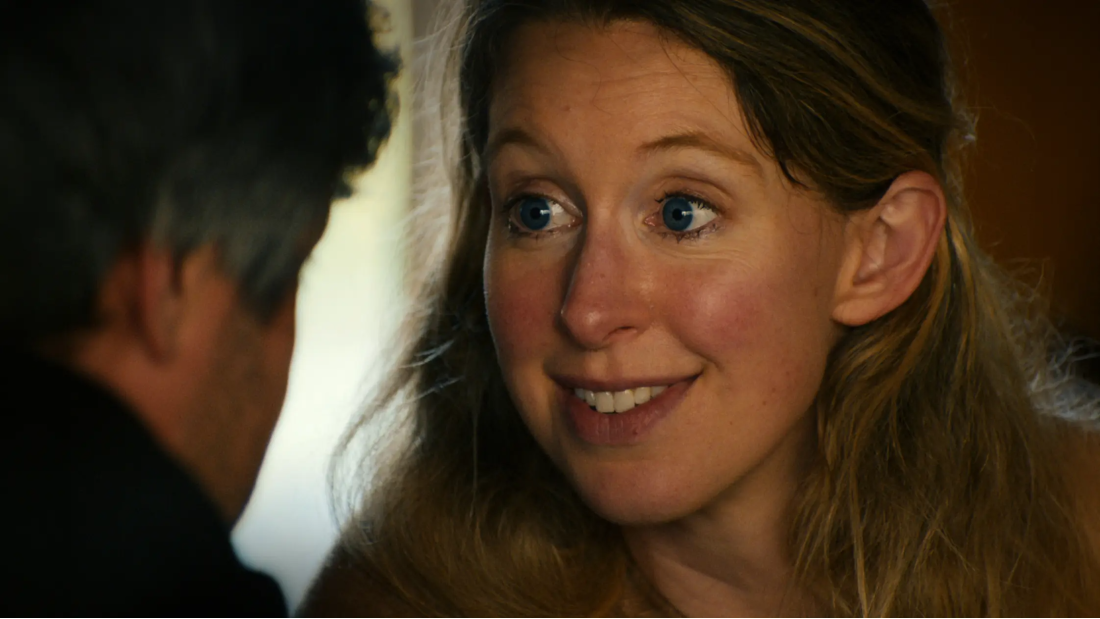
The worst liars are always the people who lie to themselves, and while we’re all guilty of that in some form (no, I don’t eat too many doughnuts), the big self-delusions are the ones that turn people into monsters. She, Billy, and her parents all insist that she never did anything wrong and that Theranos worked exactly the way it was supposed to. I read “please believe me” in her wide-eyed nodding at Nathan while she says stuff like this, but if you find craziness in her eyes, I can’t tell you that you’re wrong.
People who have seen Fielder’s real-world social experiments like The Rehearsal and Nathan for You always ask, “How does he get people to behave this way? They know they’re on camera, right?” Errol Morris sits back and lets his subjects hang themselves with their own words, while Michael Moore prods them with a stick until they say the wrong thing. Fielder as an interviewer manages to strike a masterful middle course, deferring to his subjects only up to a point. He confronts Elizabeth with Theranos’ confusing advertising copy for investors, and when Billy tells him, “I know how you’re feeling,” Nathan takes a second to answer, “No, you don’t.”
In one of many scenes worthy of Fielder’s comedy bits, the filmmakers show Elizabeth preparing scrambled eggs for her kids, and we see that she truly has no idea how to beat eggs. (Billy silently takes the bowl from her and does it properly, which is a harbinger of what’s to come, and prompts Nathan to ask cluelessly, “Why did you take over the eggs?”) Then there’s a revealing bit when Fielder plays footage of Abbott and Costello’s “Who’s on first?” routine for Elizabeth, and she admits that she doesn’t understand the humor. Nathan has to explain to her that the first baseman is named Who, which is why Costello is confused. It makes me wonder whether Holmes might be on the autism spectrum, which would not absolve her of any criminal wrongdoing.
The film reaches greatness when it jumps ahead to 2025, about an hour into its 174-minute running time. That’s when Fielder brings in Amanda Seyfried to watch footage of Elizabeth watching Amanda portray Elizabeth on Hulu’s The Dropout. The actress — who deservedly won an Emmy for her performance on that series — quickly becomes Nathan’s co-investigator and scene partner, with the filmmakers staging re-enactments of unfilmed scenes where she reprises the role of Elizabeth Holmes and Christopher Abbott portrays Billy.
The layers of documentary reality become kaleidoscopic in their complexity, and Nathan directs Seyfried to behave more like the Elizabeth he encountered. Via their scenes, Oppenheim interrogates his own methods and the methods of A24 in making this movie, and in a climactic re-enactment of Nathan’s prison visit with Elizabeth, Seyfried’s performance as a smart, powerful woman who now wants her husband to make all her decisions for her is pretty heartbreaking. We see the fake Billy demanding to be compensated like Prince Harry and Meghan Markle for his family’s participation in the film while Fielder and Seyfried debate whether Elizabeth is completely ignorant of her husband’s dealings or whether she’s just the world’s greatest actor.
Oh, but that’s nothing compared to what surfaces during a tense dinner with Nathan, Amanda, and the real Billy. Where he seems shady in the movie’s first act, he shows his true colors after his wife goes to prison, as he makes deals on Elizabeth’s behalf and tweets as her on X without her knowledge while telling Nathan that he knows her so thoroughly that he doesn’t need to consult her. He also says that prison has made his wife look healthier: “Maybe ‘healthy’ is the wrong word. I would say she’s more fit. I mean, she has abs now.”
Amanda asks Billy why he has power of attorney over his wife’s finances when she’s alive and mentally capable, and Billy not only calls her a piece of shit for her comments about Charlie Kirk, he threatens her and everybody else connected with The Dropout: “I’m wealthy and well connected, and I’m gonna fuck up everybody’s lives. I’ve got vengeance in my heart.” (Later, when Nathan brings up his attempt to make money from A24, he admits it straight out and says, “[Elizabeth] was handling a lot of shit at the time,” addressing Nathan like he’s a particularly slow 6-year-old.) Leaving his house, Seyfried says, “That guy’s batshit crazy!”, which I think is too kind. Despite his claims that he didn’t know who Elizabeth was when they first met, Evans strikes me as the type of guy who identifies women who are in trouble and presents himself as their white knight. You’ll be happy to know that he gave up his extortion plan, so the money you pay for your ticket won’t be going to him.
Anyway, in getting so close to these deluded people, Fielder and Oppenheim have done more than give a good name to access journalism. They’ve done more than generate a compelling case study of how people go insane from the desire to appear successful. What they do is nothing less than create a whole new form of nonfiction storytelling. Documentaries that teach me something are good. Documentaries that open up a whole new approach to the genre are rare indeed. That’s what makes You Can See Everything an event as it arrives here.
You Can See Everything
Starring Nathan Fielder and Elizabeth Holmes. Directed by Nathan Fielder and Lance Oppenheim. Rated R.