

Has soccer truly made it in this country when it goes casual?
TOCA Football Inc. made its name in technology-driven soccer training. They operate centers in North America, including four in North Texas, catering to players who want to improve their games. In order for such a venture to succeed, it needs, well, a lot of soccer players. There was a time in living memory where that wasn’t the case in the U.S., but in the present day, the Sports & Fitness Industry Association estimates we have more than 20 million playing the game. TOCA’s newest venture doesn’t necessarily want to rely on them, however.
“We’re a soccer company, and we create soccer experiences, but whether you’ve never kicked a ball before in your life, or you’re a two-time World Cup player like myself, the games are designed for anyone and everyone,” said TOCA Football Founder & President Eddie Lewis, who played in the midfield for Team USA from 1996 to 2008. “Outside of actually playing the games in an interactive way, we have lots of viewing that’s available for soccer games.”

Lewis spoke to the media Wednesday at TOCA Social’s first U.S. location, which they have placed in The Colony. The concept combines interactive soccer games with food, drink, TVs, and soccer-related decor. Such a venue will certainly appeal to hardcore soccer fans and regular players. But to be its best self, it needs to also draw in the soccer-curious.
“It’s a fantastic opportunity to get people who might not go to a game regularly to get out and see it and just see how exciting it can be,” said NFL kicker and TOCA Social investor Brandon Aubrey. He played professional soccer before converting to American football. His current sport has done a superb job of bringing in fans who don’t block, tackle, or get flagged for lining up in the neutral zone. Non-hardcore fans appreciate it enough to embrace the Saturday or Sunday spectacle while also populating their fantasy football rosters.
The company has TOCA Social emplacements in England where the population feels that way about the game they call football. While the U.S. certainly doesn’t have the same affinity for the beautiful game as the sport’s birthplace does, a number of factors have put the soccer industry in an advantageous position. One is the momentum that’s already building for a domestic Men’s World Cup this summer.
“With the World Cup coming this year, there couldn’t be a better time, not only to be here in the U.S., but specifically the DFW market,” said Lewis. “There’s matches here. It’s the media hub. So we’re really excited to be kind of front and center.”
The growth of the professional club game bodes well for the soccer ecosystem, too. Former FC Dallas star Kenny Cooper, Jr. attended Wednesday’s event along with the club’s mascot, Tex Hooper. Costumed characters from the Dallas Cowboys, the Dallas Stars, and the Dallas Mavericks also appeared, along with another noteworthy individual: Boots, a horse who represents the area’s second-year women’s soccer team, Dallas Trinity FC.
Boots made sure to get her photo made in front of TOCA Social’s DTFC mural with another TOCA investor, Abby Wambach. No U.S. man or woman has ever scored more goals in international competition than Wambach (see the video interview I did with her at the top of this post). Their presence underscores another crucial reason why soccer has a chance to win in the U.S.: it appeals to all genders.
Indeed, when I was conducting interviews for the Raising Her Game documentary, we had more than one person tell us how the women’s team’s success proved a greater driver of soccer growth in the United States than the men’s game.
“If you look at our performance centers, half of our customers are girls and women. So the women’s game is critical to us. You can see the homage of the Trinity inside. Abby, obviously, is, is a legend,” noted Lewis. “For us, and certainly in America, you know women’s soccer is only growing and going to get bigger.”
“The women’s team has been fantastic for as long as I’ve been alive, and always kind of carrying the sport, I think, for fans in the U.S.,” said the 30-year-old Aubrey. “You want to watch your team win, and they’ve been on top for a long time, so they’ve done a great job. They inspire the younger kids, boys and girls alike, to want to play soccer.”
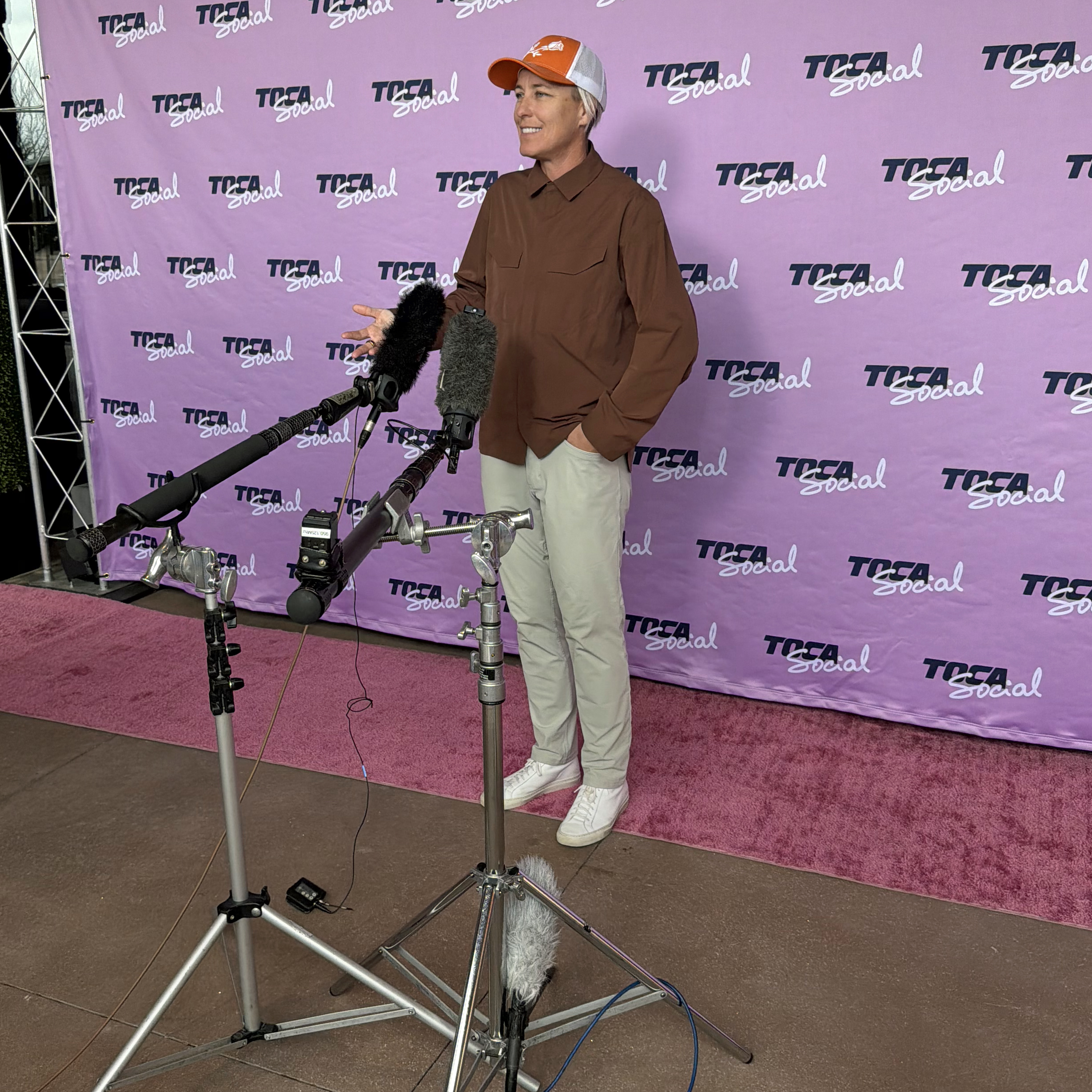 As a business like TOCA Social looks to expand, it will seek to ride the momentum created by past successes like those of Wambach and her peers, along with the aura of 2026’s Men’s World Cup. Those past and present achievements have the sport in growth mode, including creating more casual fans.
“As a women’s national team player, we understood that we had these really special moments. We had our World Cups and we had our Olympics, that the lights would shine on us as brightly as possible if we did well,” said Wambach. “And so, as it relates to like soccer in general, in our country, we have a massive opportunity.”