


Some of the planet’s best classical guitarists are coming to Fort Worth this weekend to compete for the field’s biggest cash prize in a new contest. The inaugural Guitar Studio International Festival and Competition happens Fri-Sun, Jan 16-18, in the home of the iconic Van Cliburn piano challenge on the TCU campus.
If you’re unfamiliar with classical guitar or other classical music competitions, imagine a sort of battle of the bands. Scratch any image of groups of leather-clad rockers flailing on Fender Strats in front of monster stacks. This one features elegantly groomed soloists playing nylon-string instruments before a panel of sharp-eyed judges. Another difference is the $15,000 check, plus other goodies, that goes to the musician judged best.
This is a first for Fort Worth. It’s the brainchild of local guitarist, teacher, and Guitar Studio owner Will Douglas and Chinese instrument maker Altamira Guitars. Other co-sponsors include a foundation connected to the Guitar Studio, French string maker Savarez, and TCU, which is contributing its world-class musical performance facilities.

Numerous guitar competitions happen every year all over the state, the country, and the world. This one stands out because of the size of the cash payoff. The $15,000 first prize is more cash than any other current classical guitar competition. Some contests have awards like concert tours that are valued more highly, and a handful in the past have featured bigger cash prizes, but many contests have yet to return from pandemic suspensions. And none of the active ones hand bigger checks to the winner.
The money is just one of a spectrum of awards going to artists in youth and professional divisions. Other prizes range from a $10,000 Altamira guitar and international concert gig for the top pro to $250 for the third-place youth.
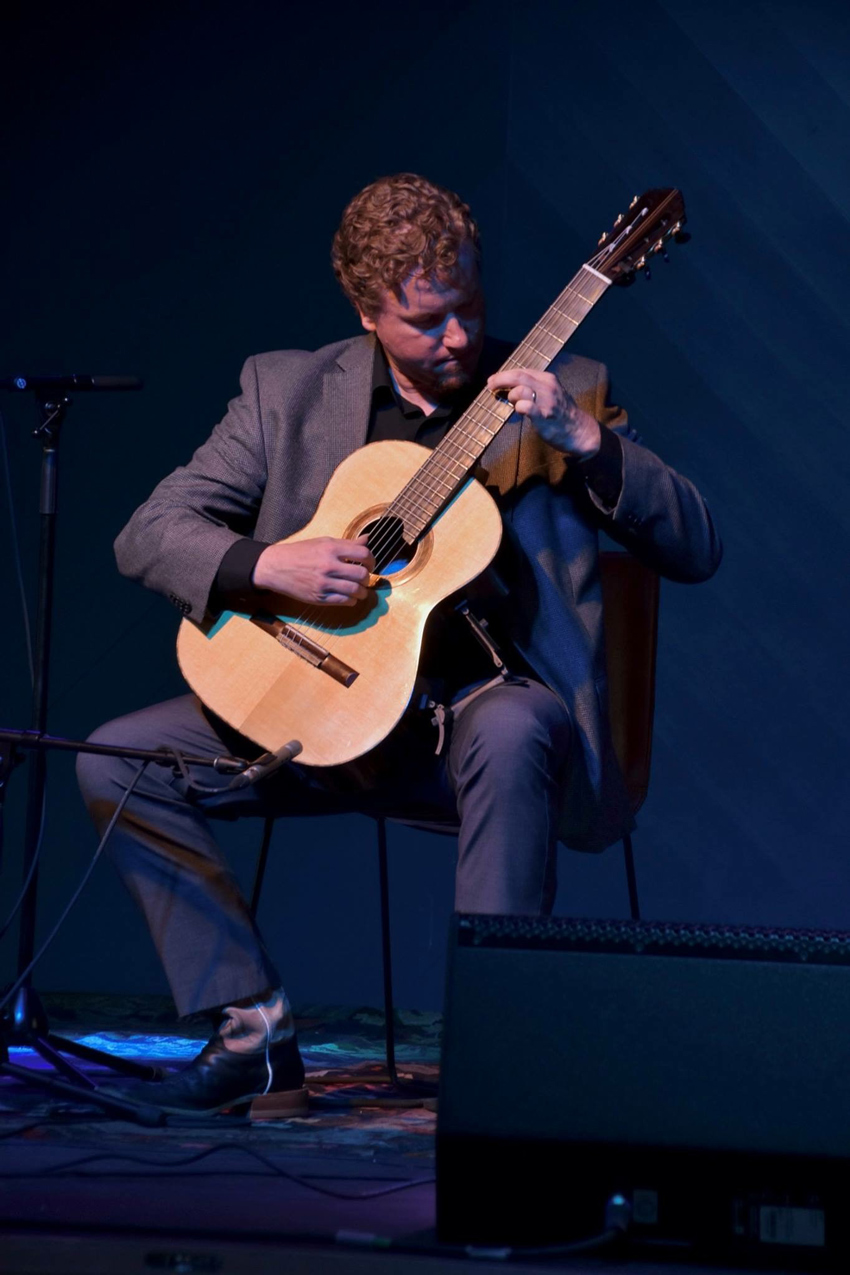
Courtesy of Fort Worth Chamber of Commerce
And it’s more than a contest. Along with semifinal and final competition rounds, the festival schedule includes full-length concerts every night by major classical guitarists. Featured performers include Cuban-born Rene Izquierdo, an acknowledged virtuoso who plays concerts all over the world, and China’s Tengyue Zheng, 2017 winner of the prestigious Guitar Foundation of America competition. In addition to listening to others play, guitar students can take advantage of a slate of master classes taught over the three-day festival by local and imported maestros.
Guitar competitions like this help young artists (30 is the top age for this one) achieve recognition and meet artistic colleagues. From a broader standpoint, the idea is to do for Fort Worth’s classical guitar and overall musical community what the best-known local classical competition — the Van Cliburn International Piano Competition — did for Cowtown. That is, make the community synonymous with top-shelf musical performance and appreciation.
It’s a stretch goal, to be sure. For starters, the Cliburn pays a sizzling $125,000 to the first-place pianist. The quadrennial Cliburn is on any list of top keyboard competitions worldwide. It is famed for launching winners into rewarding musical careers.
“To ever be compared to the Van Cliburn competition I would consider to be a deep compliment,” said Douglas, whose Guitar Studio on Camp Bowie Boulevard has taught generations of Fort Worth guitarists. But you have to start somewhere, and the inaugural Guitar Studio competition and festival may be getting off to a good beginning.
*****
The initial idea for the contest came from Altamira Guitars, a Chinese maker of Spanish-style classical and jazz guitars, including some high-dollar models used by prominent soloists. Douglas became owner of The Guitar Studio following the 2021 COVID death of founder and local guitar luminary Michael Dailey. Soon after, Douglas began selling Altamira instruments. The manufacturer, noticing the pace at which Fort Worthians and other North Americans were buying its guitars, suggested Douglas organize a competition like those it already sponsored in China, Australia, and Italy.
Douglas liked the idea. The nonprofit Guitar Studio Foundation he’d set up could serve as a co-sponsor. He started recruiting others. Early on, he met with Marc Reed, head of TCU’s music department, in search of physical facilities. Reed was receptive.
“It’s in the same vein as the Cliburn,” Reed said.
By that, he means it’s great for the local music community. In particular, it helps the university’s guitar and other music students. That was enough, Reed decided. He made a key decision to offer the famed acoustics and artist-friendly classroom and practice facilities of the $53 million Van Cliburn Concert Hall.
The dream becomes reality on Friday with the initial rounds of the youth competition, which include 14- to 17-year-olds and another group of under-14-year-olds. French-born Gabriel Bianco, winner of numerous major competitions and featured player on eight recordings, will teach a master class in the afternoon. The evening features a concert by Korean-born Bokyung Byun, who has also won several major competitions and now teaches at UNT.
Saturday brings the youth semifinals. Workshops and classes include one on musicians’ health by the UNT Health Science Center’s performing arts medicine program. In the afternoon, there’s a Zheng concert before the professional contestants go through their semifinal round. Bianco performs in the evening.
Sunday is the last day, with the pro finals in the afternoon open to ticketholders and Izquierdo concertizing in the evening to an audience that, Douglas said, will include Mayor Mattie Parker. Although all youth events are open to the public, the pros’ semis are closed, and the pro finals, like the featured concerts, are for ticketholders only. The festival sells individual concert tickets for $30 as well as day passes and two levels of all-weekend passes. For $120, passive passes let you watch all classes, workshops, and performances. A $200 active passholder can bring their guitar and join in the workshops.
The competitors, who are coming from several foreign countries and many states, get to do all this, plus take a city tour arranged with the help of the Fort Worth Stockyards. The tour, Douglas hopes, will remind competitors of the importance of knowing and connecting with the community.
“This is a competition that’s internationally minded but locally facing,” Douglas said. “We want to invite everyone to come here and be a part of the Fort Worth and Texas and DFW music community and see how a community lives and breathes and operates.”
*****
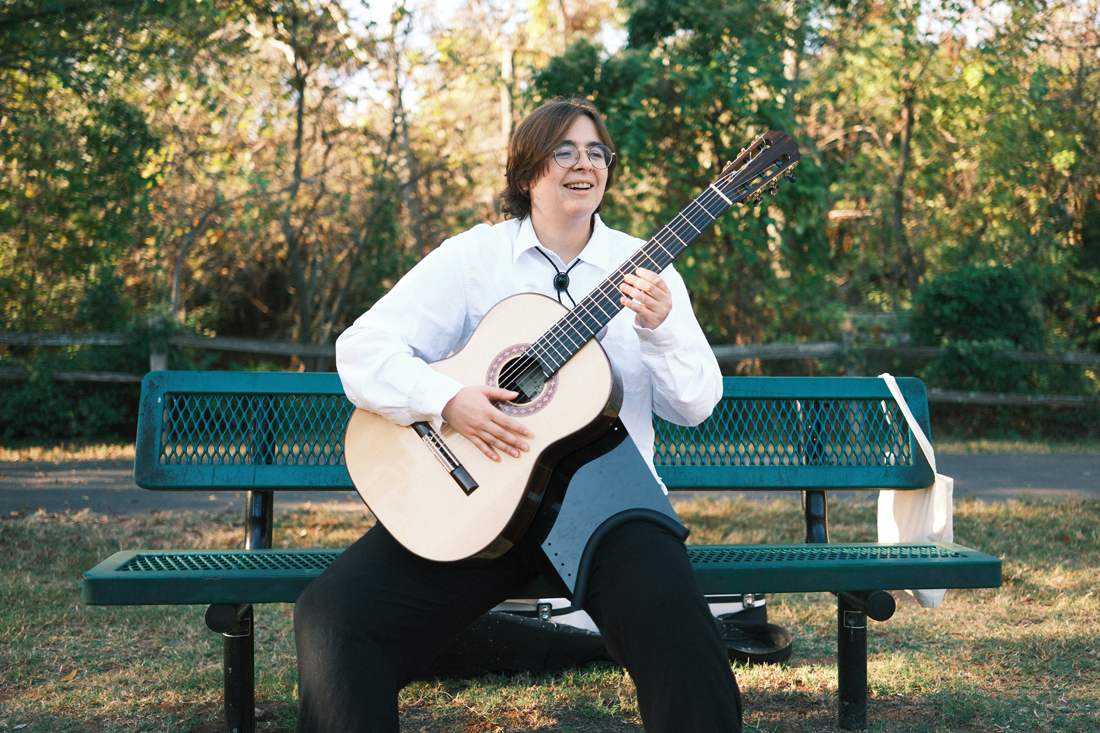
Photo by Chase Hampton
People, as much as instruments and notes, represent a common theme expressed by those connected with the Guitar Studio contest and festival. That’s by design.
“You can win a $15,000 prize, but at the end of the day, what’s going to carry you through your career and your life are the people that care about you,” Douglas said.
Douglas, a Fort Worth native with bachelor’s, master’s, and doctoral music degrees from UNT, got to know Van Cliburn through the pianist’s friendship with Douglas’ oil-industry-executive father.
“I grew up around him as a kid,” Douglas said. “Van Cliburn himself was someone who, if you were talking to him, you were the most important person in the room, whoever you were. He wasn’t looking over your shoulder to see who was standing behind you. He was a gentleman to everyone.”
Gentlemanly behavior standards don’t disguise the fact that this is a high-stakes competition. Each contestant has paid a fee — $120 for pros and $80 for the youngsters — and practiced many hours to get here. Some have also traveled from overseas. As a potential payoff, in addition to cash and a high-end guitar, the winner will get a concert at one of Altamira’s other contests in Melbourne or Shanghai, as well as a return show at the planned 2027 edition of the Guitar Studio festival.
For contestants, taking home the top award could be life-changing.
“A win in this competition would be huge,” said Eduardo Lopez, an El Paso native studying for a doctorate in musical arts at UNT. Lopez has medaled in smaller guitar challenges, but the Fort Worth event is something else. “It’s one of the biggest prize pools in the world for competitions,” he said.
To reach the semifinals, Lopez and other contestants had to impress first with a 10-minute performance video. Now that he’s in the semis, he’ll play live for another 10 minutes in front of judges onstage in the 715-seat Cliburn. Contestants can’t repeat selections but choose their own performance pieces.
Lopez has settled on the guitar transcription of the prelude to Bach’s “Cello Suite No. 6” and the 20th-century Frank Martin composition “Quatre Pièces Brèves.” Should Lopez make the finals, when contestants play for 30 minutes, he has readied more modern pieces, ones by Mexican composer Manuel Ponce, the Cuban Leo Brouwer, and Spain’s Federico Torroba.
Lopez has played some of these for years and typically has all contest selections memorized and performance-ready a month beforehand. For the next few weeks, he will focus on performing the selections onstage in front of people as much as possible.
“Two weeks out, I start recording myself a lot,” Lopez said. “I want to gauge every note. That only happens listening to yourself.”
The day of the contest, he’ll dial back practice and try to calm his nerves. Gameday breakfast will be a banana and a bowl of Mini-Wheats.
“That’s all my stomach can afford,” he said.
Win or lose, Lopez looks forward to showing his artistry before discerning audiences. That includes a panel of judges consisting of all the featured performers. Other judges are noted composers, players, and educators, including UNT professor emeritus Tom Johnson and German Gutierrez, head of TCU’s orchestra program.
“You get to play for these amazing guitarists and get their feedback,” Lopez said. “Also, you’re competing against virtuosos and literal child prodigies.”
Performers coming into town from elsewhere also get a chance to experience Fort Worth. Semifinalist Audrey Oden grew up and began studying guitar in Oklahoma City, where she’s now pursuing a doctorate at the University of Oklahoma in addition to teaching, playing, and competing. While she’s seen Fort Worth a time or two, she’s not overly familiar with the city. She’s certainly never played at the Cliburn. She’s looking forward to that, as well as getting better known and meeting fellow guitarists.
“It’s good for name recognition and connection with other musicians,” Oden said of prior competitions she’s entered and sometimes won medals in. “I know so many people from across the country that I wouldn’t have known from just staying in Oklahoma all the time.”
A win, Oden said, “would be really validating. Any prize would be good, just recognition for all the hard work I’ve put in.”
Her semifinal plan is to play a transcription of a baroque keyboard sonata by Domenico Scarlatti as well as “Three Little Preludes,” which was written for her by an Indiana composer. She’s prepared modern guitar pieces by Brouwer and Japanese musician Toru Takemitsu as well as another keyboard transcription by the 19th-century German Romantic Clara Schumann.
Judges will evaluate performers on the difficulty and appropriateness of their chosen repertoire in addition to skill, musicianship, and stage presence, Douglas said.
“It’s important that they play well,” he said, “but also, how do they relate to the audience? Is it music people can relate to? How varied is the program? Would they make a good ambassador to the classical guitar world and to the public?”
Three of the 15 semifinalists will satisfy these demands well enough to reach the finals. Of those, the best will take home the $15,000 in cash, the $10,000 concert double-top Altamira guitar, an invitation to play at next year’s festival, and a chance to perform internationally in either Melbourne or Sydney. Second place gets $5,000, and third receives $2,000. There’s also a $500 audience favorite prize voted on by attendees. The $500 Michael Dailey award goes to the best performer of a piece drawn from Andres Segovia’s recordings.
Each first-place winner in the two youth divisions qualifies for $1,000 cash and an Altamira guitar. Second- and third-place youths receive $500 and $250, respectively. Youth audience awards pay $250 for each division as well.
******
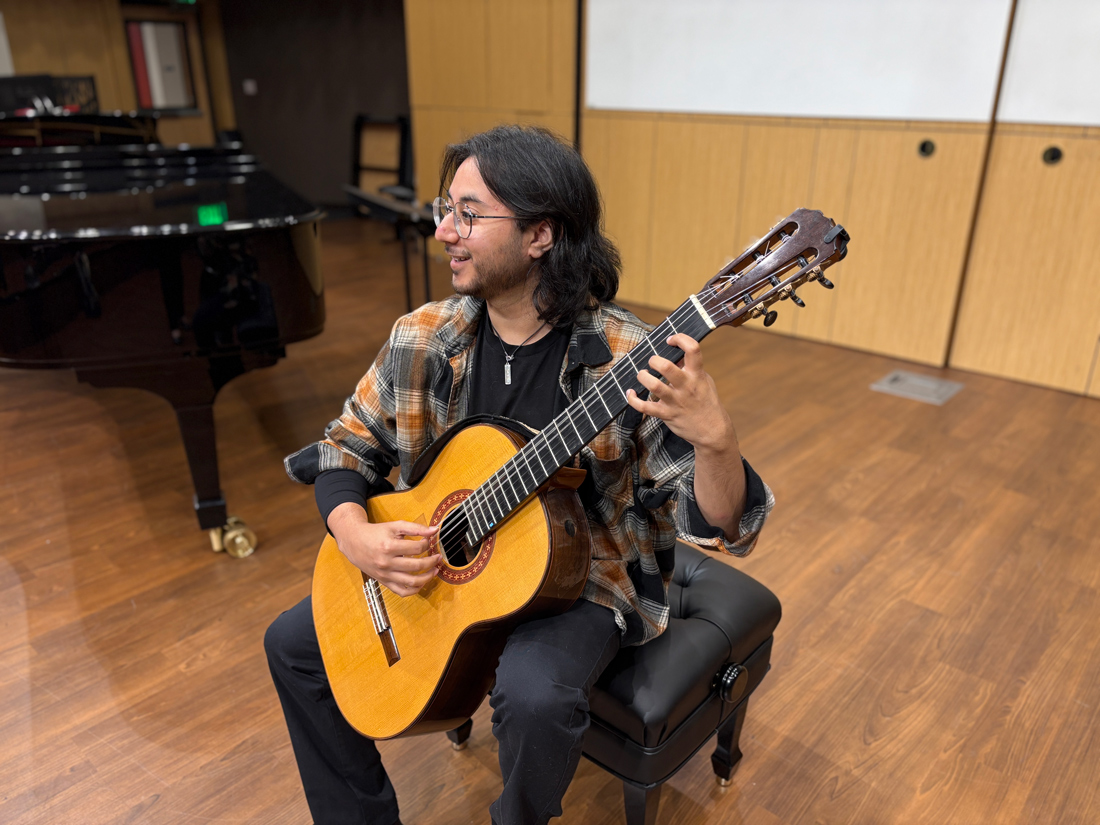
Photo by Bokyung Byun
The purse has attracted entries from all over the world as youthful artists hope for their big breakthrough. If all goes well, it could turn out to be as transformative as Van Cliburn’s fabled 1958 win at the initial International Tchaikovsky Competition in Moscow. That triumph launched one of the most storied careers of any pianist. It also put his adopted hometown on the global musical map, seemingly for good. The most recent Cliburn competition, the first held in the new namesake hall at TCU, was the 16th since it started in 1962.
The Guitar Studio International Festival and Competition doesn’t have anyone with Cliburn’s incandescent star power. That’s not surprising, since the charismatic Texan remains one of the most recognizable names in classical music even 13 years after his death. However, at least for this weekend, the event seems likely to establish Fort Worth as a classical-guitar destination.
And no matter which individual guitarist tops the field, the real winner may be the city itself. That will be even more likely should it turn out to be a regular occurrence.
That’s certainly the plan Douglas has. He makes no secret of the fact that they’re hoping this event will turn out to be as durable, if not as dominant, as the classical music event for which Fort Worth is best known. To that end, he’s tried to follow the better-established contest’s lead.
That means more than just holding it at the Cliburn Hall. He’s also trying to imbue it with the kind of class and community-mindedness Van Cliburn himself evidenced throughout his life.
“We feel that shaping the way we do things as close as possible to the Van Cliburn standard is a good way to go,” Douglas said.
So, will this turn out to be another regular feature of the Fort Worth music scene? Key supporter Reed of TCU can see it.
“That’s TBD, but I’m hopeful,” Reed said. “We’re always looking for great ways to support awesome things like this.”