

This year marks the 50th anniversary of Black History Month. Had I been reviewing movies back in February 1976, I likely would have marked that first occasion by lamenting the lack of opportunities given to Black filmmakers. Now, of course, their work deservedly fills entire shelves of books, and this 800-word column will hardly be able to do justice to their scope. We’ll try anyway, because the job is worth doing.
Despite the racism they faced, Black filmmakers were operating from early in the medium’s history. Oscar Micheaux was born the son of a freed slave in Illinois in 1884, and while he originally aimed to be a novelist, he took up the new technology and created films throughout the 1920s and ’30s. Financing his own projects outside of the established industry, he was able to craft Black stories specifically for Black audiences. His films such as Within Our Gates and Body and Soul (which stars the uniquely powerful Paul Robeson) do not offer much more than historical value, with their stilted drama and acting and their obsession with light-skinned Blacks “passing” as white. (Both Black and white writers of his time addressed the subject, but with Micheaux, it was his personal hobbyhorse.) Nevertheless, he was a useful starting point.
Somewhat more sophisticated were the films of Spencer Williams Jr., whose work received a retrospective decades ago at the now-defunct Lone Star Film Festival. Williams’ comedies frequently showcased the musical talent of Black performing groups, as well as the director’s own talent for portraying smooth-talking conmen and tricksters. Though disreputable, his charming characters sported considerably more dignity than their stereotyped counterparts in Hollywood movies, whose actors were saddled with demeaning stage names like Stepin Fetchit, Mantan Moreland, and, worst of all, Sleep ’n’ Eat.

Following World War II and the civil rights movement, Black filmmakers started setting their sights higher. The photographer and composer Gordon Parks, who had worked on government-funded documentaries about ghetto life, adapted his own coming-of-age novel The Learning Tree to film before finding success and kicking off the blaxploitation genre with Shaft. Charles Burnett’s masterpieces Killer of Sheep and To Sleep with Anger suffered from poor distribution but would find their audiences over time, and Julie Dash’s Daughters of the Dust remains a singular look at the Gullah people’s society and traditions.
This article would be incomplete without citing the work of Spike Lee. Alternately working with Hollywood and outside of it, the contentious New York native has carved out his own place in the cinema landscape, becoming one of America’s deepest thinkers on race relations. Even disregarding his massive output of fiction films, his documentaries alone such as 4 Little Girls, Bad 25, and the concert film American Utopia would be enough to secure his reputation as a great filmmaker.
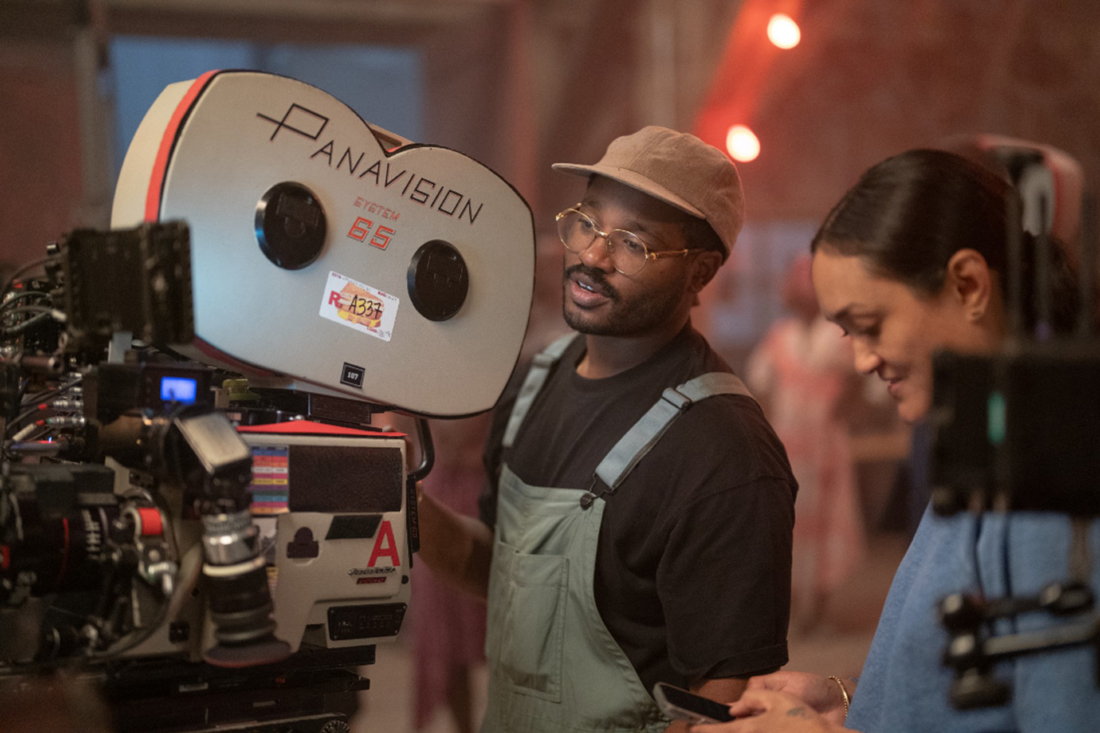
During my tenure as film critic for this publication, I’ve been lucky enough to witness the ascent of others like Ava DuVernay, Jordan Peele, Barry Jenkins, and Ryan Coogler, who have followed Lee’s footsteps and made Black stories that captured the imagination of non-Black moviegoers at the multiplexes. (I would put Nia DaCosta in their class as well.)
Of course, Black filmmaking goes beyond America. In the previous century, Burkina Faso’s Idrissa Ouédraogo and Senegal’s Ousmane Sembène and Djibril Diop Mambéty made internationally recognized films in Africa despite the lack of resources available to them. Because of their efforts, we now can see a steady stream of notable movies from the likes of Kenya (Rafiki), the Ivory Coast (Night of the Kings), Lesotho (This Is Not a Burial, It’s a Resurrection), Nigeria (Mami Wata), and Zambia (On Becoming a Guinea Fowl).
Then, too, a Black Englishman directed 12 Years a Slave, which won the Best Picture Oscar. France’s film industry was largely stuck in a rut at the turn of this century, and its recent rejuvenation is due in no small part to Black directors like Ladj Ly, Maïmouna Doucouré, Alice Diop, and Mati Diop (unrelated to Alice Diop but the niece of Mambéty) getting their chances behind the camera. Jonas Carpignano is a singular figure in Italian film because of his mixed-race heritage. As there are Black people in many parts of the world, Black filmmaking continues to evolve differently, responding to local circumstances as much as global ones. The mindful denizens of the film world watch it all with great interest.