

The contribution of Black musicians to Fort Worth is the same as it is to America. It’s immeasurable, invaluable, and woefully underrecognized. To alleviate in some small measure that last bit, we reached out to some area musicians to gain their insights on the rich legacy of Black artists from our burg and whether the focus of traditional media surrounding Black History Month — supposedly intended to celebrate normally underappreciated creators — really accomplishes what it’s purportedly intending to do.
All too often, people of color, Black artists in particular, tend to be treated by the media — intentionally or otherwise — as a monoculture. Yet despite dismissive assumptions, perspectives in reality are as varied and complex as are the individuals who live and express them.
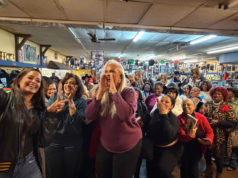
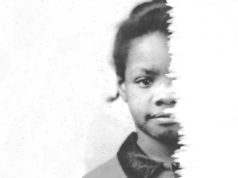
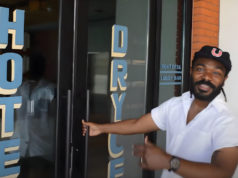
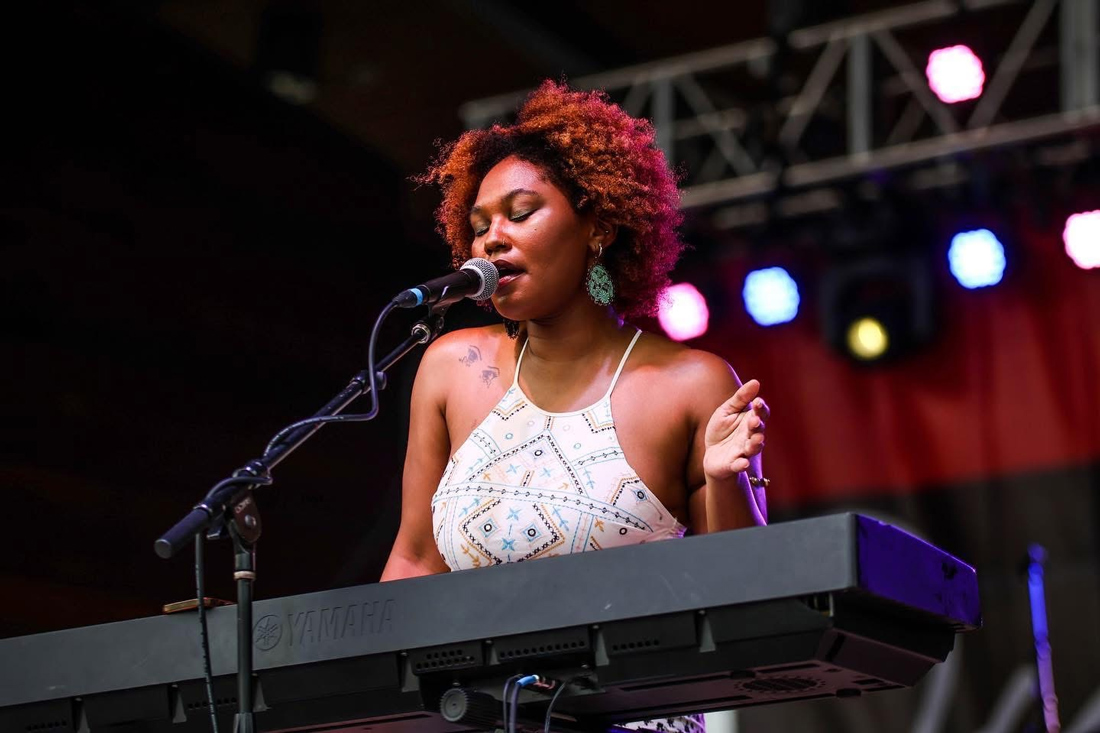
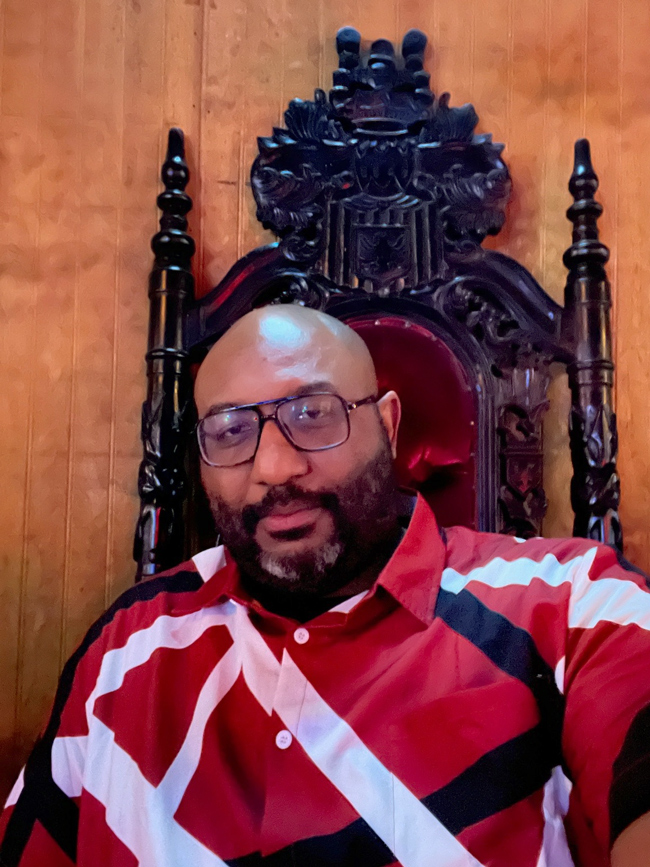
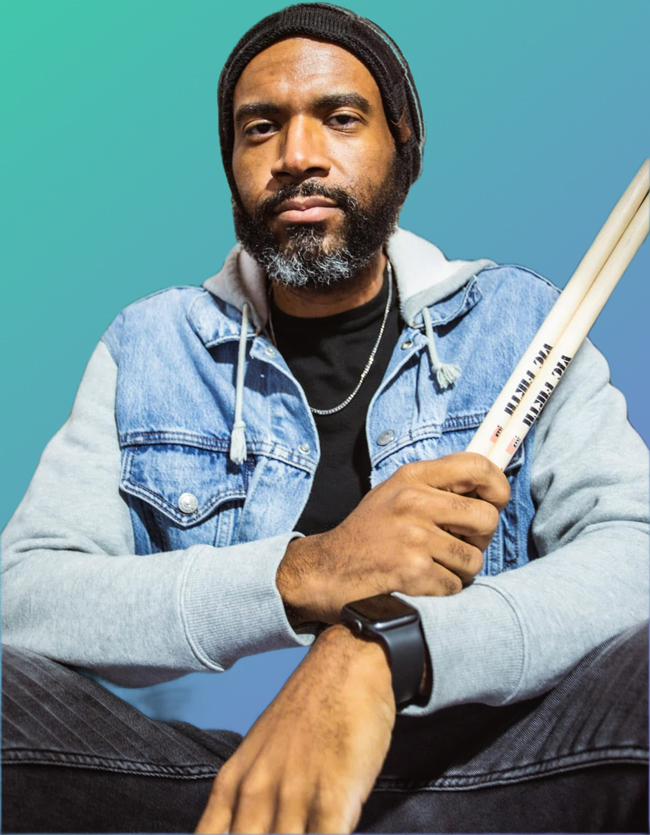
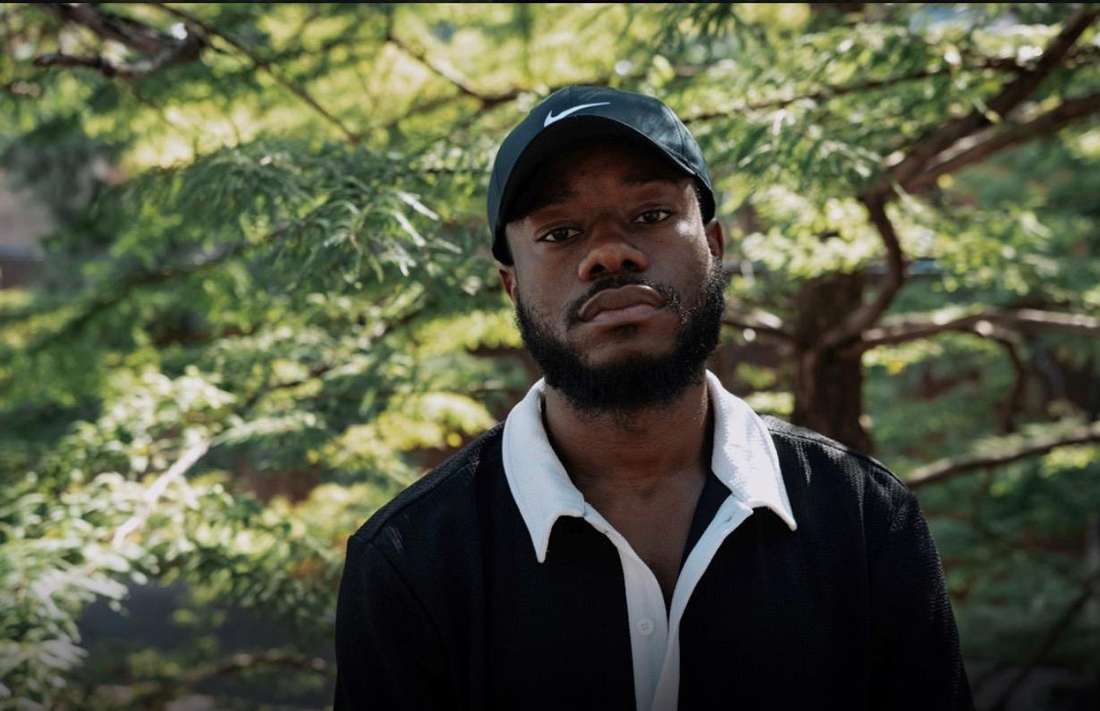
Quincy Holloway is a decades-long veteran of the North Texas underground scene, playing drums with dozens of bands like Dove Hunter, Kaiser, Meth Gator, and the legendary dub outfit Sub Oslo. Chris “Chill” Hill is also a longtime Fort Worth drummer, backing acts like blues virtuoso Chet Stevens, the soulful Taylor Pace, and the four-part vocal group Elevation. Kayla Scales is a keyboardist and vocalist for Igimèjí, a jazzy neo-soul outfit focused on love and beauty. Wrex is a prolific rapper who writes introspective verses meant to expand the mind and soul.

Fort Worth Weekly: How do you feel about the rich history of Black artists from the area? How would you describe the personal impact that history has had on you?
Holloway: I feel quite fortunate to live in a community where the influences of such legendary musicians of color left their mark, particularly those of the late Ornette Coleman and Buddy Miles and, of course, our most contemporary local legend, Leon Bridges. Although I’m not too big on localism, I can’t help but feel a sense of pride.
Hill: Fort Worth has produced some incredible artists throughout its history, and I don’t think it gets enough love and recognition for that. It’s pretty cool to be associated with — at least in geographical proximity — revolutionary legends like Kirk Franklin and Ornette Coleman.
Kirk was pivotal in making Black gospel music mainstream and exposing so many people to music they may not have known existed through the way he and his band and singers created it. He made it commercially fun, exciting, and relatable.
Ornette is one of if not the founder of what we consider free jazz. Most folks don’t like jazz, and I get it and understand why. It can just sound like noise at times. Sometimes it is. But for a musician, especially Black musicians, jazz is primal. It’s in our blood. To have it presented in a way where the foundation is “You have control over your instrument, you’ve learned all the rules, break them however you see fit” is the most freeing and exhilarating feeling there is. Ultimate expression. No box. No, “Hey man, don’t play that!” Just musicians communicating nonverbally through soundwaves and energy. Nothing beats it.
Scales: I think the rich history of Black artists in DFW is awesome. Whenever my band Igimèjí is on tour, I always tell our audience that we are from Dallas-Fort Worth, Texas. The musical tapestry of this city is already so unique. From Leon Bridges to Erykah Badu, I feel like that uniqueness really inspired Igimèjí to be so “genre-bendy” and comfortable with being experimental with our music.
Wrex: Every story and artist is unique. All of them had the inclination to create and the intuition to follow that instinct. Music is very ingrained in Black culture as a medium to communicate ideas and emotions.
Courtesy the artist
Weekly: How do you see yourself as a contributor to that continuing legacy?
Holloway: I would be flattered to have even the slightest margin of influence picked up by musicians or artists current or future. Small cog, big wheel.
Hill: I hope to continue that legacy by standing on their shoulders and trying to be original, not putting myself or my art in a box, to have no limits to what I produce sonically, having my own recognizable and distinct voice that stands out. People don’t have to like it, but if I can at least have them say, “I’ve never heard anything like this before,” that’s good enough for me.
Scales: I just hope we’re doing our part to add to the history of our city.
Wrex: If anything, I happened to follow that path just looking for a way to express myself. Haven’t really considered the bigger picture of it all.
Weekly: How important is Black identity to you as an artist? Is there a difference in how you feel about Black identity individually and on a personal level versus how you feel about it in the context of being an artist?
Holloway: That one is a bit of a dance for me. I have long focused on the individual rather than the group when it comes to accomplishments and positive input. Still, it’s right at the surface, and you really can’t help but get clustered in by these concepts of race, gender, even age, I suppose. I would say that I personally strive to make the self the key indicator of what makes up one’s identity.
I understand that some would prefer the safety of a group to identify with. I think more and more I see markers like race, gender, ethnicity, and age as a permeable membrane that bends and expands with the real-time necessity to function within a group. You could place my brain inside any head, and it would still be Quincy doing and thinking Quincy shit!
Hill: I think it’s profoundly important. Our identity is a big part of who we all are, regardless of culture or background but specifically on being Black. This country has a rich history. Black culture is American culture. I remember hearing someone say a while back, “The most popular thing to be in the world right now is Black.”
Black culture permeates everything, from food to fashion to trends to music. All music. As far as its influence on my artistry, it sets a standard. There’s a level of excellence that I strive for and expect from myself. We have the same expectation from each other. Simply put, excellence is an expectation.
Scales: As an artist, being Black has become very important. I pull a lot of inspiration from my own culture. Whether it’s the writing of James Baldwin, the smoky voice of Nina Simone, or a Spike Lee movie, I stay motivated to add to the legacy of my own culture because I see so much beauty in it.
Wrex: Plenty of things I say in songs are written in a way that mainly Black people will understand the meaning of, because it’s hip-hop, though, not because of race. I know plenty of non-Black people who are versed in hip-hop. Do I consider race when creating? No. It’s more innate. It’s shaped me in so many ways to this point that it’s just woven into the creativity and process.
Courtesy the artist
Weekly: How do you feel your identity influences how other artists in the music community associate with you? Do you feel the specific type of music you make impacts this?
Holloway: I have seen a long and fortunately positive arc in the relationship I have with other local musicians and artists. The time I spent in my youth dealing with the presence of skinheads and that ilk was deeply and positively affected by the sense of being protected by the antifascist mindset of my brothers and sisters in the scene.
Sitting here and thinking about it makes me believe that those times nurtured my sense of universality. I had so many positive reinforcers on “my” side as a Black kid. From the positive and progressive D.C. hardcore I was listening to to the real life elder local artists and musicians that rallied around the cause of social unity. I don’t know that the music I make today is acutely reflexive of those earlier times, but that may have more to do with my own intellectual pursuits.
Hill: That’s a tough question. My racial identity doesn’t play into it at all when it comes to how my non-white peers see me. They know I’m professional, prepared, and perform my job well. I’m kind and a good hang. So, I don’t believe they see me through the lens of Blackness first. I do not believe the music I make directly influences this, but perhaps the other way around?
Wrex: I don’t give it much thought, honestly, maybe because the “haters” are easily recognizable. I know most people who judge you based on skin aren’t that bright, so avoiding them is usually a good thing. Early in my career, hip-hop had a bad stigma, as if everything was violent from the culture. We would struggle to get venues and things like that, and there are still some who would prefer we didn’t book their venues, but “go where you’re celebrated, not tolerated” fits here I guess.
Weekly: How do you feel about Black representation in the media, especially locally?
Holloway: That’s another tricky step. The irony of me answering questions on a Black History Month piece isn’t lost on me, but for the sake of answering, I look forward to a time where humanity isn’t so quick to celebrate or call out the idea of race or ethnicity first.
Hill: In general, I don’t believe we are represented as much as we should be. I don’t think that’s any specific person’s fault but rather the group of consumers. Years and years ago, Fort Worth was the most musically diverse city I’ve ever experienced. There were clubs everywhere, and you could go to any of them and catch somebody doing something incredible across many genres. Now, this town seems to only care about country, Americana, singer-songwriter, and cover/tribute bands. We [Black musicians] tend not to be in those scenes en masse. Therefore, a lot of our artistic endeavors tend to be overlooked because that’s not what “the people” want to see and hear.
If I could change anything, I’d change what we actually present to the public. In my opinion, the public tends to like what they think they should like based on what’s in front of them. They don’t go looking for anything new. It’s up to promoters, clubs, and media to take a chance on some people and see if the public likes it. If so, cool. Everyone wins. If not, cool. Move on to the next. But people need a chance. This industry is based on risk, and nobody is risking anything anymore. They are set on playing it safe.
Wrex: Black representation in the media on a national scale — almost — always has an agenda. Our negatives are overstated. Our positives are overlooked. We’re made out to be a monolith in many cases, although there are so many ways to express the culture. Changes don’t really work because they go against said agenda. Withdrawing from those spaces is a more logical conclusion. Build our own media companies and control the narrative fully.
I think music media is a tad more fair because of the overwhelming contribution Black people make to American culture. It’s hard to speak on music at all without Black people’s hand and innovation in it. Unless you’re being disingenuous, of course.
Courtesy the artist.
Weekly: To that end, what are your honest feelings about the seemingly annual tradition of predominantly white media writing articles like this one or creating TV features around Black History Month? Do you see these as legitimate attempts to help raise Black voices and give platforms for Black perspectives, or can these efforts sometimes seem cynical and disingenuous?
Holloway: The closest analogy I could make would be from my observations of urban Japanese subcultures. By that, I mean when all things are as homogenous as they are over there, the individual controls what the world sees, and the media’s narrative resumes focus on specific aspects of that person’s accomplishments, talents, strengths, and contributions. If Black people represented 80% of a given population, would there be a need to focus on white history month as a way to spotlight that culture? Possibly. But that brings so much of the focus back onto the idea of race in the first place, which I have grown so bored of. If people only focus their attention on the perspective of a specific classification of humanity, then they are sadly missing the picture that the mosaic of our lives has to show them.
Hill: Yeah, it’s quite annoying, honestly. Like I’d said before, Black history is American history, not separate but a part of it. It shouldn’t have to be hyper-focused on for 28 days every year. It always seems to me like, “OK, it’s February! Time to talk about MLK and Rosa Parks again. Smile at the closest Black person and tell them you appreciate them.”
Of course, there are people who are genuine and mean well. Their hearts are in the right place. Others do it because they feel like they need to. Honestly, we probably need both. “A helping hand is a helping hand, clean or dirty.” Obviously, that quote deserves nuance, but in general, there’s no such thing as bad press, right? So as long as it keeps a conversation going, I can’t complain about the intent of the source. I just think if people really cared, it wouldn’t just be in February and on June 19th. Maybe you can hear the cynicism in my tone, which probably answers the last part of your question.
Scales: This is a good question, and I think my answer is going to be a bit complicated. I feel like white people’s attempts to include Black people in media, especially during Black History Month, can feel performative. I think a lot of white people, in general, still struggle to see Black art or creation as legitimate, including the journalists that cover it. That being said, I think that there are many white people who genuinely love and appreciate Black music, literature, and media and are seeking to make sure Black creators are given their credit for influencing the greater culture.
Wrex: Do these efforts sometimes appear cynical and disingenuous? Yes. That is because those specific attempts usually are. The real heartfelt, honest attempts to celebrate Black culture are easily recognizable as well, by the content of the message and what’s being highlighted about the artist or historical figure’s accomplishments. When done tastefully and in earnest, I do think it sheds a light on the brilliance and humanity.
Weekly: How do you feel about the current state of music, especially music made by Black artists?
Holloway: My feelings toward the general state of music made by Black artists today are just as varied as they have always been: If said artist is grinding out commercially driven turds for the masses, avoidance mode activated. If the artist is driving a truly inspiring message while galloping across the airwaves on a flaming steed of heart-pounding hoofwork, gimme more.
Hill: In all, I like where Black music is. It’s always been innovative, forward-thinking, challenging, and trendsetting. I love and appreciate all those qualities. I wouldn’t change anything about where we are. We have always been innovators, and we will continue to be.
I don’t have any issue with any music made by anybody, let alone Black artists, but a lot of people outside of the community have a lot to say about the music we make. I have a saying: “All music ain’t for everybody.” Nor is it supposed to be. Or doesn’t have to be. If you like it, wonderful. If not, it wasn’t for you anyways. So, move on. Don’t hate on other people’s art from the sidelines. If you hate something so much, you should try it yourself. Do it better. Be the change you want to see. But if you’ve never created anything or even attempted to, just stay silent and let us do what we do. I appreciate originality, confidence, and staying true to yourself and your art no matter what it is.
Scales: Black music is so incredibly diverse now. I see so many Black punk artists, techno DJs, metalheads, grunge musicians, et cetera. Now more than I ever have. And I love it.
Wrex: The current state of music for Black artists is just like the state of Black people. First, it’s going back underground, just like Black people are withdrawing from the mainstream conversations, building our own infrastructure and music communities. It is the most diverse it’s ever been. There’s many different ways to express ideas across all genres. There is plenty of innovation, emotion, and passion being displayed right now, without the validation of outside groups and without their knowledge of these things existing. The best artists are only really known to the culture right now. It’s almost a secret. The most intelligent of us have abandoned mainstream credibility and that whole thing.
Weekly: What insights could you offer younger Black artists trying to make their way in the scene today?
Holloway: If it’s too loud, you’re too old.
Hill: The advice I have for any Black artist is to first make art for yourself. You have to like it. If others like it too, that’s a cherry on top. Be expressive and unapologetic. Confident. Loud.
Art is a language, so say what you want. There are two quotes I’d like to share in that same vein. They were made in reference to civil rights, but I believe they are universally applicable. “There comes a time when silence is betrayal.” That’s MLK. If you keep your voice to yourself, you’re betraying not only those around you who may need it but also yourself.
Shirley Chisolm also said, “If they don’t give you a seat at the table, bring a folding chair,” meaning: Create your own space.
Scales: Honestly, for any artist, not just someone who is Black, I would say, stay true to yourself. Perform in public often and keep evolving your craft. For Black artists specifically, don’t be afraid to speak up for the culture and showcase Black culture in as many creative ways as you can. We are not a monolith. We are known for our creativity. Embrace that. And don’t be afraid to get weird.
Wrex: The only insight I can offer is to be 100% yourself. There has never been a better time to do so. There are fans who are looking for exactly what you’re making, and social media has given you a great chance at finding them.