
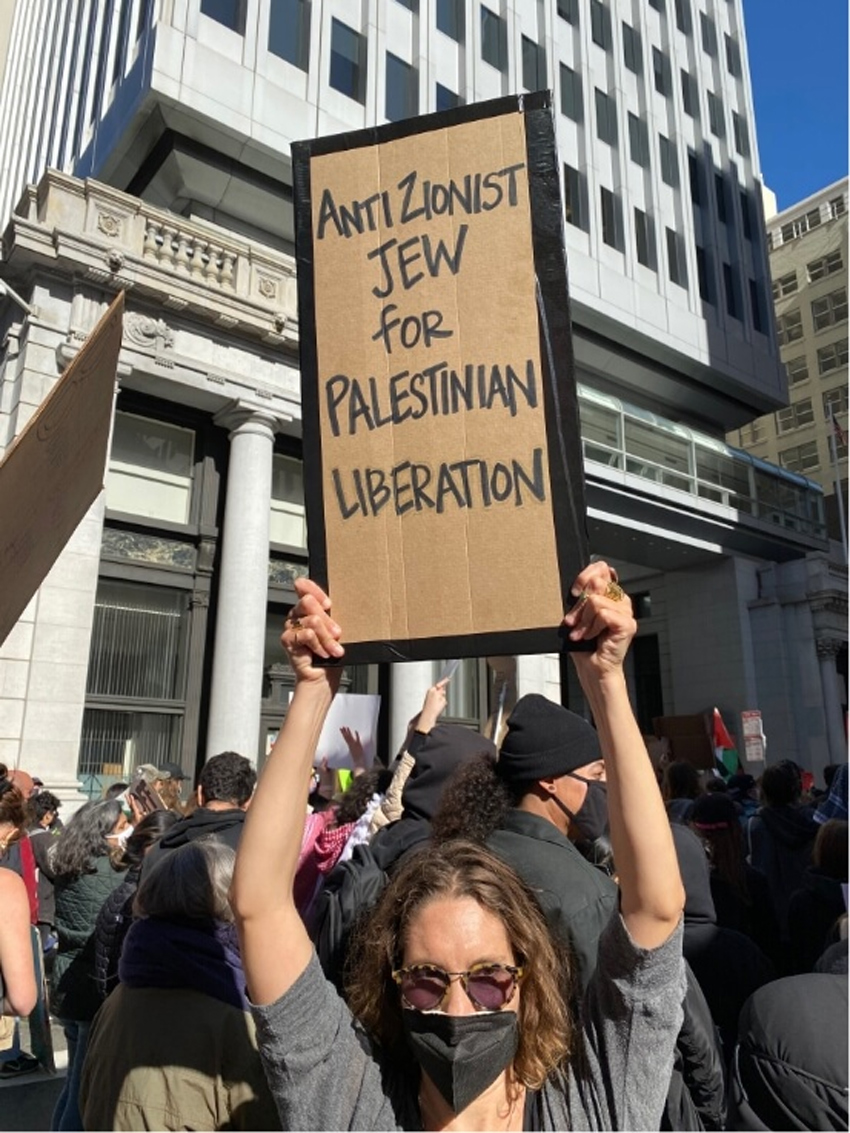
“Never again” is a saying that echoes throughout the Jewish community. It is a solemn reminder of the Holocaust and a vow to never let an atrocity like that happen again. For some, this saying equates to Jewish suffering. For others, it’s a call to fight all forms of systematic oppression. Every May, Jewish American Heritage Month celebrates the contributions that Jewish people have made in this country while also honoring the diversity of their experiences. Both united and divided, there’s not one way to be Jewish. Some individuals are supportive of Israel’s military actions against Palestine, while others strongly oppose them. This division is apparent throughout North Texas, making many wonder what it means to be Jewish in this area, especially for folks who oppose the war on Gaza and support Palestinian liberation.
Having been a part of the local community since the mid-19th century, a small but prosperous Jewish population resides in Fort Worth. With synagogues as the center of the community, this group is closeknit. However, standing in solidarity with Palestinians as a Jewish person in this area is challenging. Fort Worth’s political landscape is complicated. North Texas is conservative yet heavily gerrymandered while also being home to several Christian Zionist organizations. For Jews who support Palestine, their activism is misunderstood by other members in the community, as there is no single way to embody Jewish values. Given the political climate, the stakes are high. Many people are cautious to speak on the record about their advocacy, for fear of being ostracized by their families and fellow community members. Individual dissent can be isolating, so many local activists turn to organized spaces to find their voices. The Dallas-Fort Worth chapter of Jewish Voice for Peace (JVP) is one of the country’s largest Jewish anti-Zionist grassroots organizations that supports Palestinian liberation. JVP-DFW’s organizing efforts bring the community together by putting Jewish values into practice through advocacy efforts for Palestinians.
For local faith leaders, this perspective comes straight from Jewish traditions.

“My Jewish identity is very much connected to the land of Israel,” said Rabbi Nancy Kasten, a prominent Reform rabbi in North Texas and Chief Relationship Officer at Faith Commons, an interfaith organization that encourages understanding and civic engagement. “But I think of Jews as belonging to the land, not vice versa. The Earth is God’s, and Palestinians belong to the land just as we do.”
For Kasten, speaking out for Palestinian rights is an expression of her religious duties. “We are commanded to take care of the orphan, the widow, and the stranger. We have an ethical obligation to take care of other Jews, but we cannot lose our moral compass or our compassion for innocents.”

Josh MacPhee (JustSeeds.org)
Speaking out in a conservative area like North Texas means facing occasional backlash. While Kasten acknowledges experiencing pushback for her participation in interfaith advocacy work, she explained that the “negative feedback is far outweighed by support and appreciation.”
One of Kasten’s main reasons she’s involved in interfaith work isn’t to spark political conflict. It is inspired by sheer grief.
“I grieve for our decreasing capacity for human decency,” she said, seeing her activism as “re-moralizing and re-humanizing what has become demoralizing and dehumanizing behavior.”
Kasten is a lifelong human rights advocate and, alongside hundreds of other Jewish religious figures within the United States, called for a ceasefire back in 2024. She also stated that solidarity across religious lines is about “being willing to advocate for one another’s rights and legitimacy even when we disagree.”
These local disagreements about current world issues make it clear that Jewish identity isn’t a monolith. Regarding emotionally charged issues, Kasten suggests that we should create dialogue and constantly try to look for opportunities to open up conversations with others. As Fort Worth celebrates Jewish American Heritage month, the conversations happening right now prove that even in times of uncertainty, even if it’s difficult, we can all still come together.
“We can’t leave these conversations for others to have,” Kasten said. “Don’t retreat to the news or social media. Work on your active listening skills and put yourself in situations where you can ask and answer questions. Otherwise, our sense of security will diminish rather than grow.”
This column reflects the opinions and fact-gathering of the author(s) and only the author(s) and not the Fort Worth Weekly. To submit a column, please email Editor Anthony Mariani at Anthony@FWWeekly.com. He will gently edit it for clarity and concision.