


Live casino tables once copied the quiet rhythm of casinos, but game show ideas changed what viewers expected from a streamed table. Early live products focused on familiar rules, cards, and wheels. Newer versions added hosts, bold sets, timed reveals, and moments that felt like television.
That shift made comparison more important because a reader using trusted real money online casino Ontario review pages needs to separate licensed access, clear rules, and stable streams from surface spectacle before choosing where to play. Game show ideas did not remove the gambling element. Instead, they changed its pace, look, and tone.
From Table Simulation to Studio Entertainment
The Host Became More Than a Dealer

In classic live blackjack or baccarat, the dealer controls the cards, confirms bets, and keeps the round moving. Game show formats gave the presenter a wider role. The host explains each stage, reacts to results, and speaks to a remote audience.
This changed the mood of live casino play. A quiet table depends on focus, while a game show depends on suspense. The host must balance energy with clear guidance. Players still need to know when betting opens, when it closes, and how the result is produced.
The Set Became Part of the Interface
A normal casino table can fit within one camera frame. Game show studios use larger spaces, bright signs, moving displays, and several camera angles. They guide attention toward the current stage.
A wheel may lead the opening phase, while another screen explains a multiplier or bonus event. Camera changes mark the move from betting to the result. The set now does some work once handled by menus and written prompts.
Game Mechanics Became More Layered
Game shows expanded the live dealer round beyond one simple result. A wheel spin or card draw can lead to a second stage, unlock a multiplier, or select a themed bonus. This creates suspense beyond one quick reveal.
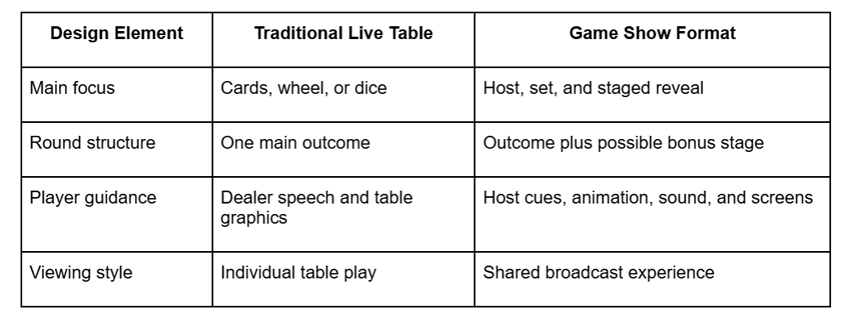
Layered rounds also changed how details must appear on screen. Players need to see the base wager, extra outcomes, and event order. If the display becomes too busy, excitement can turn into confusion. Good design keeps the sequence clear even when the set is loud.
Live Streaming Became a Broadcast System
Production Quality Started Affecting Play
Game show ideas raised the technical standard for live dealer rooms. Several cameras, graphics, studio sound, and fast data feeds must work together. A delay can disrupt more than the picture because betting windows and visible events must stay in step.
The scale of table-based casino play is clear in Ontario. iGaming Ontario reported that operators offered more than 5,000 certified casino games in the 2023 to 2024 fiscal year, with blackjack accounting for more than one quarter of table game wagers. That demand helps explain why studios continue to develop live formats with stronger production, clearer interfaces, and more varied presentation.
Mobile Screens Shaped the New Layout
Television inspired the look, but phones shaped the final product. A game may use a large studio, yet key details must remain clear on a small vertical screen. Betting controls, countdowns, results, and live video all compete for space.
This pressure led to cleaner overlays and a clearer visual order. The presenter keeps the experience human, while graphics carry exact details. Strong formats make both parts easy to follow without forcing players to switch between views.
Shared Spectacle Changed the Social Feeling
Traditional live tables allowed chat, but game show formats made the audience feel more present. The host may answer messages or speak to everyone waiting for a bonus round. Each player places a separate wager, yet the reveal can still feel shared.
The format also borrows the timing of television contests. A pause before the result can matter as much as the result itself. However, players remain viewers and participants rather than people performing in the studio.

Entertainment Did Not Remove the Need for Clarity
Game shows widened the live casino format by making it brighter, faster, and easier to watch in short sessions. They also created new design risks. A dramatic set can hide weak instructions, while constant effects can make outcomes hard to track.
Therefore, the strongest formats keep entertainment and explanation in balance. The host creates momentum, while the interface shows rules, betting time, and results in plain terms. Physical equipment, streaming tools, and digital payments must still work as one system.
Game show ideas did not simply decorate the live dealer table. They turned it into a broadcast product with casino rules at its centre. The result is a format built for screens and shared attention.