

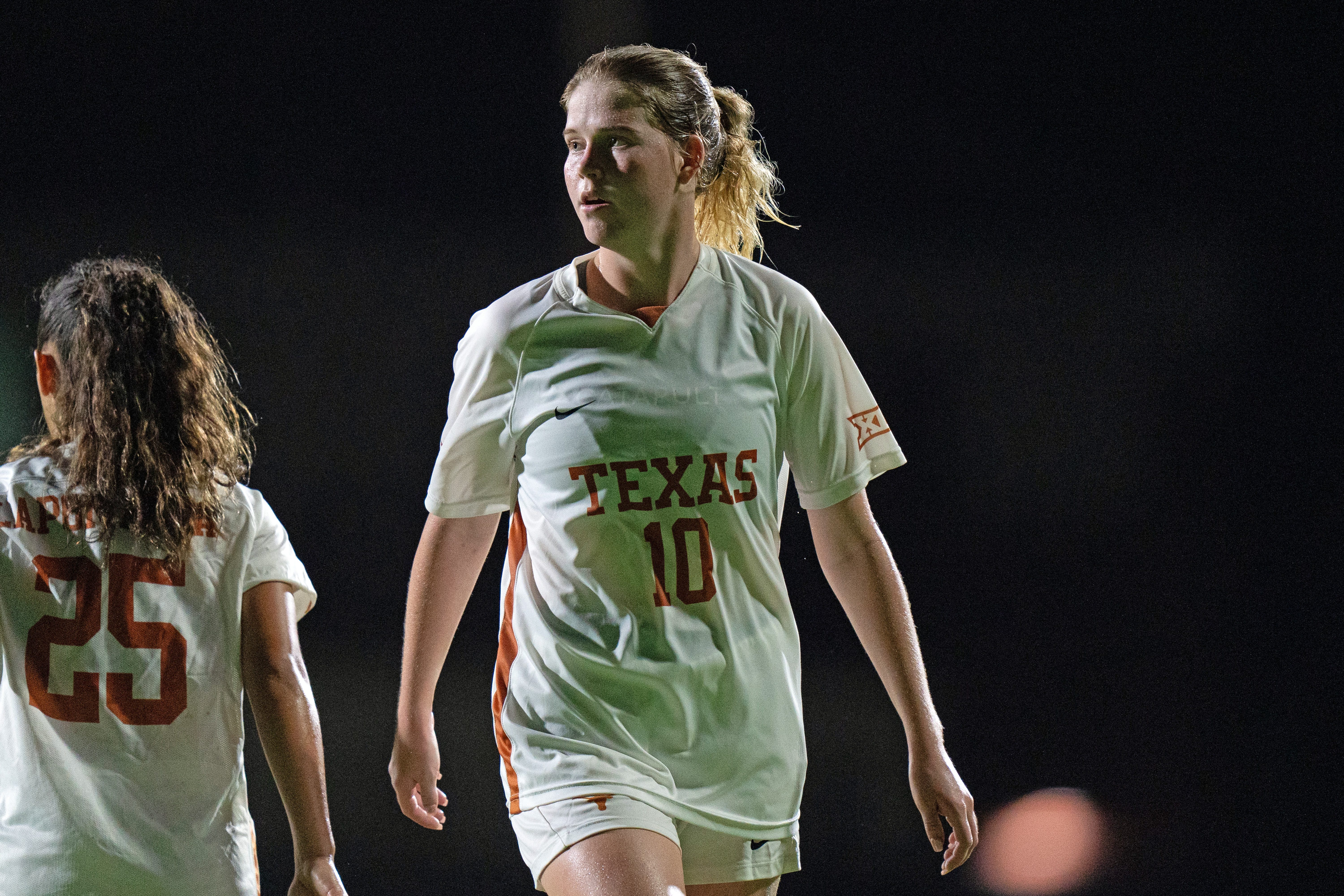
Les Marseillaises, a professional soccer team in Southern France, added a new player to their roster this week. She’s from Southlake.
I saw her the night before she left. She had trepidations, but was excited. In other words, just what one should expect from a 23-year-old moving far from home for a really promising job opportunity.
The player in question is Lexi Missimo, and I got to know her and her family while producing a docuseries called Raising Her Game (now streaming on Tubi, Victory+, and Amazon). It tracks her career as well as those of her University of Texas teammates and one of the key themes of the series is how they had opportunities their predecessors in the sport did not.

The club she’s joining plays in France’s top division, the Première Ligue. The club also fields a men’s side, Olympique de Marseille, in the men’s Ligue 1. When Missimo’s parents played (her father at North Carolina, her mom at TCU), it would have been highly unusual for an American man to get an opportunity in a top European league and women of any nationality had few options anywhere to continue playing after college.
As we cover in the series, the soccer world evolved. Now, Timothy Weah plays for both the Marseille club and the USMNT, one among many Americans placed with European squads. Missimo started her pro career in the Gainbridge Super League, one of two Division I women’s leagues in the U.S., before her move abroad.
The transition could greatly benefit her career. After enduring some injury challenges and coaching changes at her previous employer, Dallas Trinity FC, this relocation represents a chance for the former All-American midfielder to get minutes against the high-level talent that plays for the best sides in the Première Ligue. Les Marseillaises are not yet one of those top-of-the-table clubs, but adding a player who put up transcendent numbers at the university level and played on U.S. youth national teams signals a desire to win.
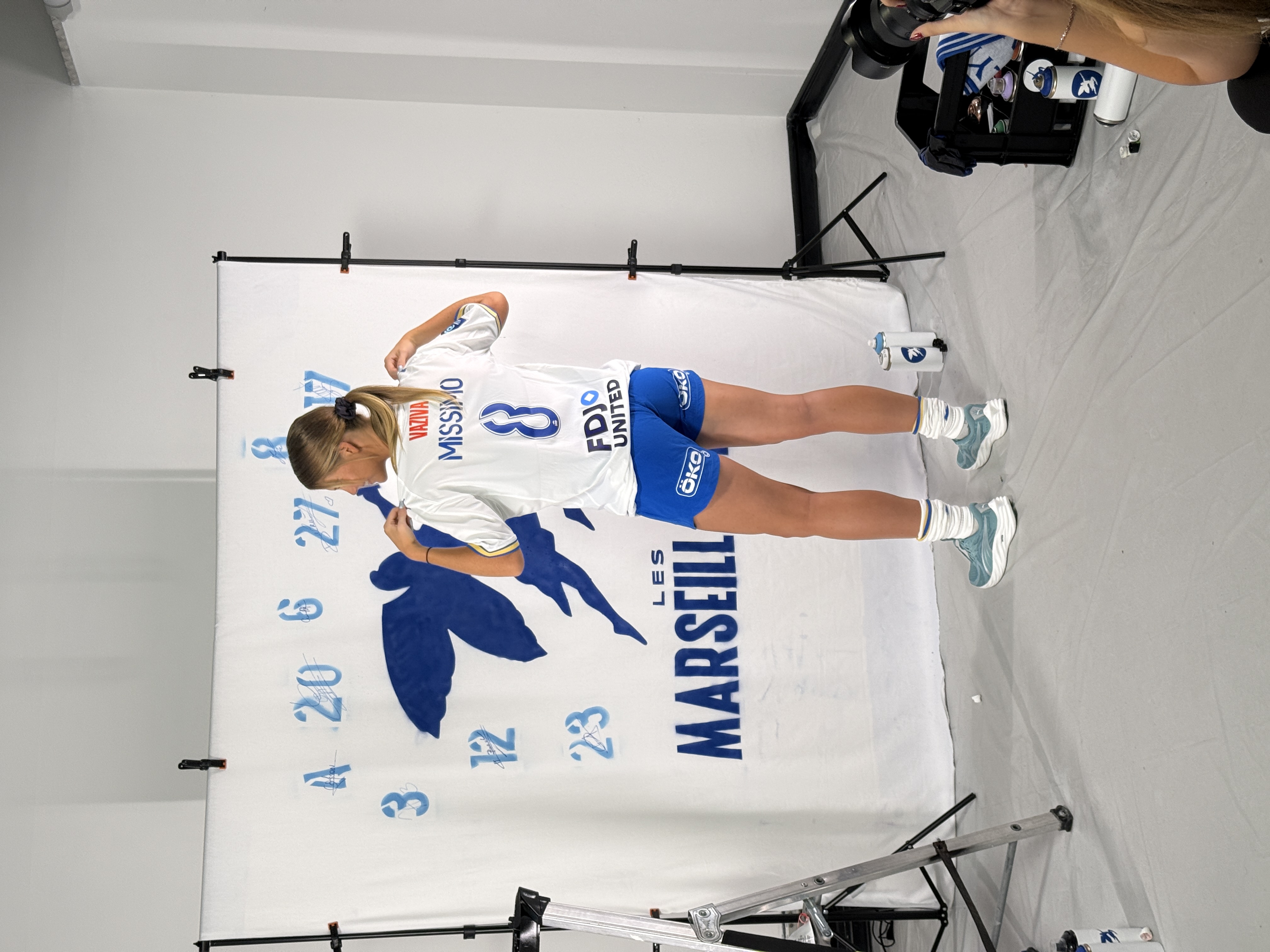 The men’s half of the club has won nine Division I titles and a Champions League crown. They have finished outside the top ten in the league standings once since 2002 and ranked fifth out of 18 teams last season following a runner-up finish the year before. Les Marseillaises, as the women’s side began calling itself last year, finished ninth of 12 in 2025-26 and have historically spent much of their existence outside the top flight, with only occasional promotion to the country’s highest-level circuit. So certainly if they can make a step up and even contend for a title during Missimo’s tenure in Provence, it would benefit the club. But there’s a case to be made it would be good for the league, too.
Many of the women’s club competitions outside the U.S. have results heavily weighted toward top teams. It’s true in the men’s game as well, but is even more pronounced on the women’s end. In the Première Ligue, dominance resides primarily among three teams: Lyon (which at one point won 14 straight league titles), Paris Saint-Germain, and Paris FC (known in an earlier incarnation as Juvisy). Since 2005, in only four seasons has a team other than that big three finished in the top two in the league (Montpellier each time). In the 2020s, only once have they not gone first-second-third (Bordeaux finished third in 2021). We see similar skews in Germany, England, Italy, and Spain. The best teams have traditionally had few challenges from those below them. It has often shown up not only in terms of on-pitch results but also in attendance and other revenue numbers.
In American sport, we’ve had dynasties, but not on this scale in the modern era. The National Women’s Soccer League has had six or seven different title winners (depending on how one classifies the Western New York Flash franchise that sort of became the North Carolina Courage) from a league that started with just eight teams in 2013 and did not reach 12 until 2021. In its two years of existence, the Gainbridge Super League has had four different teams contesting its playoff final. Those U.S. leagues were fully professional right from inception (though, as we learn in the docuseries, the NWSL was not initially as big-time as it has since become). As startups, their ownership groups probably didn’t invest unless they truly wanted to succeed on the women’s side. In Europe, most of the squads didn’t become fully professional until the last few seasons and exist as offshoots (and often afterthoughts) of long-established men’s clubs – a recipe for widely varying levels of support. In addition, the NWSL and GSL have had a salary cap from start, evening out the spend on players. That rule assured club owners, including those who also had a men’s team, of some cost certainty and competitive balance that European entities considering investing in the women’s game did not have.
But as the women’s game has grown in popularity, more clubs everywhere have started to see potential upside in lifting their level of play. Marseille, currently under American ownership, can perhaps look to build upon staying up in 2026 after their 2025 promotion from the second division. If a player like Missimo can have success along with her team, she’ll have options. She could transfer to a bigger club. Or she could stay in Marseille and compete for championships – with Les Marseillaises having perhaps become of one of those more prominent sides. European women’s football likely needs more of those bigger clubs. The Marseille team averaged 4,806 per home game last season, good for second in the league according to world football.net. FC Nantes led with 4,967 per match. Overall, the figures over the last few seasons have grown substantially on a percentage basis (in 2019-20, Marseille averaged 274 fans per home match). Other leagues have seen similar growth. However, only three European teams would have finished in the top ten in attendance in the NWSL for league games last season. Women’s Champions League numbers and U.S. playoffs plus expansion might adjust those rankings up or down in a given year, but the United States still has a pronounced advantage over every other country’s league.
I learned researching the doc that Title IX and the soccer opportunities it provided within the U.S. college system helped grow the game domestically. Many female players from other nations have played college soccer, too, since the development paths for male athletes in their homelands did not have counterparts for women. USWNT successes also helped legitimize the women’s game in other countries (and losses, too – it helps to beat the champs every once in a while). The knock-on effect has been that clubs in soccer-intensive countries can now recognize the potential for women’s pros. Perhaps they can build upon the American model, especially given the overwhelming popularity of the game in general there. Bringing in a talented U.S. midfielder from Texas just might be part of that path to success.