

As a writer — even as a Cro-Magnon-brained sportswriter and musician — I am inherently dubious of AI. While it continues to worm itself into nearly every unoccupied molecule of space left in existence, we’ve been seemingly left no choice but to accept it.
In some ways, it’s possible to see benefits, I suppose. It’s nifty to see what your house would look like in a different paint color or get a perfect two-day Disneyworld trip itinerary instantaneously. Yet I absolutely despise its tentacles reaching into creative endeavors. I fully believe that the arts represent humanity’s greatest achievements and are the truest objectives by which all other great human accomplishments — engineering, commerce, democracy, and so on — ultimately exist to enable. Artistic expression is the chief attribute that separates us from all other forms of life. It’s what makes us human. When we yield that expression to machines, we yield the essence of our humanity.
Plus, generative AI content just sucks. It’s ugly and overstimulating, and you can intuitively sense its lack of soul. You need pain to make art. You think a computer can come up with my patented witty takedowns of incompetent Cowboys ownership? Ha! I scoff at the notion. The 30 years of suffering through football mediocrity on which my jocular anti-Jerry-isms are built simply can’t be replicated by a series of rapidly moving electrons and a few hunks of silicon. You have to live it.

Like everything else, AI has made its way into sports, too. Colleges and pro teams use machine learning in everything from prospect evaluation and tracking of player health and safety data to real time in-game decisions. Hell, I even recently overheard a conversation between two travel ball dads giddily boasting about AI’s ability to detect a kid’s 12% launch velo increase from the weekend tournament they just got back from. I cringed at the cold technological pervasion while also thanking god again that my kid doesn’t play baseball. Competitive Little League is a whole-ass lifestyle.
On one hand, sports might represent sort of the ideal model for how a precarious tool like AI should best be used. At least in the sense of how it’s being pitched to us: using the power of machine learning to improve what are ultimately human endeavors. Machine learning can predict the success rate of a particular play in football, taking into account significantly more variables than the old school spreadsheet model and with higher accuracy. Or give a recruiter granular insight into the college-level potential of a high school junior which now has years of biometrical data logged to support it. Each of these should theoretically lend to an overall increasing trend in performance and ultimately improve the quality of the sport. Good, right?
Yet in practice, the consequences are likely the same as they are in all applications of AI. The end result is people losing their jobs. Modern analytics is a fairly new field in sports, and AI models have already likely surpassed the work of genius sports nerds like Bill James (the father of baseball “sabermetrics”) and Bob Carroll (inventor of the “expected points” stat, the most informative metric in football). The next Dean Oliver (a pioneer in basketball analytics) now might never exist. Not to mention the armies of analytics guys currently on every major program’s staffs soon to be headed for the bread line.
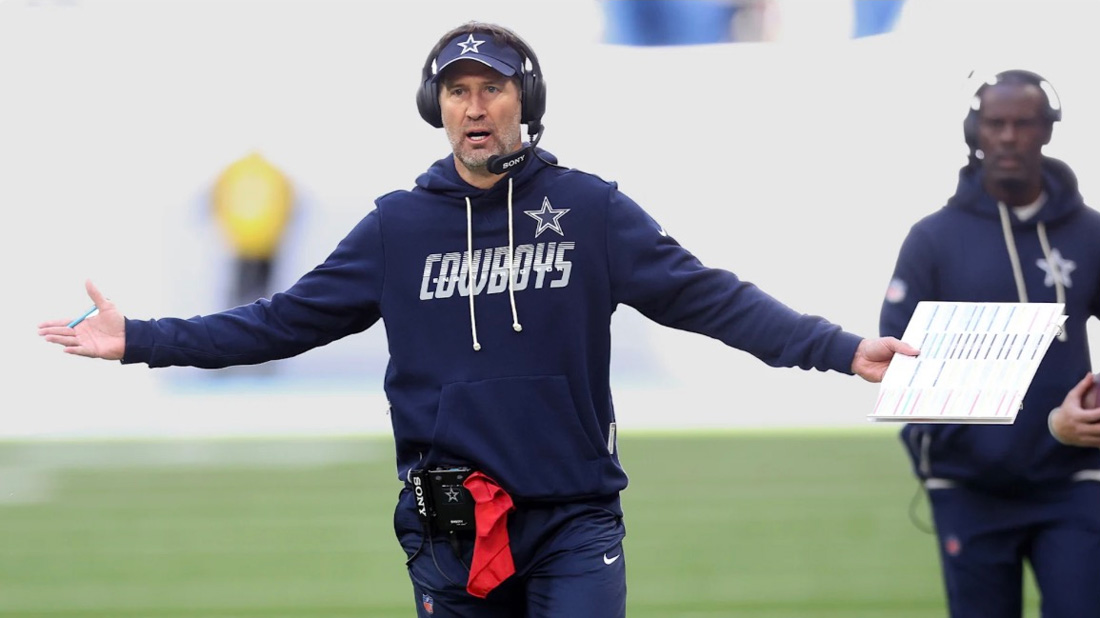
The trend even seems to be removing, or at least minimizing, the human element of a coach’s decision-making. How much of “going with the gut” made Bill Belechik or Gregg Popovich the legends they are? What is lost in the beauty and complexity of human athletics when machines are making all the calls? Besides, the bots certainly aren’t helping Brian Schottenheimer and Christian Parker, am I right? Who am I supposed to hate when the Cowboys blow a fourth-quarter lead? Nvidia?
Recently, I was helping my kid with some math homework. Confused and frustrated, they expressed a thought likely every single one us had when we were sitting at our own childhood kitchen tables laboring painfully over long division. “Why do I even need to learn this when we have calculators? When am I ever going to use this stuff in real life?”
I started to list some of the myriad ways in which we intuitively use math every day, from converting unit measurements in cooking recipes to calculating costs per unit so we can find the best deal on beer to figuring out how much to tip your server.
“Yeah, but I can just look that stuff up,” they replied.
Defeated, I offered the best response I could think of at the time. “It’s only so if you can help your own kids do their math homework someday.”
Initially, I meant it as sarcasm. When thinking about it now, given the context of our current continuous slide toward technology replacing humanity, I actually think I hit on something. Parenting is the most human thing there is, even more so than creativity. That connection from one generation to the next in an organic and primordial way is essential. Literally everything around us now is screaming that the more we allow technology to divorce ourselves from humanity, we become ever less human.
I think we need to hold onto whatever vestiges we have left. Cherish simple human interactions and decisions, whether it’s passing on the misery of complex math problems done by hand to your kid or in deciding whether to go for it or not on a fourth and 1 at your own 47.