

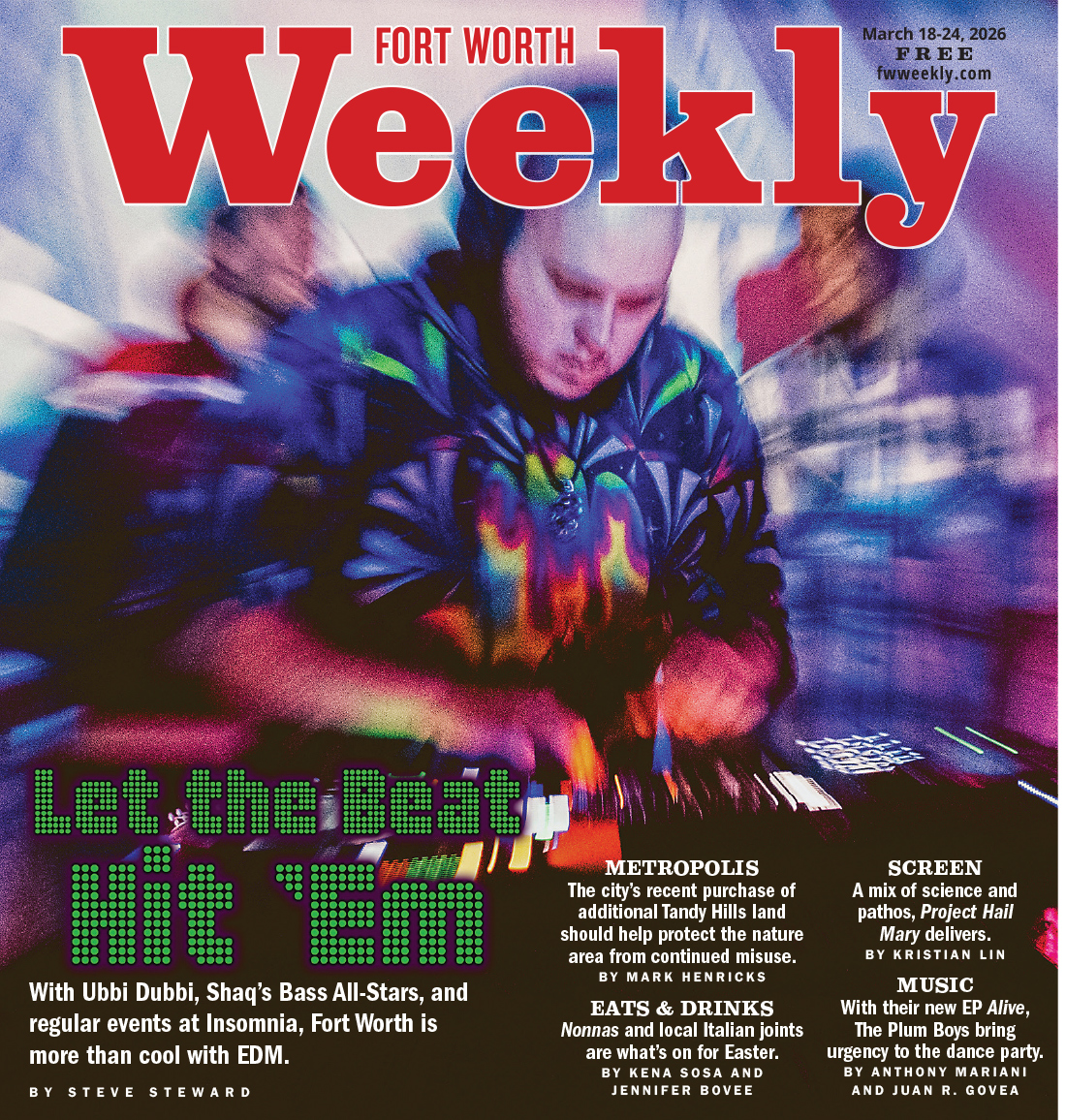
As my car slid into a parking space in front of Insomnia, I made a mental note about the crunch of debris beneath my tires, how I felt the sound through the floorboard and brake pedal as much as I heard it. Killing the engine, I sat there for a minute, paying attention to the ambient noise around me. Mostly, it was the susurrous din of nighttime traffic from nearby I-35, enlivened with cumbia pumping out of a pickup truck on 28th Street, the accordion and vocals dopplering east and fading into the night. Dogs barked from somewhere north of me, and a trap beat sizzled in and out of earshot from an even larger pickup on 28th, this one headed west. Beneath it all, pulsing softly through the nightclub’s ’70s-era, prefabricated rock-façade’d walls was bass.
This was around 8 p.m. on a Thursday recently, and I went there for Open Decks, a weekly event in which local DJs get a free drink if they sign up and perform a 30-minute set. Open Decks is presented by AFTERDubz, a collaboration between two separate EDM event production teams, AFTRLIFE Entertainment and Wubba Dub Dubz — in terms of an event flyer, their names are at the top of the font and promotional hierarchy. Both call Insomnia home base. I opened the club’s door. Dubstep thudded around me like an invisible avalanche.
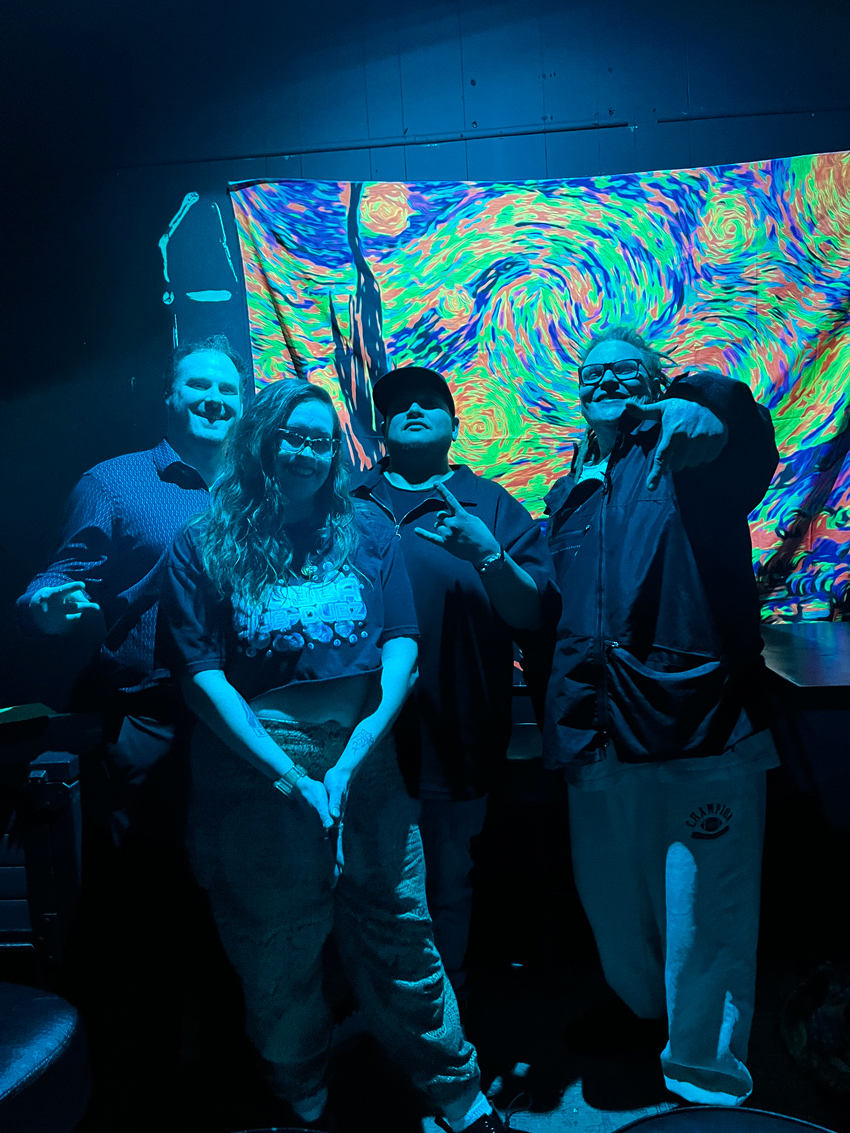
Stefanie Jeffress, who started Wubba Dub Dubz with business partner Bobby Gonzales in April 2024, had invited me to check out the space and meet her crew. She was tending bar, exuding that sort of supervisory energy you get from multitasking during most of your waking hours. Jeffress got into the North Texas rave scene right out of high school, after she graduated in the early 2010s. Pretty quickly, she transitioned from going to raves to throwing them. On Saturday, she and her crew at Insomnia will host the afterparty for Shaq’s Bass All-Stars Festival from Panther Island Pavilion, and it will be Wubba Dub Dubz’ biggest event yet. As big a deal as that is, it’s just one piece of her quest to build Fort Worth’s EDM scene into something huge, one night at a time.
Steve Steward

*****
Jeffress introduced me to her business partners after we had moved from the club’s dark, cavernous main room to a green room, which was actually illuminated by black lights. Barstools crowded the middle like metal mushrooms. The walls muffled the music.
We sat around the barstools’ periphery and went over bios. Bobby Gonzales is an elder millennial, entrepreneur, and former rapper (known as Bobo the Great) who got into raves in the late 2000s. He fell out of the scene in 2012 to get his life in order, then back into it when Jeffress, a friend from the end of his time in the scene, asked him to help her produce a party. Tracy Hazelton, a cybersecurity expert by day and DJ by night, got into the scene as a DJ in 2012 and currently dee-jays as one half of EVRAFTR. He founded a production company and record label called AFTRLIFE Entertainment during the COVID lockdown, when he would livestream single-person dance parties with club speakers and a green screen at his house. AFTRLIFE boasts a roster of North Texas DJs — Gray Wolf, Dark Bunny, Reydex, and Indigo, among others — and it puts on and promotes other EDM events. Finally, there was Nick Perlmutter, Wubba Dub Dubz resident DJ, who performs and produces as Bluff Baby. A fixture on the scene since 2015, Bluff Baby also produces numerous artists when he isn’t on tour.
All four of them are music fans, obviously, and Jeffress was quick to point out that when it comes to events at Insomnia, they aren’t just booking EDM parties. The club had hosted a punk show on January 7 with Noogy, Samuel Caldwell’s Revenge, From Parts Unknown, and the Weigh Down, and she said they are down to book pretty much anything. They have a disc-golf putting tournament every other Thursday and had a crawfish boil/mud wrestling event on March 14. Gonzales noted that their first event was a WWE afterparty, and they all seem to be minor metalheads. Still, EDM is what makes their hearts beat the hardest.
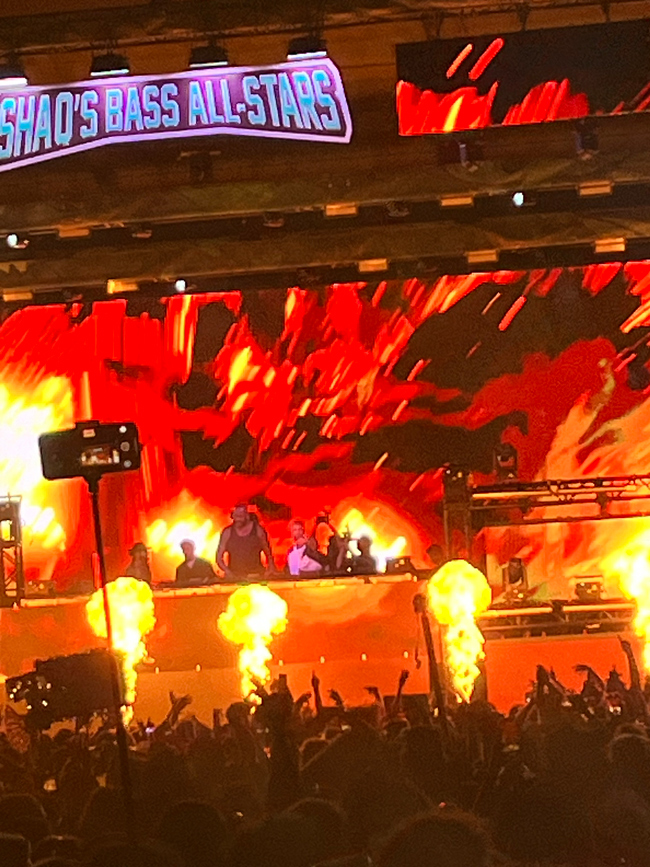
I’m a casual observer, so to me, I associate EDM with Ubbi Dubbi, the annual festival at Panther Island Pavilion that last May drew more than 50,000 people there and emanated subsonic frequencies as far away as Westworth Village. But I went to see Marc Rebillet at Wild Acre in 2022 and Shaq’s Bass All-Stars at Panther Island in 2024, and at both, the energy and the spectacle at these shows are immense and intense. Hearing Rebillet make dance music out of his own banter and Shaq bellow, “Let me see your mosh pit!” as pyrotechnics exploded in time to a headsplitting, glitchy sonic assault are two experiences I’ll never forget. They were as fun and cathartic as they were gonzo and absurd, so I can only imagine how that music feels for people who’ve made it a huge part of their life.
We talked about where the scene is currently and where they hope to take it.
“So, promoters that we’re all friends with, we kind of work with each other,” Jeffress said. “Ubbi Dubbi [in April] is kind of our Super Bowl, and there’s Shaq’s [Bass All-Stars] on [Saturday]. There’s the big Sublime show coming in May. We’re gonna do ‘afters’ for those.”
“Shaq is bringing T-PAIN,” Bluff Baby said. “That’s huge for EDM. That’s top tier to see somebody that’s that great of a producer in this genre … because I feel like our music is forever evolving faster than mainstream music. … There’s so many people that are hungry to make more.”
Steve Steward
Yet there are obstacles, one of which is lack of awareness.
“I feel like it’s kind of a matter of waking up the people that are here,” Hazelton said, “finding the EDM community and linking them to this space, these afterparties.”
Bluff Baby agreed. “There are people from Dallas who are willing to come out here.”
But there’s competition. “There’s always, like, five other EDM shows going on [in Dallas], you know what I’m saying?” he continued. “Venues in Dallas have radius clauses on some of their local artists, and that sucks, but all the big dogs want to come out here and play.”
And while it seems like the audience for this music skews heavily toward late-teens/early twentysomethings, Jeffress said that the lifestyle can get kind of expensive — even if you don’t buy a lot of scene-specific clothes, tickets aren’t cheap for anything these days — and so the age range tends to be 25-35, which was a lot different than when she first got into the scene. Still, when I returned on March 6 to check out their weekly Funky Town Fridays, when two Dallas-based DJ crews — Pleasure Unit and Miasma — were doing a show, the crowd seemed to be mostly in that younger cohort. Jeffress has noticed shifts from when she first got into EDM.
“Like, the way we danced in the last 15 years has changed,” she said. “The way we dress has changed. The music is completely different … but the thing about EDM, [as] I felt when I got into it, it was a place for anybody at all times. But you would also find that people that were broken went to EDM, like they found EDM music because of the community, because everybody had issues.”
The idea that the EDM community is a place for everyone to come together is central to both AFTRLIFE’s and Wubba Dub Dubz’ ethos, but there are other promoters. Sometimes the scene can seem kind of clique-y.
“It used to not be,” Bluff Baby said. “There’s politics. It can be very much like high school. … We have to build this image of trust … and we don’t get involved in drama.”
Getting people to come to a thing has been a challenge ever since hosting things has existed, and afterparties for huge EDM concerts at Panther Island Pavilion are most certainly things. Of Wubba Dub Dubz’ “afters,” Gonzales said they usually go until 4 a.m. For the post-Shaq party Saturday, “I think like we probably might start at, like, 10 [p.m.]. We’re gonna start early because there’s a lot of people who don’t go to the festival that are artists and other people who want to do sets. … It’s a hard game in Fort Worth, getting ready for the people who are leaving Shaq’s fest and giving them a chance to perform while we have everything set up for the in-house team. But Panther Island shows end at midnight, and we’ll already have the ‘water on’ ahead of everybody else.”
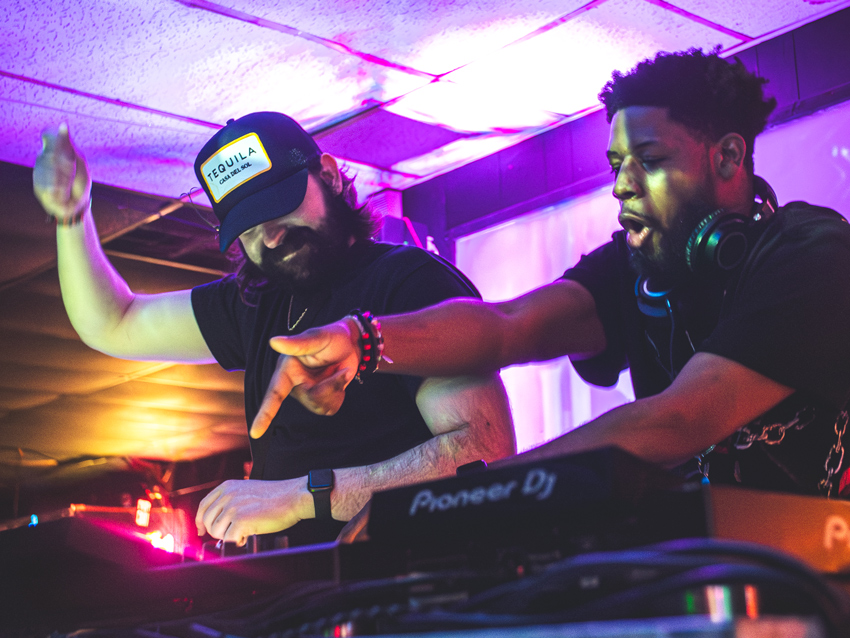
Photo by Stephen Cervantes
******
Wubba Dub Dubz also sees the value of opening their doors to unsung artists. Open Decks is kind of a pipeline to bigger gigs. Gonzales put it like this: “We want the people who are showing up every time at Open Decks to highlight them and give them the opportunity to be on the bigger stage, with a bigger headliner who usually they would never to play with.”
Jeffress also emphasized their commitment to safety. “In the past, finding venues, we’ve had problems. … I’m very, very much the maternal figure in all of this, and there were always problems doing shows at dive bars, like with the patrons there. … They have fights all the time.”
There’s also the issue of illegal drugs.
“All of our bartenders are Narcan trained,” she said. “You know, we have a fentanyl epidemic in our country right now, and it’s … I mean, there are young kids that don’t know how to do things the right way or don’t know people, don’t know where they’re getting their drugs, and it’s something I’ve dealt with, and it’s something that I was very, very big on in the beginning, that I was going to make sure I’m a bartender as well. Yeah, that kind of goes into what I was telling you of us trying to be more — I wouldn’t say ‘upscale’ — but more mainstream. … We don’t want to be the underground.
“I’ve been to very unsafe places,” she continued, “and I don’t want people to feel that way when they come here.”
Stefanie Jeffress
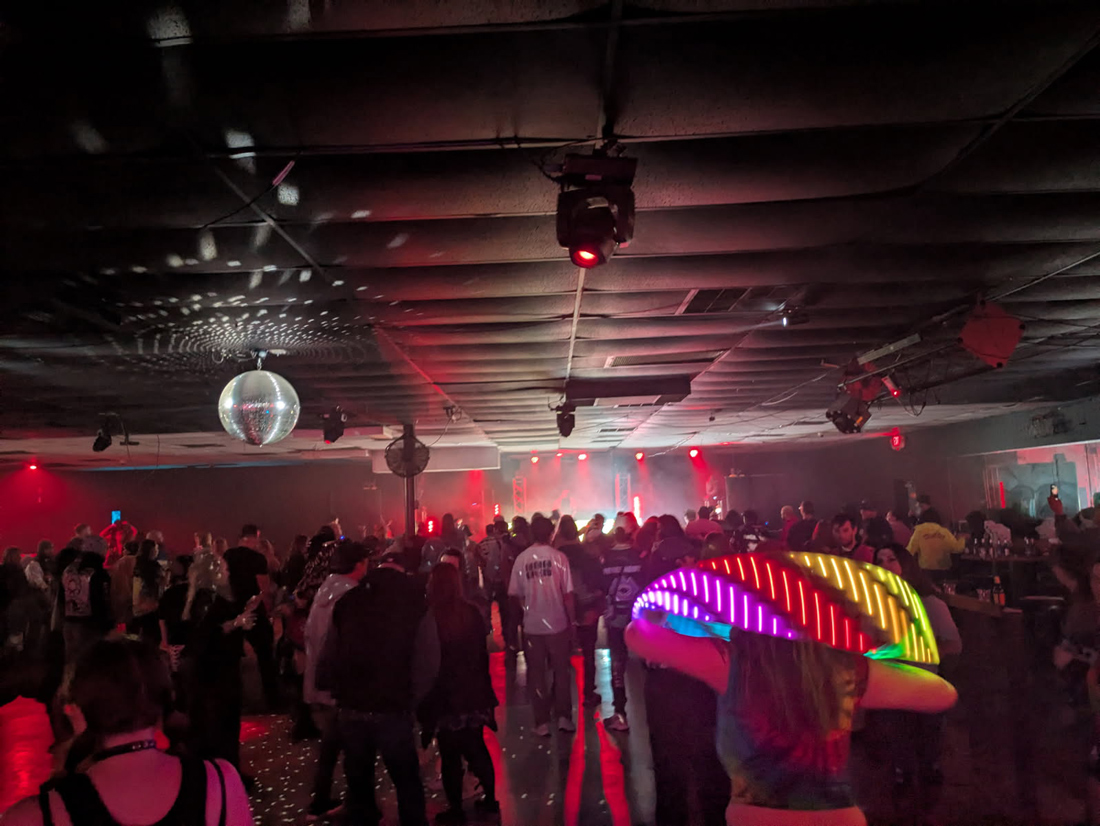
The scene centered on Insomnia is still growing, but seeing a dozen young people out at 10 p.m. on a Friday night to bob along to electronic dance music at a club was encouraging. Fort Worth needs more of this, because what Wubba Dub Dubz and Insomnia offer is a safe haven, an in-person place to escape all the bullshit and just fucking dance. We all need community. EDM, whether mainstream or underground, is about self-expression in a safe space, where the music and vibe are what matter most, the beating heart of an uplifting community, the kind of energy you can feel as loud as it in your ears.
Shaq’s Bass All-Stars Festival
4:30pm Sat w/DJ Diesel, Levity, T-PAIN (bass set), Wooli, Jessica Audiffred, All the Reason, Celo, Neotek, Dream Takers, Drinkurwater, GorillaT, Ivory, TYNAN, and Whales at Panther Island Pavilion, 395 Purcey St, Fort Worth. $104.95-256.19. ShaqsBassAllStars.com.
Ubbi Dubbi: Into the Abyss
Fri-Sat, Apr 24-25, w/Alesso, BUNT., Cloonee, Kx5, Loud Luxury, Tape B, TroyBoi, Zedd, Ganja White Night, Jade Cicada, Kai Wachi, Of the Trees, San Holo at Panther Island Pavilion. $79.88-419.96. UbbiDubbiFestival.com.
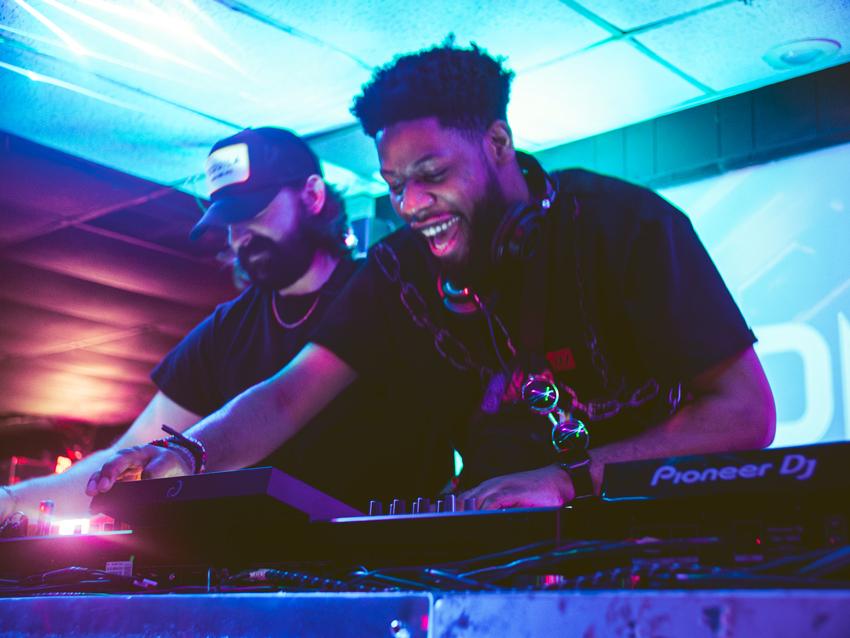
Photo by Stephen Cervantes