


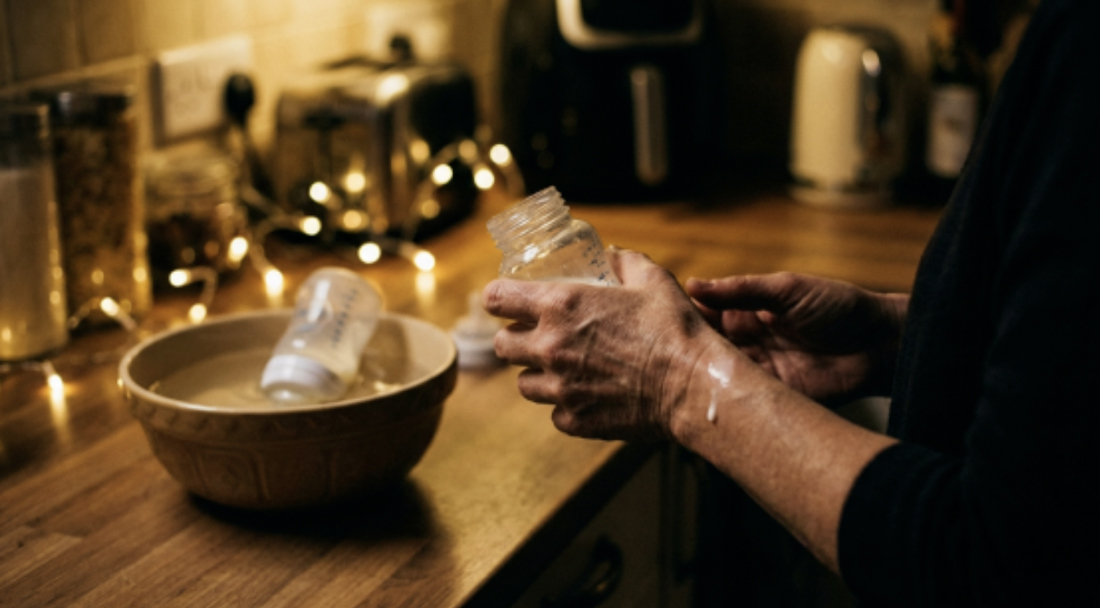
Warm bottles only when your baby prefers it, and use gentle, outside-in heat with strict timing for leftovers. This guide gives a practical home routine for breast milk and formula without microwaves or overheating. Learning how to warm baby bottles effectively can make your 2:00 AM routine much smoother.
Is your baby crying at 2:00 AM while you stand at the sink wondering whether the bottle is too cold or too hot? Leading pediatric safety guidance agrees on the biggest risks to avoid, especially uneven heating and waiting too long to discard used milk. You’ll leave with a practical routine that works for both breast milk and formula, including what to do when online advice conflicts.
Start With the Safety Basics

For many families, warming is optional, because babies can often drink room-temperature milk if they accept it. Warming is mostly about comfort and feeding preference, not a medical requirement, so the goal is simple: make feeding easier without adding risk.
The one method that consistently fails the safety test is microwave warming. Microwaves can create hot spots, or pockets of much hotter liquid, that can burn a baby’s mouth and throat even when the bottle feels fine in your hand.
What “Safely Warm” Actually Means
A practical target is at or just below body temperature, around 98–100°F at feeding time. This is warm enough for comfort but still gentle for sensitive mouths.
Breast milk quality can drop if overheated, and 104°F is a key upper limit in commonly cited extension guidance. If you are unsure, serving slightly cooler is safer than serving hotter.
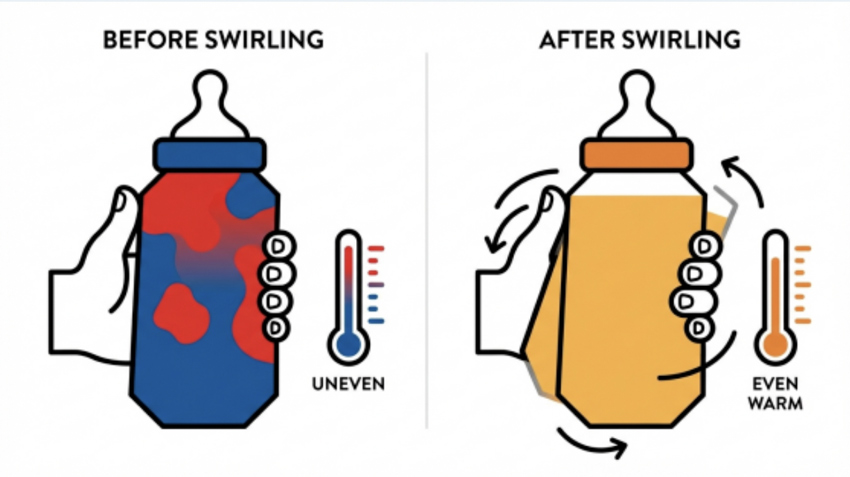
A safe check means swirling the bottle, then testing a few drops on the inside of your wrist so it feels warm, not hot. This matters because bottle exteriors can feel cooler than the liquid inside, and swirling helps even out the temperature and remix separated milk fat.
Home Methods: Pros, Cons, and When to Use Each
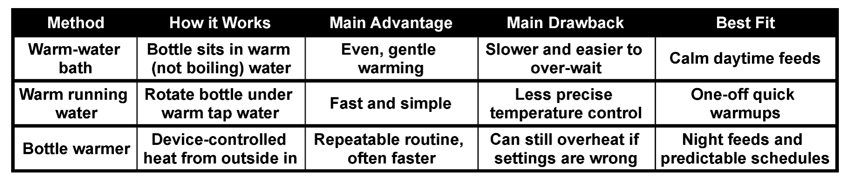
At home, warm-water baths and warm running water are reliable low-tech methods, while bottle warmers add consistency when you want less guesswork during frequent feeds.
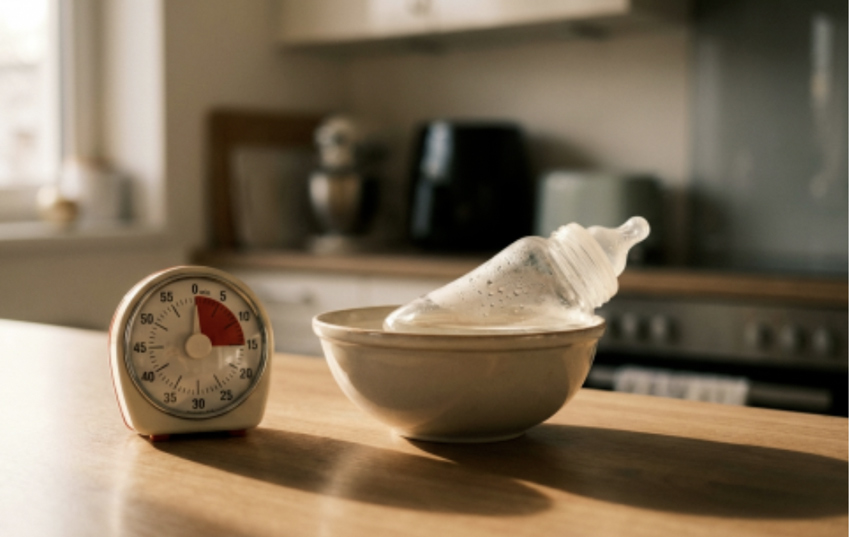
Warm-Water Bath: The warm-water method works best when you use comfortably warm water, keep water below the bottle neck, and avoid letting the bottle sit too long. A practical ceiling is about 15 minutes; beyond that, both safety and quality concerns increase. In real life, this works well when you are already in the kitchen and can watch the clock.
Warm Running Water: Using warm running water for a few minutes is often the quickest non-device option. Rotate the bottle so heating stays even, then swirl and wrist-test before feeding. This approach is especially useful when a refrigerated bottle only needs a quick bump to a comfortable temperature.
Bottle Warmer: A dedicated warmer can be consistent, but consistency still depends on correct setup, bottle fit, and timing. Compatibility checks matter with different bottle shapes, and maintenance matters too because mineral buildup can affect performance over time. If your warmer runs hot, use shorter cycles and recheck rather than trying to finish in one pass.
Breast Milk and Formula: Similar Process, Different Guardrails
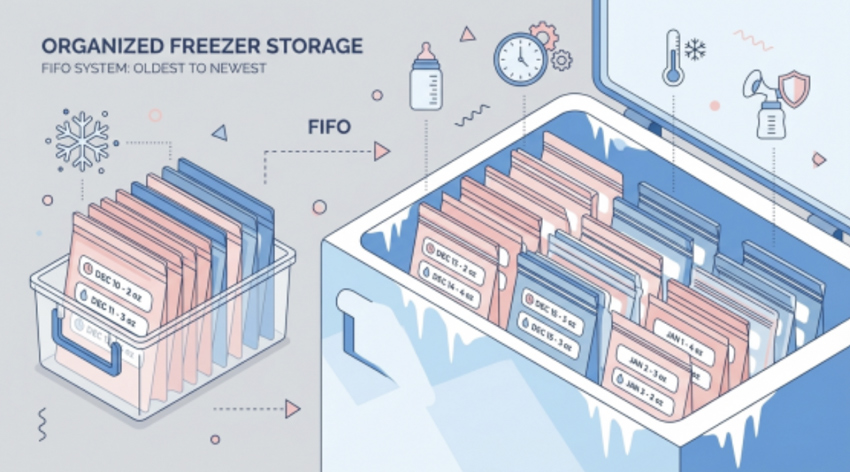
For stored milk, thawing and warming guidance for breast milk emphasizes gentle heat, no microwave, and FIFO use of frozen supply so older milk is used first. A practical home habit is freezing in smaller portions, such as 2–4 fl oz, which reduces waste when baby appetite changes from feed to feed.
For formula prep, safe water and clean prep tools are as important as warming. If local water safety is uncertain, boiling cold tap water for 1 minute and cooling it before mixing is a conservative approach used in pediatric guidance. Once feeding starts, discard timing becomes critical because saliva introduces bacteria into the bottle.
When Sources Disagree on Timing, Use the More Protective Rule
Mainstream pediatric and extension guidance generally says not to reheat once warmed and to discard promptly, with formula commonly limited to 1 hour after feeding begins. This rule is stricter, but it is easy to remember during sleep-deprived nights.
Some parent-facing advice gives longer windows for warmed milk in specific contexts, which likely reflects different definitions of an unused warmed bottle versus a bottle already fed from. Because those scenarios are easy to mix up at home, the lower-risk default is one warm-up, immediate feeding, then discarding leftovers.
Hygiene and Burn Prevention at Home
A safer routine starts with clean hands, clean bottle parts, and clean prep surfaces, especially around nipples, lids, and formula can tops. This lowers contamination risk before warming begins.
Handling details matter more than people expect: wet glass bottles can be slippery, and rushed transfers from hot water increase spill and burn risk. A dry towel under your prep area and a firm grip before lifting the bottle can prevent most near-misses.
Even at home, backup plans help when power is out or routines change, and thermos-style hot-water baths are a valid fallback. The same core rule applies in every setting: warm gently, test carefully, and never microwave.
A Night Routine That Works at 3:00 AM
The most sustainable setup is the one you can do half-awake: pre-portion milk, keep clean bottles ready, and use a repeatable warming method with wrist testing at every feed. If your baby accepts room-temperature milk, skip warming and save time; if your baby prefers warm milk, keep your method consistent so you are not guessing each night.
A simple example is preparing two 4 fl oz bottles for the overnight window, warming only the bottle you are about to feed, then discarding what remains after feeding instead of trying to save it for later. That approach reduces stress and risk, and it usually leads to calmer feeds because your process is predictable.
Calm, safe bottle warming is less about buying a perfect gadget and more about using gentle heat, reliable timing, and clean handling every time. When in doubt, go a little cooler, feed sooner, and throw leftovers out.