
Like many good things, Texas’ newest state park began with a crime. In this case, it was a 2008 fatal shooting in the Mule Lip Bar in Mingus, a town of about 200 some 70 miles west of Fort Worth. In addition to a funeral for a local ne-er-do-well, the event resulted in prison time for a member of a prominent ranching family. Another important outcome was the transfer of about 1,000 acres of land to settle a wrongful death suit brought by the dead man’s survivors.
A few years later, the Texas Parks and Wildlife Department bought that acreage to be the nucleus of Palo Pinto Mountains State Park, a 4,871-acre facility that opened in March. If being the first new state park in 25 years is not enough, Palo Pinto also has arguably the best origin story in the 92-park system. We’re talking class conflict, gunplay, homicide, and a bar named the Mule Lip.

*****
The story’s even true, up to a point. The events in the Mule Lip actually occurred, as did the subsequent land transfer, but the beginnings of this state park really go back all the way to 1927. That was when laborers for the Works Progress Administration, a Depression-era federal employment initiative, built a dam for a 90-acre lake to provide water to the nearby town of Strawn.
Today, the state leases Tucker Lake as the centerpiece for the freshly minted park. The other 3,000-plus acres were acquired piece by piece over almost a decade. Construction started in 2021 and has been slow — it was originally slated to open in 2023.
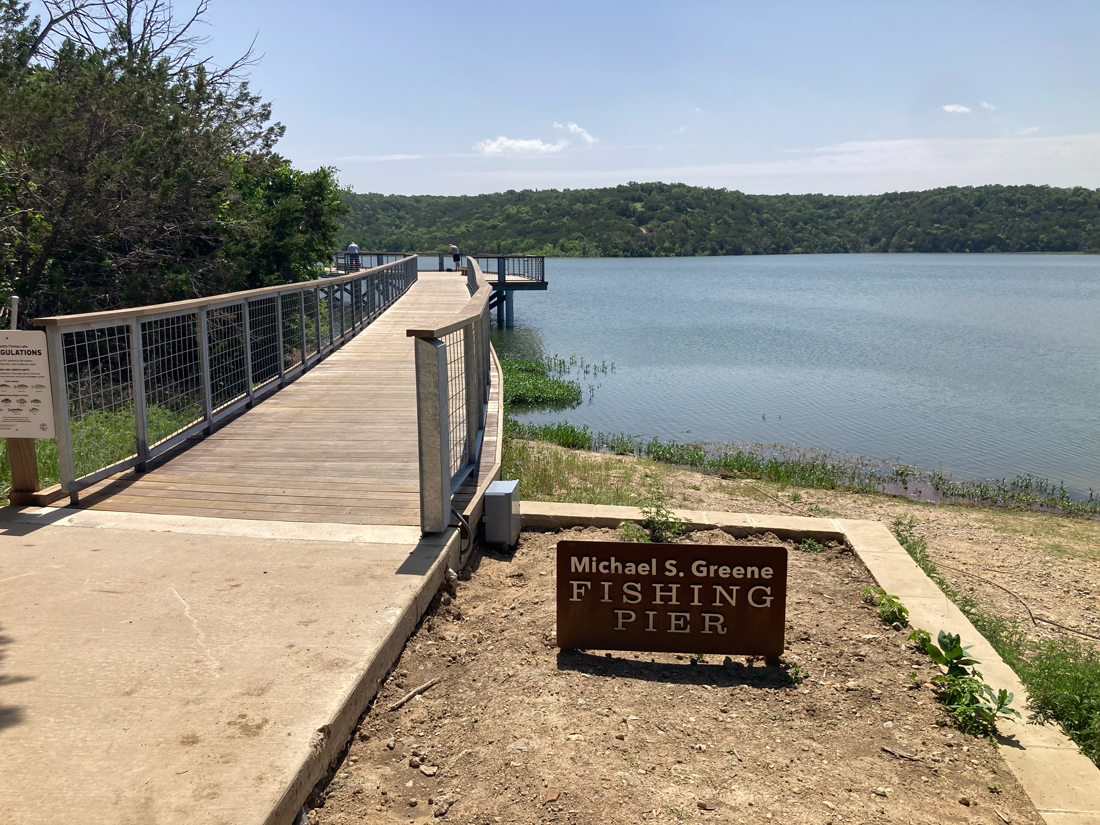
Photo by Mark Henricks
Besides its origins, the most striking thing about this park is how close it is to Fort Worth, just 75 miles west and a few miles north of Interstate 20. That’s no accident, and it also involves a tale. This one is about how the state parks department decided a 400-acre plot on Eagle Mountain Lake it had earmarked for a future park was just too small. So, it sold the land to the Tarrant Regional Water District, which turned it into Eagle Mountain Park.
In addition to $9 million, TRWD also took away a promise to build its next park close to Fort Worth. That’s only fair, since the city had, after all, lost an opportunity to have a state park even more conveniently located within its boundaries.
The resulting Palo Pinto Mountains State Park is perhaps mislabeled. The two Spanish words translate as “painted stick,” which is fine. It’s supposed to refer to the way juniper tree trunks and branches show different colors after losing the stringy bark.
And although miles of small, rugged canyons supply a mountainous feel, the summits go up only to 1,400 feet above sea level — molehills compared to Guadalupe Peak, in West Texas, the state’s highest point at 8,751 feet. The specific type of hill common here is a “cuesta.” These have a long gradual slope on one side and drop steeply on the other. Cuestas appear all over the world, including the Cross Timbers region around Fort Worth.
Two creeks, Russell and Palo Pinto, did the hard work to make Palo Pinto’s varied terrain. After cutting through the tough capstone of the plateau, their waters eroded the softer rock underneath. The action formed rocky canyons that, fortunately for park-lovers, are not as useful for ranching and farming as the flatter land atop the plateaus.
Tucker Lake provides the park’s visual centerpiece. It’s ringed by trails and features a lavish fishing pier with LED lights, deluxe fish-cleaning stations, and ample parking by a boat ramp. Anglers can expect bites from bass, bluegill, catfish, and crappie, and — bonus! — no fishing license required. They’ll even loan you a rod, reel, and tackle, and you can keep five fish maximum, of any species.
To maintain the lake’s serenity, gasoline-powered boats are banned, so it’s paddlecraft such as kayaks and electric trolling motors only. While there’s no rule against swimming in the lake, there is also no beach or other inviting place to splash. One of the rangers described the mucky bottom as uninviting. If you ask me, a sandy beach should be on the short list of future improvements.
*****
I’m not much of a fisherman, so the crappie and others were safe from me when I visited for two nights in April. Instead, I lit out hiking. Starting from my campsite in the Painted Stick Campground, I first did the five-mile Tucker Lake Trail that circles the lake. It was a mostly shady and entirely enjoyable hike on foot. With a maximum elevation change of 150 feet, this would be a good mountain-biking outing for any rider above newbie level. It’s mostly two-track and reasonably smooth, if not always level, with a couple of wet-weather water crossings.
Most of the 16-mile trail network is open to hikers, bikers, and equestrians. More than a mile of these are disabled-accessible, and the park has all-terrain wheelchairs available for loan. I thought Ben’s Trail, which climbs a mile or so from the fishing pier to Painted Stick Campground, would be an interesting ride for intermediate-level mountain bikers, with lots of narrow, twisting single track and a few tree gates and rock ledges, even if a ranger I spoke with said they felt it was too difficult for bikers.
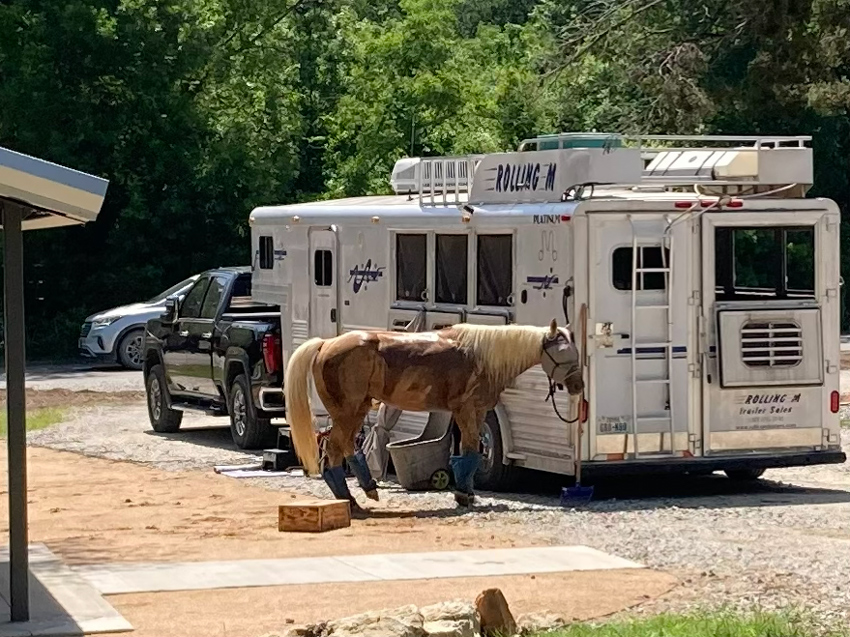
Photo by Mark Henricks
Perhaps because the park is so new, wildlife is plentiful and not particularly skittish. A cottontail and a road runner sauntered through my campsite at different times, both seeming more curious than cautious. I heard but did not see my favorite Texas bird, the gorgeous painted bunting, while traversing Tucker Lake Trail. And a family of hikers on the same path reported seeing a mother fox and kits sheltering in a rock crevice just off the trail. Otherwise, you may see deer, bobcat, and any number of lizards and buzzards. Evenings, the quavering calls of a coyote pack play a sunset soundtrack.
A trail of a different sort has an effect discernible throughout the park. That’s the railroad line hugging the property’s northern edge. The same Texas and Pacific Railway company that built the huge buildings that dominate the south side of downtown Fort Worth operated there for more than century, hauling cattle, oil, and other goods to market before the Missouri Pacific took it over in 1976.
Today the trains, usually carrying stacked containers, fill the canyons and woodlands with their rumbles and squeaks numerous times a day. The sound is fairly muted through most of the park and not unpleasant once you realize what it is. Luckily, because there are no crossings, the train whistles never blow. From time to time, you may also hear the roar of military jets from the direction of Abilene, home to Dyess Air Force Base.
*****
Camping opportunities here are appealing but limited. There are just 33 campsites with water and electric connections, including 23 in the Warbler Ridge Campground and 10 in the Russell Equestrian Campground that include two steel horse paddocks per site.
These RV-suitable sites go for $30 a night and have spacious concrete aprons for parking several vehicles as well as shaded picnic tables and steel fire rings. Both campground areas also have spanking-new and well-equipped bath and shower facilities. Like most Texas state parks, this one has no full hookup sites with sewer connections.
Campers at the dozen walk-in sites at Painted Stick experience a more spartan vibe. For $15 a night, you’ll need to tote your gear up to 50 yards on a path connecting the parking area. Some of these trails are a bit rugged, while others are disabled-accessible. If this could be an issue, call before reserving.
Each walk-in site also has picnic table, lantern hook and — nice touch — a steel bear box to protect food from wildlife. (An actual bear sighting is a remote possibility as the animals are increasingly wandering in from Oklahoma, and meanwhile I wouldn’t doubt the occasional mountain lion travels through already.) If you bring a padlock, you could also use the box to secure non-food items from potential two-legged marauders.
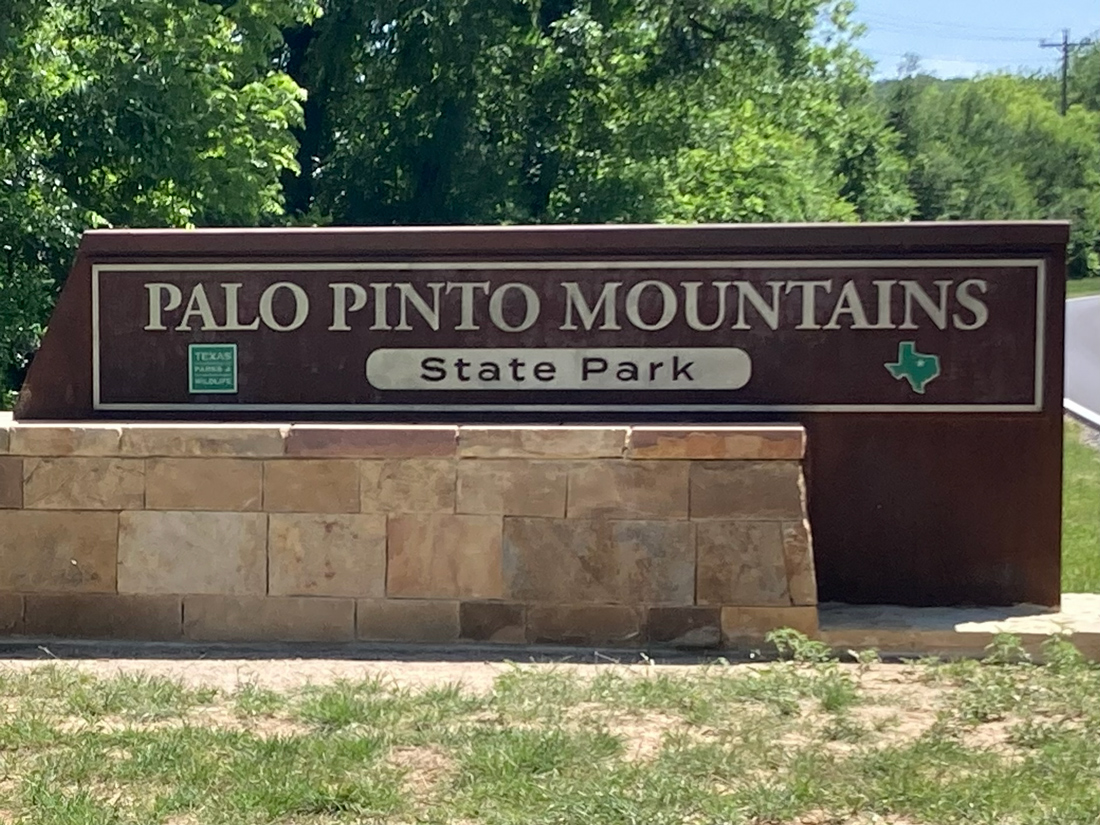
Photo by Mark Henricks
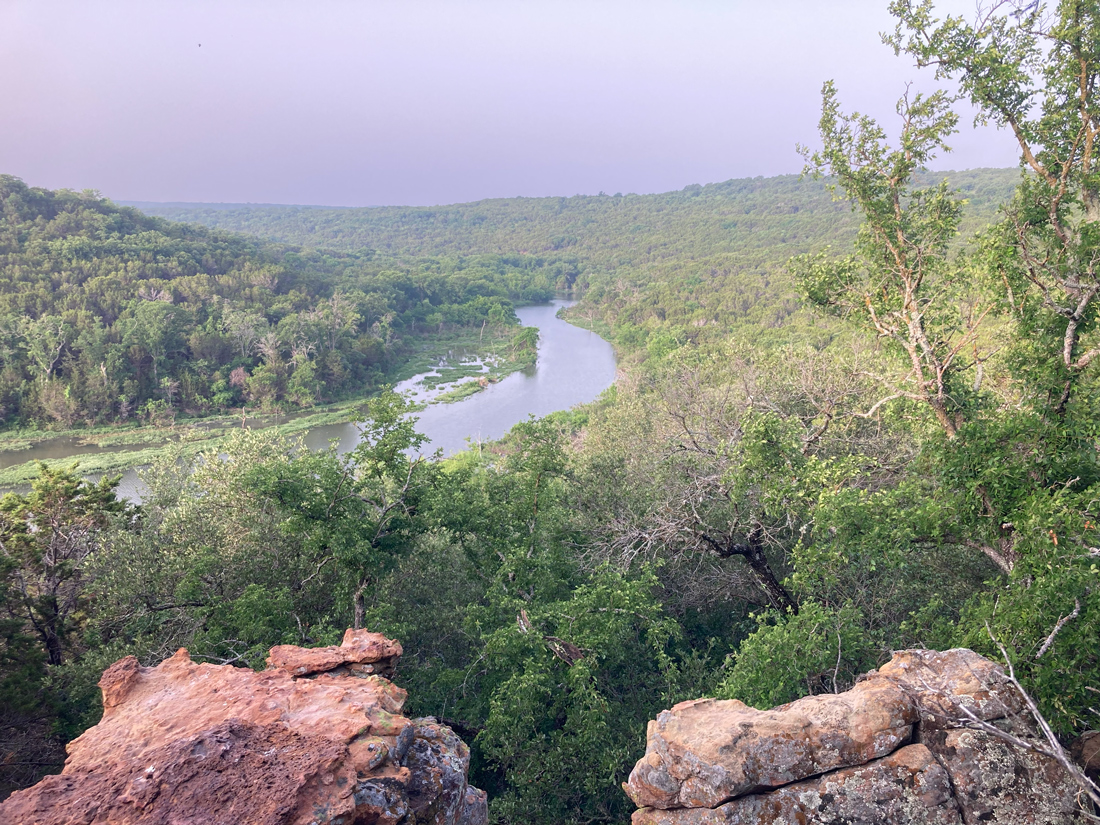
Water spigots are located near walk-in sites, but bathroom facilities for walk-ins consist of a vault toilet. Having said that, these are the nicest, newest, best-smelling outhouses you’re likely to see. And the view off the back of my campsite, No. 40, was the best in the park if you ask me. It overlooked Tucker Lake from the top of a 150-foot bluff and featured eye-catching rock formations.
My fellow campers proved a congenial bunch. They included a couple who left early because of the unseasonable 90-degree heat, a solo woman who was spending several nights in a tent, and my next-door-neighbor, Osye Pritchett, a retired executive of a marketing firm from Frisco. Like me, Pritchett rode a motorcycle to the park. We also shared an appreciation for reading a book while perched on the edge of the bluff behind our sites.
Pritchett likely spoke for a good many more visitors when he explained the reason for his trip.
“I wanted to see it just because it is new,” Pritchett said. “And it was a good excuse to get on my motorcyle and go for a ride.”
Folks who prefer walking to their destinations can backpack two miles down the Texas and Pacific Trail to one of the 13 primitive sites. These have no water, and, although they’re near Palo Pinto Creek and it was running while I was there, the waterway is dry much of the year. Call ahead if you’re primitive camping to see if there is enough water in the creek to filter or otherwise purify. If not, you’ll have to carry all your water.
The 5.7-mile Texas and Pacific Trail that leads to the primitive sites is a basic ranch road, but it traverses some beautiful meadows frequently filled with blooms of prickly pear, barrel cactus, Indian paints, verbena, and many more.
For picnickers and day-use visitors, there are the Canyon View Day Use area up on a ridge and, down by the lake, Crappie Cove Day Use. The Crappie Cove area has scores of parking spaces and the aforementioned fishing accoutrements.
Canyon View is distinguished by several picnic tables, a playscape incorporating native materials, and a well-equipped pavilion for rent at $150 a day. That pavilion is the park’s best spot for sunset watching.
Photo by Mark Henricks
Both nights I was there, the western sky turned pink while an orange orb sank behind a screen of far-off wind turbines and a silver-roofed train wound through the scrub-covered hills between. Another viewer’s story about seeing a rattlesnake on the trails that day did little to dampen the peaceful mood.
The park holds a variety of regular and special events, including night hikes, birding expeditions, edible plant explorations, and more. One is the occasional Texas Outdoor Family camp-out. For $75, the park provides camping gear for up to six, as well as guided kayaking, night hikes, and fire-building. If you’re a teacher and arrange a group field trip in advance, the whole class gets in free. Otherwise, it’s $7 per person for a day pass. It’s also a good idea to consider getting one online at the park website before you visit. That will ensure you aren’t stopped at the gate in case the park reaches capacity. Kids under 12, Texas State Parks annual passholders, veterans, active-duty military, Gold Star family members, and anybody born before Sep. 1, 1930, also get in free. Over-65 and disabled get half off.
*****
Palo Pinto is proving a strong draw for local outdoors-seekers. The first 30 days the park was open, exactly 17,172 visitors passed through the gates, according to TRWD. That includes 3,106 campers and 14,666 day users. Currently, they are limiting parking to 250 vehicles daily for day use. Weekends average 700 to 900 people, per the department.
The nearest town, Strawn, is just four miles away, but the problem is that, to paraphrase Gertrude Stein on Oakland, California, there’s not a lot of there there. One exception is Mary’s Café, home for 40 years to one of the state’s best chicken-fried steaks, literally so tender you could cut it with a fork and properly breaded with a light touch. If you hit Mary’s for lunch or dinner — they don’t do breakfast — you’ll find there are three sizes of chicken-fried steak. Do not order the large. Or even the medium. The small will be plenty, trust me on this. By the time you’ve consumed your steak, plus zeppelin-sized baked potato, Texas toast, and green salad, you may have trouble getting energized and pine for a nap.
The energy level of crews working on Palo Pinto is still high. You’ll likely see various dirt-moving and construction projects underway during your visit, but everything is fully functional. One small hiccup: the “Sunset Watch” viewing point shown on the main park road on the map is likely to be removed in later editions, since there’s no place to pull over or walking trail leading to it. Just go to the Canyon View pavilion where there’s plenty of parking and a concrete path.
This is your last chance for years to check out a new state park, and none of those in the works are anywhere near Fort Worth. The next new one is Post Oak Ridge, scheduled to open down near Lampasas by the existing Colorado Bend State Park. So, get out there and see it while it’s fresh. Don’t over-order at Mary’s or forget your hiking shoes, and, if you see a bar called the Mule Lip, keep driving unless you want to risk winding up as part of the story of a new state park.
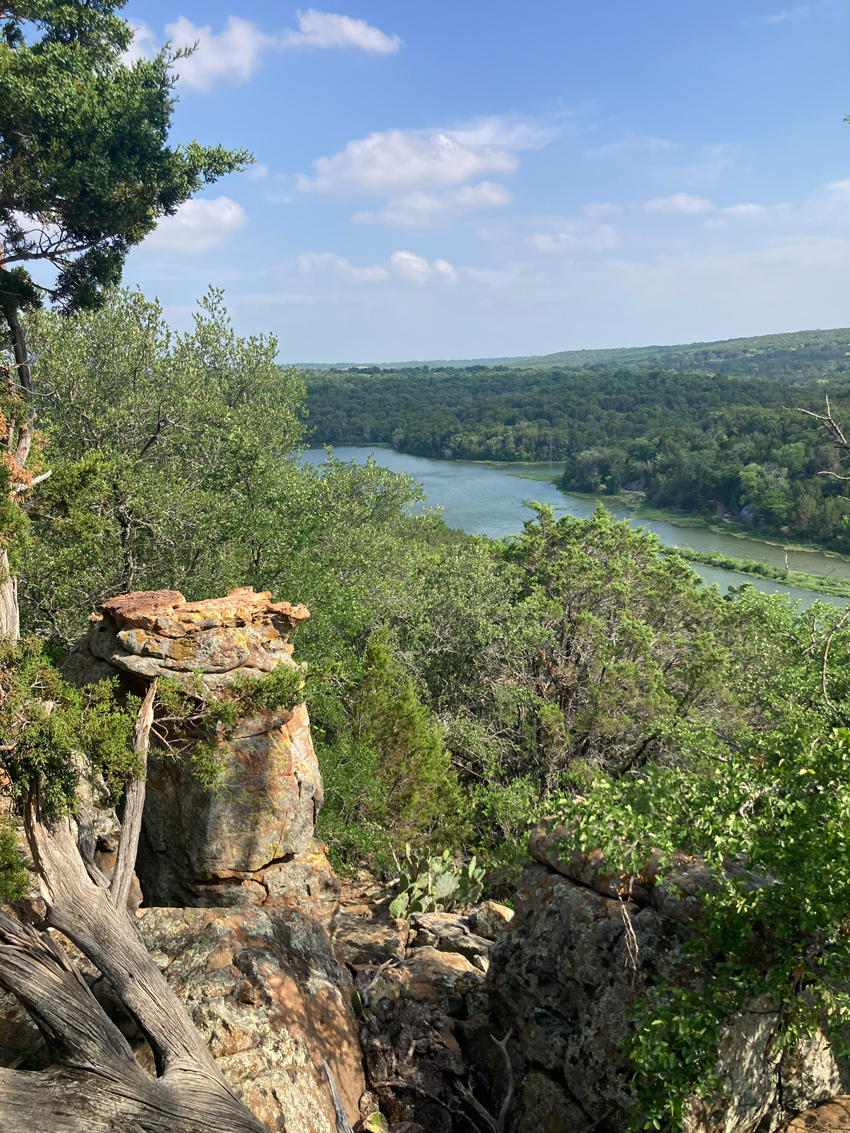
Photo by Mark Henricks
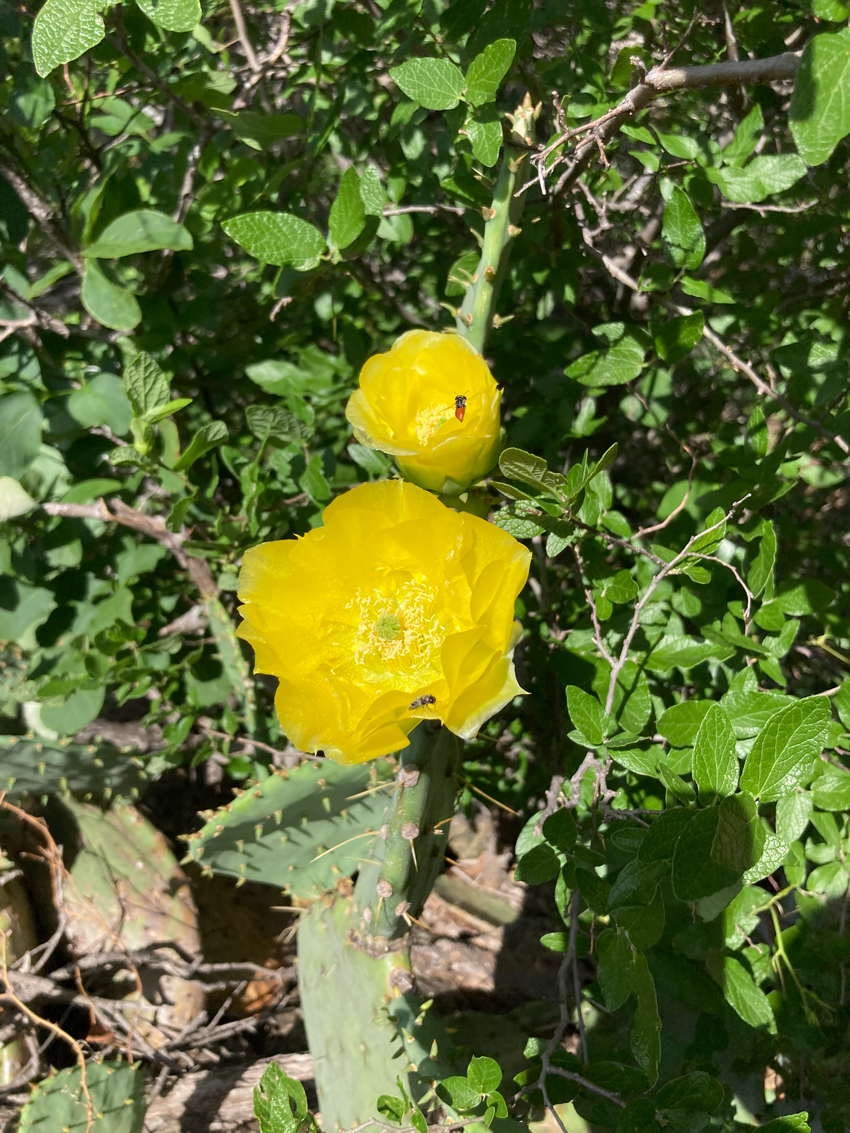
Photo by Mark Henricks
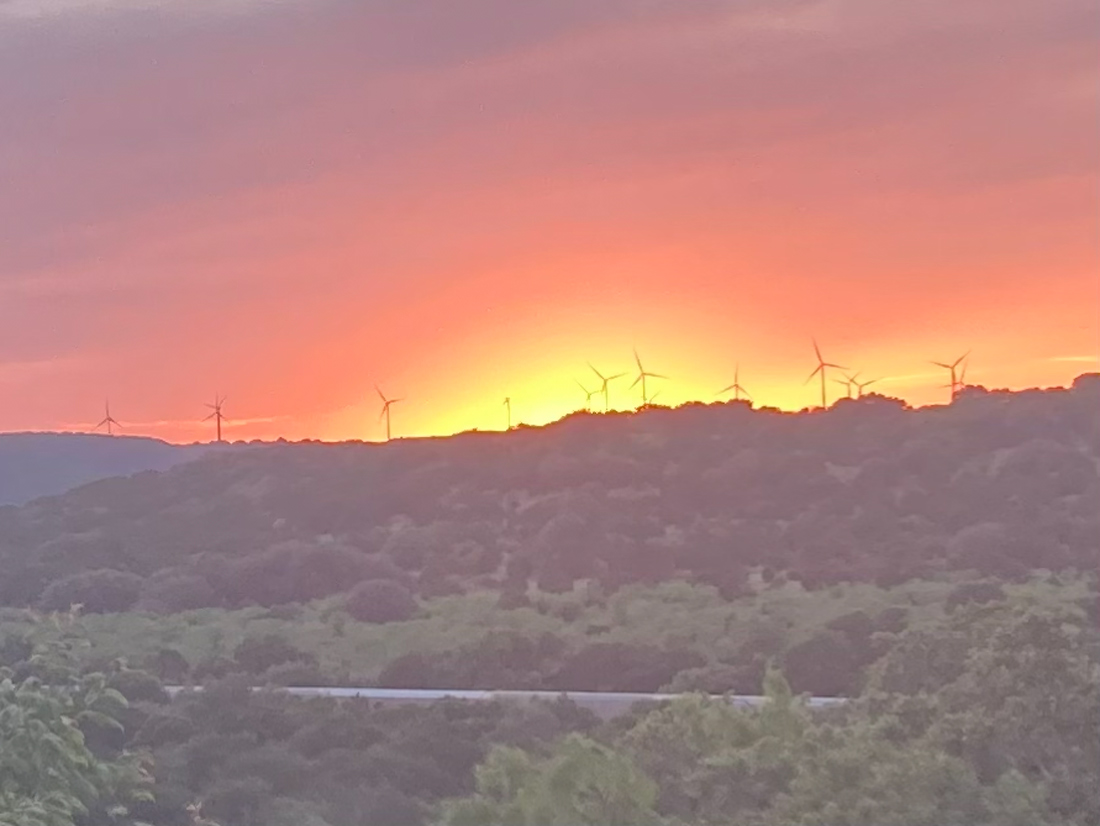
Photo by Mark Henricks
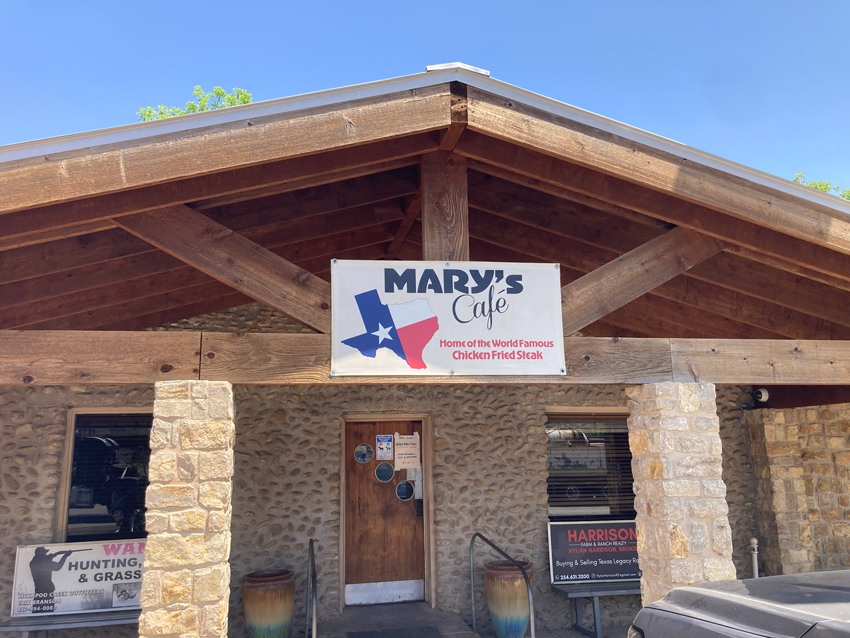
Photo by Mark Henricks
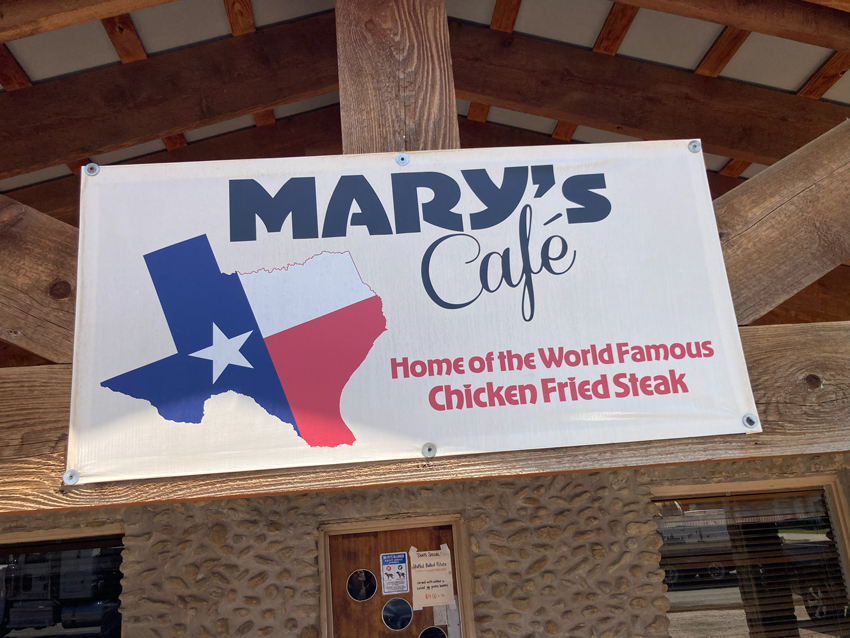
Photo by Mark Henricks
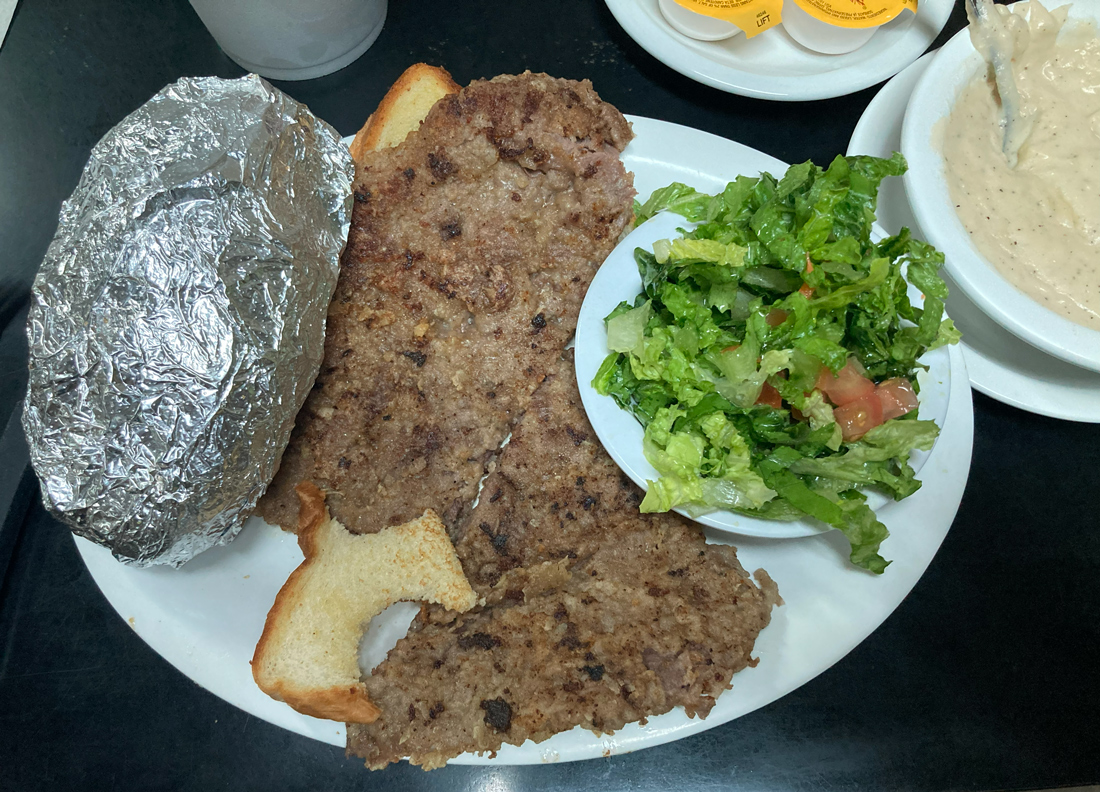
Photo by Mark Henricks