

The term “food apartheid” was coined by food justice advocate Karen Washington to highlight that lack of healthy food is not a natural condition but a system of segregation that divides people with access to abundant, nutritious food and those who are denied that access because of systemic injustices. Food apartheid goes beyond the common “food desert” label — it points to deliberate social and economic policies like redlining and disinvestment that restrict grocery stores, farmers’ markets, and fresh produce to affluent areas and leave Black and Latino neighborhoods with few or no options.
Communities suffering food apartheid often become food swamps — areas where energy‑dense, ultra‑processed foods from convenience stores and fast‑food restaurants flood the local market. Healthline defines a “food swamp” as a place where there is more access to less‑nutritious food than nutrient‑dense food, and these areas disproportionately affect historically marginalized racial and ethnic groups, especially Black residents. Research shows that living in a food swamp is a stronger predictor of obesity than living in a food desert.
The consequences of food apartheid are stark in Fort Worth. In the 76104 ZIP code — an historically Black area comprising the neighborhoods of Morningside, Hillside, Southside, and Terrell Heights — life expectancy hovers around 66-67 years, the lowest in Texas. UT Southwestern’s statewide analysis found that ZIP codes with less than 5% of residents living in poverty had an average life expectancy of 82.4 years, whereas those with more than 20% poverty had an average of 76.4 years. In 76104, the poverty rate is around 40%, and the median household income is about $31,450 in 2019. Despite sitting within Fort Worth’s Medical District, the community has few grocery stores and abundant fast‑food outlets — residents told researchers that the nearest supermarket is more than a mile away and that convenience stores and dollar stores dominate.

A 2013 food‑desert study found no grocery stores in 76104, and 22% of Tarrant County households lack a vehicle and live over a mile from a supermarket. As a result, diet‑related chronic diseases such as heart disease and hypertension are common.
These health inequities have roots in decades of discriminatory policies. Redlining — a racist practice in which banks refused loans in neighborhoods graded “C” or “D” by the Home Owners’ Loan Corporation — created cycles of disinvestment. A 2022 national study found that historically redlined neighborhoods still exhibit reduced food access and increased food insecurity. Other research links “supermarket redlining,” in which grocery chains avoid inner‑city neighborhoods, to hunger, poor diets, and higher rates of diet‑related diseases. As advocates at the Straydog Institute explain, this legacy of structural racism has left Black, Indigenous, and other communities of color with fewer supermarkets, zoning restrictions that discourage local food retail, and limited economic opportunities. When combined with low wages and a lack of transportation, these policies effectively determine who eats fresh fruits and vegetables and who relies on processed foods.
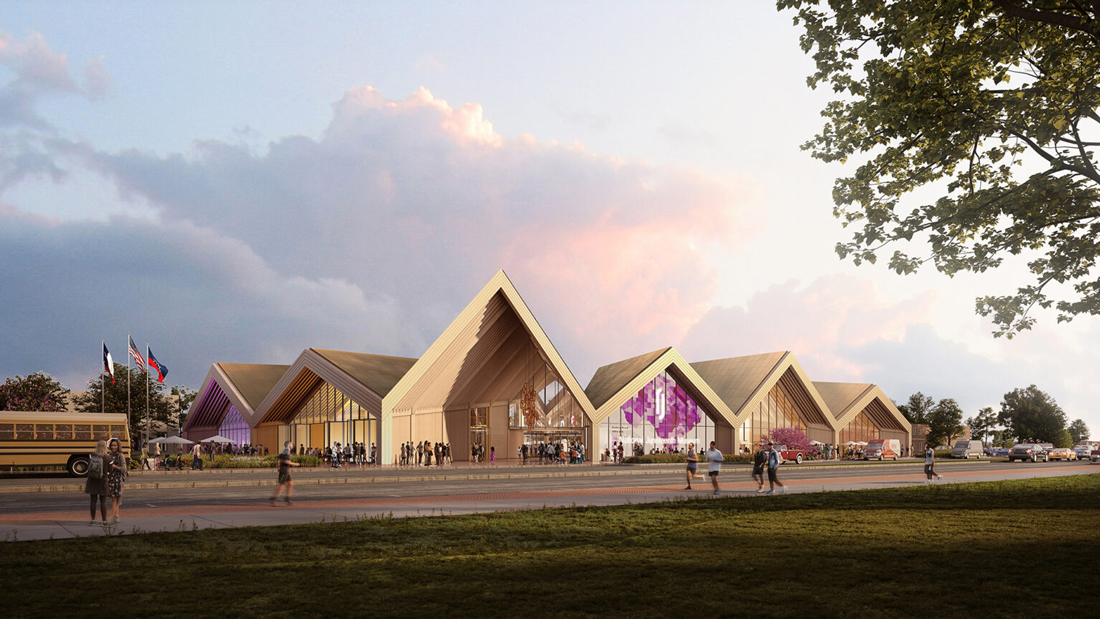
Against this backdrop, Fort Worth is developing the National Juneteenth Museum (NJM) in the 76104. The museum will occupy the corner of Rosedale Street and Evans Avenue in the Historic Southside — a neighborhood once dubbed the “Black Wall Street of the South” but later divided and impoverished by I‑35. The project aims to create a “community gateway” that brings education, cultural heritage, and economic opportunity to one of the city’s most underserved areas. Renderings show a two‑level, 50,000‑square‑foot building with immersive galleries, a theater, a business incubator, and a food hall. The City of Fort Worth has committed $15 million and the Texas Legislature $10 million toward the estimated $70 million cost. As of February 2026, the construction management team anticipates breaking ground in fall 2026.
While the NJM symbolizes cultural pride and investment, local residents stress that art and tourism alone cannot solve their daily struggle for healthy food. Community meetings during the Evans and Rosedale redevelopment highlighted access to food as a top priority, and residents asked for a full‑service grocery store. The Texas Observer noted that in the 76104, residents wanted a health clinic, pharmacy, and grocery store to accompany the museum. An NBC-5 report described the area as a “food swamp,” where fried food and convenience-store fare are plentiful but fresh produce scarce. Survey results from Spectrum News found that 63% of Fort Worth adults suffer from diet‑related chronic diseases — many respondents said they need a nearby grocery store rather than another dollar store selling processed foods. Living in a neighborhood with good schools, clinics, recreation, and healthy food access should not depend on ZIP code or median income. Food apartheid is a human‑made injustice. Rectifying it requires investments in grocery stores, urban agriculture, transportation, and livable wages, alongside cultural institutions.
Only by addressing the racist policies that shaped neighborhoods like the 76104 and by ensuring that economic development includes fresh food access can Fort Worth fulfill the Juneteenth promise of freedom and opportunity for all.
Patrice Jones is executive director of Southside Community Garden.
This column reflects the opinions and fact-gathering of the author(s) and only the author(s) and not the Fort Worth Weekly. To submit a column, please email Editor Anthony Mariani at Anthony@FWWeekly.com. He will gently edit it for clarity and concision.