



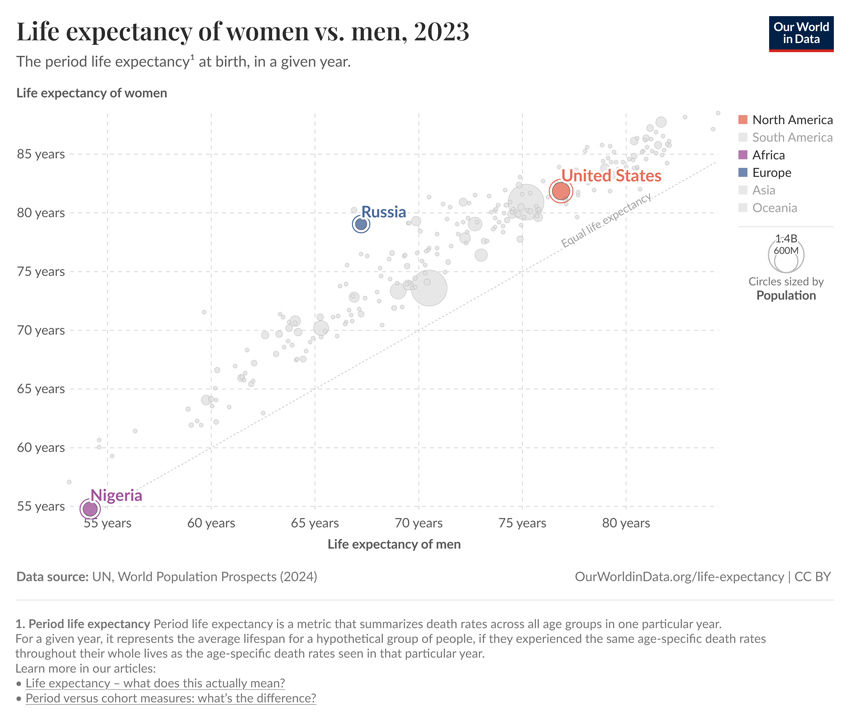
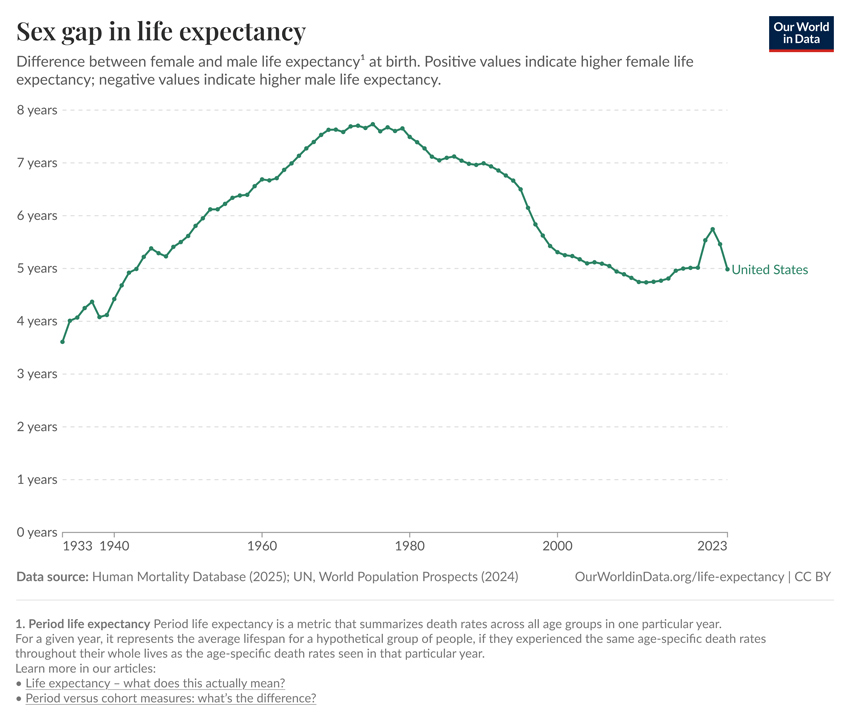
An American boy born today will on average live almost five fewer years than a member of the opposite sex born today. In addition to directly affecting in the most profound and personal manner the 1.88 million boys who will be born in our country this year, this burden also weighs heavily on society at large.
Male premature death imposes enormous economic costs as well as incalculable emotional and other damage on families, friends, employers, and others. Basically, it affects any person or institution that cares about or relies on men.
Racer Kyle Busch’s death last month at 41 is a timely and high-profile reminder of how often and tragically American men pass before their time. The winner of more races in the top NASCAR divisions than anyone in history collapsed and died from complications of pneumonia less than a week after winning his final professional race. In addition to his wife and two children, ages 11 and 4, Busch was mourned by countless motorsports fans, sponsors, team owners, and other drivers.

Like many people, I’ve been personally touched by premature male death. Twenty-five years ago, my father died aged a few months younger than I am now. He passed because of a fatal embolism to which smoking and alcohol use likely contributed. My son, Brady, died almost 10 years ago at 16 of suicide. Suicide is one of the major causes of death in America, and 80% of those who die from it are men.
And it’s not just me and some race fans. Virtually every American has felt the loss of a father, husband, son, or other man who left before what would have been his time if premature male death were reduced. And even those without personal male attachment can be significantly affected by broad societal effects of so many tens of millions of people dying so much younger than the rest.

Pexels
Men make up almost half (about 49%) of the 342 million Americans. This group of roughly 167.5 million is larger than any other cohort affected by a similar life-expectancy deficit. Two top causes of early death — obesity and smoking — reduce life expectancy for millions, but neither condition is nearly as common as being male.
The loss in lifespan is also massive. The magnitude of male premature death varies over time — more on that later — but currently sits at nearly five years. This exceeds the three to four years of reduced life expectancy for a smoker who puffs half a pack of cigarettes a day. It’s similar to all but the most severe forms of obesity. And maleness is not something most people choose. It’s mostly chosen for them at birth.
It’s easy to see how losing a father, husband, son, brother, or friend can affect individuals. The social impact is perhaps harder to discern, but, once you look, it is massive. To get an idea, let’s look at the economic effects. They may not be the most important, but measuring them is relatively straightforward.
When you add it up, male premature death probably has an economic impact of at least $300 billion every year, using the most conservative estimates. A midrange estimate would put it at over $2 trillion, year in and year out.
These estimates are necessarily imprecise and use figures like the statistical value of a life which are not completely standardized. However, when considering lost earnings to families, lost productivity to employers, higher healthcare outlays, and other costs, it’s clear that few, if any, social investments offer potential for more broad-based rewards.
Of course, before you try to change something, you need to ask what causes it. The answer’s not simple. Male premature death has many causes. A brief list includes biology, behavior, occupational hazards, mental health, societal roles, violence, and war. All these and more cut men’s lives shorter than the average.
Looking at the details, when it comes to biological factors, men tend to have less robust immune systems. This can make them more susceptible to infections such as Kyle Busch’s fatal pneumonia. Men also tend to have more testosterone, which may incline them to risky behaviors such as driving too fast. Men are more than twice as likely to die in traffic accidents.
On the social front, men are far more likely to work dangerous jobs — more than 90% of the 5,000 or so fatal on-the-job accidents each year kill men. Male social roles also draw them to lifespan-reducing choices such as smoking and drinking. Similarly, masculine stereotypes discourage seeking medical attention for physical and mental health conditions.

Pexels
A variety of causes calls for a variety of solutions. Fortunately, we can choose from proven effective approaches. Even biology can be overcome. It’s not set in stone by nature that men will die younger. Several pieces of evidence support this view.
First, consider how male premature death shows up in different countries. In Russia, for instance, men die an average of almost 12 years sooner. In Nigeria, the difference is just six months. Since Russians and Nigerians are biologically interchangeable, the variation suggests that culture and society are as important as biology in male premature death.
History also makes it plain that biology can’t fully explain male premature death. In 1880, for instance, American men actually outlived women. This began to shift in large part because of better maternal care following labor and delivery.
Before washing hands and sterilizing surgical instruments became standard practice in maternity wards, mothers often died from childbirth — a biological factor if ever there was one. By 1933, the effects of better medical care for mothers and other factors meant American men died about 3.6 years sooner.
That trend of increasingly premature male death has generally continued today, with occasional spikes. One occurred during the pandemic, when men represented a lopsided share of COVID deaths. A bigger one happened in the 1960s and 1970s, as American men died on average nearly eight years prematurely due to war, smoking, drinking, and accidents.
Since biologically based female premature death was reversed by social change, it follows that social changes can, in principle, reduce male premature death. The recent introduction of the 988 suicide crisis hotline shows that this is not just theoretical. More than 4,000 fewer American teens and young adults died from suicide in the first few years after the hotline’s national rollout.
Courtesy Our World in Data
Because suicide is so lopsidedly male, this mostly benefited men and shows how relatively small, inexpensive initiatives can help reduce male premature death. In the case of the hotline, the federal government has budgeted $231 million to fund its national operations for five years. That is a cost of about 15 cents per year for each American. Other promising low-cost moves include campaigns like those encouraging mammograms, which would prompt men to visit their doctors more often, drink and smoke less, and even choose less dangerous occupations.
There are predictable objections to any effort to reduce premature male death. One is that it won’t work, that there’s nothing we can do. The evidence that cultural factors influence male premature death show this is not so. We can’t change biology for the most part, but we can change culture.
Detractors are also sure to say that this would redirect resources from other worthwhile social goals. This isn’t about taking from anyone. We can do this without neglecting other pressing needs.
Today, virtually no money or attention is directed at solving this problem. Because so little is being done now, even limited and low-cost initiatives, such as the 988 hotline rollout, could produce significant improvement. Resource constraints are not the issue.
Courtesy Our World in Data
Any widow, fatherless child, or bereaved parent probably doesn’t need to ask whether success here would be worth the effort. Others could consider the benefits of having two-income households later in life, expanded grandparent involvement in childcare, longer marriages and friendships, and more multigenerational family experiences. More pluses include a better return on investments in education, the availability of more mentors, and improved institutional memory.
It’s not going to help only the men who would otherwise die, or NASCAR fans, or my family, or my late son’s friends and relatives. It will improve life for virtually everyone by ensuring that half the people in America don’t die five years sooner than the other half when there is something we could do about it.
Premature male death is as big an opportunity as it is a problem. There probably is no other preventable health risk that affects as many people, or as large a portion of the population, in so many profoundly meaningful ways. If we can reduce premature male death, we’ll all be a lot better off.
So let’s start now. Let’s first recognize that premature male death exists. Let’s see it has large, lasting, and nearly universal effects. Let’s get our heads around the idea that it probably can be meaningfully reduced even if not eliminated. Then we can discuss practical paths to change.
For Men’s Health Month this June, look at a man near you whom you care about — even if it’s yourself. Now think about what it would be like if they were gone, finally, completely, and irreversibly. Wouldn’t you like something done to keep that from happening? I would.
Writing this article is an effort to do something by starting to shift attitudes. It may take a while for that to happen, and it’s too late for my beloved son Brady, Dad, Kyle, and uncounted millions of other men who died before their time. But, hopefully, it’s a start.