
The happiest surprise I found in summer 2006 was The Devil Wears Prada, and I don’t just mean at the movie theater. I went into it expecting very little and instead enjoyed a sharp workplace comedy with stellar acting. (And beautiful women wearing cool clothes. Don’t forget that.)
Eager as I was to see the sequel, I was also somewhat wary. I’ve been around long enough to know how sequels like these go bad: too many plotlines, bigger set pieces, celebrity cameos cashing in on the first movie’s success, product placement that crushes everything else. There is a certain amount of all those things in The Devil Wears Prada 2 — did you really think we were getting out of the product placement? — but I had fun nevertheless. Yet a whole other issue came to my mind hours after I saw the film, and the more I think about it, the more it bugs me.
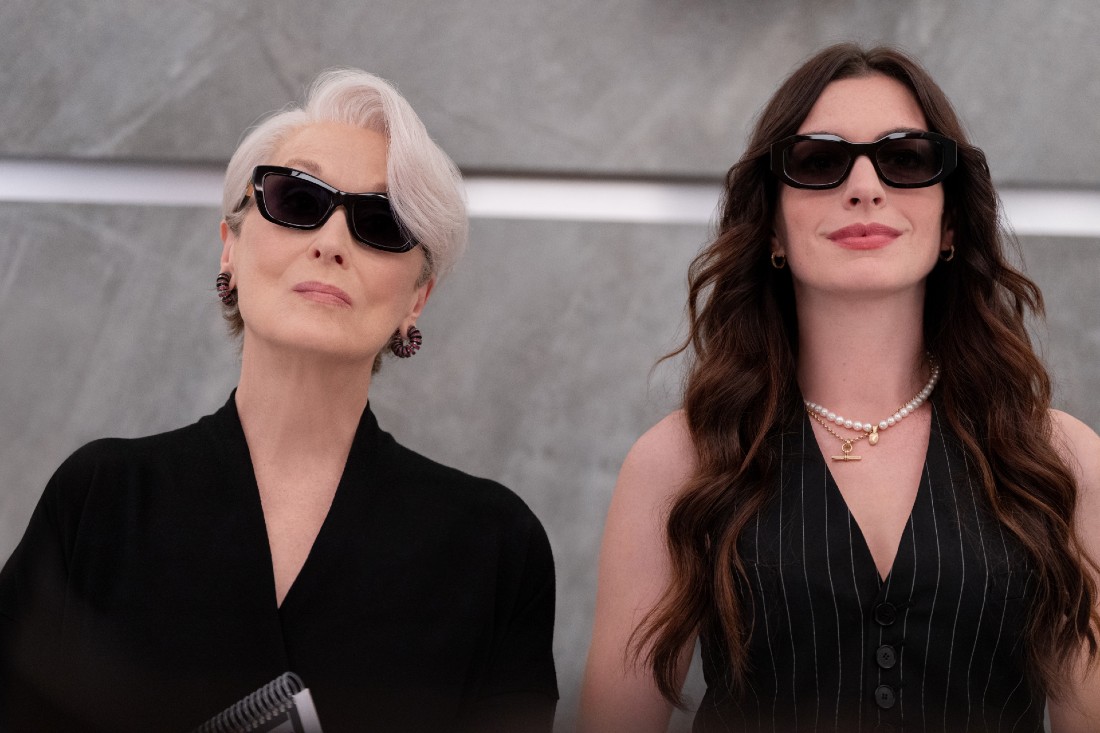
We begin with Andy Sachs (Anne Hathaway) winning an award for her investigative reporting, just in time to learn that her newspaper has imploded, leaving her and her fellow journos out of jobs. By coincidence, Runway magazine is in a pickle after extensively praising a fashion label that’s been found using sweatshop labor. To fix the publication’s tattered credibility, the higher-ups hire Miranda Priestly’s former assistant as its new features editor. This is news to Miranda herself (Meryl Streep), who doesn’t know about the hire and also has no recollection of ever meeting Andy.

As you can tell from the plot summary, the sequel is aware that the landscape of media has changed immeasurably in the last 20 years, especially fashion media. (Just for starters, there was no YouTube or Instagram when the first movie came out.) We see Miranda becoming a target of social-media memesters after the sweatshop scandal, as well as keeping her eye on her articles’ clicks. Even so, the script by Aline Brosh McKenna gets caught up in a succession battle after Runway’s elderly owner (Tibor Feldman) suddenly dies. The resulting budget cuts at least subject Miranda to the indignity of having to fly commercial to Milan, and not even first-class at that.
The new supporting characters are undersketched, and none of the actors portraying them (Kenneth Branagh, Lucy Liu, Justin Theroux, B.J. Novak, Rachel Bloom) make those roles leap from the page. Miranda does finally realize how she has wronged her loyal fashion director Nigel (Stanley Tucci), but her conciliatory gesture doesn’t nearly make up for what she did to him at the end of the first film. Given his total lack of personal life, she could at least find him a boyfriend.
While we’re on the subject of wrongs being redressed, Emily Charlton (Emily Blunt) in no way deserves the forgiveness extended to her after what she does from her new position at Dior. However, the bigger issue is the culture at Runway. The first movie vividly depicted the magazine as a truly terrible professional environment: Remember Miranda asking, “Where is that piece of paper that I had in my hand yesterday morning?” It’s good that Andy sets a better example for her co-workers by ensuring that her own assistant (Helen J. Shen) feels appreciated. It’s better that Miranda is tailed by an assistant (Simone Ashley) who evidently has the backing of Runway’s HR department and constantly corrects Miranda’s behavior, including stopping her from throwing her coat on employees’ desks.
All that still undersells the difficulties and setbacks of shifting a whole workplace culture, and the movie is supposed to be about the joy of finding purpose in one’s work. Understandable though it is that Andy is focused on the outlet’s survival after her previous employer’s bankruptcy, surely the filmmakers would have been better off concentrating on Andy trying to make Runway a better place to be. After she moves heaven and earth to save the cultural institution and Miranda’s position, it’s incredible that she doesn’t at least extract a promise from the boss to treat the staff with more respect. Or that Emily doesn’t tell Miranda how working for her has scarred her for life, despite a prime opportunity to do so. If the film had ended with Miranda leaving Runway in Nigel’s hands, it would have solved a whole raft of problems in one stroke. Fashion likely wouldn’t exist without the snobbery of tastemakers like Miranda, which is precisely why the sequel would have hit as hard as the original if Andy had made a concerted effort to be the Ted Lasso of fashion media.
Andy’s natural ebullience always lifts the film when pitted against the “I’m too cool” vibe of everyone around her, and Hathaway returns to the role with her enthusiasm undimmed. The sequel does not have any dead spots, and these characters have been away long enough that we’re happy to see them again. The script is smart enough that The Devil Wears Prada 2 won’t make you hate yourself while you’re reveling in the posh atmosphere (unlike, say, Sex and the City 2). It’s just a shame that the sequel chooses to don a set of rose-tinted glasses that it ought to be too mature for.
The Devil Wears Prada 2
Starring Anne Hathaway and Meryl Streep. Directed by David Frankel. Written by Aline Brosh McKenna. Rated PG-13.