


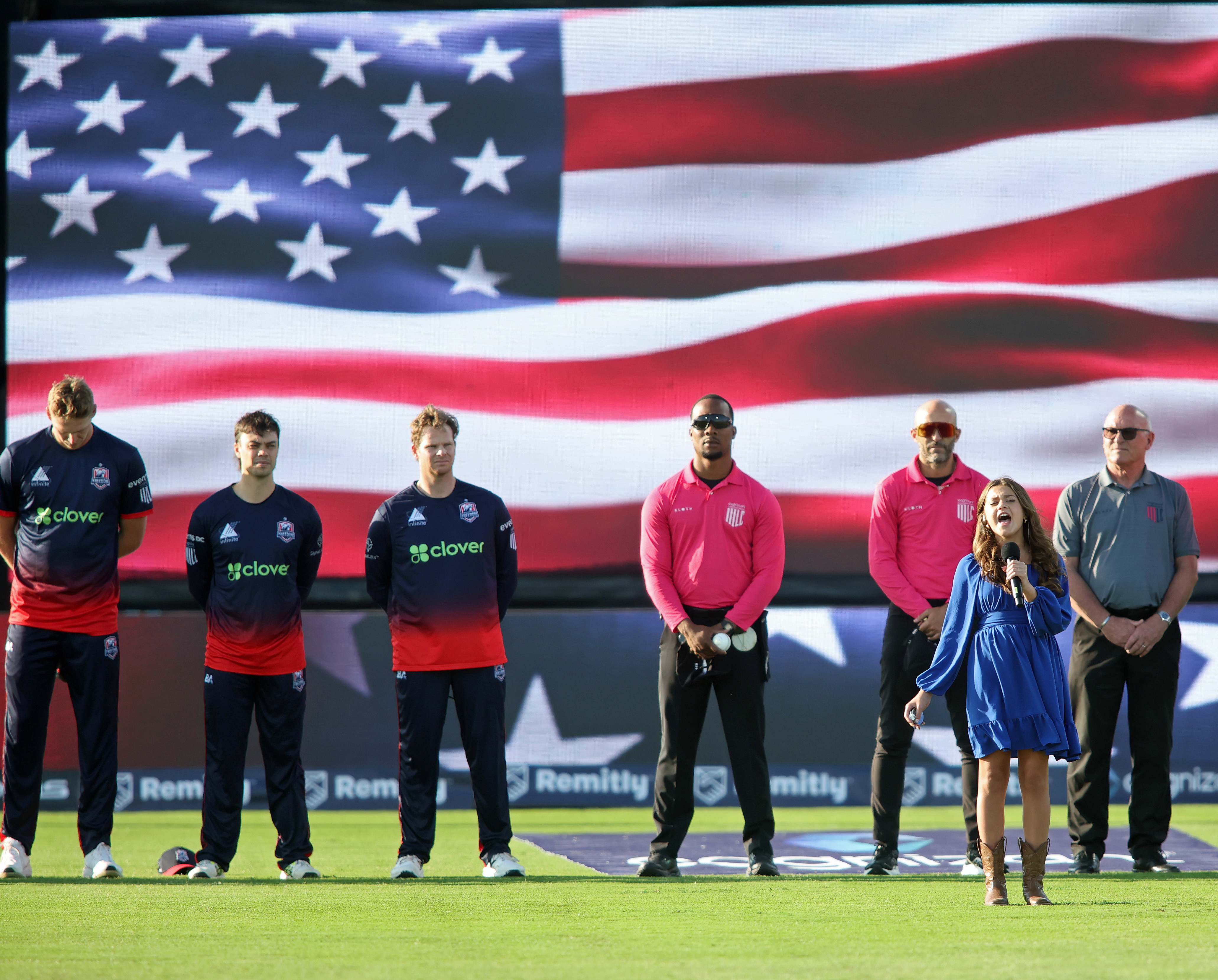
There’s a big international professional sports competition going on now, playing some of its matches in North Texas.
It’s a sport you might not be as familiar with as the four major U.S. sports, but the upstart wants to increase its market share in this country.
And, like you, they’ve noticed there’s also a soccer tournament going on.

“Soccer World Cup’s always going to be a good one. So to be here in the States while it’s happening is obviously great, obviously massive buzz,” said Carmi le Roux of the Los Angeles Knight Riders.
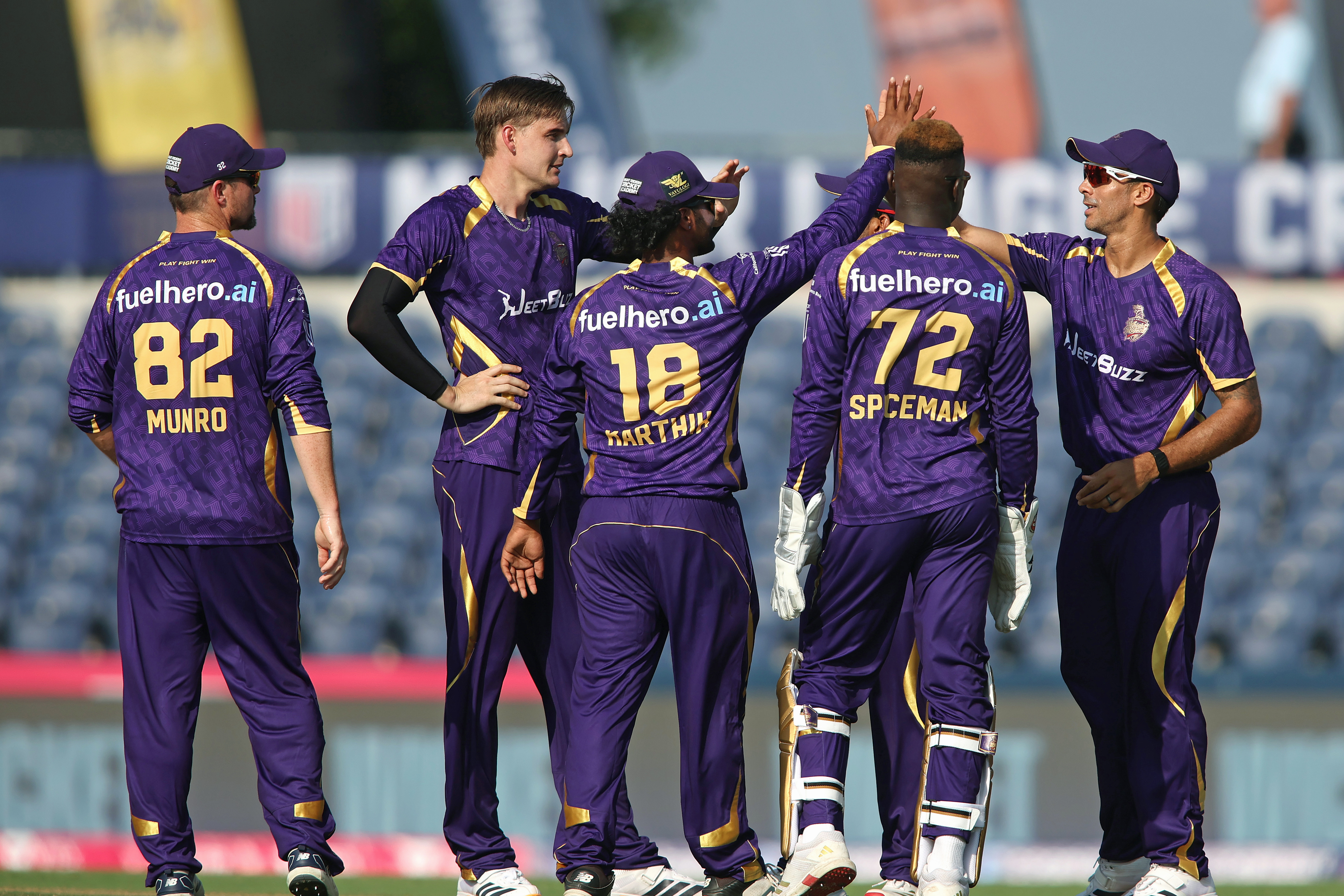
Photo by Shaun Roy / Sportzpics for MLC
The South African le Roux was likely happy to see his native country make the FIFA Men’s World Cup knockout rounds. He’d also be happy to see some buzz for his sport. He competes as a bowler in Major League Cricket. The circuit played in Grand Prairie Stadium to open its season, followed by games in Oakland and Pomona in California. They will bring the teams back to Grand Prairie for eight games in five days starting July 8th before concluding their 2026 run back in the Oakland Coliseum.
MLC’s organizers would love to see their sport progress in the U.S. the way soccer has.
“Rugby and cricket are probably behind looking at soccer, thinking, ‘How can we do something similar?’ And that’s certainly the ambition for us,” said Major League Cricket Chief Executive Officer Johnny Grave. “We know it’s not going to be something that’s going to explode and be an overnight sensation and suddenly be mainstream and popular, but what we’ve started here with Major League Cricket, with Minor League Cricket, of building facilities like this in Grand Prairie, it’s the start, we think, of cricket’s journey in the United States.”
As they play in World Cup markets, they can look for relevant insights into how soccer went from an afterthought to a commercial and sporting force.
“You’re seeing FIFA just killing it. And if you go back 34 years, soccer was nothing in America, and it took them 32 years to really get to a certain place,” said Anurag Jain, co-owner of the local Texas Super Kings MLC club. “The women’s soccer team did really well, and lots of other things happened, but it’s amazing to watch the interest and excitement.”
Both soccer and cricket have been played in the U.S. since before the Declaration of Independence, though other sports outdistanced them here even as the two British-originated pastimes accumulated substantial popularity elsewhere in the world. But in the 1960s, a group of Americans took on the task of raising soccer’s profile. They got a boost from the 1994 Men’s World Cup and the subsequent men’s professional league. As Jain noted, the USWNT’s substantial success did a lot to grow the sport in general. Substantial grassroots participation developed and European club sides invested in the market. All those factors helped the sport gain what now seems to be a lasting foothold.
North Texas had a lot to do with the expansion of the beautiful game, and much of the impetus for it came from the late Lamar Hunt and his family. Luckily for his sport, Jain runs in those circles.
“I’ve spoken to Hunts many times. They were visionaries, and what they’ve done is amazing, building soccer,” he said.
One thing the Hunts considered a difference-maker was to construct stadia purpose-built for their sport.
“You’ve got to have first-class facilities. You don’t build them too big, that’s always a great life lesson. You build them with an opportunity to expand,” FC Dallas President Dan Hunt said in an interview conducted at the grand opening of Hunt Sports Management’s newest venue, Texas Health Mansfield Stadium. It will house North Texas SC of MLS Next Pro, a third-division feeder club for FC Dallas.
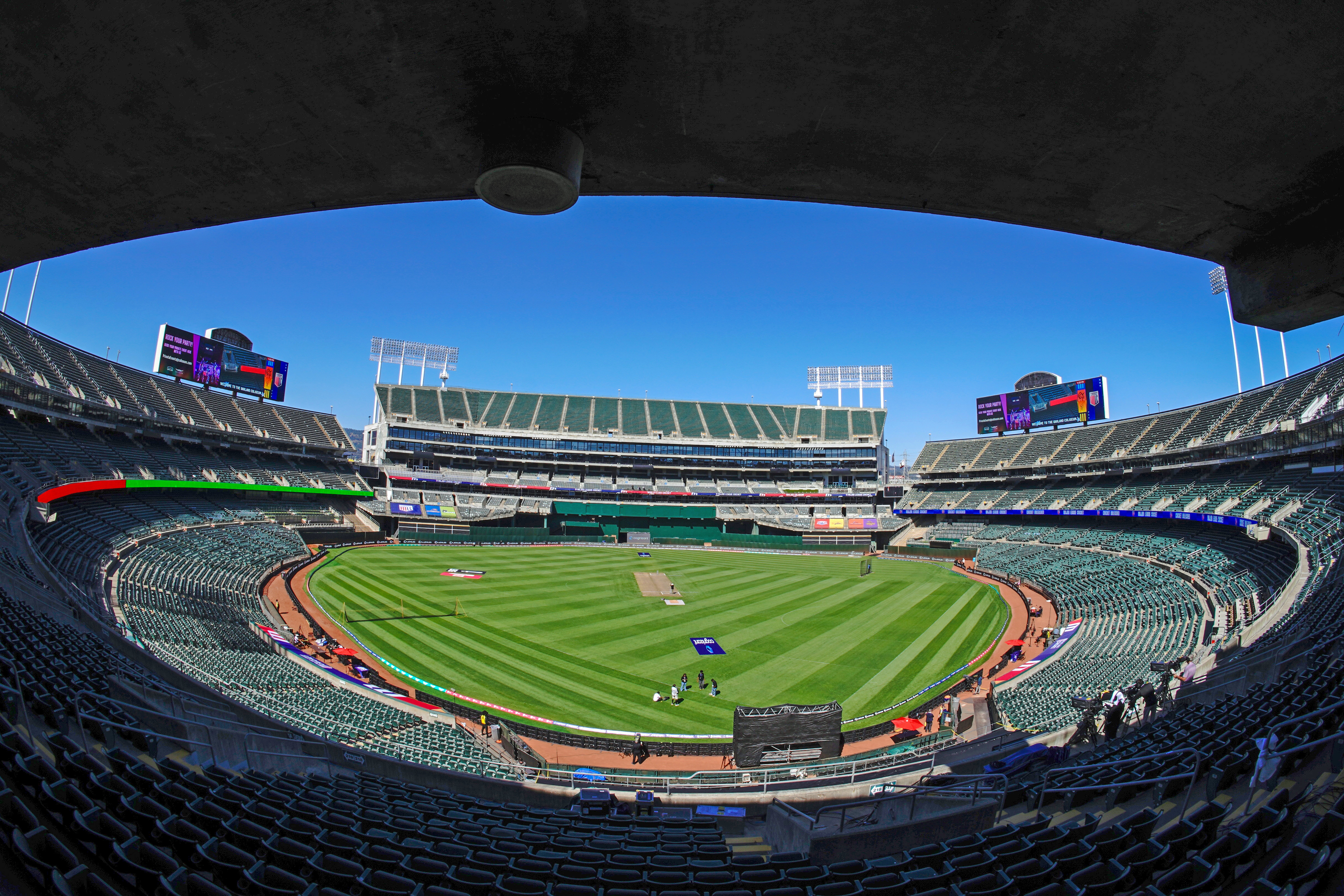
Photo by Jonathan Steer / Sportzpics for MLC
Jain and his fellow cricket advocates have taken Hunt’s advice to heart. “We’re working on building stadiums across the country,” he said. However, while soccer can at least be played, albeit sometimes imperfectly, on fields intended for American football, cricket is less adaptable.
“That’s our biggest challenge, because unfortunately, as great a sports as they are, baseball and American football and soccer don’t have the same dimensions as cricket fields,” explained Grave. “So we have to build these bespoke venues, which is obviously an expensive and heavily capitalized requirement of us.” In Grand Prairie and Oakland, they redid baseball facilities and hope to add more dedicated pitches in the near future.
When Major League Soccer began in 1996, they did not have any soccer-specific stadiums. They also didn’t have the reputation or cash flow to attract the world’s top-tier players. The fourth-year cricket league has an advantage MLS didn’t, which is that the U.S. pro cricket season does not overlap with top leagues in other countries. The ownership also committed from the beginning to recruit pedigreed international cricketers.
“We bring the world’s best players in, playing alongside local players for a month of the year, which is how the cricket calendar works,” said Grave. “We kind of own this calendar, which is extraordinary for a country in cricketing size to be as small as the United States in terms of its position in the world game to own really this post-IPL, so early June through to mid-July, where no other franchise cricket of this size plays anywhere in the world.”
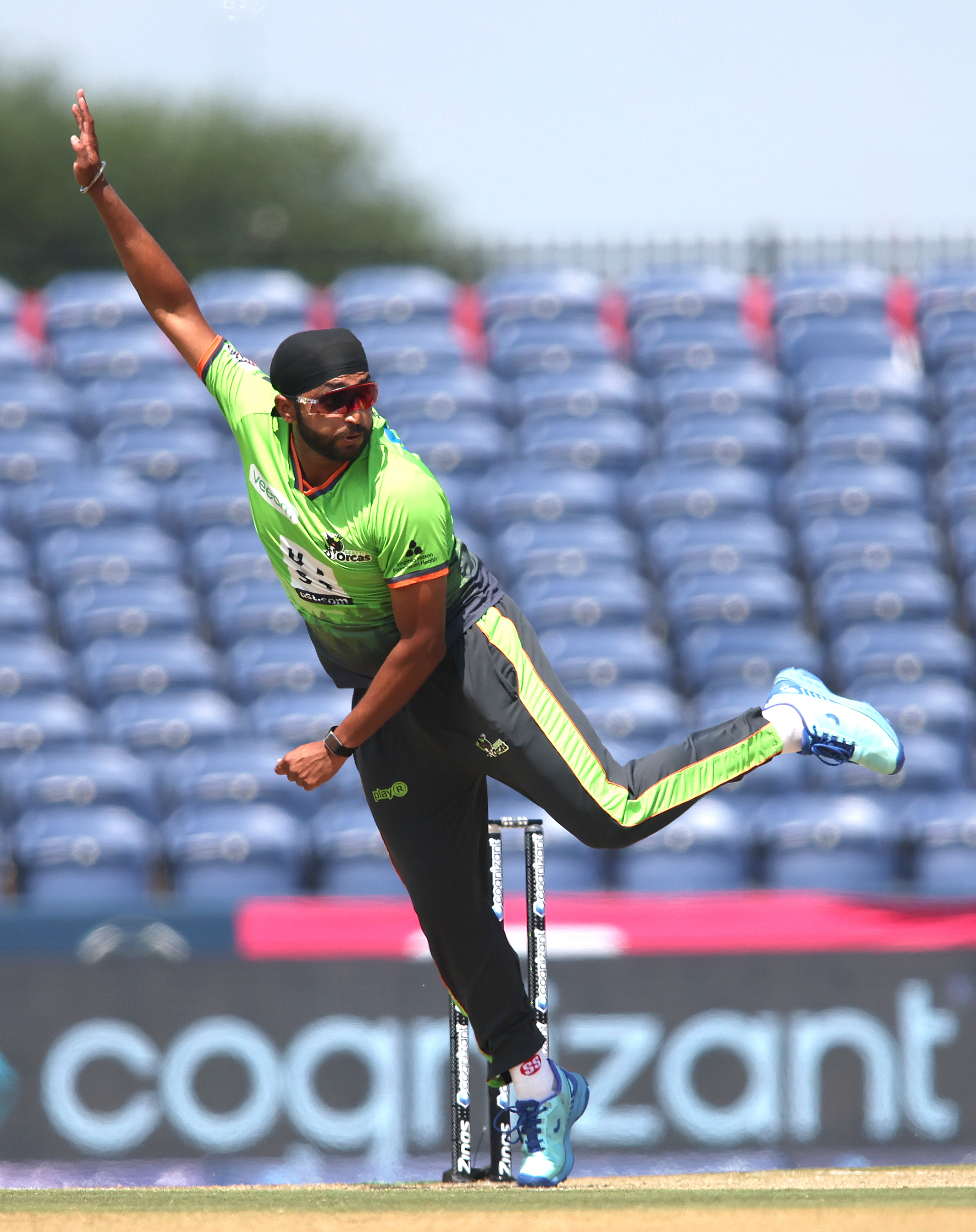
Photo by Shaun Roy / Sportzpics for MLC
MLC begins play shortly after the Indian Premier League (IPL) concludes and ends before The Hundred, England’s top competition in this form of cricket, starts. That helps the U.S. league attract quality talent from cricket-playing countries who may also compete in those series. The IPL is widely considered the world’s most popular cricket club league, playing, as MLC does, the Twenty20 form of the game in which matches resolve in three hours or so. Its franchises invested in some Major League Cricket clubs and lent their branding, knowledge, and even personnel. One challenge MLS has had is that overseas clubs have appealed to both existing stateside supporters and to new fans, making it tougher for local clubs to become a soccer fan’s favorite. U.S. IPL fans can easily transfer their loyalties to the American version of the club. Indeed, at a match, one will often see fans clad in Indian or American versions of a team’s kit.
Cricket has billions of fans worldwide. They are not as evenly distributed as soccer’s supporters, with cricket having caught on largely in countries of the former British Empire, whereas association football is popular pretty much everywhere. But just as soccer could draw early adopters from the American melting pot that included Latin Americans and Europeans, a cricket-attuned diaspora can provide a domestic fanbase as its international roster members also generate interest and viewership in their home countries.
“We’re on the big networks of the UK, Australia, New Zealand, Caribbean, South Africa, India, so we know there’ll be millions of people watching the game around the world. So we get that global brand awareness, and then I think we’re serving an audience that’s highly affluent in terms of the cricket fan, and probably not served by a number of the other sports,” said Grave. “It’s an untapped market that’s growing in this country, particularly with that South Asian audience.”
American residents with heritage from countries like India, Pakistan, and Sri Lanka often offer high-income demographics. Those can appeal to sponsors, whose involvement can help grow the game through the money and exposure they provide. And an impending event promises to also supply some mojo.
“I think we’ll get a buy-in to the Olympics, because we’re the host nation, and I’m looking forward to that,” said Jain of the 2028 Los Angeles Games that will include cricket for the first time since 1900. “I see the Olympics as a magnetizer, and a sort of a boost to cricket in this country.”
Certainly, the Olympics can stir interest in unfamiliar athletic pursuits like few, if any, other entities. It happened for soccer on the women’s side. The U.S. won the first Olympic women’s tournament on home soil at the 1996 Atlanta Games. The result accelerated the U.S. program and the tournament’s presence in the Games helped induce other countries to take their women’s soccer more seriously, too. Jain noted how China’s athletic authorities began to devote new resources to cricket once the International Olympic Committee selected it for LA28.
Cricket has an advantage here in that LA28 will include both men’s and women’s cricket. They don’t have to wait 100 years, as women’s soccer did, for half the planet to be able to aspire to Olympic glory in their sport.
“It can’t be just a men’s game. It needs to be a women’s game as well,” advised Hunt.
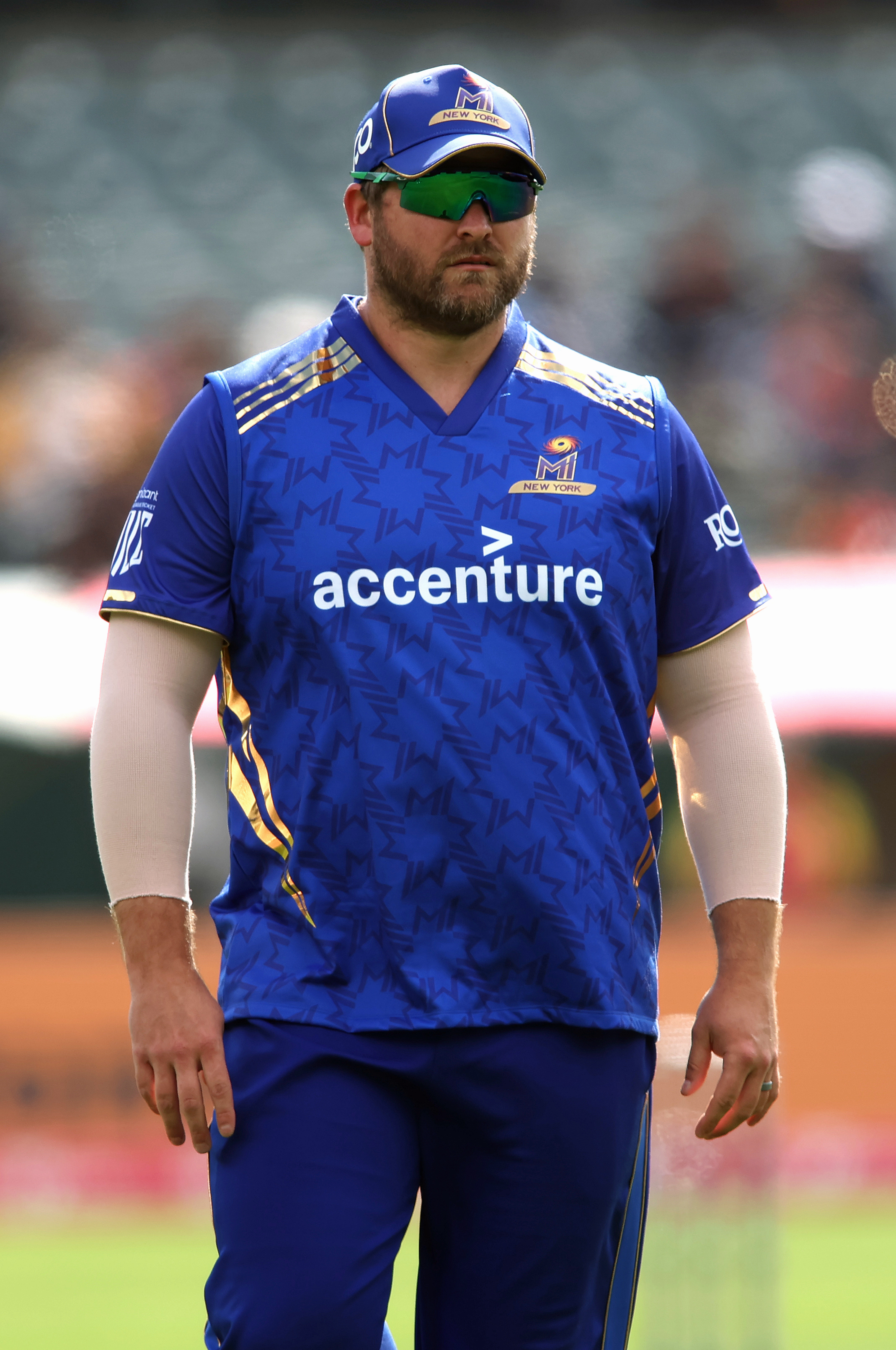
Photo by Shaun Roy / Sportzpics for MLC
“I think if you got the opportunity to represent the U.S. at an Olympics, representing any country at the Olympics, I mean, it’s one of the pinnacles of world sport. It’ll be an awesome, awesome experience, especially in our own backyard here,” noted Corey Anderson, a native New Zealander who has competed internationally for the U.S. and also plays in MLC for MI New York. As host nation, the United States will receive automatic entries into the Olympic tournaments.
It helps to win, and while the U.S. sides hold scant hopes of medaling, the men’s team did upset world power Pakistan two years ago at a T20 World Cup match in Grand Prairie and gave top-ranked India a scare in a close loss. The best native-born U.S. players are getting valuable experience in Major League Cricket alongside international teammates and opponents.
To create world-beating American cricketers, the country must develop more young players. A positive result or two at the Olympics could help.
“Team USA doing well creates a massive halo effect of awareness and passion and pride, and at the same time have that grassroots approach getting kids just aware that the sport exists,” said Grave. “The real opportunity of being an Olympic sport means now that we can have those conversations into the junior, middle, and high schools, and the colleges, and really have that bottom-up approach, as well as the top-down. I think that dual strategy of making sure that cricket is getting into the consciousness of young people in America, and the best way to do that is physically giving them a ball and a bat and saying, have some fun, because ultimately that’s what cricket is.”
Jain noted they are also looking to create academies around the country, mirroring in many ways the numerous soccer clubs and even MLS academies that have proliferated in the U.S. since the 1970s.
“Every kid needs to be able to have an academy within a reasonable distance to go learn cricket,” he said.
Hunt agrees with that strategy.
“I think if you really want to grow to a grassroots level, these clubs need to take the philosophy of the soccer clubs and start having youth clubs and academies developing young players, and that love, and having tournaments.”
MLC feels growing the game itself is crucial to the league’s own success, though its officials agree widespread U.S. adoption of the game will not happen immediately. But the spectacle they’ve been witnessing across North America this June and July provides them with hope the task can be achieved.
“What soccer shows is that there is space for other sports and entertainment here in the U.S. And everyone knows that the United States probably is the most developed sports market anywhere in the world, and the most commercially advanced, but actually, Americans love their sport. They love the rivalry, the competitiveness, the action, the skill, and therefore, as soccer has done, it’s taken a long time, but it’s now bigger than ever,” Grave said. “We’re trying to make inroads here into the entertainment market, and say that cricket, we think, can have a space in the summer months.”