

“You saw it yourself during the World Cup—the incredible impact this sport can have.”
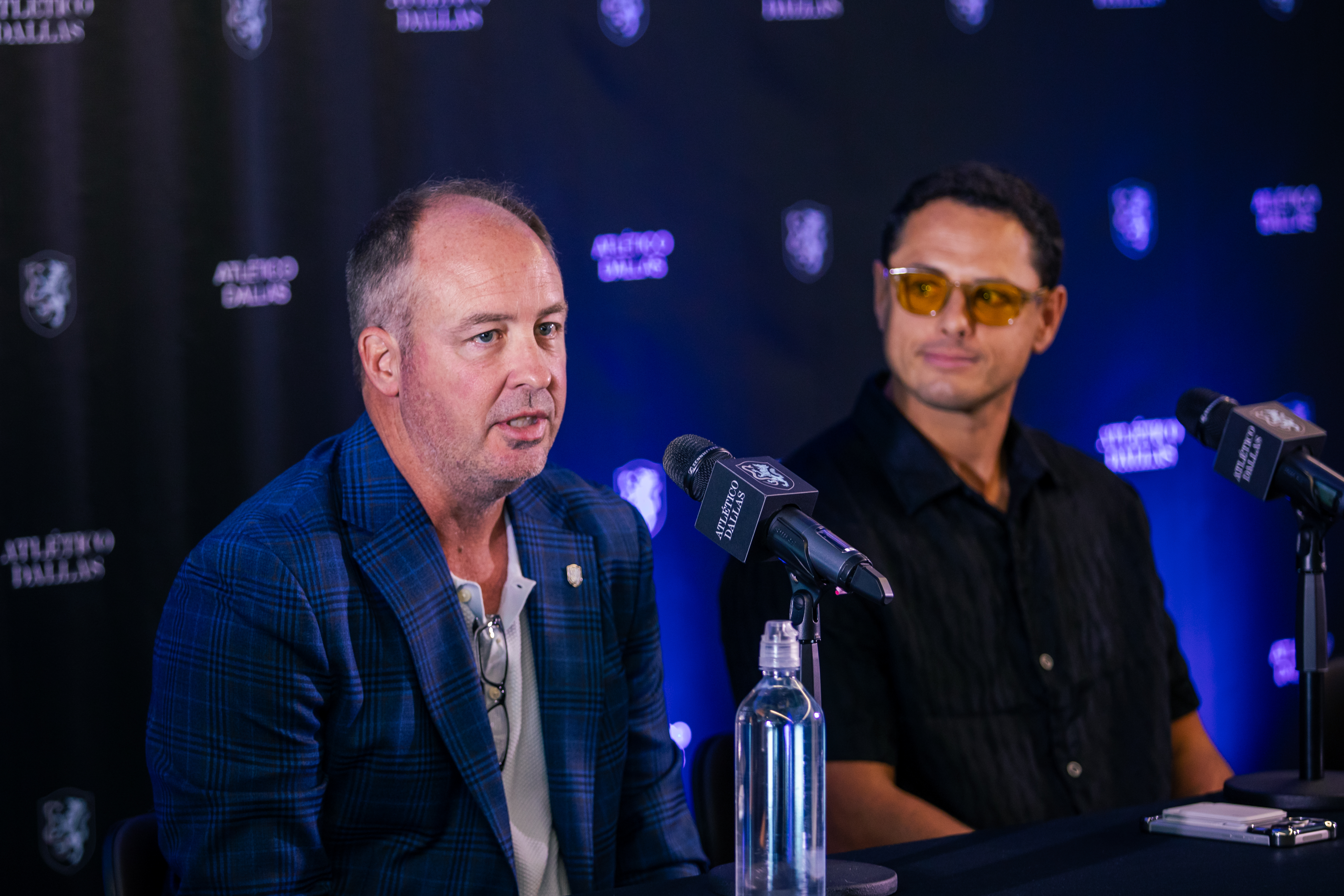
So said Javier “Chicharito” Hernández Wednesday at his Atlético Dallas introductory press conference. The Mexican soccer legend had a first-hand look at the global spectacle via his role as a FOX television analyst. He’s played in World Cups himself, and also for big clubs in England, Spain, Germany, his native country, and the United States. He has seen what true passion for the sport looks like and, indeed, has fueled it himself many times with prolific production for club and country.
He arrived at his new team the same month the event left Americans and North Texans feeling energized by his sport to an unprecedented degree. And the question now becomes: “what will soccer do with that energy?”

“There’s a lot of eyeballs on us right now, and quite frankly, that’s what we’ve asked for by doing this. And coming out of a World Cup, there’s always possibilities,” said Atlético Dallas Sporting Director Brian Corcoran, as he sat to Hernández’s right at the presser. “It’s on us to understand what those are and how to bring them to fruition.”
Certainly, Corcoran’s insight applies to his club. Atlético Dallas is an expansion outfit that will play in Cotton Bowl Stadium starting in 2027 as part of the USL Championship Division II circuit, and likely thereafter ascending to the United Soccer League’s planned Division I entity. Corcoran’s take might also apply to U.S. soccer more broadly. And the two entities are, in some ways, intertwined – the fate of one affects the fate of the other.
The U.S. will host significant international soccer competitions again in 2028 (Olympics) and 2031 (Women’s World Cup). Those sorts of national team events certainly motivate young athletes to take up the game and adult fans of baseball, basketball, and football (gridiron version) to become interested in it. But the world’s biggest footballing nations (Hernández does prefer the term “football” to “soccer” he noted) have robust layers of clubs, like Atlético Dallas, FC Dallas of Major League Soccer, or Atlético-owned women’s side Dallas Trinity FC. Those entities drive interest on a daily basis if they are successful.
“A guy like Javier, combined with coming off the back of a World Cup, we expect to bring people in the stadium. And quite frankly, this project doesn’t work unless we can do that,” said Corcoran.
It will take more than high-profile scorers and lingering goodwill to strengthen the game’s foundation in America.
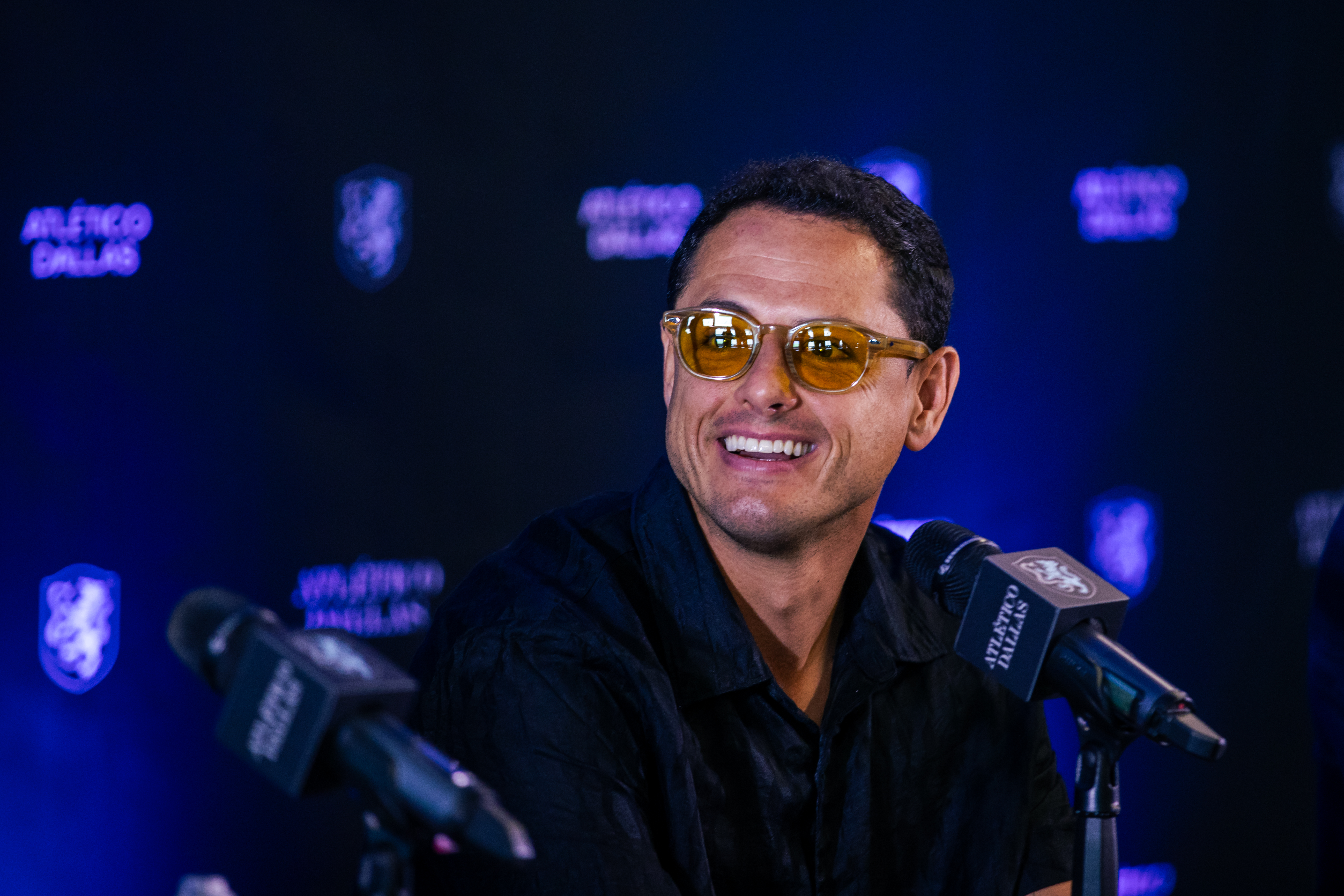
“The USL needs to have better development of football players, and not only bringing stars,” said Hernández, who sees promotion/relegation as a potentially helpful component to cultivating young talent. “Not having only amazing managers, but it’s the combination of all. This league needs to grow, so a lot of players can come, and then the whole country can improve.”
Atlético Dallas Founder and Chairman Matt Valentine sees off-field efforts, including by Hernández, as also crucial to the franchise’s plans for stability.
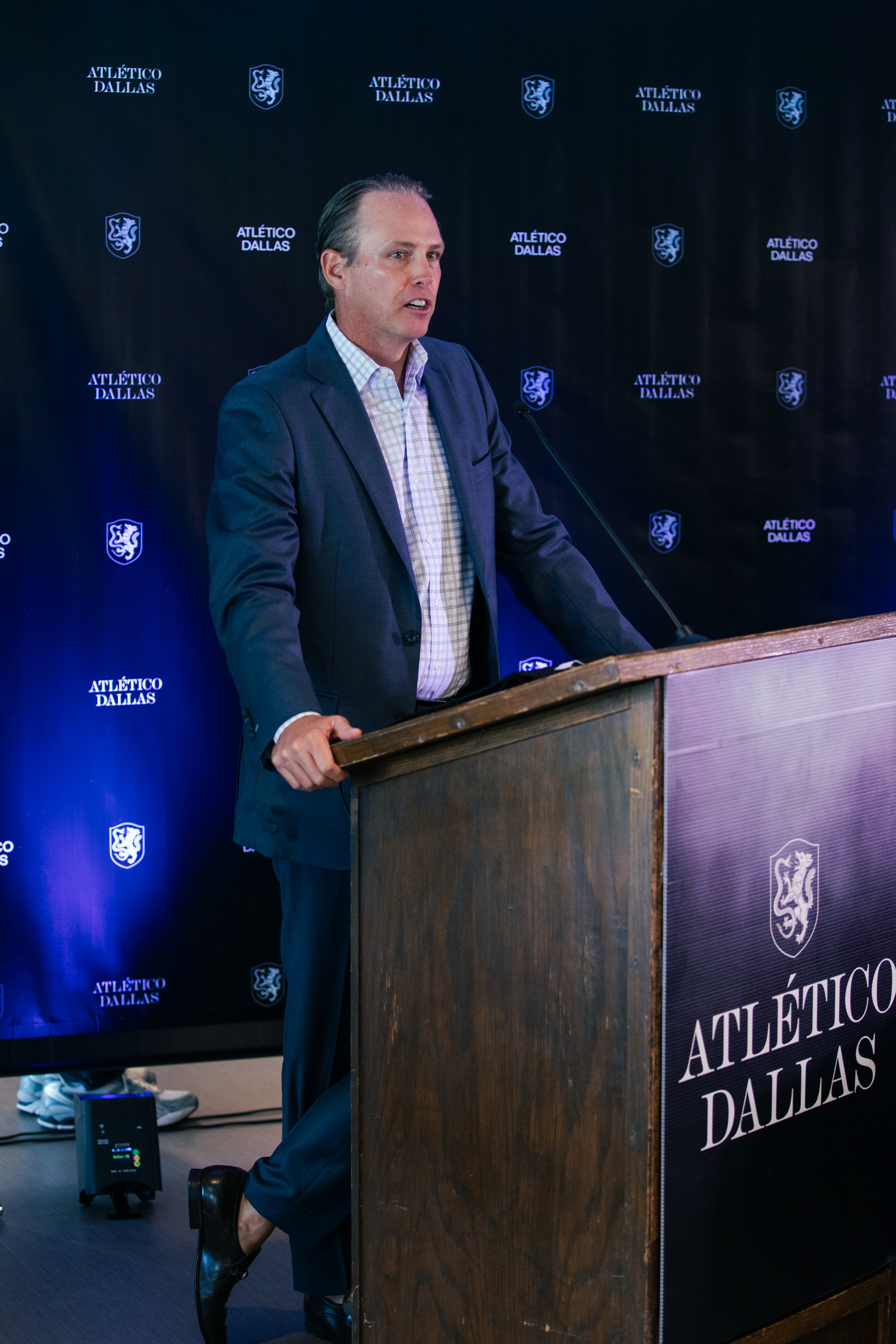
“He will make an effort to be in the community, so people know we’re authentic and they want to come be part of this, and that’s what we’re trying to do with everything. From our supporters’ bar, our youth club – we want people to see that we are here to stay. We want to be Dallas’s professional sports team, and a lot of the stars are aligning right now to help us.
Chicharito certainly qualifies as a star in the sporting sense. Though he turned 38 years old in June, he has stated his commitment to fitness and has a pedigree beyond most in the game. Indeed, one can make the case that bringing in international standouts has played a big role in establishing clubs and the sport in North America. Major League Soccer and its teams have been boosted by the arrivals of the likes of Lionel Messi, David Beckham, Thierry Henry, Son Heung-min, and, indeed, Hernández himself, who scored 38 goals for the Los Angeles Galaxy. A previous generation saw Johan Cruyff, Franz Beckenbauer, Eusébio, and the legendary Pelé bring world-class talent to the North American Soccer League.
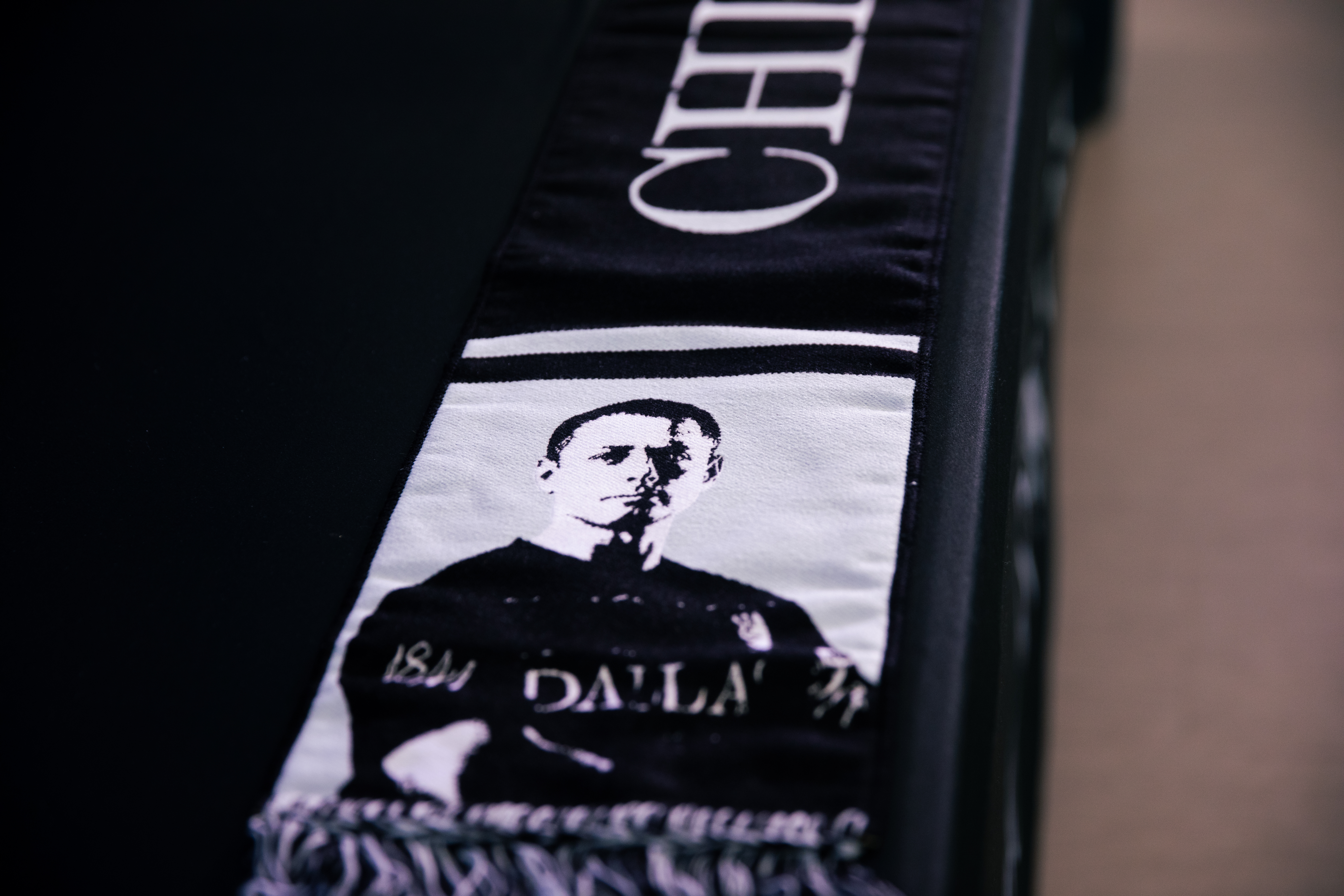
Many local residents of Mexican heritage will want to see Chicharito, as they did his predecessor Hugo Sánchez when that El Tri legend played for FC Dallas (then known as the Dallas Burn) in the Cotton Bowl. Sánchez played only MLS’s inaugural season before retiring and at some point Hernández will take off his boots, too. Atlético Dallas has positioned themselves as a team for the city proper, though certainly they’ll welcome supporters from anywhere. They hope that by, among other initiatives, creating a soccer-themed bar in Fair Park and establishing a robust and inclusive youth pipeline, they – and their sport in this area and beyond – will last far beyond any one superstar.
“We always talk about trying to build a 100-year asset,” said Valentine in his opening remarks. “But to do that right, we have to have foundational traits that, without them, we can’t build a 100-year asset. And for us, those traits are grit, heart, and community.”
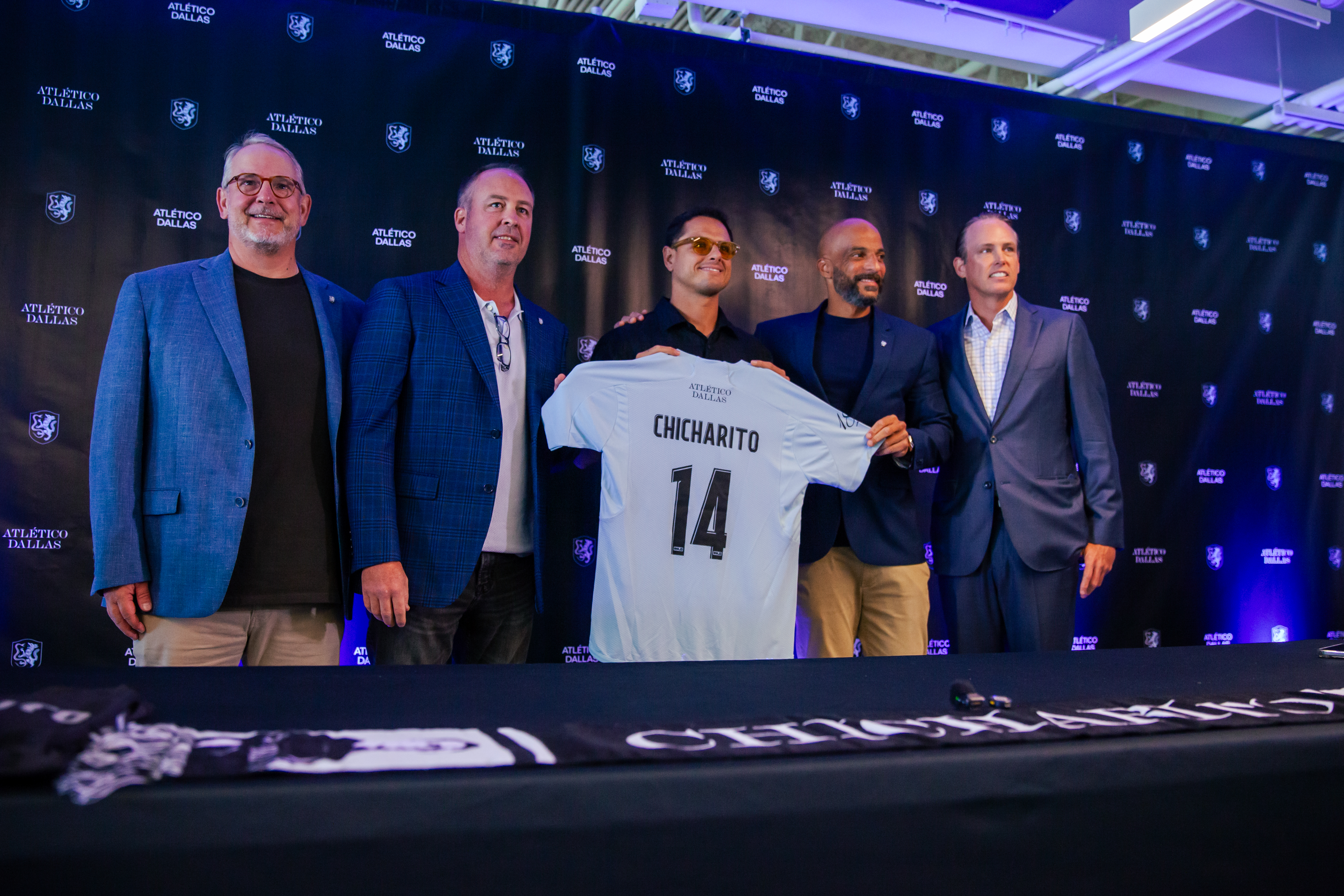
“This club is truly focused on the people—the people of Dallas. We want to build a real connection with the team,” said Hernández. “I believe the city of Dallas—right here in the heart of the city—deserves a strong bon with us, and we want the fans to feel truly represented by us, both on the pitch and off it.”
Some of the quotes in this article were translated from Hernández’s Spanish-language responses