

On June 25, Japan drew with Sweden at what we can now once again call AT&T Stadium. It set up my personal favorite moment of the 2026 FIFA Men’s World Cup.
I didn’t attend that game, but in the evening, I headed to Texas Live!, where I planned to meet some friends to watch Team USA’s final group stage game. The place teemed with supporters still in the area from the earlier match played on the other side of Johnson Creek. On the way in, I conversed with a Swedish guy who had flown into Los Angeles, where he had friends, and driven to North Texas. He had loved his trip so far. A few minutes later, as I sat at the bar, the Stars and Stripes scored against Türkiye and the familiar “USA! USA! USA!” broke out next to me. Except the people who started the chant weren’t the ones wearing red, white, and blue. They sported yellow jerseys. And they high-fived me.
I loved that the Swedish fans felt so happy to be here watching soccer that they would cheer for their hosts. And I also loved that my experience was not unique. Rather, it seemed typical.
North Texas FWC Organizing Committee Co-Chair Dan Hunt, in his remarks at the group’s closing press conference, named the Swedes’ opponents that day as one of his favorite parts of the event.
“The Japanese fans and their constant singing throughout the match and then the fact that they cleaned up after the match,” he said.
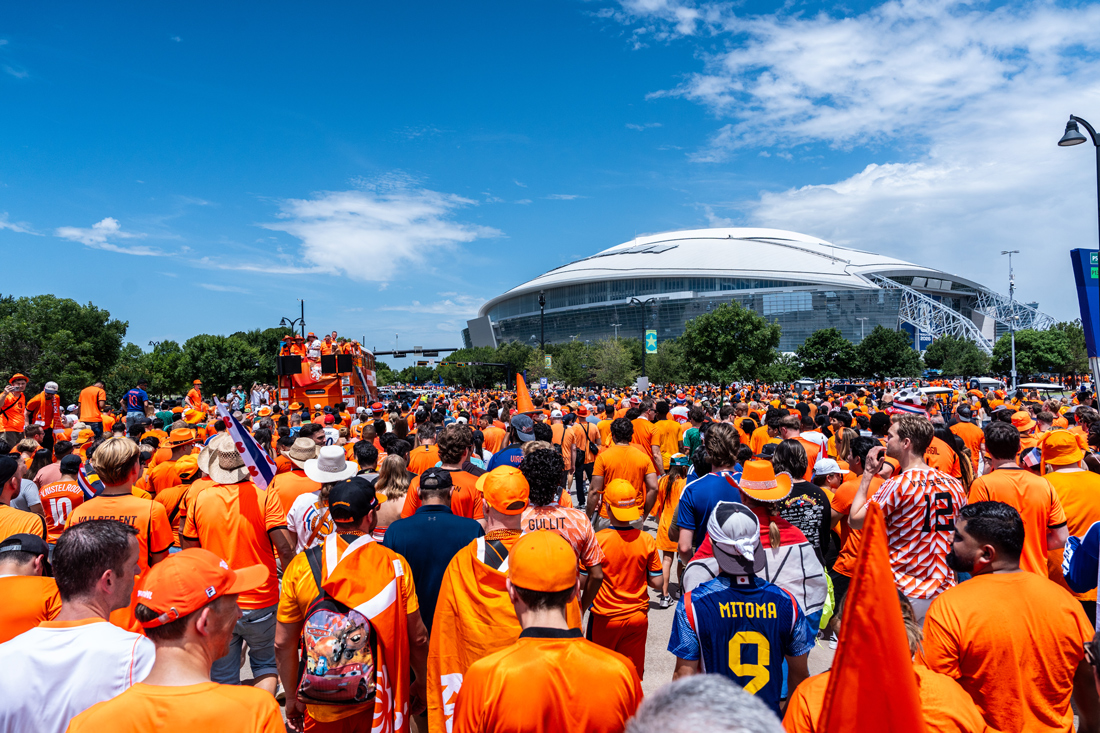
Japan played in Arlington twice. One of those came in the first match the city hosted, a 2-2 tie against the Netherlands. It was preceded by another of my favorite moments, the Orange Walk, as throngs of Dutch fans paraded around current and former baseball stadia on their way to the match venue. The Japanese supporters mingled in and out of the procession in a spirit of goodwill. I watched orange and blue fans who had met seconds before get a photo taken together with the big football stadium behind them.
I saw some fans in Astros kit that day (presumably the only orange clothing they owned) and later caught a game in Houston. After another hard-fought draw, I watched Portugal fans get selfies with supporters of the Democratic Republic of the Congo as a keepsake of their shared interaction. Both groups wanted their teams to win. Both seemed to value the spirit of the game at least as much.
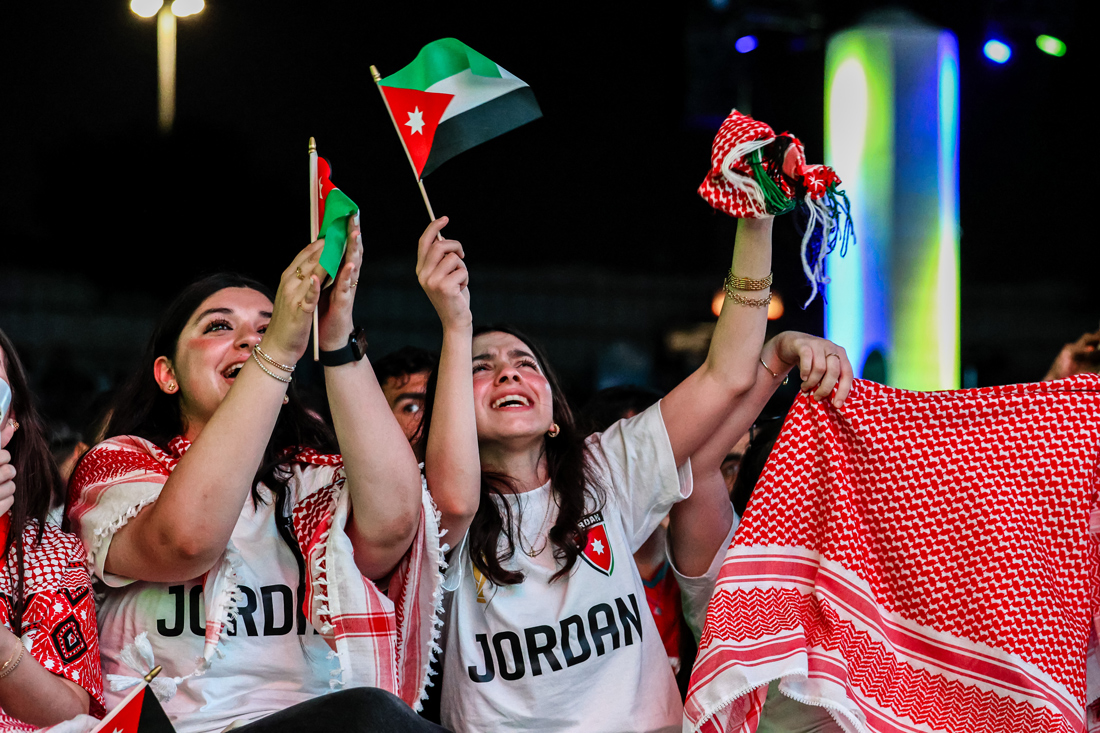
“Over these past several weeks, fans from every corner of the globe filled our stadiums, our parks, our restaurants, our neighborhoods, our hotels, and our hearts” said North Texas FWC Organizing Committee President Monica Paul at the presser. “Different languages were spoken, different flags were waved, different songs were sung. Yet everyone shared something in common: a love for the beautiful game and a belief that sport has the power to unite us all.”
North Texas FWC
The United States has a long tradition as a place where disparate cultures meet and interact peacefully. Though developments in recent decades have created some headwinds buffeting that reputation, we saw the power of sport blow a powerful gust to fill its sails this summer.
“It’s about so much more than just a tournament,” said Nina Vaca, Hunt’s co-chair. “It’s about people and bringing people together in a true celebration of humanity.
The celebration went both directions, too. Just as we Americans got to appreciate the skill of the world’s players and the passion of their supporters, they got to see the ways this country’s residents can welcome visitors, customers, and even opposing fans. Our guests discovered they were welcome at our Waffle Houses, our Buc-ee’s locations, and at our barbecue restaurants. We refilled their soft drinks for free, and, in turn, Scottish fans drank all of Boston’s beer. (A Dallas bartender told me the Austrian fans did the same in his establishment.) Visitors took in our baseball games, and I’m hoping some Rangers fans (Glasgow) became Rangers fans (Arlington). Visitors scarfed down our ranch dressing. Erling Haaland apparently took a liking to Texas culture just as we embraced his nation’s Viking Row.
“For me personally, it’s been fun to walk our stadium like I do on events and see people that have never seen a stadium like that, certainly never been in our stadium, and have them be in awe of everything they were able to see when they walked around,” said Chad Estis, executive vice president of business operations for the Dallas Cowboys and AT&T Stadium. “The atmosphere that those fans create is unlike anything we see in sport, and it’s been truly awesome to be a part of.”
We kind of knew our stadia would rank with the world’s best. The United States has been a leader in that space for a long time. It was nice to see we also still rank pretty highly when it comes to welcoming visitors to those venues and the communities that surround them. I’d like to think a lot of those involved in the event will have favorite memories like mine — ones that have very little to do with the result of a match and much with the resulting goodwill created.