

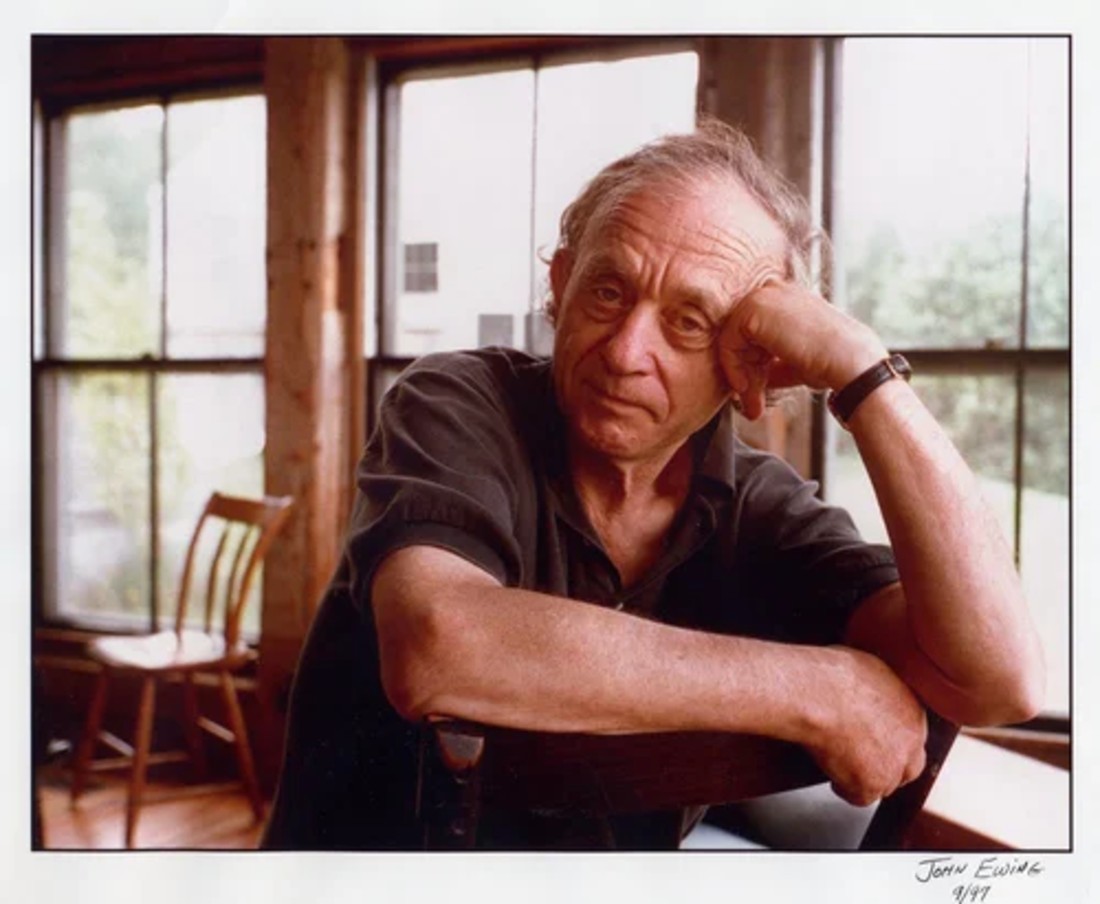
This past Monday, the news came from Massachusetts that Frederick Wiseman passed away at the age of 96. Most of the film press was busy noting Robert Duvall’s death on the same day at a similar age, and justly so, for the man was a great actor. However, I’m writing this up because I’m of greater use on the subject of Wiseman, whose work is indispensable to anyone who cares about the art of documentary film.
Born to a Jewish family in Boston, Wiseman graduated from Yale Law School and then served for two years in the U.S. Army after being drafted. He would then spend two years in Paris after his service was up, where he started shooting footage on a movie camera for fun. Later, he would make his second home in the City of Lights.
His movies are all about examining a civic institution from every angle, sometimes to exhaustive length. While his early films are short, you’ll be hard pressed to find any of his efforts from the 21st century under three hours. There were times when he direly needed an editor, but at his best, the length is part of his greatness. His 190-minute In Jackson Heights provided a look at the rioting colors of the New York City neighborhood, where Colombian soccer fans celebrated alongside halal butchers reciting Quran verses over their blades. Ex Libris clocks in at 197 minutes and tallied all the public services that the New York Public Library provided, and it’s even more essential viewing now that the current White House hates libraries.

His first documentary was Titicut Follies, a 1967 look at the Bridgewater Public Hospital for the Criminally Insane. This film was the subject of lengthy litigation because it showed the Massachusetts mental hospital in a bad light, with employees humiliating the patients. The state of Massachusetts sued on the grounds of the patients’ right to privacy, so the film spent decades being only available to law enforcement and medical personnel, where it nevertheless gained a great reputation before finally becoming available to the general public in the late 1980s.
Wiseman’s first documentary to find an audience was High School, from the following year. He filmed at Philadelphia’s Northeast High School, where his unblinking camera found students being bullied by administrators and bored to tears by teachers, with the lower-achieving ones being funneled to military service in the Vietnam War. There’s one particularly uncomfortable scene where the students put on a fashion show, and the teacher running the event makes catty comments about a student model’s weight. The first screening of this film was only for the employees of Northeast High, who overwhelmingly approved of the way the movie depicted them. Then Wiseman started showing the movie to parents and people outside the school, and their consensus reaction was, “My God, these teachers are fascists!” Because of the fallout, the film was under an unofficial ban in Philly for the next quarter century. In the 1990s, he would make a sequel called High School II that found a similar malaise in public education.
Then there was his 1976 documentary Meat, which turned its gaze upon a slaughterhouse in Wisconsin. Wiseman’s depiction of the practices there was so disgusting that many viewers assumed that the experience had turned him into a vegetarian. It hadn’t — he cheerfully admitted that after he and his film crew shot the revolting scenes of cattle and sheep being butchered, they dined on steak every night at a nearby steakhouse. They’re hardly the only ones who are familiar with that old cognitive dissonance: Eating animals may be wrong, but ribeye is yummy.
He wasn’t a mere muckraker, though, as some of his other works were positive in ways that challenged what people thought. His 1997 documentary Public Housing was filmed at Chicago’s Ida B. Wells Homes, and instead of finding thieves, drug addicts, and killers, found a great many residents putting in hard work to make their housing development safer, cleaner, and more efficient. His films Ballet and La Comédie Française turned his gimlet eye on performing arts troupes and how they went about creating conditions to allow dancers and actors to give great performances.
He named his production company after Zipporah, his wife of 65 years. After her death in 2021, he took up acting, portraying American expats in France in Jane Austen Wrecked My Life and A Private Life. He also provided a radio voice in Carson Lund’s Eephus, which I mentioned in my end-of-year movie coverage last month.
You can stream many of Wiseman’s documentaries on Mubi right now. If you don’t like the streamer or prefer physical copies of movies (like I do), you can order discs of his films from Zipporah Films’ website. Either way, you can see how his self-effacing, eagle-eyed style of documentary cinema influenced filmmakers as different as Errol Morris and Michael Moore, who’s the opposite of self-effacing. A great American artist and journalist is gone, and we are richer for what he left behind.