Foggie-Barnett: “What we tried to do with this exhibition is to show things you might not have seen before of said players — basketball players, football players, track stars — but slightly different than you’re used to seeing on the front page.”
Photo by Abeeku Yankah
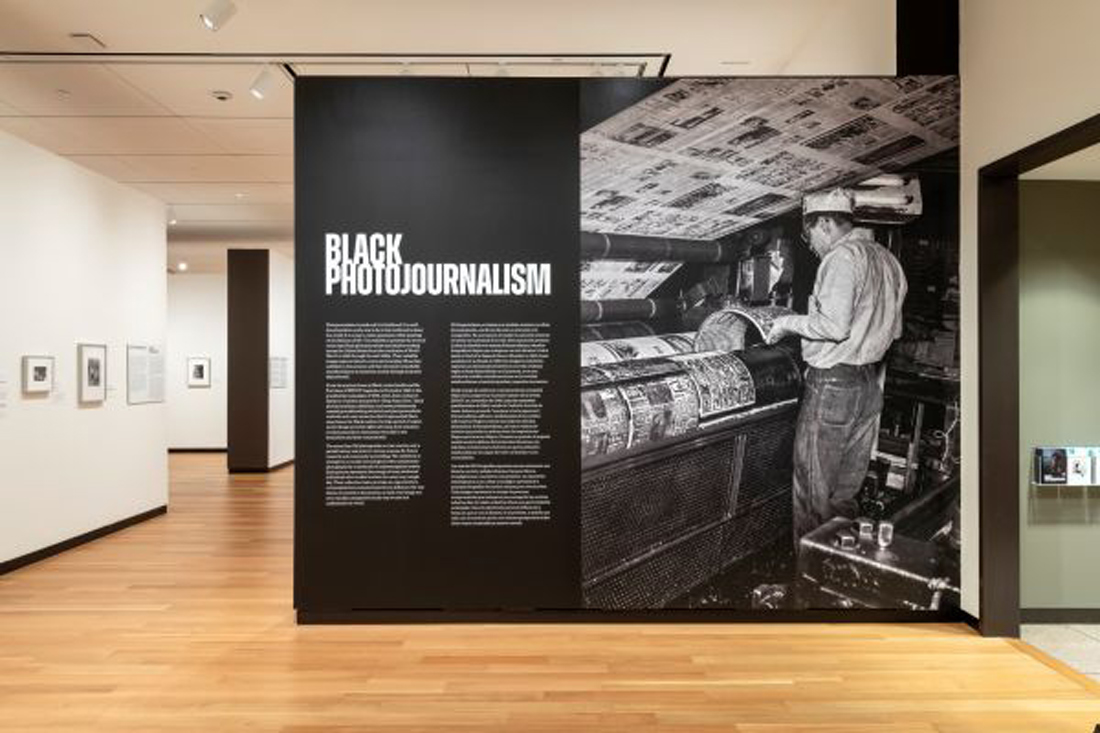
Visuals of athletic competition impact us. The perfectly captured victory celebration, the image of a defeated competitor’s despair, the moment of a home run robbery — such pictures drive home the emotion we feel about what happens on the playing surfaces. They can have impact beyond the fields, courts, and pools, too, as seen in Black Photojournalism at the Amon Carter Museum of American Art through July 5.
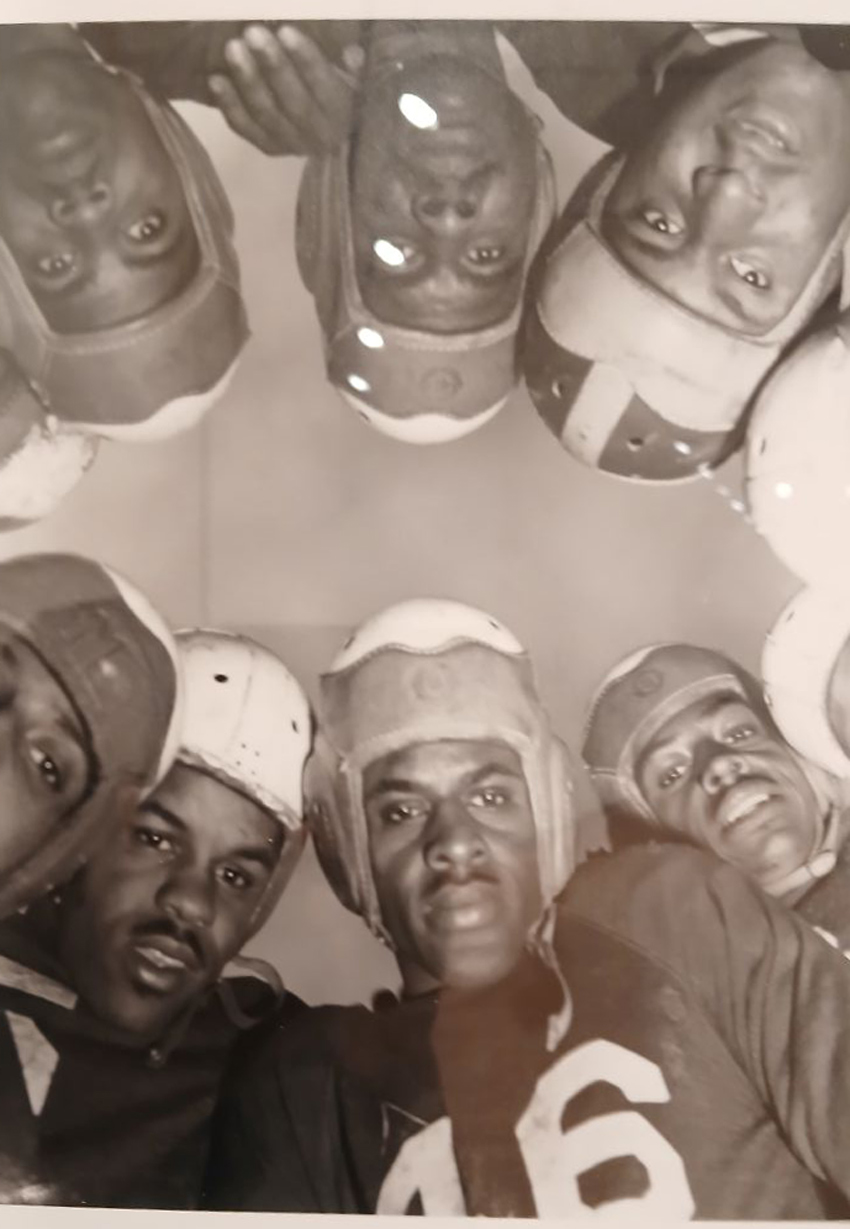
“What we tried to do with this exhibition is to show things you might not have seen before of said players — basketball players, football players, track stars — but slightly different than you’re used to seeing on the front page,” said Charlene Foggie-Barnett, co-curator of the exhibition who serves as community archivist for the Charles “Teenie” Harris Archive at the Carnegie Museum of Art in Pittsburgh. She oversees the 70,000-plus items in the collection created by Harris, a Black photographer who worked as a photojournalist in 20th-century Pittsburgh. The works presented at the Carter include many of his photos alongside those of other Black photographers working between 1945 and the mid-1980s.
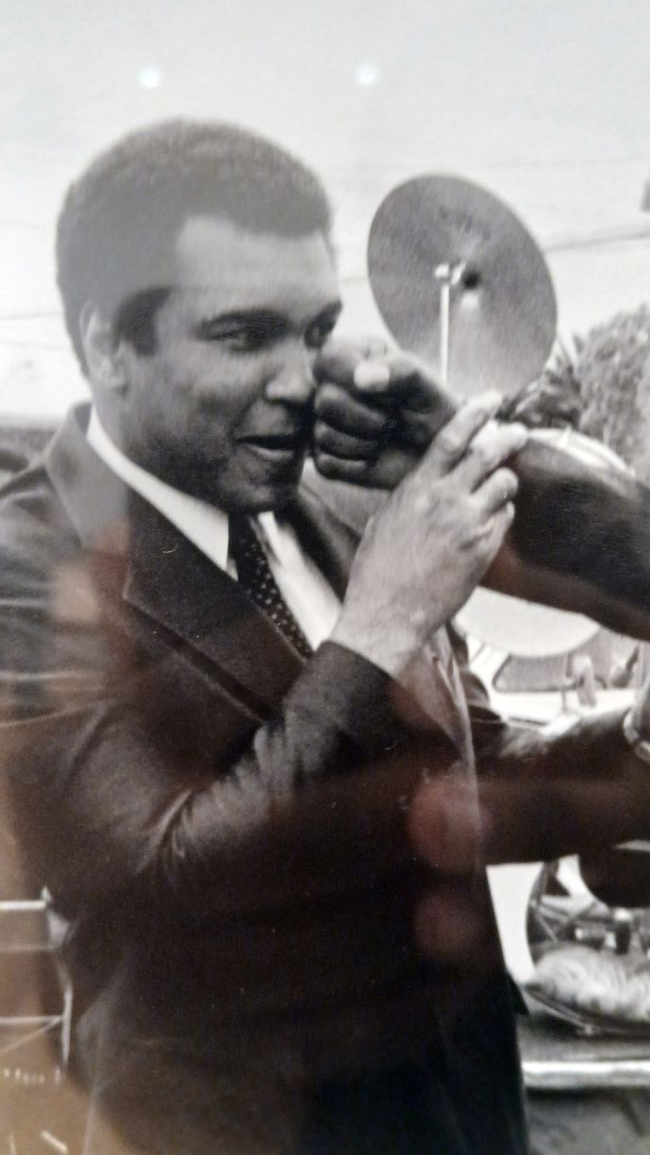
The pieces represent a general exhibit of photography, although Foggie-Barnett noted they would have had enough material to create a dedicated sports version. Indeed, Black Photojournalism does feature a number of sports-themed photos, including images of the likes of Muhammad Ali, Wilt Chamberlain, and Charlie Sifford. While some depict on-field competition, Foggie-Barnett and her co-curator, Carnegie Museum Curator of Photography Dan Leers, chose others that show athletes in other settings.
Courtesy Amon Carter Museum of American Art
While mainstream media might have stopped featuring Black athletes once the games ended, African-American newspapers, like the Pittsburgh Courier that employed Harris, wanted to provide their readers more detail. The installation includes an image of Jackie Robinson at the plate in mid-swing but also ones that show him at a community event and in a commercial setting. The latter photo, by an unidentified photographer, features the pioneering baseball player alongside boxer Sugar Ray Robinson in an appliance store. We learn from the label that Jackie served as a TV salesman to earn extra money in the offseason, a normal practice for players in all leagues in the days before six-figure minimum salaries.
“We specifically wanted to take them out of this direct context of everything you’ve seen about them and say, ‘Oh, there’s two gentlemen selling TVs in shirts and ties,’ but they’re sports celebrities,” Foggie-Barnett said.
A 1967 advertising photograph in the gallery shows a pair of tennis players enjoying Tang breakfast drink.
“All money is green, so the airline industry and food and beverages were trying to get the Black dollar,” Foggie-Barnett noted. “Everybody wanted Tang after the astronauts went to space, and so now everyone’s like, ‘I want to be like the astronauts and have Tang,’ so that was promoted for, ‘OK, Black tennis players drink Tang, too.’ ”
The courting of African-American consumers by mainstream brands could be considered a subtle sign of progress. The newspapers for whom many of these photos were taken were also commercial enterprises, featuring ads that paid the photographers’ salaries. The papers’ readers wanted to see their own lived experiences reflected in these publications’ pages. Indeed, many of the images in Black Photojournalism show the everyday lives of Black Americans. The organizers intentionally did not present well-known images of 20th-century domestic tumult. Instead, they opted to show more relatable signs of advancement, especially through sport.
“People will contact me at the museum and say, ‘Oh, I want to cover some civil rights things. I need civil rights information,’ ” Foggie-Barnett said, “so they go straight to Martin Luther King, and they go straight to that kind of civil rights. All of this is civil rights, and the sports activities are, in particular, a proving ground for civil rights, because it was happening in a national pastime.”
When Jackie Robinson worked with Branch Rickey to integrate Major League Baseball, it played a huge role in unleashing the power of sport to quicken the progression toward a more tolerant American society. Foggie-Barnett, a lifelong Steelers fan, cited the iconic Coca-Cola ad in which UNT alum Mean Joe Greene gives his worn jersey to a young white fan as one of many examples of visuals that have confirmed shared bonds through sports. Harris, whom Foggie-Barnett had known as a child (he even photographed her family), had played Negro League baseball as a co-founder of the Pittsburgh Crawfords. When he moved behind the camera for a career, Harris, along with the other photographers who contributed to the exhibition, provided visual evidence for the humanity of Black Americans, professional athletes or not.
“They are the proof of our existence as African Americans in this country, not the stereotypes and not the assumptions or misnomers,” Foggie-Barnett said.
Black Photojournalism
Thru Sun, Jul 5, at the Amon Carter Museum of American Art, 3501 Camp Bowie Blvd, Fort Worth. Free. 817-738-1933.
Foggie-Barnett: “The sports activities are, in particular, a proving ground for civil rights.” Photo by Abeeku Yankah