
The feelings of Cowtown locals nearly a century ago are largely left to the imaginations of writers and historians. The conversations, the glances, the private understandings between folks who couldn’t afford to be known — all are long evaporated in the Texas heat.
What survives is almost accidental: a receipt, a letter, occasionally a photograph. And while not necessarily worth a thousand words, some images come with hefty emotional value.
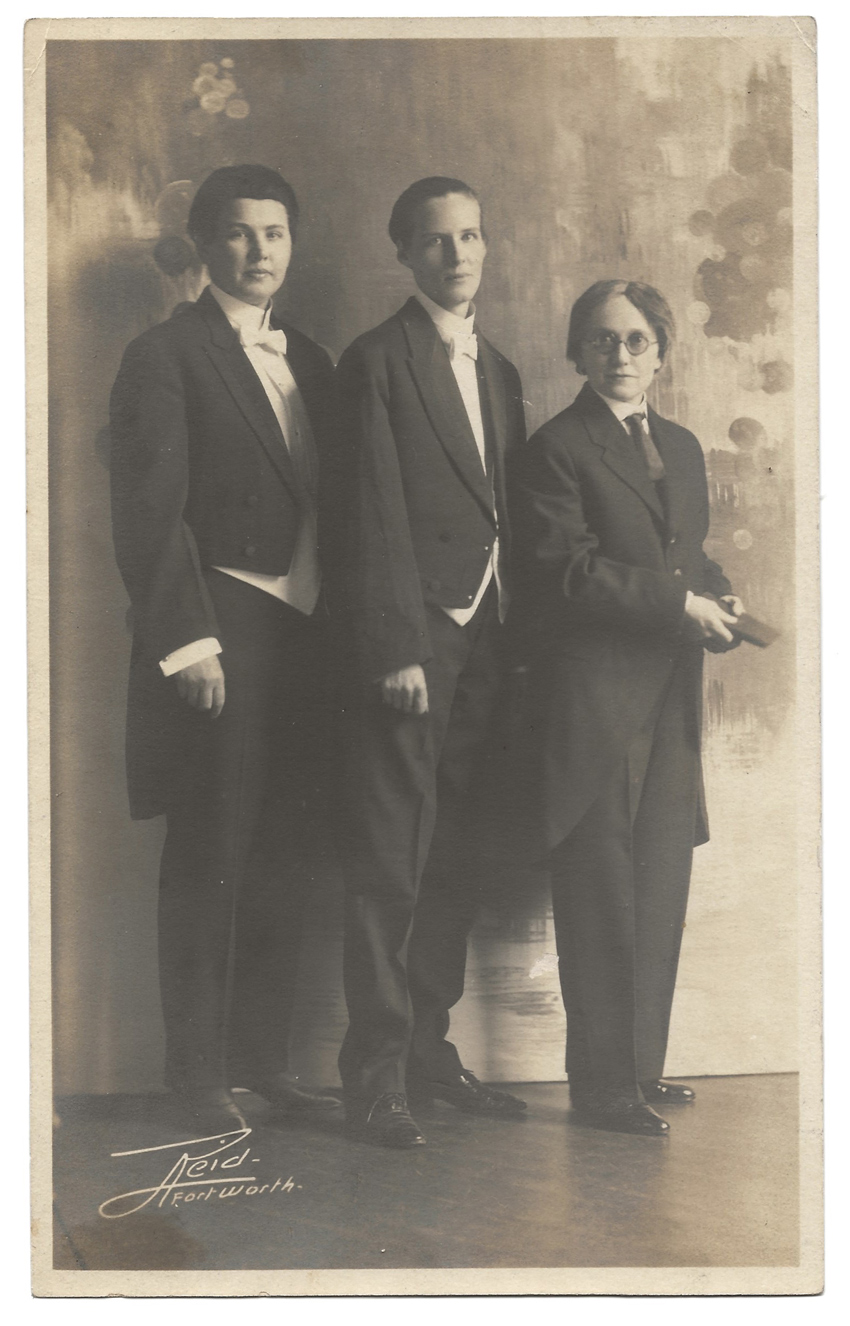
That’s what happened when this image of three individuals caught my attention in a recent online auction. Shot at the studio of photographer Guy N. Reid on Houston Street sometime in the early 1920s, it’s a formal, full-length portrait — the kind that Fort Worth’s emerging middle class commissioned to mark memorable occasions.

Two of the figures wear white ties and tails, the other a dark sport coat and tie and round wire-rimmed glasses catching what light the studio allowed. All three present, unambiguously, tog men’s formal wear.
All three appear to be women.
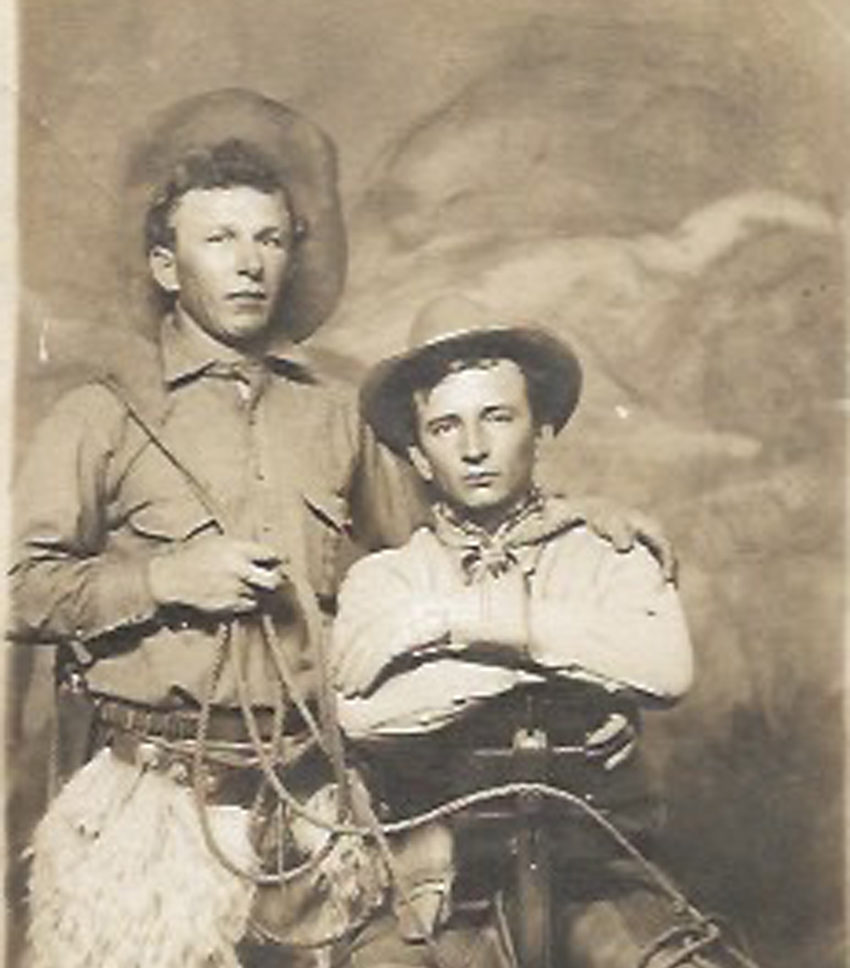
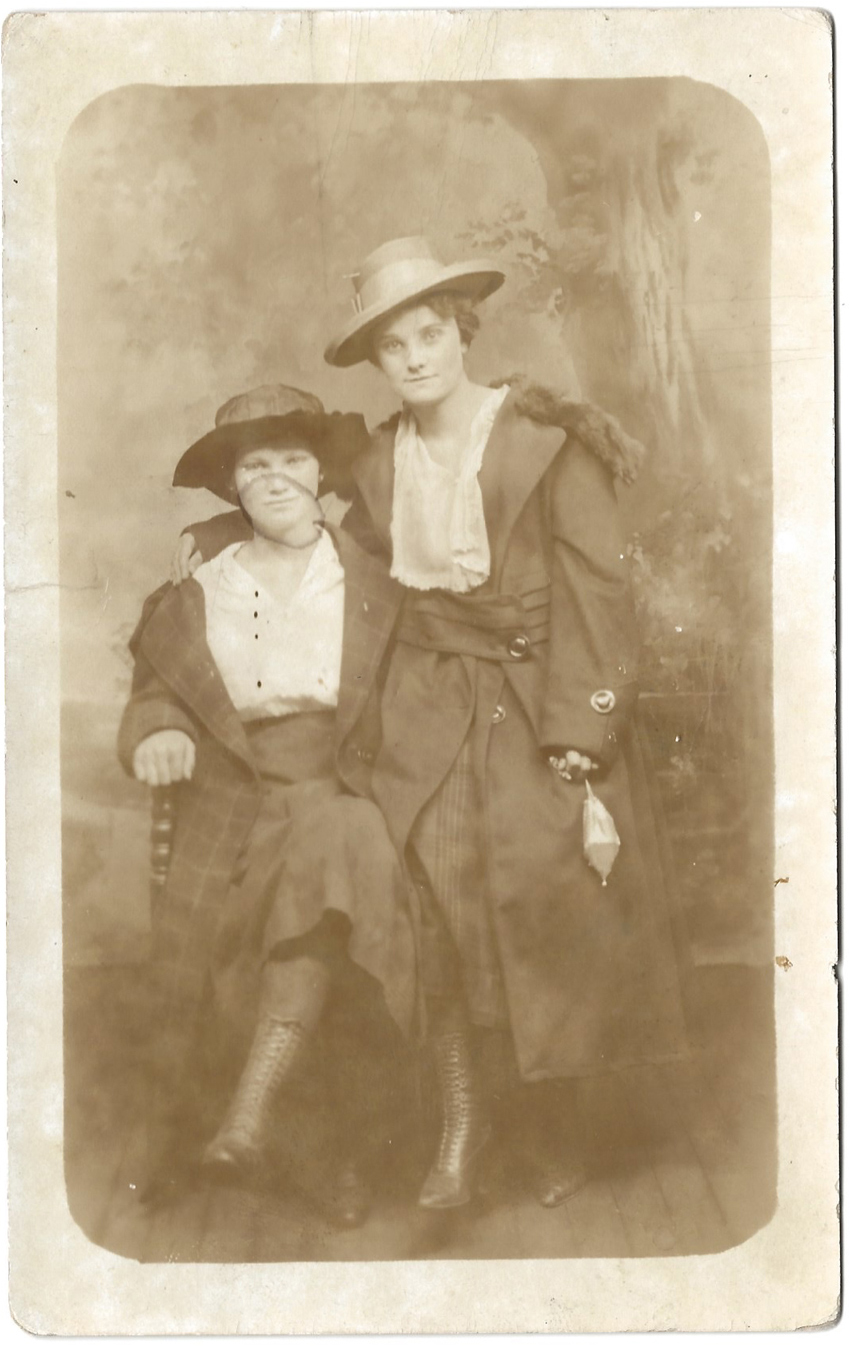
The portrait is a recent addition to the archive of YesterQueer, the Tarrant County LGBTQ+ History Project. It joins a small selection of surviving photos that place gender-nonconforming individuals specifically in Cowtown, including a pair of images from the Electric Post Card Studio on Main Street, one depicting two cowboys linked by lariat, and another two young women sporting wide-brimmed hats and matching long-laced boots.
We don’t know their names. We don’t know if they would have identified as queer, only that they chose to be photographed and they chose to preserve it.
Seth Knievel, a Ph.D. candidate at Louisiana State University whose dissertation focuses on queer archives and photographs, has spent years hunting images like these in thrift stores, estate sales, and antique shops across the South.
LGBTQ+ History Project.
When shown the Reid portrait recently, he zeroed in on a detail easy to overlook. These weren’t candid snapshots taken by a sympathetic friend. This was a transaction conducted in the presence of a stranger who could have refused — or worse. That Reid didn’t, that the portrait exists at all, suggests a particular kind of courage on the part of its subjects.
Knievel is careful about the limits of what images like these can prove and the assumptions modern historians might make. The concept of a public homosexual identity barely existed before the Oscar Wilde trials of 1895, and by the McCarthy era, same-sex affection in photographs often came with grave consequences.
Knievel does extensive research on the subjects of his photos, using whatever hand-written captions or visual clues are provided, but for him, when it comes to the aesthetic enjoyment of images like these, the question of proof is ultimately beside the point.
“It doesn’t really matter whether or not the people in this photograph were queer,” he said. “What matters is that when we look at these photographs … we have the space to imagine. This photograph represents a transgression of social norms. And that in itself is really impactful.”
Images like these are why YesterQueer exists — to gather the fragments of a history that was never meant to survive and to make sure it does. The three figures in the Reid portrait are still unnamed, but they walked into a studio a century ago and asked to be seen. Some acts of courage leave no footnote. They just leave a photograph.
Todd Camp is the founder and executive director of YesterQueer. Learn more at YesterQueerFW.com.
LGBTQ+ History Project.