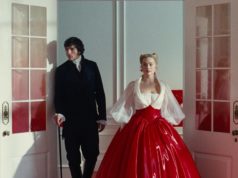

I’m about to drop some film history on you, so brace yourself. In 1949, the British director Robert Hamer made a black-comedy masterpiece called Kind Hearts and Coronets, about an impoverished young man who resolves to claim his ancestors’ inheritance by killing all the relatives standing between him and the family fortune. The kicker: All the murdered relations were played by Alec Guinness, which not only allowed the actor to give delightful different performances but also played up the family resemblance among them and emphasized the protagonist’s position as an outsider.
In the late 1990s, Mike Nichols floated the idea of remaking the film with Will Smith as the killer and Robin Williams as the people he kills. I don’t have any special insight about why that project never came together, but a story about a Black man taking revenge on the white family who screwed him out of his rightful inheritance would have carried great potential.
Now Kind Hearts and Coronets has an unofficial remake in How to Make a Killing, with the racial element removed and different actors portraying the dispatched kinfolk. This takes a great deal of fun out of the original concept, so the new film emerges as a mere trifle whose enjoyment mostly comes from Glen Powell’s ability to play a psychopathic killer whom we can root for.

That would be Becket Redfellow, who’s born into one of America’s richest families, only for his grandfather (Ed Harris) to disinherit his mother (Nell Williams) for giving birth to him instead of having an abortion. When Becket’s mother dies from an illness, he finds out he can still come into the family’s $28 billion if seven other relatives die, so he resolves to start by offing his younger family members before finishing up with that grandfather. The plan goes awry, though, because the framing story has him confessing his deeds to a Catholic priest on death row, where Becket’s scheduled to be executed for a murder he didn’t even commit.
If you’ve seen the original film, none of the plot developments here will surprise you. Maybe that would matter less if the slaughtered family members were funnier and/or more strongly characterized. There is some success in this area, particularly with Zach Woods as a pretentious art photographer who calls himself “White Basquiat” and Topher Grace as a megachurch pastor who preaches the prosperity gospel and holds a sword to Becket’s throat after mistaking him for an exposé-hunting journalist. The more loathsome the victims are, the more enjoyment we derive from Becket’s schemes to get rid of them, and Powell offers up some nicely understated reactions when he meets these rich bitches.
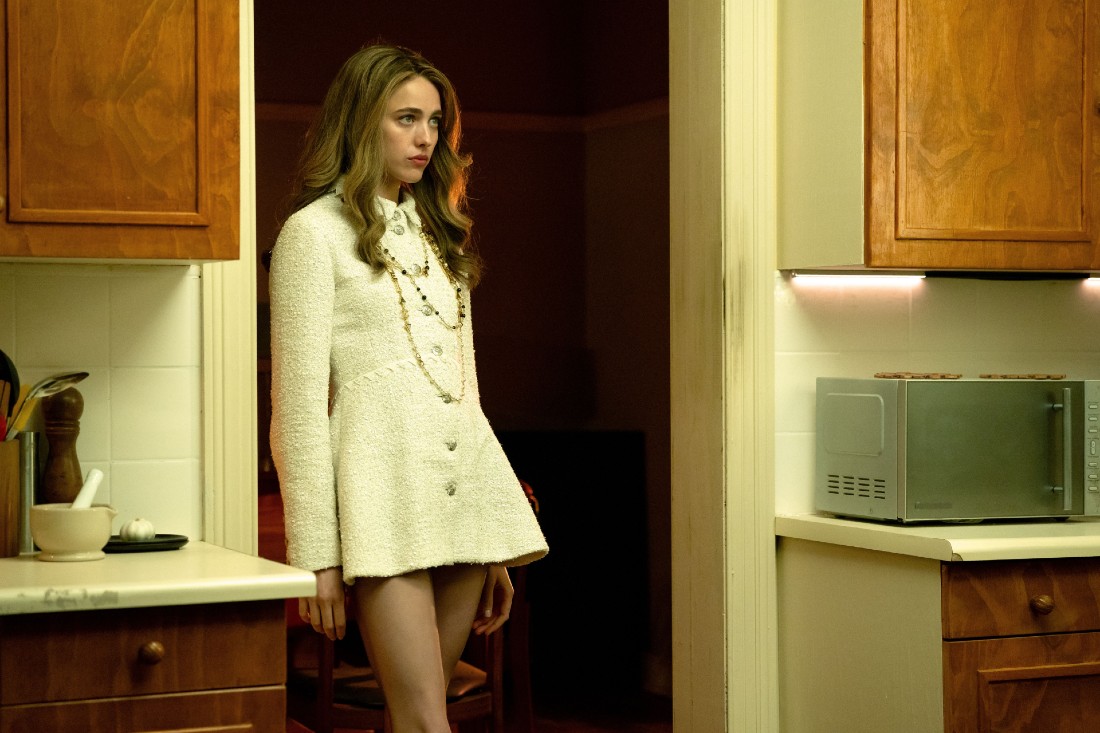
Much less happy results come from the love triangle between Becket, his childhood sweetheart (Margaret Qualley), and White Basquiat’s ex-girlfriend (Jessica Henwick). As the respectable, virtuous woman in the relationship, Henwick can’t help but come off as dull, especially since writer-director John Patton Ford repeatedly films Qualley with her legs perched up on desks, tables, and ottomans. Besides having great legs, Qualley at least does some good work as a siren who’s way more evil than she seems.
Ford made a brilliant debut four years ago with Emily the Criminal, but neither his murder plotting nor his action sequences here live up to the standard of that movie, not even when the grandfather turns the tables and goes after Becket with a World War I-era rifle. Unfathomably, Ford chooses to take the sting out of the original’s element of class warfare. All this leaves some minor charms behind in How to Make a Killing, along with the feeling that it could have been so much more.
How to Make a Killing
Starring Glen Powell and Margaret Qualley. Written and directed by John Patton Ford. Rated R.