

What made the Samurai Blue?
It’s not a riddle, actually. It’s a question people like you might be asking right now (kinda).
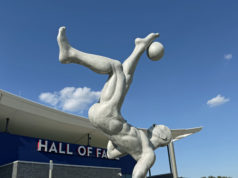
See, you may have picked up on the fact that the Japanese men’s national soccer team calls itself the “Samurai Blue.” That’s because the word that there’s a big tournament in that sport going on in the USA right now (also in Canada and Mexico) has spread rapidly. Maybe you read an article about soccer art or the media party or an interview with a statue of a boot. Or perhaps other coverage of the FIFA World Cup 2026™ – it’s been hard to miss. And Japan drew the first North Texas game of the tournament, so they been especially prominent in the news in that region.

You may have learned how Japanese supporters voted for that nickname in January of 2006 prior to that year’s World Cup and that blue-colored jerseys date back to pre-World War II days. But you might also be asking deeper questions, like “What’s a samurai?”
Glad you asked.
“The samurai class, most people recognize them for being warriors, but their role in society was actually much more complex than that,” explained Crow Museum of Asian Art Director of Museum Experience Sara Greenberg. “They sort of defined style. They were the upper echelon of society, and they really sort of set the standards for taste, and had really cultivated skills and talents in literature and the arts.”
Her institution’s Dallas Arts District location is hosting an exhibit entitled “Paper Knife: Objects of Beauty in Early Modern Japan.” On display through August 29, 2027, its artifacts and their descriptions showcase samurai artistic preferences while also lending insight into the mindsets that influenced them. A wall label offers some background:
“Established in the Heian period (794–1185) as a warrior class, the samurai soon evolved beyond their original purpose as warriors serving specific lords or houses. The Edo period (1603–1868) saw samurai transition into a largely bureaucratic class and the later Meiji period (1868–1912) dissolved the samurai as a social class altogether.”
 So, yes, a samurai might well have been “blue” (aka sad) that his social class got bureaucratized or dissolved. But what’s not sad is the discovery soccer might encourage. Japan plays two games in Arlington, so lots of locals may get interested in the team and its heritage. And with a relevant museum exhibit nearby, they can dive into that heritage in a highly accessible way.
“The great thing about museums is that you can find things that you gravitate towards naturally and are excited to see, but you’re also exposed to new art forms and new cultures that spark your curiosity and invite you to learn more,” said Greenberg.
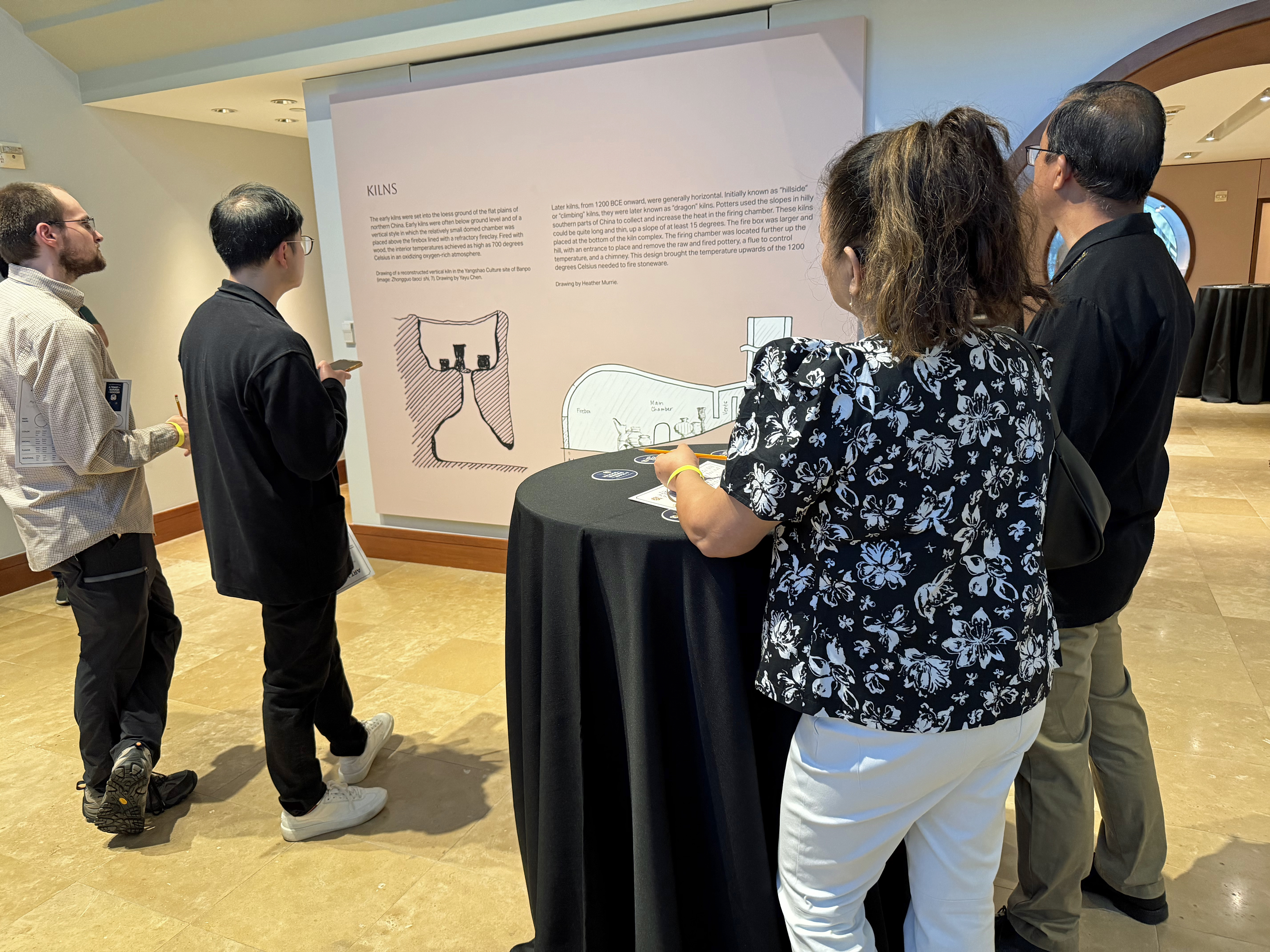
Sport, especially a wide-ranging international competition like this one, can also inspire such curiosity. I visited the Crow Samurai exhibit during an event called “From Dallas to the World: A Toast to a Summer of Soccer.” It provided attendees a chance to see exhibits after normal operating hours in a festive atmosphere. The museum hoped it might attract soccer fans who had not previously visited the museum, perhaps stoking their appreciation of multiple Asian cultures through art. I mingled with a couple who were supporting Colombia in the World Cup while making their first visit to the Crow Museum of Asian Art.
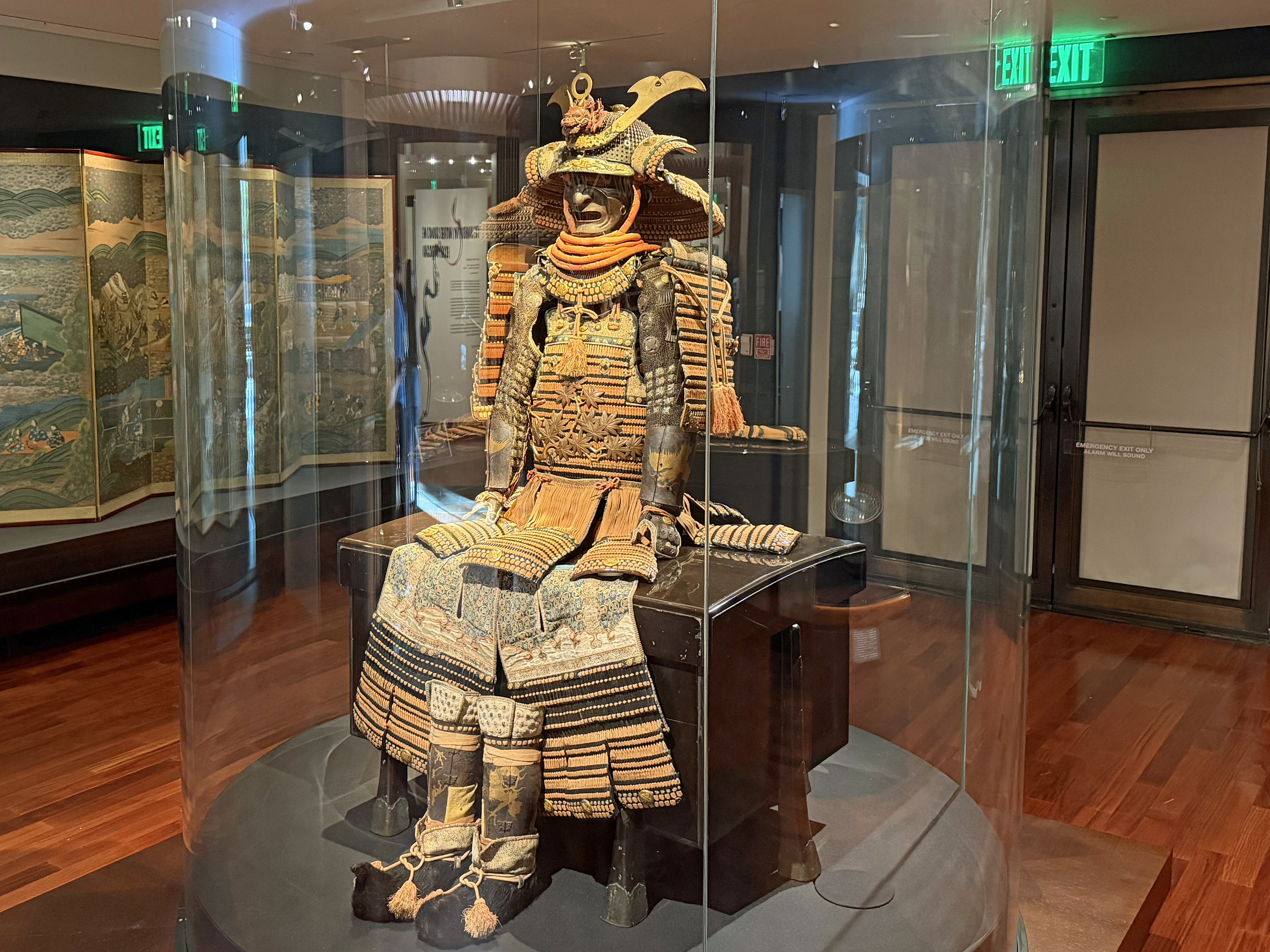
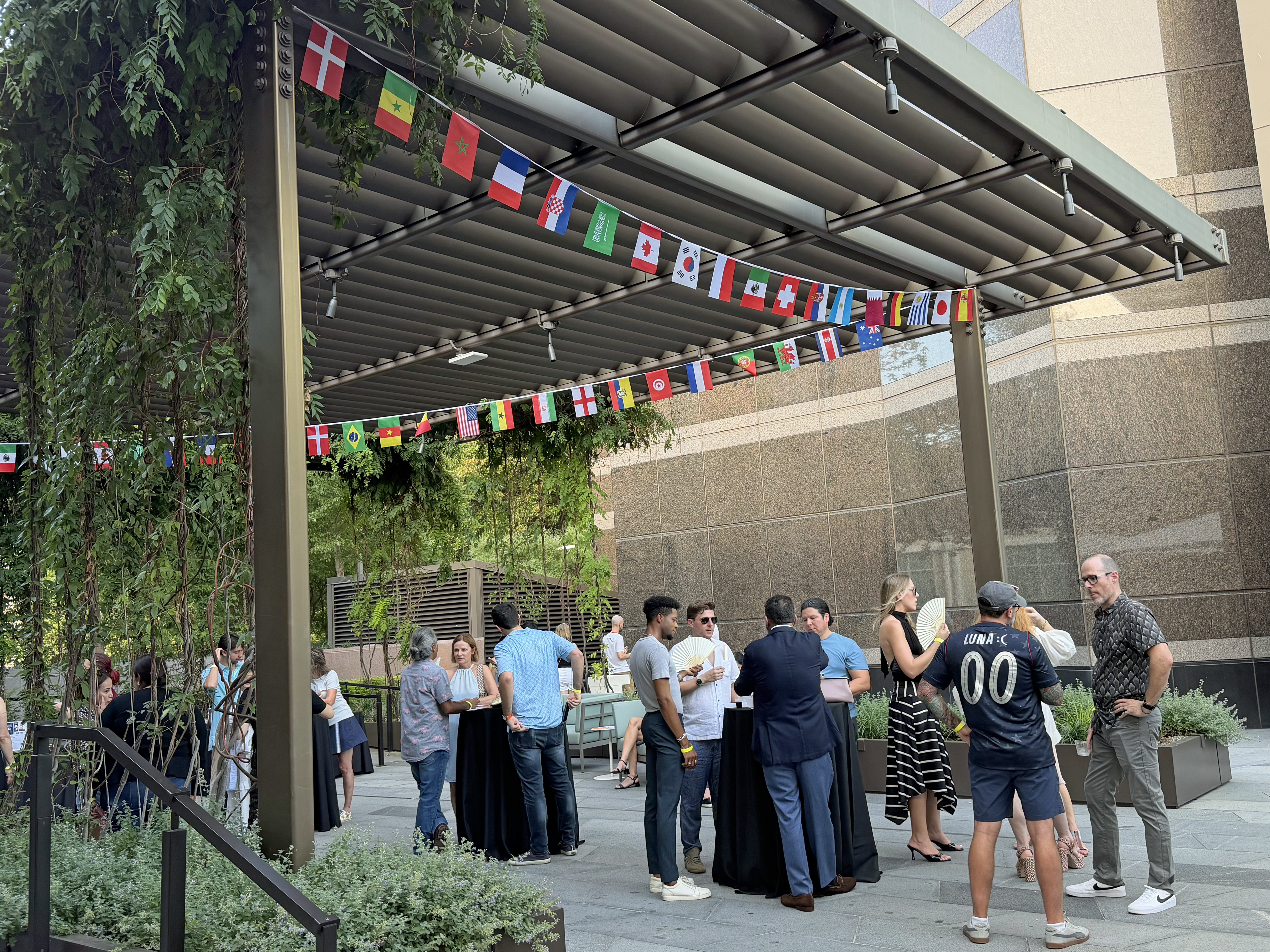 One thing I learned (and perhaps they did, too) was that the samurai class embraced violent symbols even as their role in actual violence decreased during the relatively peaceful Edo period. It made them feel better about themselves, perhaps, as the actual need for expert wielders of swords diminished. The visually impressive suit of armor on display was never used in actual combat. Indeed, this echoes the role international sport should play. It’s a symbol of nationalism, but hopefully a non-violent one (with hooliganism and the occasional over-aggressive-red-card-worthy foul being unfortunate exceptions).
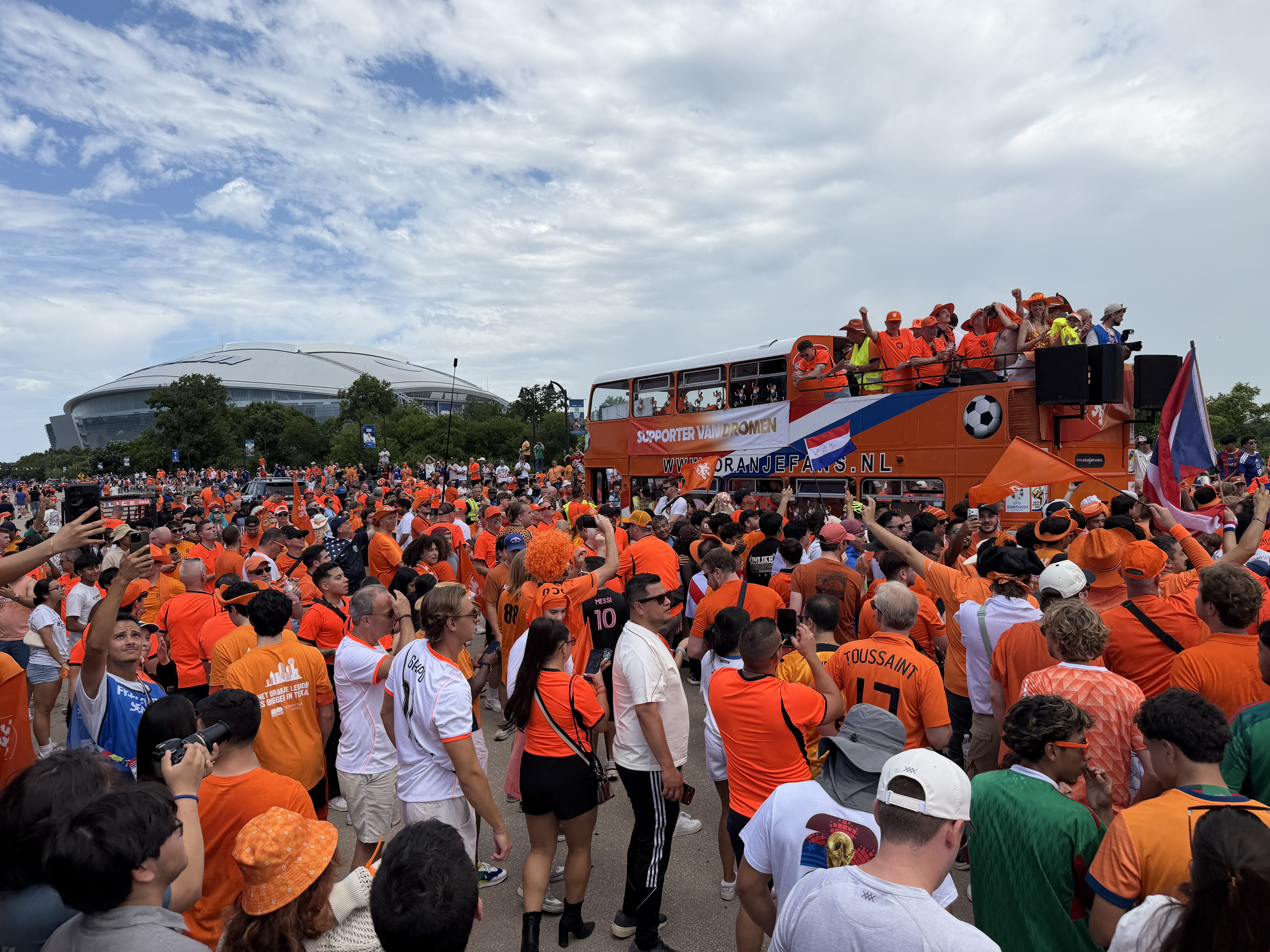 The design theme for the event intentionally emphasized the color blue. Japan’s opening opponent – the Netherlands – skewed orange. Before the game, thousands of Dutch fans performed their traditional Orange Walk – peacefully – through Arlington’s Entertainment District to the game. The fans of Japan (and a number of other countries whose jerseys appeared in the crowd) seemed to enjoy the spectacle, too.
Saturday, museum-goers got to try various Japanese beers as part of the event. I especially liked the IPA from Japanese craft brewer Echigo (which comes in a blue can, I should point out). Sunday’s match in Arlington ended in a 2-2 draw after a late Japan equalizer. My hope would be that the Dutch and Japanese supporters could get together after the game, no matter their feelings about the result, and have a beer. It could be Japanese-brewed, Dutch, Texan, or even the official FWC beer, Michelob Ultra – because that’s the way sport is supposed to work. It bridges cultural divides in as many ways as possible.