


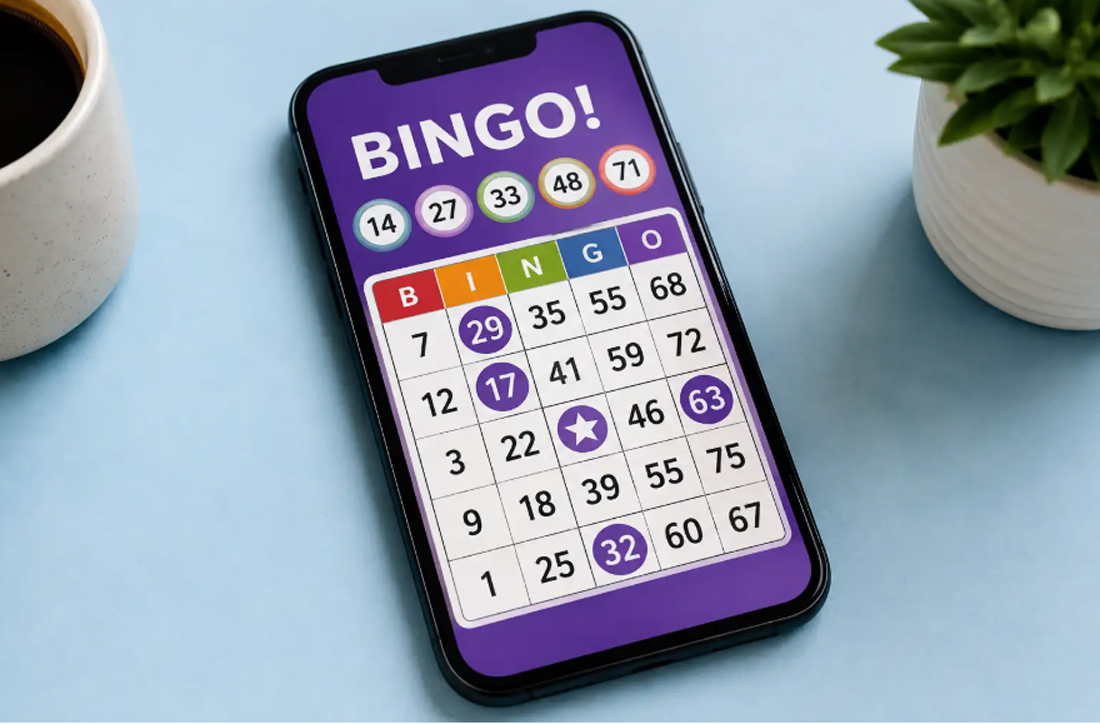
Bingo has always been built around small moments. You have a card, some numbers, and a pattern slowly taking shape. That is why mobile bingo feels less like reinvention and more like the game finding a screen that matches its tempo. The hall gave it a shared room. The phone gives it reach, speed, and clarity.
The key to this transition is readability. Mobile games succeed when the player understands what matters within seconds, then receives clear feedback fast enough to stay engaged. A JMIR study on casual game preferences found that older adults rated casual puzzle games especially well for enjoyment, gameplay, and control. That helps explain why grid-based games with familiar rules travel so easily across devices: simple markings, visible progress, and just enough unpredictability to keep everyone guessing.
1. The Round Fits the Phone

For readers who want to compare how mobile-friendly versions present that rhythm, bingo games at Bovada offer a direct example through an online casino bingo category with multiple classic and themed titles. The page describes different types of bingo games, from American and European styles to themed versions such as Tribo Bingo, Bingo Goal, Amazonia Bingo, and Go-Go Bingo. That variety matters because mobile bingo is less about one fixed look and more about how clearly each title handles the same core loop: cards, drawn numbers, marked matches, and possible patterns.
Bovada’s selection of bingo games also shows why theme can help when it supports recognition, instead of crowding the screen. A soccer-style title, a jungle-themed title, or a streamlined version can all feel distinct while still asking the player to follow the same visible movement from scattered numbers toward a completed shape. The format works best when variety sits around the card, not on top of it.
A useful example is this article on Tribo Bingo, which describes it as a tribal-themed video bingo game adapted for phone or tablet play. Its rules show the mobile logic clearly: 31 balls are drawn each round, missing numbers can be highlighted in yellow near the end, up to 12 extra balls can be available, and a BONUS pattern opens a separate round. The game also allows up to 4 cards, giving the player a cleaner or busier view.
Mobile bingo is easiest to understand when it has a clear structure to its design. The useful question is how much of the hall game survives once the room, caller, and table chatter are gone. The answer is more than expected, because bingo’s main pleasure came from seeing order appear out of a random draw.
2. Why the Small Screen Likes Bingo
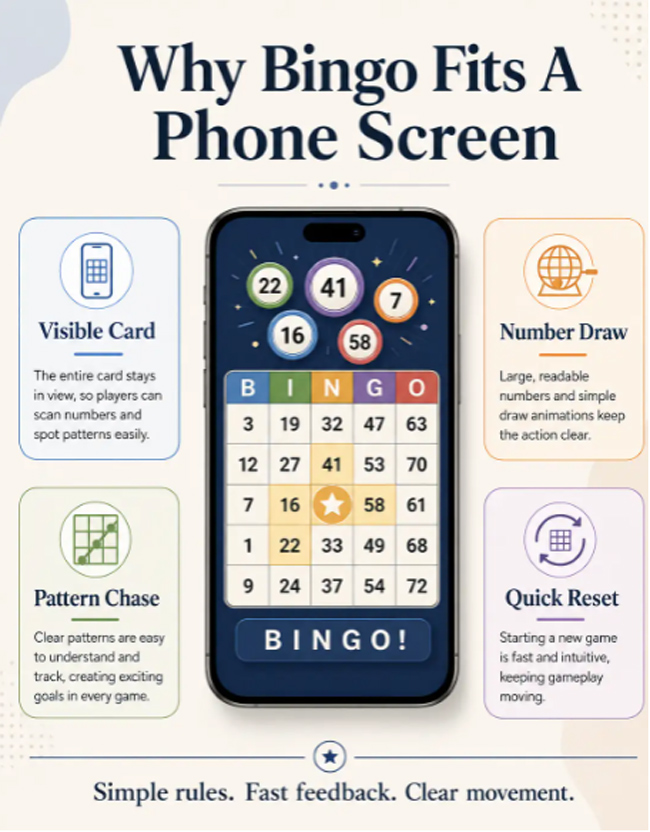
A phone screen rewards games that make the important information obvious. Bingo already has the right structure for that. The card is visual. The draw is sequential. The pattern gives the eye something concrete to chase. The player can clearly see the numbers, the card, and the shape that could form next.
The move from hall to phone sharpened what was already there. The round becomes a compact loop: check the draw, scan the card, notice the near-match, wait for the next call. A smaller screen can make the tension clearer.
3. The Best Mobile Details Stay Quiet
The strongest mobile bingo features are the small touches that make a short round easier to follow. A highlighted number helps the player notice important details quickly. A clear bonus pattern gives the round another visible target. A card count provides additional information without changing the basic nature of the game.
That restraint matters. A mobile game can lose its charm when every second is crowded with effects. Bingo does not need that. Its suspense comes from a plain question repeated in different ways: will the next number complete the shape? When the screen respects that question, a themed version can still feel focused, with the card at the center.
Bingo can also serve different moods. One player may prefer a stripped-back version of the game because it feels clean and quick. Another may like a themed version because the setting gives the round more color.
4. Casual Does Not Mean Thin
Calling bingo casual can make it sound light, yet casual games often demand sharp design. They have less time to earn attention. They have to explain themselves quickly, feel complete in short bursts, and give the player enough feedback to make another round feel natural. Mobile bingo benefits because its structure is already compact.
The hall version had ritual. Players arrived, settled in, listened, marked cards, and reacted together. The phone version keeps the core pattern while changing the setting around it. A round can now live in a few spare minutes without losing the thrill.
Mobile bingo did not simply shrink an old game. It carried the part that needed the least explanation: the card, the draw, the almost-there pattern, and the reset. A 2025 MDPI scoping review of mobile gaming applications points toward the value of accessible design and usable feedback in mobile play, which is where simple formats can feel modern.