Black is indeed beautiful, as Black Photojournalism proves.
Photo by Abeeku Yankah
On view now thru day Sunday, July 5, at the Amon Carter Museum of American Art, Black Photojournalism gathers the work of more than 60 photographers across the country between 1945 and the mid-1980s. The 250-plus photos on display cover everything from major historical events to everyday life in Black America. The resulting portrayal exudes complexity and sublimity, underlining that while skin colors may be different, humanity is shared.
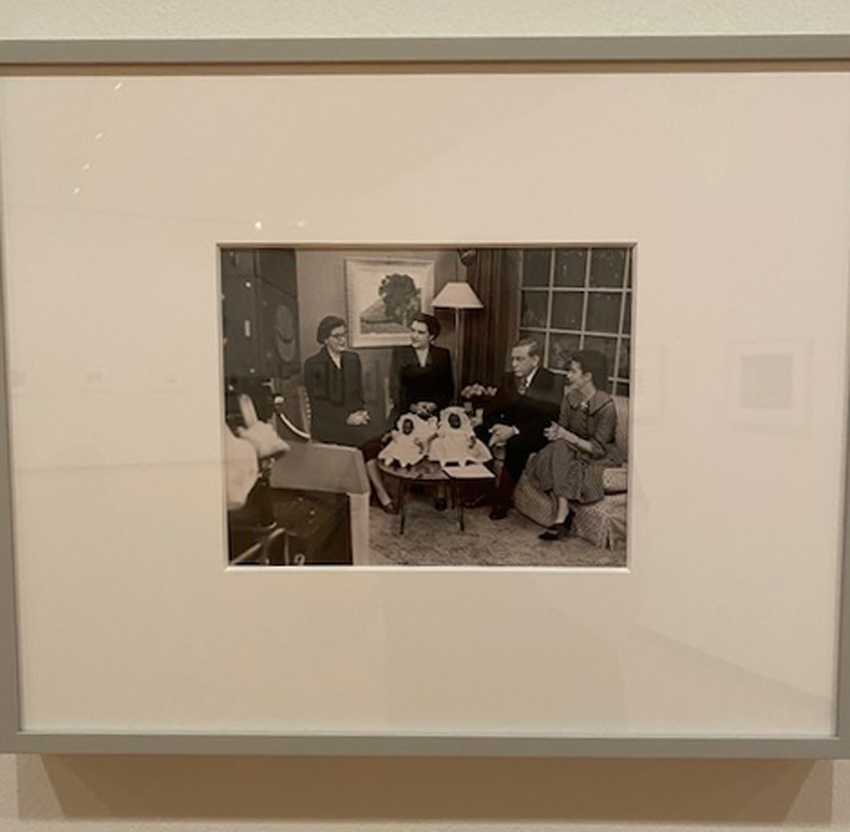
Organized by the Carnegie Museum of Art in Pittsburgh, Black Photojournalism draws from nationwide collections and archives, in particular the wealth of work by Charles “Teenie” Harris. There’s also a North Texan, Fort Worth’s Calvin Littlejohn. Most of the photos originally appeared in Black-owned publications, including the Afro American News, Atlanta Daily World, Chicago Defender, Ebony, and Pittsburgh Courier. The exhibit unfolds chronologically, and if viewers find themselves looking at disconcerting images and thinking, “Hmm, not much has changed,” you could argue that that’s partly the point. We’ve come a long way, true — Black baby dolls and Black-forward fashion spreads or ads aren’t as novel and disruptive as they were in the 1950s and ’60s. Still, there’s a long way to go.
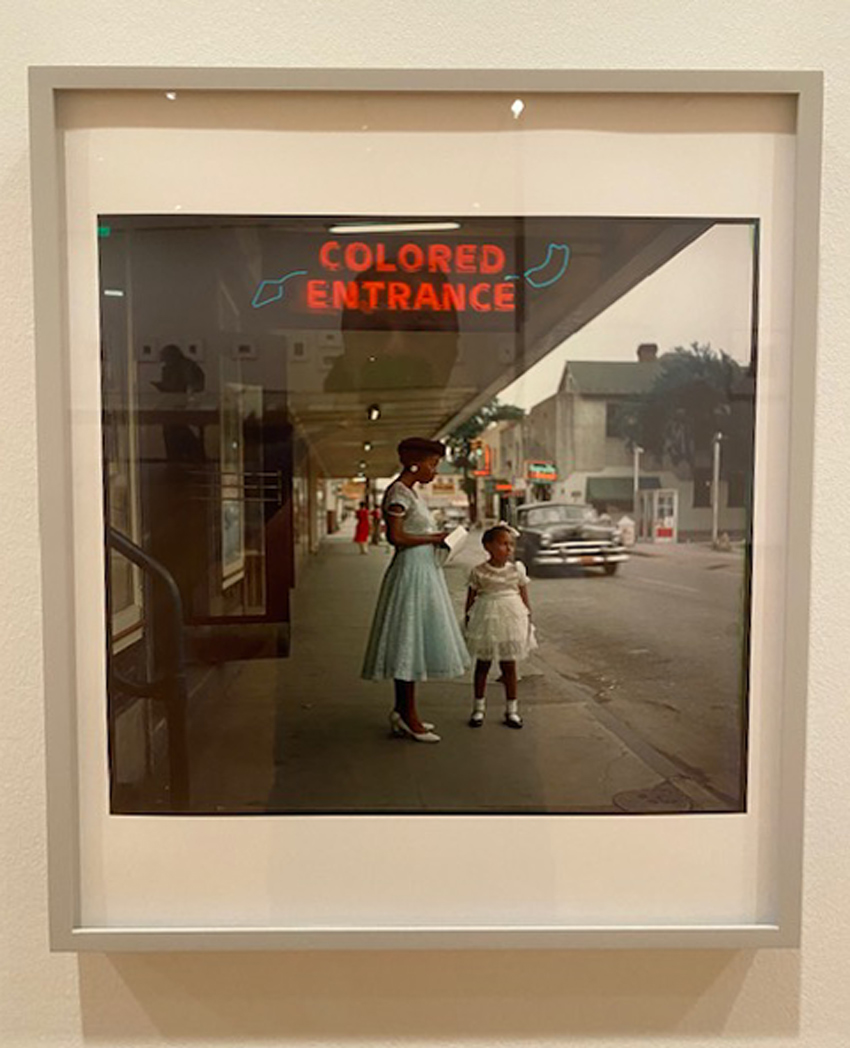
The sign in Gordon Parks’ famous image may be gone but not forgotten. Photo by Abeeku Yankah
Black Photojournalism features a lot of famous images, including Gordon Parks’ colored snap of a streetside coloreds-only entrance to a department store. A well-dressed mother in white heels looks down on presumably her fancily dressed daughter as if to explain the situation but stopping — the girl is still too young for such ugliness. The red neon “Colored Entrance” sign may be gone, but don’t kid yourself that it doesn’t still shine on. The term “de facto segregation” comes to mind, recalling the notion of self-segregating for various reasons but perhaps chief among them safety.
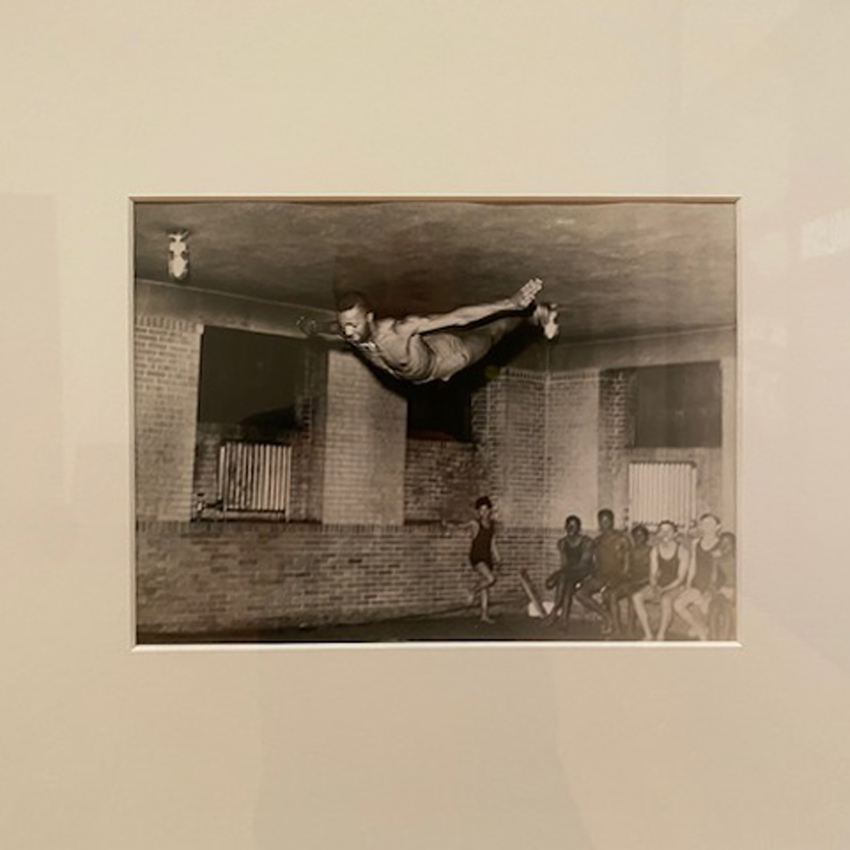
While seriousness pervades Black Photojournalism, Black joy jumps out from the walls — literally as with one of Harris’ pics of a slender Black man swan-diving into a swimming pool. The water below is merely implied. Shown from the front, the man — arms stretched wide, body horizontal — floats almost angelically, constrained by nothing but air, some seated onlookers facing the camera, and the dark, utilitarian interior surrounding him. It’s immensely joyous. And atmospheric. You can almost smell the chlorine.
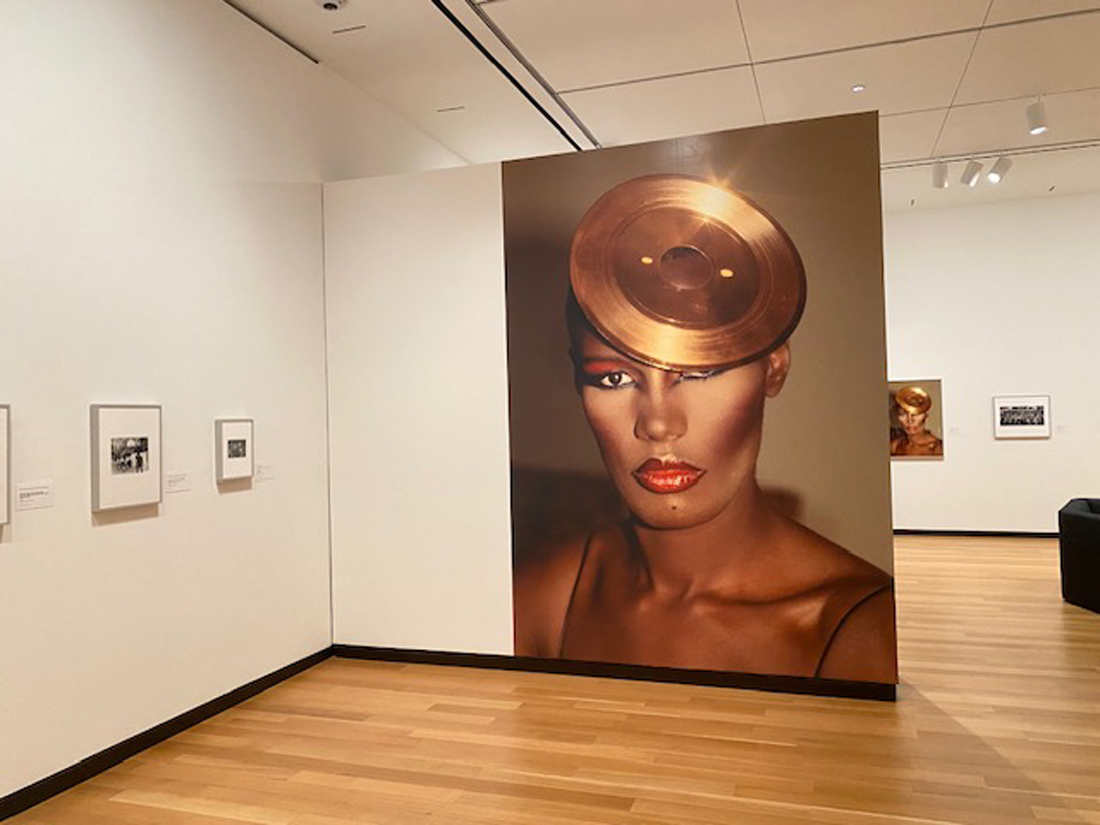
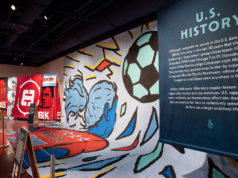
The exhibit is divided into sections, and by the time you reach the mid-1980s — entitled “Keep Hope Alive” after former U.S. presidential candidate Jesse Jackson’s Rainbow Coalition — the joy is paramount. At one angle of the galleries, a massive recreation of a portrait of generational singer/performance artist Grace Jones all glammed out in a gold-record hat looks back at you as the smaller original portrait lurks right beyond the wall, driving home the point that Black is indeed beautiful.
This snap by Charles “Teenie” Harris of a swimmer is so atmospheric, you can almost smell the chlorine. Photo by Abeeku Yankah
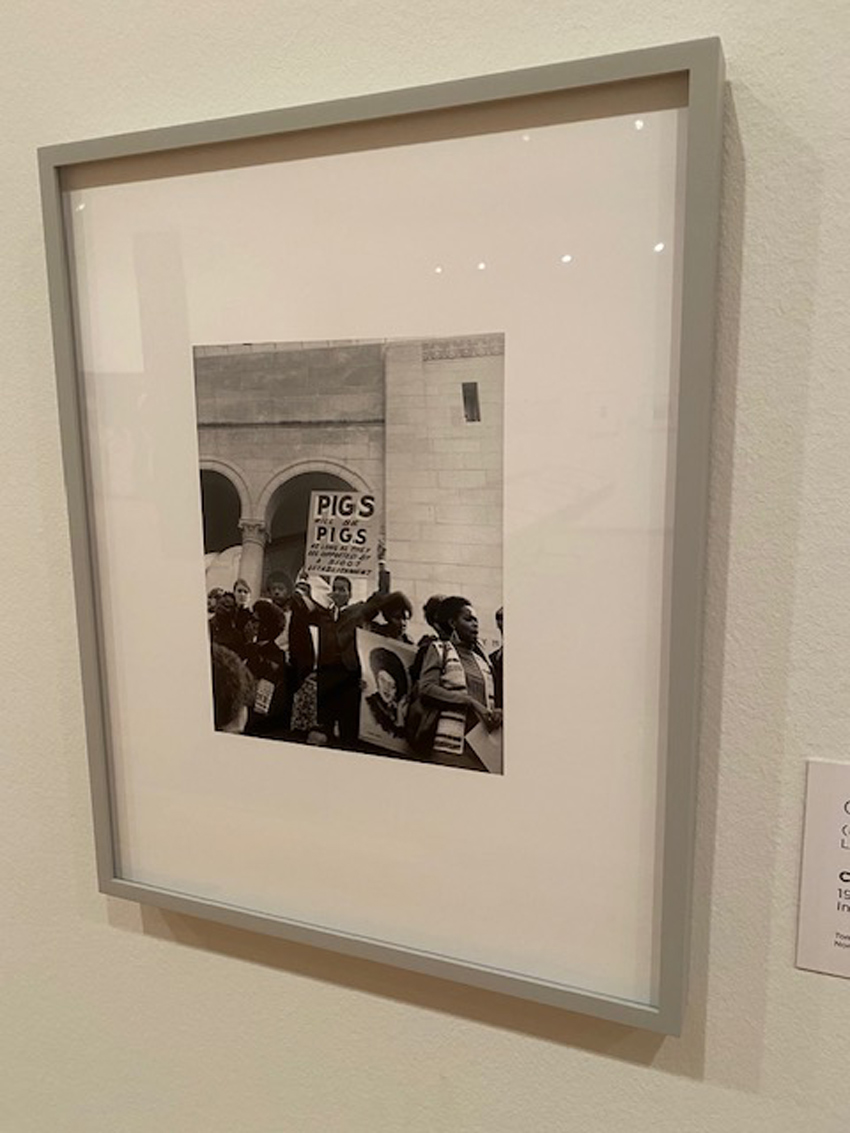
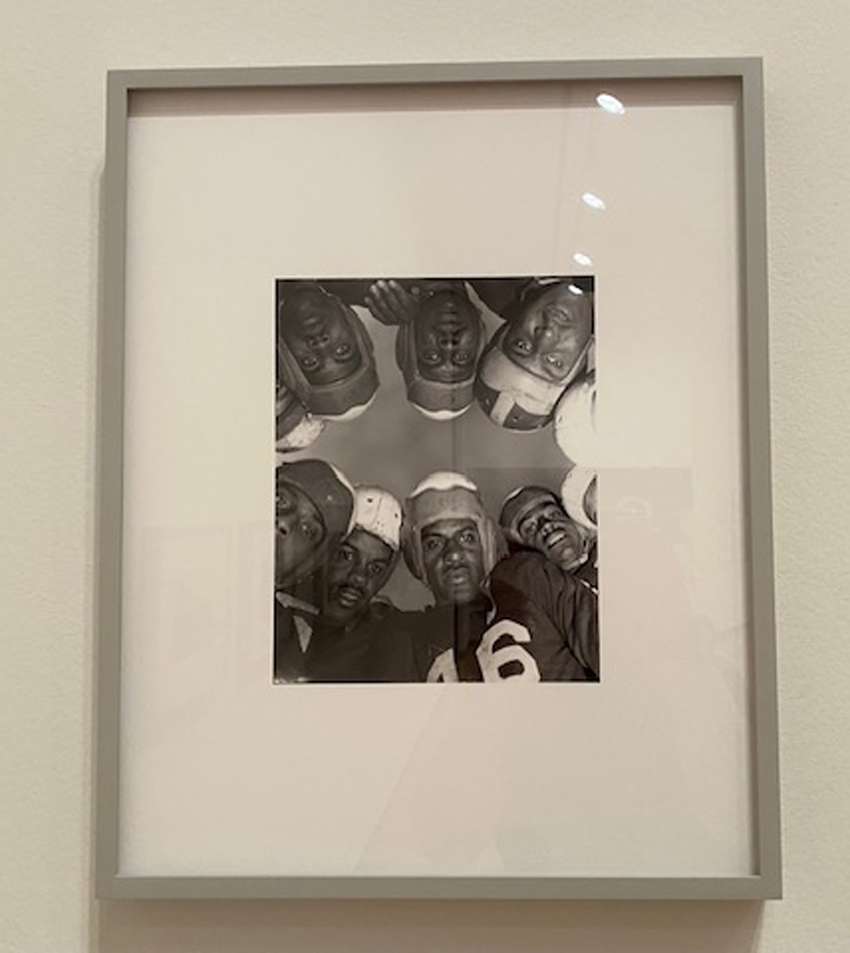
Black Photojournalism also beams with Black pride and Black power. The era represented by the exhibit groans with conflict imagery. Protesters, Freedom Riders, fire-and-brimstone preachers — they all combine to emphasize the history of freedom, justice, and unity which we all share but forget about too often, divided as we are by some of our elected leaders. And the rot festers at the top.
Like during the civil rights era, the federal government and Republican-led legislators today are stealing the right to vote from Black Americans, gerrymandering their voices into nonexistence. The current White House also continues demonizing urban neighborhoods as crime-riddled hellscapes. It’s as if no one’s ever heard of redlining. Trapping poor racial minorities in poor neighborhoods has a way of perpetuating and prioritizing survivalism over all else. Sometimes this reaction takes the shape of studying with a flashlight late into the night. More often, it comes as generational crime. One thing that will never fix the problem is the country’s growing wealth disparity. More of the same prefigures our future as long as the 1% keeps paying less while wages stagnate.
Black Photojournalism
Thru Sun, Jul 5, at the Amon Carter Museum of American Art, 3501 Camp Bowie Blvd, Fort Worth. Free. 817-738-1933.
The exhibit’s timespan dovetails with a lot of political unrest. Photo by Abeeku YankahBlack baby dolls may not be as novel or disruptive as they were in the 1950s, but there’s still work to do. Photo by Abeeku YankahAlong with Black power, Black excellence — and joy — also permeate Black Photojournalism at the Amon Carter. Photo by Abeeku Yankah