
This week’s title represents neither the 1964 free-love anthem by The Beatles nor 1987’s Gen-X-favorited high school-based pseudo-prostitution story starring Patrick Dempsey (who is aging insultingly well), just the reality for many universities facing a slew of financial challenges and that must make Sophie’s Choice on what’s essential and what’s expendable.
In the last week, several universities have cut their NCAA tennis teams, representing a larger trend. The University of Arkansas, St. Louis University, Gardener-Webb, and North Dakota all concluded their regular seasons by announcing their schools would forgo fielding men’s and women’s teams indefinitely. Illinois State similarly axed their men’s program moving forward.
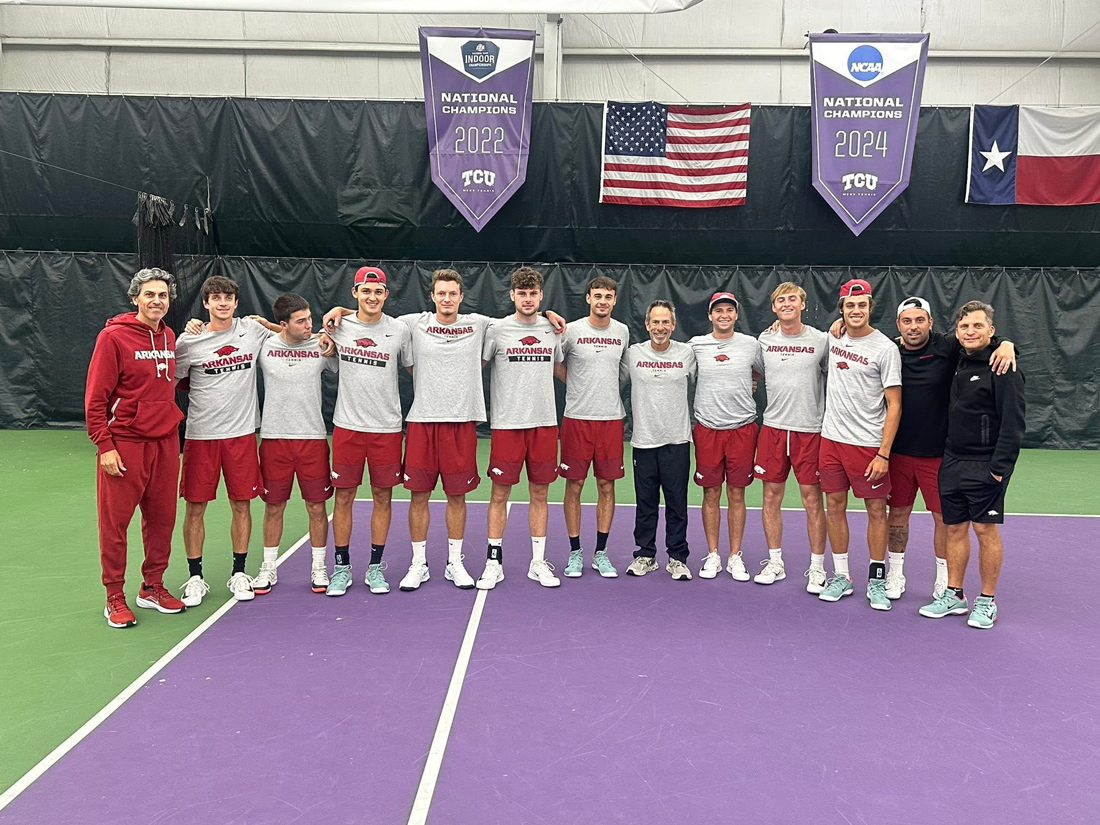
The Razorback men oinked their final “Woo Pig Sooie” on Friday on the TCU tennis courts as they dropped their round-of-64 match 3-4 against Cornell. Maybe Andy Bernard from The Office would have been proud, but the larger tennis world — especially U of A alums — isn’t. The sixth-seeded Frogs rolled through their home regional by beating Denver, then Cornell (both matches 4-0). Before another perfect 4-0 match against their super-regional opponent, Stanford, TCU advances to Athens, Georgia, to face third-seeded Ohio State on Thursday in the national quarterfinals.

TCU women’s tennis, who have not enjoyed the level of success of their counterparts, battled to one of their best seasons in the last decade by winning the Big 12 tournament and Coach Lee Taylor Walker earning the conference’s coach of the year award. Despite a 2-4 loss to Rice during the Baton Rouge Regional, the Frogs can point to tremendous upswing for recruiting and building toward continued success for TCU as a co-ed tennis destination program.
Despite the shock of programs cutting competitive teams, TCU Athletic Director Mike Buddie assured alumni and fans that there are no plans to cut nonrevenue sports in Fort Worth anytime soon. In case you haven’t ventured to the Bayard H. Friedman Tennis Center for a match, the facility itself is a utopia nestled between TCU’s Greek Village and The Colonial and has the corresponding country-club vibe. There is no charge for regular-season matches, and coaches Walker and David Roditti regularly have gifts, food, and festivities to attract crowds to enjoy and support the teams. TCU has won attendance awards multiple times for largest single-match and average attendance.
It shouldn’t be surprising that director Buddie is committing to supporting these programs, as they represent some of our school’s most successful. Men’s tennis, beach volleyball, and rifle have all claimed national championships in the last three years, and women’s soccer just recorded their best-ever finish, reaching the final four.
Despite being a smaller university with a correspondingly miniscule alumni base compared to a school like Arkansas (roughly triple TCU’s enrollment), our local university enjoys the advantage of private funds as compared to state purse strings, as well as a bustling city rather than a small college town surrounding it. The smaller student body at what can now only be thought of as a luxury university also represents a lesser threat from the dreaded enrollment cliff, which triggers larger universities’ anxiety year to year and can leave publicly funded institutions with sudden budget deficits to contend with (see: UNT).
Buddie asserted that he understood the challenges many of his colleagues are facing in the new business of college athletics, acknowledging that the balance sheets matter now more than ever and that hard decisions will have to be made. That’s where the term nonrevenue really becomes a misnomer. Almost every collegiate sport — at least on its face — loses money. Football is generally the only athletic-funds producer for colleges, and men’s basketball programs tend to self-sustain or possibly profit to a much lesser extent. Schools like UNC and Duke (the most valuable basketball programs) still net less cash than their football programs, but their cache drives greater overall value and other revenue for their universities.
It seems Funkytown fringe sports are safe, but the overall flux for many universities in the country is indicative of the greater spending trend among colleges: Pay whatever it takes to win at football or basketball. The Razorback tennis program was spending approximately $2.3 million per year to field both teams, though their money generation was effectively nothing. In comparison, it’s estimated that that cost is similar to the amount QB Arch Manning is accepting from the University of Texas as part of his generosity to accept less than he could receive elsewhere and open funds to pay other players and fill out the roster.
You don’t even need to leave North Texas to see the devastating effects of the new professional college system. UNT football enjoyed one of their best seasons in years and was even a dark horse for selection to the College Football Playoff. Their walk-on quarterback Drew Mestemaker burst on the scene as the most productive in the nation. Former Mean Green coach Eric Morris left to fill Mike Gundy’s open position at Oklahoma State (Gundy is still a man; he’s just 58 now), and Mestemaker tagged along. Morris is now making more than double his old salary, and Mestemaker is being paid by a single donor almost the same per year as his head coach (around $3.75 million). Almost all of UNT’s roster transferred somewhere else, and now Denton’s university, who should have had an amazing foundation to build on, is rebuilding from Square 1.
Meanwhile, the academic part of North Texas is reeling from the sudden severance of international students as the school faces a $45 million budget shortfall and is consolidating programs and majors and encouraging buyouts for tenured faculty.
Successful athletics are supposed to drive general enrollment and larger budgets and create recognition of the rest of the university. TCU itself is one of the most poignant modern examples of this strategy, but the sudden tremendous cost to be competitive might be soiling this playbook in real time. Unfortunately, for those who love college sports but miss the days of players driving cars in booster’s names and McDonald’s bags full of cash, it doesn’t seem like a reprieve to the current arrangement will arrive anytime soon.
Donald Trump’s executive order to protect college sports does a good job of acknowledging its cultural importance and that the current arrangement isn’t sustainable but little else. Trump has threatened to withdraw federal funding from universities who accept an athlete who is playing for more than five total years or who is transferring more than once without sitting out for a year. The order itself is a paper tiger and will be challenged in court — which Trump has acknowledged — and will likely be struck down. It would take a dedicated effort from Congress to change laws surrounding the formerly amateur status of collegiate athletes, and this is unlikely to gain traction with other political priorities taking the forefront. Trump’s executive order — even if unenforceable — does correctly assert that Olympic and women’s sports are disproportionately hamstrung by the pay-for-play frontier into which we’ve entered.
The next course of action is writing your congressperson to enact common sense restrictions to bring back a more nebulous era of college sports. I’m kidding. Those legislators have more important work to do (Cancun, y’all!), and they won’t even give earnest effort to that unless it’s for a major campaign donor. As with almost anything in our post-capitalist America, dollars vote, and it will require a concerted desire from those at the bottom who spend to disengage from major sports and restraint from those at the top who are ponying up the money to pay to level the playing field. Rather than forking over the equivalent GDP of developing nations for their alma mater to win, major donors will have to commit to some modicum of fair play. Sounds likely, right?
Sadly enough for The Beatles and Patrick Dempsey, it seems that right now money can indeed buy you love.