

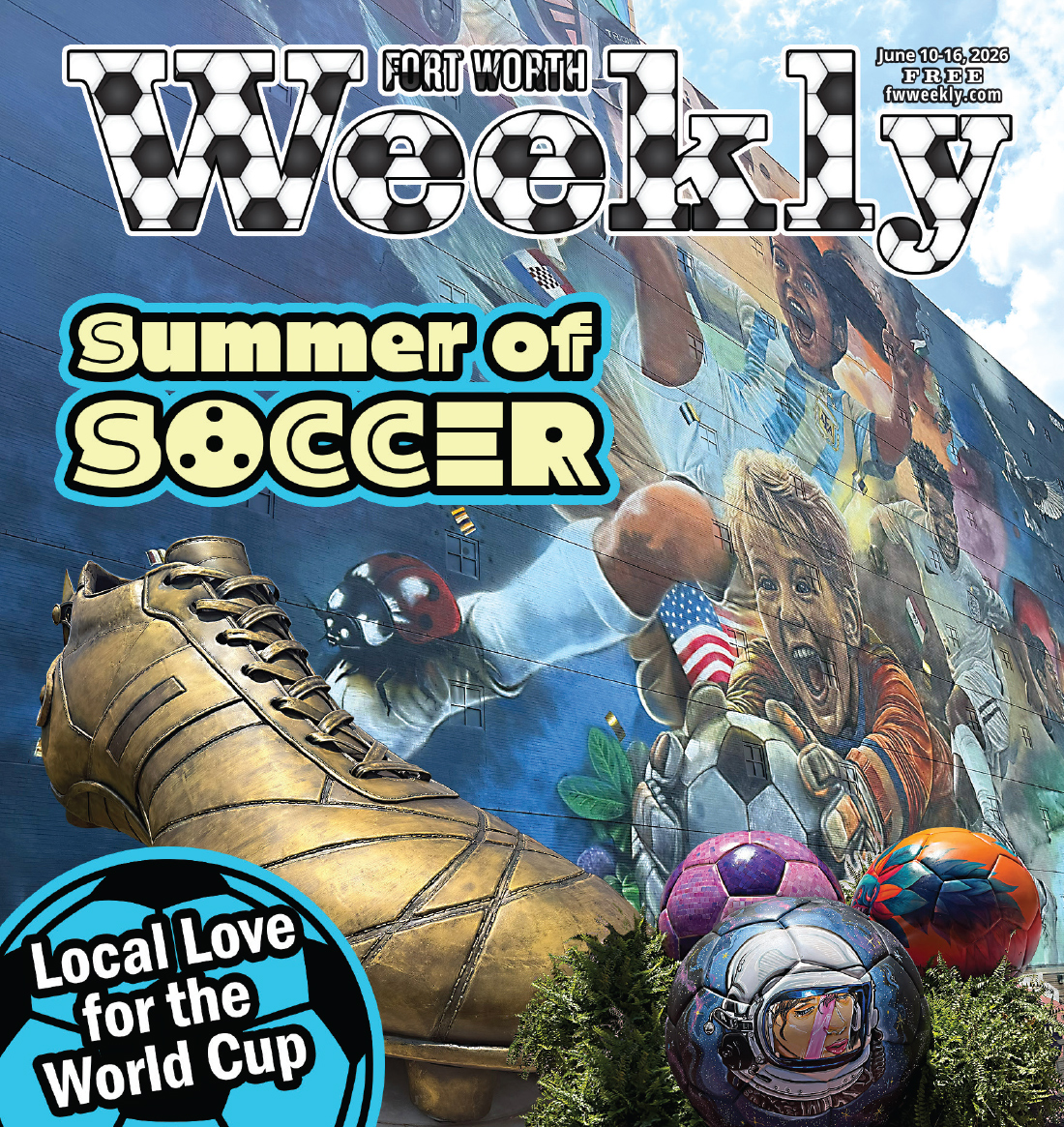
In the 1970s and ’80s up north where I’m from, soccer wasn’t even a thing. We’d heard of Pelé, but that’s about it. It was all football (American-style), baseball, hockey, and basketball. That’s it. And, individually, swimming and golf. Having never been taught soccer, I spent most of my life ignoring it — until a really good Italian team made the World Cup. And eventually won it. This was in 2006, and I, as a full-blooded second-generation Italian, watched every second of every match. Sometimes at home. More often at The Grotto (R.I.P.). That’s when I realized I’d been missing out. Italy has pretty much sucked since then, so my fandom now encompasses Team Ghana, since my son is from Accra. For the 2026 FIFA World Cup, they’re in Group L with Croatia, Panama, and mighty England. Go, Black Stars!
And that’s the thing about sports. It truly is unifying. As a lifelong Pittsburgh sports fan and longtime resident of the Steel City, I grew up witnessing the material impact of sports on society. After all our steel mills closed in the mid-to-late 1970s, sending thousands of formerly proud men and women out of work, we had no identity and nothing to believe in — until the world champion Steelers and Pirates came along. Their success sparked the city’s second “renaissance,” as they called it, which ultimately led to Pittsburgh’s lofty standing as a place of groundbreaking medicine and technology, robotics specifically (because of Carnegie Mellon University).
Soccer, as the only truly international sport, has had similar impacts around the globe, perhaps not ones tied to real estate but to social unification and the conjoining of disparate factions, which is what most of us are hoping for through this World Cup: that we can put politics aside temporarily and come together to cheer on Team USA. I get it. It’s hard, but don’t let the fascists and Nazis running this clownshow of a government take away your patriotism to a country founded on and (up until recently) committed to two very specific anti-Nazi, anti-fascist things: words like the Declaration of Independence and the Constitution and deeds like 1776 and the world wars. Maybe Team USA’s performance can help transform “Old Glory” from the placeholder Confederate flag that it is today to a true representation of our shared Americanness, forming in a shining place once likened by some smart person to a melting pot, with all sorts of flavors, colors, and textures. That’s what makes America America: Baskin-Robbins’ big 31-plus-1,000. Not just straight vanilla.
All of this is a roundabout way of saying there’s a ton of stuff to do and a bevy of ways to take in the World Cup action, many that don’t involve taking out a loan to purchase “Dallas Stadium” tickets. On pg. 12, our resident expert on X’s and O’s, Film Editor Kristian Lin breaks down Team USA’s chances and prognosticates on potential finalists, while on pg. 10, fellow soccer maniac Ryan Burger, who’s also the Weekly’s art director, discusses the potential action (or lack thereof) outside the pitch, with some yellow and red cards for the offenders. (“Quite frankly,” we’d be amazed Donald Trump doesn’t get one.)
Elsewhere in the issue, “Sports Rush” Olson and Editorial Board member Elaine Wilder look at all the soccer-themed artwork popping up throughout DFW in anticipation of the tourney (pps. 4 and 6), while on pg. 17, Elaine runs down some of the best spots in town for watch parties. All that and so much more await, so welcome to our inaugural (and perhaps last for a long time) Summer of Soccer issue. As the Beastie Boys once prophetically cried, “Kick it!”
-Anthony Mariani
WHAT’S INSIDE SUMMER OF SOCCER?
We’re glad you asked!
ARTS // City of (World) Cups and Culture — From giant painted soccer balls in Fort Worth to murals, museum exhibits, and brewery galleries, North Texas turns World Cup 2026 into a massive celebration of art, culture, and global fandom. Read the full article here.
CALENDAR // Big Ticket: Art of the Game — North Texas art spaces are embracing FIFA World Cup 2026 with soccer-inspired works, public art, and cultural crossover events. Read when and where to see it all here.
METRO // World Cup Chaos — With hundreds of thousands of soccer fans coming to Fort Worth, Arlington, and Dallas, who’s watching the health of the population? Find out here.
FEATURES // Red and Yellow Cards — Potential fouls are everywhere in the summer of soccer 2026. Previous World Cups have had major issues that have affected the people, the tournament, and the World Cup legacy. FIFA itself has a long history of corruption, which only seems to intensify with each passing tournament. Read more about it here.
FEATURES // World Cup Preview — Because we will probably never host an Olympics, this World Cup tournament is likely the biggest sports event that you will ever get to witness without leaving home. As the big soccer tournament comes to North Texas, we answer our own questions here.
EATS & DRINKS // Where to Watch the World Cup — Nine World Cup matches will be played in Arlington at AT&T Stadium. Dubbed “Dallas Stadium” for the tournament, it will host more games than any other spot in the country. Don’t have tickets? Don’t worry. Watch parties and soccer-themed events are happening all over. Read about them here.
EATING LOCAL // World Cup With Wagu — Rex’s started out as a Team Japan watching spot, but has expanded to encompass all 48 FIFA World Cup squads. Read more about that here.
MUSIC FEATURE // The Music of Football — Spots fans all over the world have used music as a way of encouraging their team, winding up the opposition, and expressing their solidarity. As the World Cup comes to Tarrant County, we’re taking a look at the wild and extremely varied world of soccer chants. Read all about it here.
LISTENING LOCAL // These Tips Don’t Lie — Shakira will be entertaining the world alongside BTS and Madonna at the final at the Meadowlands in New Jersey in mid-July (FIFA’a first ever halftime show), but in the meantime, other big stars are headed to the Dallas FIFA Fan Fest in Fair Park: three massive nights of live music that bring the spirit of the World Cup to life. From Latin legends to Red Dirt country and anthemic global dance, every show at The Pavilion at Fair Park is built for singing loud, dancing hard, and making memories with thousands of fans. Read about it here.
SUMMER OF SOCCER // Cover-to-Cover Flipbook — Did you miss your chance to pick up Summer of Soccer in the stands? No worries. We’ve got you covered. To see this special issue in a flipbook, cover-to-cover format, click here.
ICYMI // World Cup Preview (Groups A-F) — Mexico has home-field advantage, Brazil and Canada have new coaches, and more. Read this article from April here.
ICYMI // World Cup Preview (Groups G-L) — England, France, Spain, and a host of newcomers populate this half of the groups. Read this article from April here.
ICYMI // Who Won’t Be at the World Cup — Some of the best pro players on the planet won’t be at World Cup 2026 for a variety of reasons, and we’re not talking about Iran. Read this article from April here.
ICYMI // The Iran (Soccer) Question — A few months back, we addressed the whole insanely complex question of whether Iran would be at the party. While the situation was changing by the day, and would most likely be obsolete for future readers, one of our writers and his imaginary question-asker still gave it a try. Read this article from April here.
ICYMI // Dreamtime — It’ll take a few miracles for the USMNT to win the 2026 FIFA World Cup. Read one dream scenario of how it could happen here.