

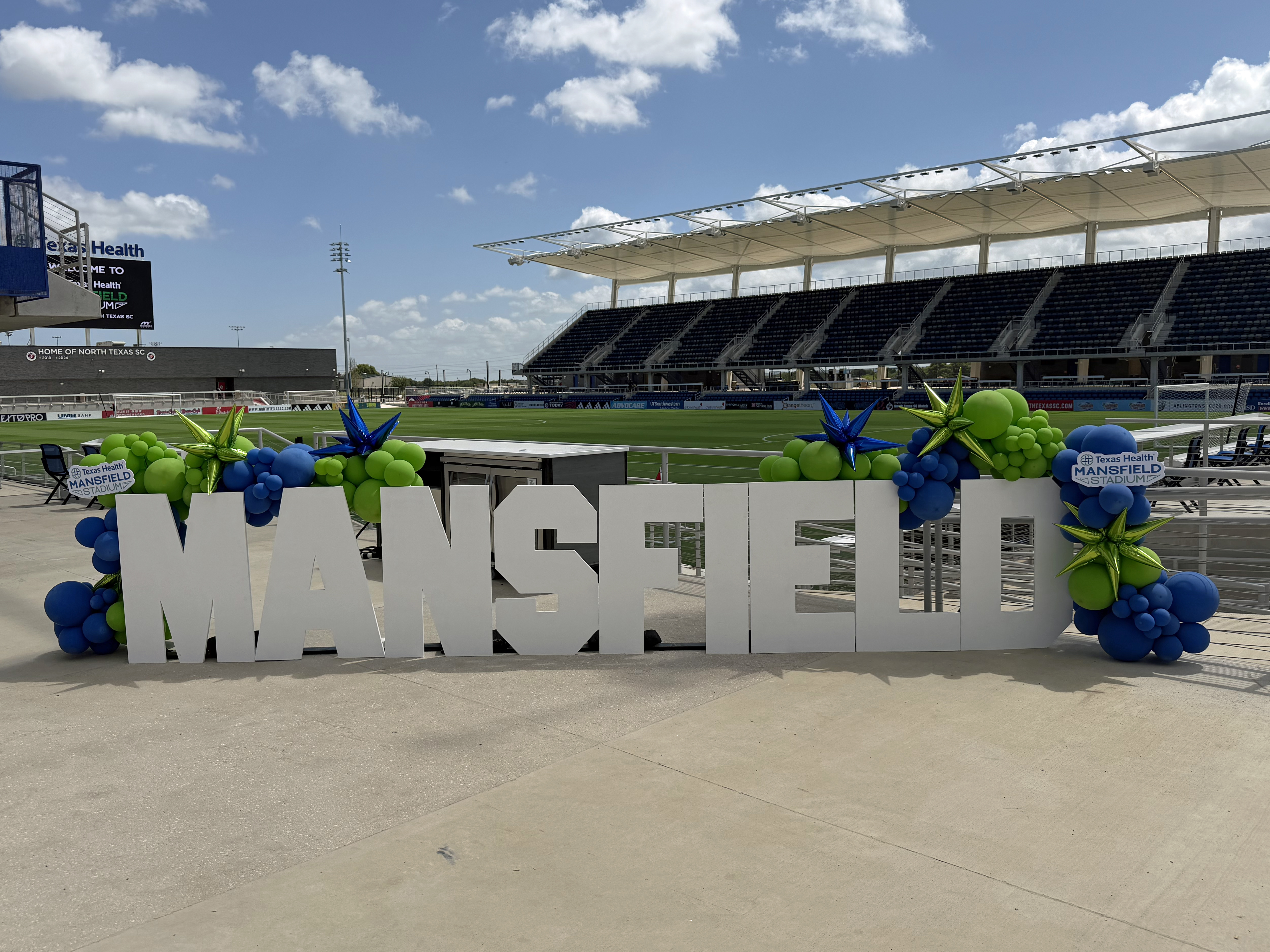
In the early days of Major League Soccer, many of the league’s teams played home games in stadiums designed for American football. Their predecessors in the North American Soccer League had done the same. NFL and college buildings offered professional facilities with large grassy spaces and built-in chairs. But they weren’t ideal. They had too many seats for the ticket demand at the time, some couldn’t fit a regulation soccer pitch in the bowl, and nobody wants to watch soccer played on a field with gridiron yardlines.
Those leagues played in such places because they had few options. If recent events in Mansfield are an indication, that has changed – a lot.
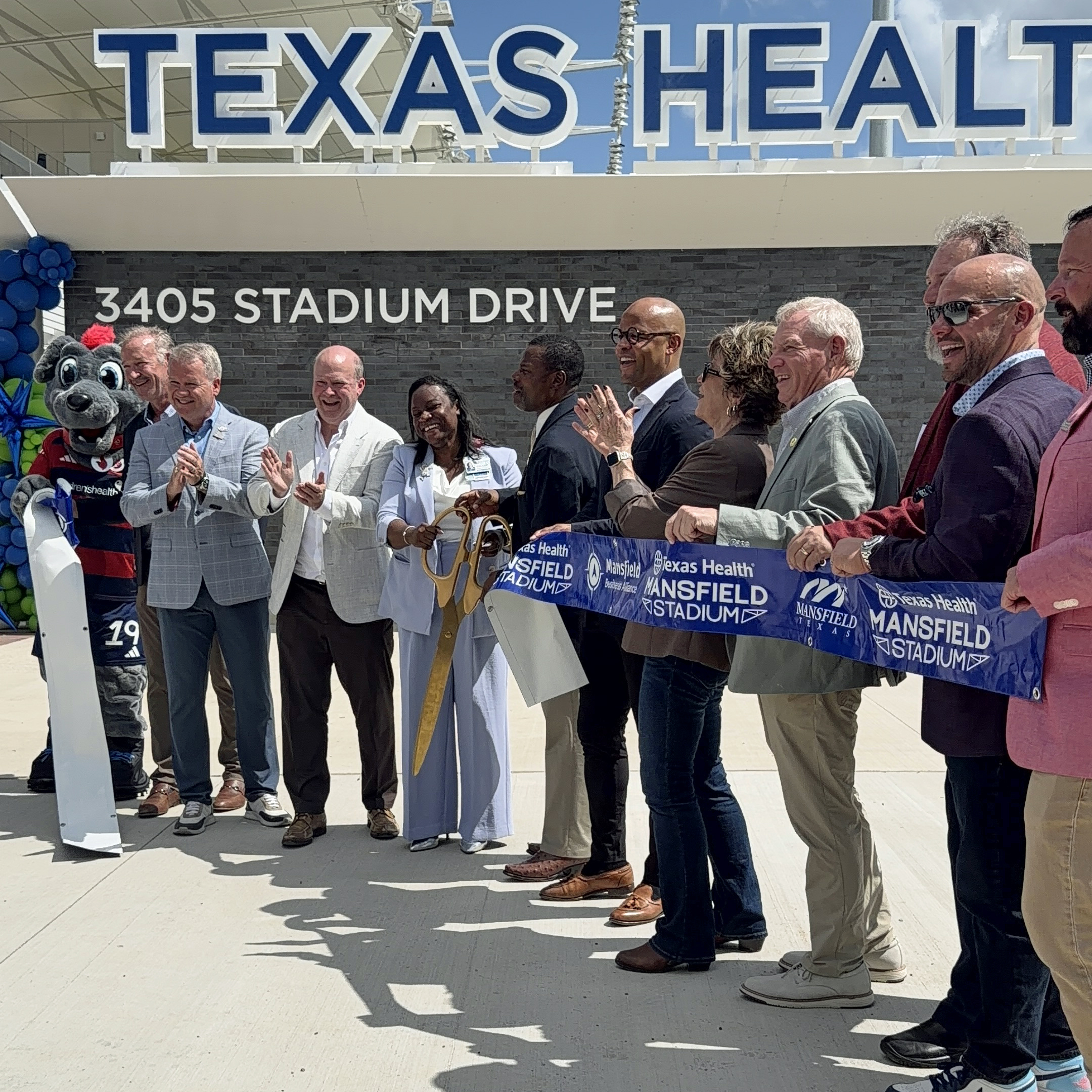 Dignitaries gathered Wednesday morning for a ribbon-cutting ceremony at the new Texas Health Mansfield Stadium. North Texas SC of the MLS Next Pro league will serve as its primary tenant. Though REV Entertainment and Hunt Sports Management will book other events there when the schedule permits, the new structure has been built with one primary purpose: to host soccer games.

The Hunt family worked to push soccer forward when it was in a much different place than it is now. At the lectern, FC Dallas President Dan Hunt noted that one of the turning points for Major League Soccer came when his father Lamar privately funded a playing facility for an MLS club he owned at the time in Columbus, Ohio.
“I go all the way back to the late ‘90s when we opened up Crew Stadium, and Crew Stadium was what really catapulted Major League Soccer forward,” said Dan Hunt.
Ali Curtis, president of MLS NEXT Pro, MLS’s second-division circuit, remembered coming to the league’s first soccer-specific stadium.
“The Columbus Crew and his family building that stadium in the late 90s – I remember as a player in 2001, my rookie year,” the former MLS player said. “I played in all these different stadiums, and then when I played in that stadium, I remember sitting on the grass, warming up, and just feeling that I finally felt like a professional soccer player, and I finally have arrived.”
Many MLS teams constructed stadia in the years following. Dedicated to soccer, they helped the clubs establish an identity, offer a tailored game experience, and control revenue streams. Those all helped not only the individual clubs, but the sport itself. Now, the United States has a crazily buzzworthy soccer event taking over the country, and builds 7000+-seat stadiums for lower-division teams like the one in Mansfield. The MLS has expanded to 30 teams plus its farm teams while the USL provides lower-level soccer teams to cities and will soon unveil a second U.S.-based Division I men’s league. We also have two Division I women’s leagues and a pyramid of teams below them. It’s possible that many, maybe most, of these clubs’ facilities would be envied in nations where soccer is the number one sport.
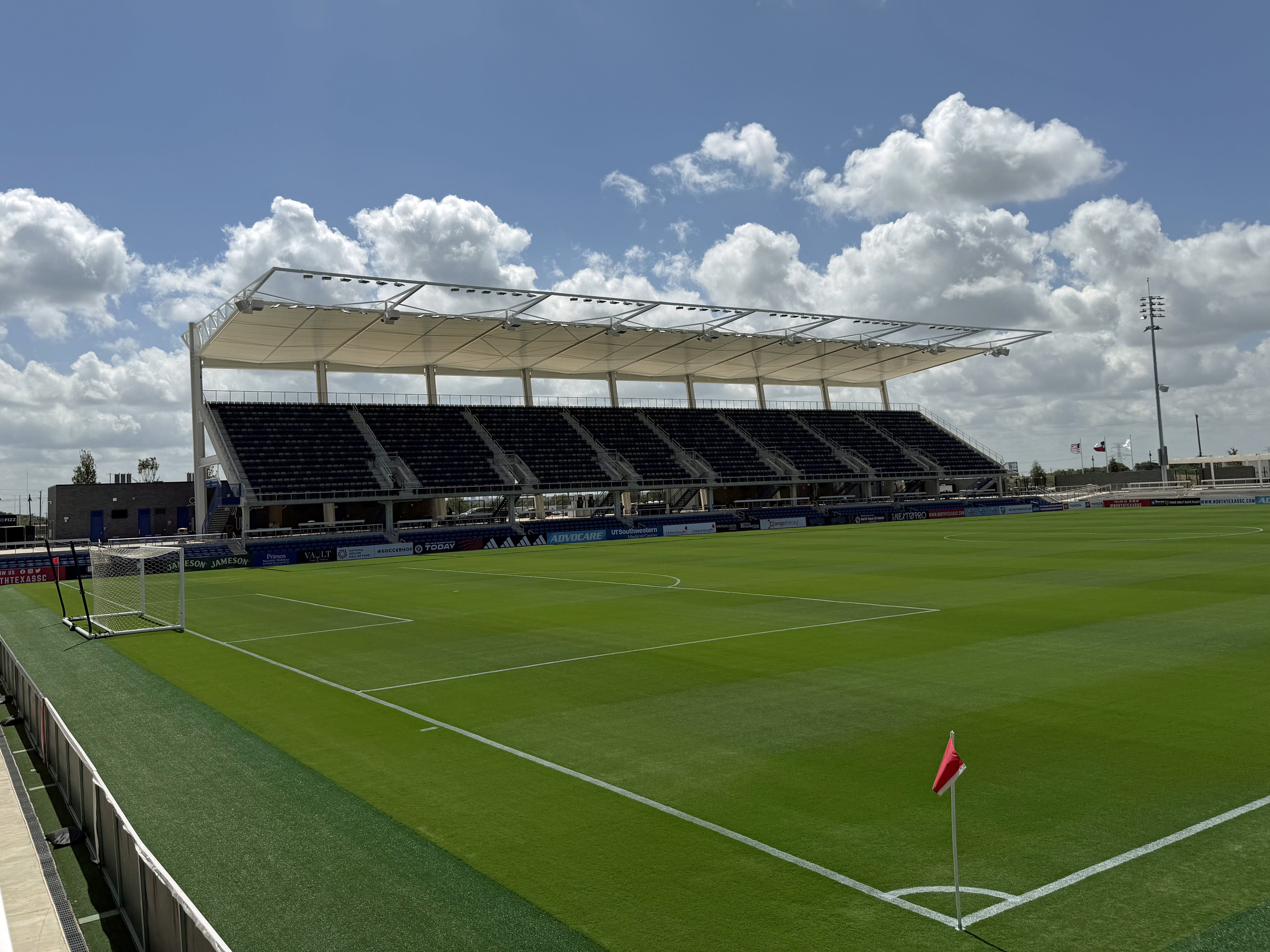 Texas Health Mansfield Stadium can – can – host American football games. It might get a few high school playoff games in the fall among other bookings for women’s soccer, rugby, and more. That’s a reversal of the original model – here, soccer comes first. Football stadiums, by the way, are still useful for World Cups and other enormous soccer events. Back in the day, only Lamar Hunt and a few others envisioned a day when any soccer game would require the capacity of an AT&T Stadium, much less a Texas Health Mansfield Stadium. But that’s where we are. We may someday need to go back to the future and build soccer stadiums that can hold 60,000+ fans.
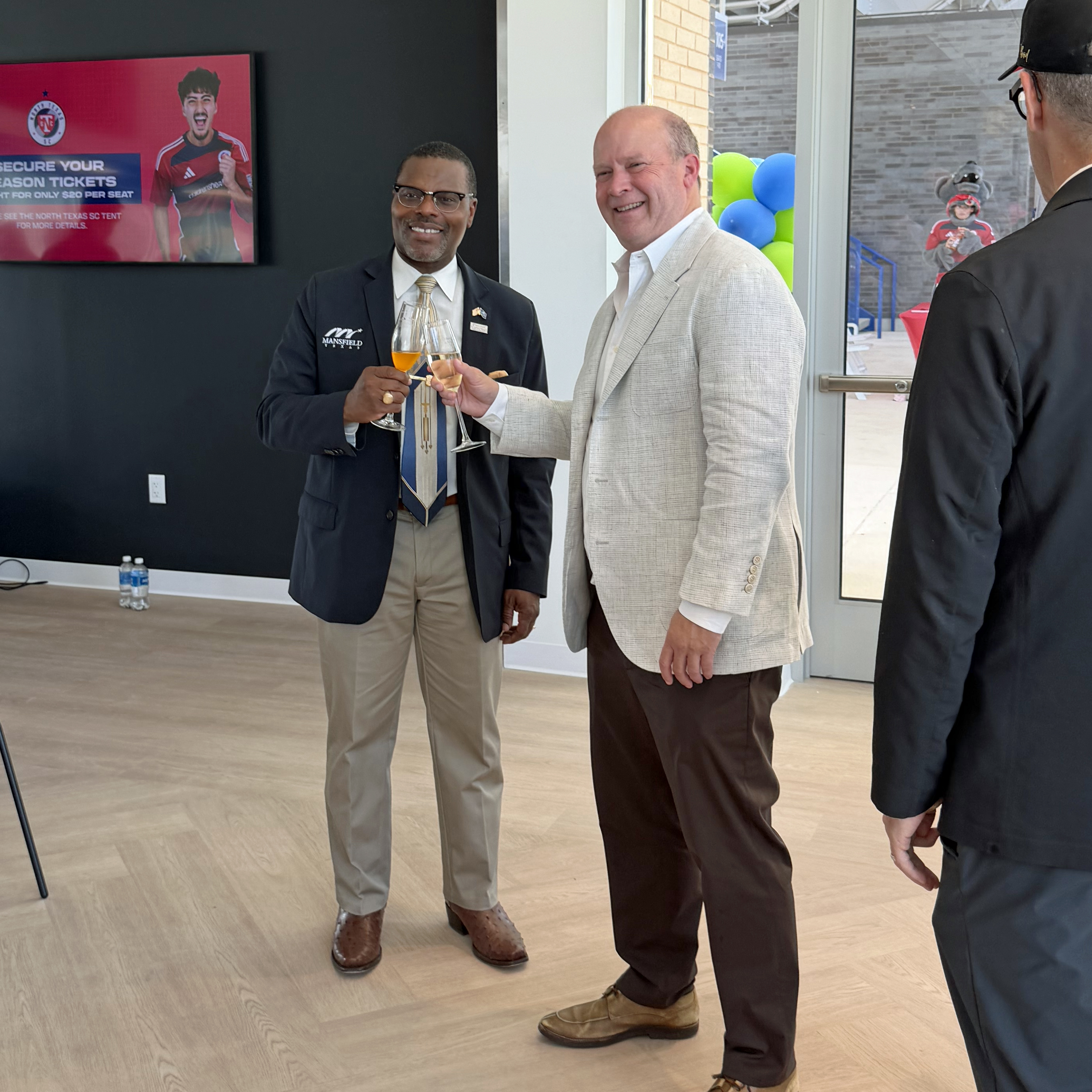 Mansfield Mayor Michael Evans suggested his city’s new gem “is the southern gateway of soccer in the DFW metroplex” and was “happy to proclaim that it is soccer time in Mansfield, Texas.” Former Mayor David Cook called the stadium “the front door of Mansfield.” The idea that soccer would be the front door to anything in the USA tells you the sport has pushed its way into the mainstream.